

What does the ‘no deposit’ option on a car rental mean? Usually, it means you don’t pay a specified security deposit upfront. It doesn’t necessarily remove the rental fee, other payment requirements, or your responsibilities under the rental agreement. That distinction matters when you’re choosing a premium car in the UAE.
It’s understandable to expect a simpler payment process, especially when booking a high-performance or luxury vehicle. But damage, traffic fines, insurance excess, and other costs may still be your responsibility under the rental agreement. Read the written terms before accepting the keys so you know what is due, when it is due, and what could be charged later.
This guide explains what a no-deposit option changes and what it doesn’t. It covers payment requirements, insurance excess, damage procedures, fines, and potential additional charges. Delta Rentals Dubai offers no-deposit supercar rental, and understanding the terms can help you consider that option alongside vehicles such as the Porsche 911 GT3 RS, Rolls-Royce Cullinan Black Badge, and McLaren Artura.
Key Takeaways
- Understand what the ‘no deposit’ option on a car rental means, and how it differs from the rental fee and other payment requirements.
- Separate the rental fee from possible fuel, mileage, toll, damage, and fine-related charges.
- Compare a deposit, no-deposit arrangement, and card hold by how each affects payment or security, rather than assuming one is cheaper.
- Use a practical checklist to review deposit requirements, card holds, payment timing, and key rental terms before accepting the car.
- Consider Delta Rentals Dubai’s no-deposit supercar rental while reviewing the specific terms that apply to your booking.
What Does ‘No Deposit’ Mean When Renting a Car?
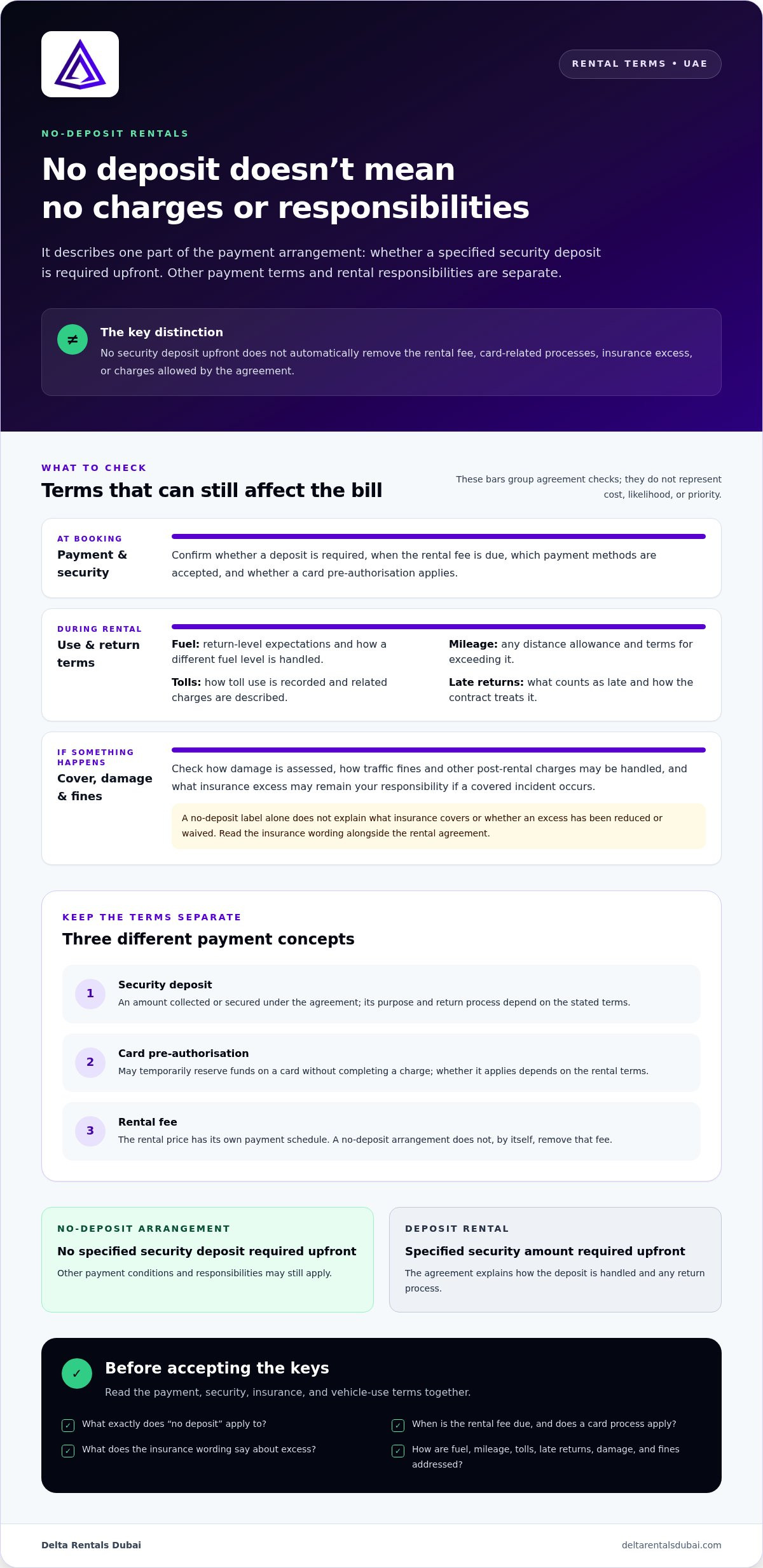
A no-deposit car rental means the rental agreement doesn’t require a specified security deposit upfront. It describes one part of the payment arrangement, not the entire contract. You may still have rental charges, payment conditions, or other responsibilities under the agreement. The written terms explain what the option means for a particular booking.
In practical terms, the no-deposit label tells you that a particular security deposit isn’t required at the start of the rental. It doesn’t tell you when the rental fee is due, whether a card authorisation applies, or what you may owe if a contract condition is triggered. Treat “no deposit” as one specific term to understand, not a summary of every cost or obligation.
What is a rental deposit designed to do?
A deposit can serve as security for obligations described in the rental agreement. It may give the rental company a way to address certain covered costs if they arise during or after the rental, subject to the contract. The agreement sets out the deposit’s purpose, how it is handled, and any return process.
Separate money collected upfront from charges assessed later. A deposit is part of the agreement’s security arrangement. A later charge may relate to a cost identified during or after the rental, if the contract allows it. Whether money is collected, held, or charged, and how that process works, depends on the stated terms.
What does the ‘no deposit’ label tell you?
The label tells you about the deposit requirement, not every payment connected with renting. The rental price, payment schedule, any card-related process, and the conditions that apply during the rental are separate terms. Review each one rather than assuming that removing a deposit removes other payment obligations.
For a general overview of how deposits, insurance, and rental conditions fit into vehicle hire, see Car rental practices and deposits. Use it as background, then rely on the agreement for the specific rental you’re considering.
For example, an offer may not require a security deposit upfront, while still requiring the rental fee according to a stated schedule. The agreement may also set out responsibilities for fuel, vehicle condition, and other matters. Check each of these terms separately so you know what is payable at the start and what could apply later.
Before accepting the keys, read the payment and security terms together. Check what “no deposit” applies to, when the rental fee is due, and what the agreement says about your responsibilities. This helps you plan for the costs and conditions of a premium rental without relying on assumptions.
No Deposit Doesn’t Mean No Charges or Responsibilities
A rental can require no security deposit and still involve rental charges and responsibilities under its agreement. The deposit and the costs or obligations that may arise during the rental are separate matters. Deposit requirements and liability terms are separate parts of a rental agreement.
So, what does the ‘no deposit’ option on a car rental mean? It describes the security deposit requirement, not a blanket waiver of charges, damage responsibility, or other contract terms. Check each term individually before you book, especially when choosing a premium vehicle.
Deposit, card hold, and payment are different things
A deposit is an amount collected or secured under the agreement. A card pre-authorisation may temporarily reserve funds on a card without completing a charge. Whether either applies, how payment is processed, which methods are accepted, and when payment is due depend on the specific rental terms. A no-deposit label doesn’t rule out every card process or payment requirement.
Which other terms can still affect the final bill?
Read the agreement for costs and conditions beyond the deposit. In particular, look for terms covering:
- Fuel: what’s expected when you return the vehicle and how the agreement handles a different fuel level.
- Mileage: any stated distance allowance and the terms that apply if you exceed it.
- Tolls: how toll use is recorded and whether the agreement describes related charges.
- Late returns: what counts as a late return and how the contract treats it.
- Damage and fines: how damage is assessed, and how traffic fines or other post-rental charges may be handled under the agreement and applicable processes.
Insurance excess is another distinct term. It refers to the amount you may remain responsible for under the relevant insurance conditions if a covered incident occurs. A no-deposit offer doesn’t, by itself, tell you whether an excess applies, what coverage includes, or whether any excess has been reduced or waived. Read the insurance wording alongside the rental contract to understand what applies to your booking.
Before accepting the car, distinguish the rental fee, any deposit or card authorisation, insurance excess, and charges that could arise later. If you’re considering a premium drive, you can discuss a no-deposit supercar rental with Delta Rentals and review the terms of your rental agreement.
No-Deposit Rental vs. Deposit Rental: What Is Actually Different?
The clearest difference is what happens at the start of the rental: a deposit rental requires a specified security amount upfront, while a no-deposit arrangement doesn’t require that deposit. A card hold is a separate payment process that may temporarily set aside funds without completing a payment. The key difference is upfront security, not the full contract.
Use this comparison to separate the terms. It describes common distinctions, while the rental agreement determines how each arrangement works for a particular booking.
| Arrangement | What it means for payment or security | What it doesn’t automatically change |
|---|---|---|
| Deposit rental | A security deposit is required upfront, according to the agreement. | Rental charges, insurance terms, and responsibilities remain governed by the contract. |
| No-deposit rental | The specified security deposit isn’t required upfront. | It doesn’t automatically remove rental fees, other payment conditions, or contractual responsibilities. |
| Card hold | A temporary authorisation may reserve funds on a card rather than complete a charge. | It doesn’t, by itself, define the deposit policy or change the rental conditions. |
How does a deposit rental differ from a no-deposit rental?
With a deposit rental, the agreement sets out a security amount to be collected or secured before or at the start of the hire. With a no-deposit rental, that specified upfront deposit isn’t required. The difference is the initial security requirement, not necessarily the rental price or the driver’s obligations. Either arrangement can include separate rental charges, payment schedules, insurance conditions, and vehicle-use rules. Compare those terms in writing rather than treating either label as a guarantee about the final bill.
If you’re asking, “what does the ‘no deposit’ option on a car rental mean,” focus on the security requirement stated for that booking. The label alone doesn’t tell you whether the rental fee is due upfront, whether another payment process applies, or how contract terms work if an issue arises.
Is a card hold the same as paying a deposit?
Not necessarily. A completed payment transfers money as a charge, while a card pre-authorisation may temporarily reserve available funds. The agreement and payment provider’s processes affect how the authorisation is handled and when it is released. Don’t assume a hold is the same as a deposit, or that either will be released on a particular schedule without checking the written terms.
Before accepting the booking, identify three details separately: the amount, if any, required as a deposit; whether a card hold or other authorisation applies; and the stated purpose and release conditions for each. Check these alongside the rental fee and payment timing. This helps you understand what may be due at pickup and what the agreement says could happen later, without assuming that one structure is always cheaper or more favourable. The same careful evaluation is valuable when booking vehicles in popular travel spots—for example, holidaymakers exploring island fleets can inspect pickup policies and vehicle tiers directly on rentalcarmaui.com.
What to Check Before Accepting a No-Deposit Car Rental
A clear agreement makes it easier to understand what you’re paying now and what could become your responsibility later. Before accepting the vehicle, review the clauses below in order. Use the checklist to distinguish the deposit arrangement from the rest of the terms.
Read the payment and liability terms together
Don’t scan only for the words “no deposit.” Read the payment and responsibility clauses as a set, and compare any explanation you receive with what the agreement says in writing.
- Identify the deposit requirement. Find out whether a security deposit is required or whether the offer says no deposit is due. Note exactly what the agreement calls a deposit.
- Check for a card hold or authorisation. Look for any separate pre-authorisation, its stated amount and purpose, and the conditions for its release. A no-deposit label doesn’t explain whether a card process applies.
- Confirm payment timing. Separate amounts payable at booking or pickup from charges that may be assessed during or after the rental. Review the payment method stated in the agreement.
- Read the insurance excess and damage clauses. Find the excess that may apply and how the agreement describes reporting or assessing vehicle damage. Don’t assume a no-deposit arrangement changes these terms.
Record the vehicle condition and return requirements
Before driving away, make a simple record of the car’s condition. At return, follow the contract’s instructions and keep relevant records until the rental is settled.
- Document the handover. Photograph or video existing marks and note them on the vehicle condition record. Capture clear views of the exterior and interior, and keep a copy of any handover notes.
- Check use-related clauses. Review fuel expectations, mileage limits, toll handling, and the terms for fines or other post-rental charges. The agreement should explain the applicable process, so read the wording carefully.
- Confirm return details. Find the return time, the location specified in your agreement, fuel expectations, and how to report an incident. Keep records of the return and any communication about the vehicle’s condition.
- Save the paperwork. Retain the rental agreement, payment records, handover documentation, and return evidence. These help you refer to the written terms if a question arises later.
Resolve unclear wording before accepting the keys. For a premium rental, you can discuss a no-deposit supercar rental with Delta Rentals and review the specific rental terms before proceeding.
How Delta Rentals’ No-Deposit Supercar Rental Fits In
Once you understand what the label does and doesn’t promise, you can weigh it alongside the driving experience you want. Delta Rentals offers no-deposit supercar rental, with premium vehicles such as the Porsche 911 GT3 RS, Rolls-Royce Cullinan Black Badge, and McLaren Artura in its fleet. Read “no deposit” as a specific payment term, not a summary of every rental condition.
The practical approach is to understand the deposit arrangement, then read the rest of the agreement on its own terms. Explore the Delta Rentals car rental options with both points in mind.
What should you understand before choosing a premium rental?
Bring the same clear-eyed approach to a supercar that you’d bring to any rental. A striking vehicle can set the tone for the experience, while a careful read of the agreement helps you understand what you’re accepting. Focus on the written terms for payment, any deposit or card authorisation, insurance excess, vehicle condition, and return requirements.
- Start with the payment details. Identify what’s payable, when payment is due, and whether the agreement describes a separate deposit or card hold.
- Review your responsibilities. Read the clauses for damage, insurance excess, fuel, mileage, tolls, fines, and returning the vehicle.
- Keep the handover clear. Record the car’s condition at collection and retain the agreement and related records.
Take the next step with clear expectations
A confident rental decision balances the excitement of the car with a clear understanding of the contract. If a payment or responsibility clause is unclear, understand its meaning before accepting the agreement and use the written terms as your reference. This helps you start the rental with a shared understanding rather than assumptions about what “no deposit” covers.
To discuss a premium rental, message Delta Rentals about your rental with the agreement terms in view.
Plan Your Next Drive With Confidence
The question “what does the ‘no deposit’ option on a car rental mean” is a useful starting point. Match the rental terms to the kind of drive you want, so the experience feels exciting and the agreement is clear. Take time to choose a vehicle, then make sure the written terms suit your plans before you commit.
Delta Rentals offers no-deposit supercar rental, with premium vehicles including the Porsche 911 GT3 RS and McLaren Artura. Consider which model fits your occasion, then review the terms that apply to your booking.
Ready to explore your options? Speak with Delta Rentals about your rental and take the next step toward a premium drive with clear expectations.
Frequently Asked Questions
Does no-deposit car rental mean I pay nothing upfront?
No, a no-deposit rental doesn’t necessarily mean you pay nothing upfront. It means the stated security deposit isn’t required, but the rental fee or another payment may still be due at booking or pickup. Check whether the agreement requires payment before you collect the car, even if no deposit is listed.
Can a rental company charge me after I return a no-deposit car?
Yes, a later charge may apply if the agreement allows it and a relevant cost arises. For instance, a toll record or damage assessment may be processed after you’ve returned the vehicle, depending on the contract and applicable process. Keep your return confirmation and related records, then compare any later charge with the clause that explains it. The no-deposit label alone doesn’t establish whether a charge is valid.
Is no-deposit car rental the same as no insurance excess?
No, a no-deposit arrangement and insurance excess are different terms. The deposit describes a security requirement, while excess concerns the amount you may be responsible for under the insurance conditions if an incident occurs. Before booking, look for the excess amount, the situations it applies to, and any stated exclusions. Don’t infer that the excess is removed just because the rental is advertised as no-deposit.
Can a rental company still place a hold on my card with no deposit?
Possibly. A no-deposit offer doesn’t automatically tell you whether a separate card pre-authorisation will be requested. A pre-authorisation may temporarily reserve available funds rather than complete a payment. Check whether the agreement mentions an authorisation, what it relates to, and how its release is handled. If your available card balance matters for other plans, clarify this detail before collection.
What should I check in a no-deposit car rental agreement?
Read the payment schedule and any deposit or card-authorisation wording first. Then review insurance excess, damage reporting, fuel, mileage, tolls, fines, late return, and vehicle-condition clauses. For example, note the required fuel level at return and the stated process for documenting a new mark. Save the agreement and handover records so you can refer to the precise terms if a question comes up.
Is no-deposit car rental a good option for a short rental?
It can suit a short rental if the payment arrangement and contract conditions work for your plans. Compare the full terms, not just the deposit label: check when the rental fee is due, whether a card authorisation applies, and what responsibilities continue through return. A brief hire still needs clear handover and return arrangements. Choose based on the written conditions and the driving experience you want, not an assumption that one option always costs less.
Does no deposit mean I am not responsible for damage to the car?
No. The absence of a security deposit doesn’t, by itself, remove responsibility for damage. Your obligations depend on the rental agreement and its insurance terms, including how damage is reported, assessed, and handled. At collection, record existing marks clearly and keep the handover evidence. If damage occurs during the rental, follow the incident-reporting process stated in your agreement and retain relevant records.