
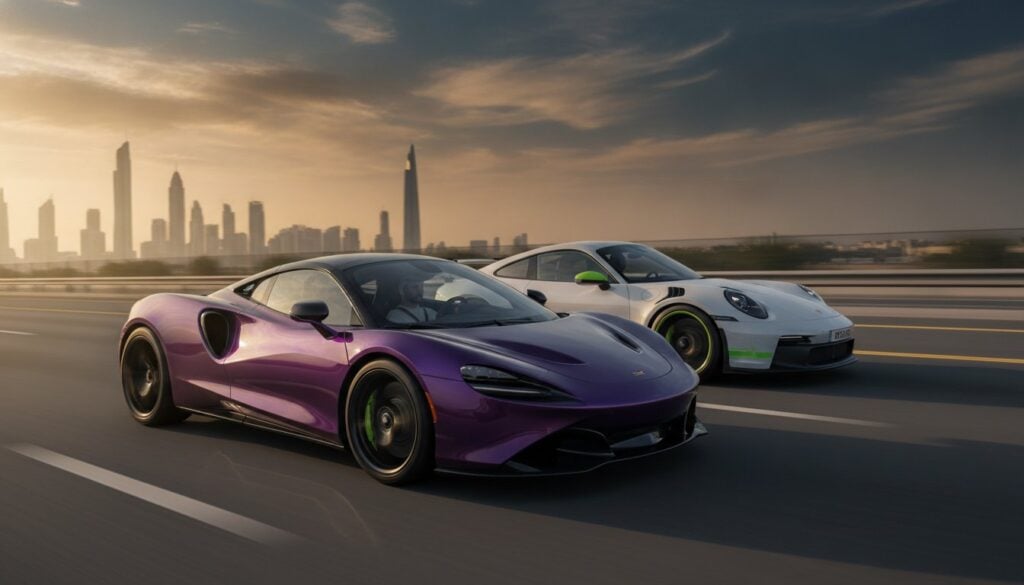
What if the six-figure machine in your driveway is actually “just” a sports car, despite what the marketing brochure claims? It’s a common frustration for enthusiasts and renters alike. As performance figures skyrocket in 2026, the line between these categories feels thinner than ever. Understanding what defines a supercar vs a sports car is no longer just about top speed; it’s about the transition from a driver-centric tool to a track-bred spectacle. You likely feel that the distinction is becoming a blur of jargon, but specific technical benchmarks still exist to separate the elite from the merely fast.
This guide promises to reveal the precise technical, aesthetic, and performance criteria used to categorize these machines. Whether you’re justifying a price jump or choosing between a McLaren Artura and a high-end Porsche, you’ll gain the confidence to identify the engineering “soul” of each vehicle. We’ll provide a clear checklist of 2026 performance standards, explore how hybrid technology is reshaping the hierarchy, and help you determine which tier fits your driving skill and your lifestyle.
Key Takeaways
- Distinguish between driver-focused engagement and the extreme, track-bred performance that marks a vehicle as a true supercar.
- Learn the specific 2026 technical benchmarks, including power-to-weight ratios and active aerodynamics, that clarify what defines a supercar vs a sports car.
- Understand how limited production numbers and high-drama design elements, like the McLaren Artura’s hybrid architecture, create the exclusivity required for elite status.
- Compare daily driveability factors, such as nose-lift systems and storage capacity, to determine which category fits your lifestyle and driving skill.
- Examine the Porsche 911 GT3 RS as the ultimate case study for a vehicle that successfully blurs the lines between a high-end sports car and a supercar.
The Philosophical Divide: Purpose-Built vs. Driver-Focused
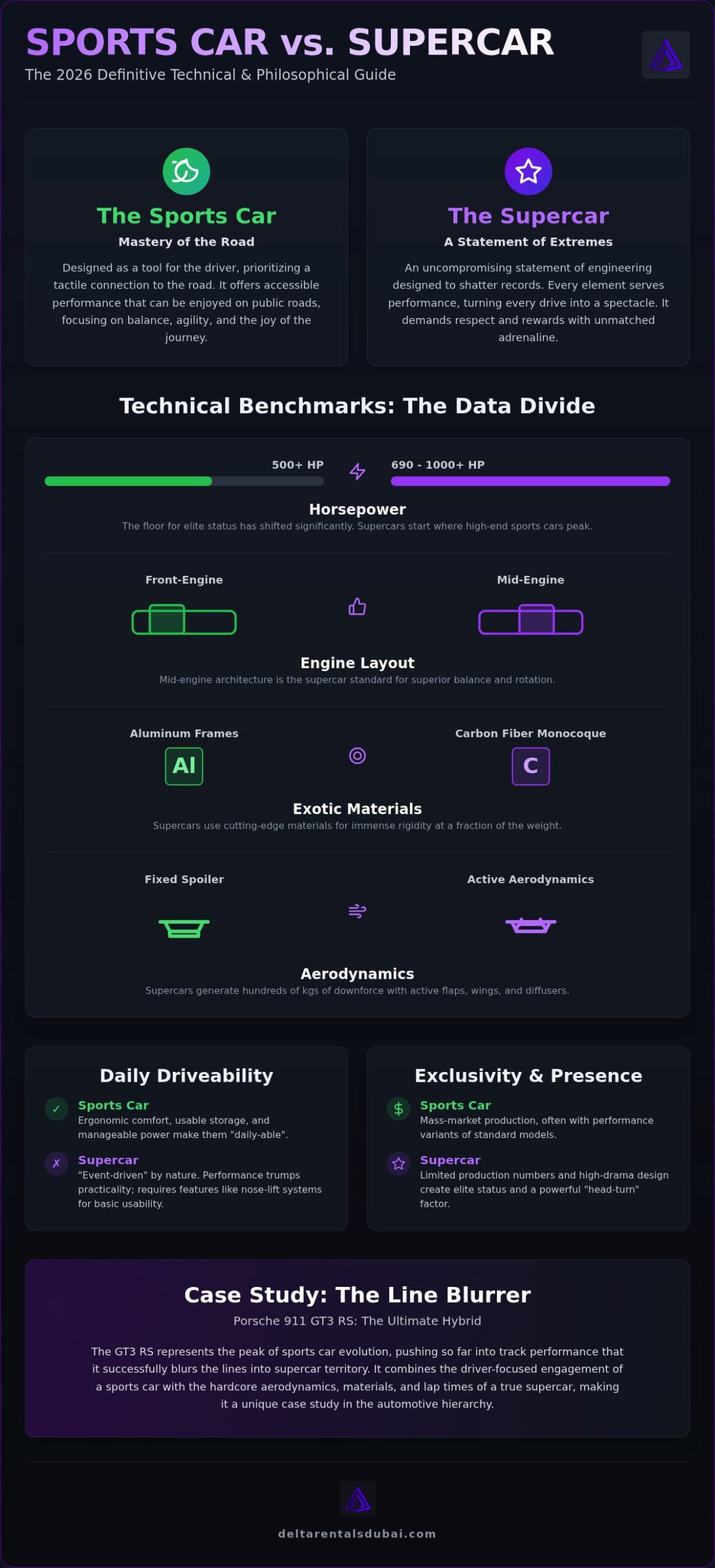
The line between high-performance machines is often blurred by marketing jargon and aggressive styling. To truly understand what defines a supercar vs a sports car, you must look beyond the badge and focus on the vehicle’s core intent. A sports car is a tool for the driver, designed to make every corner feel alive on a public road. A supercar, however, is a statement of uncompromising engineering. It exists to shatter records and command attention. The definition of a supercar has evolved significantly, moving from raw power to a holistic blend of art, technology, and track-bred speed.
This distinction creates a “Usability Scale.” Sports cars are “daily-able” because they offer a manageable level of power and ergonomic comfort. Supercars are “event-driven.” They turn every trip into a spectacle, requiring more from the driver and offering less in the way of traditional utility. Above both sits the hypercar, the absolute pinnacle of performance where price and practicality are discarded in favor of groundbreaking innovation.
The Sports Car: Mastery of the Road
Think of the Audi RS3. It’s balanced, agile, and remarkably tactile. Sports cars prioritize the connection between your hands and the asphalt. They allow you to use a high percentage of their power on public roads without needing a professional racing license. Key characteristics include:
- Tactile Feedback: Precision steering and suspension tuned for spirited road use.
- Weight Distribution: A focus on balance that makes the car feel like an extension of the driver.
- Accessible Performance: The ability to enjoy the car’s limits without constant fear of losing control.
You don’t just drive a sports car; you wear it. It is about the joy of the journey and the mastery of the road.
The Supercar: A Statement of Extremes
Step into a McLaren Artura, and the philosophy changes instantly. Every vent and curve serves aerodynamic efficiency. Supercars are designed to push the boundaries of street-legal performance, often prioritizing lap times over luggage space. This shift from driver-centric to performance-obsessed is central to what defines a supercar vs a sports car. These vehicles demand respect. They are automotive art that signals prestige and engineering dominance. At Delta Rentals, we provide access to these high-status assets with a transparent, no-deposit approach, making this elite experience straightforward and accessible. A supercar isn’t just transportation. It’s an uncompromising event that requires your full attention and rewards you with unmatched adrenaline.
Technical Benchmarks: Power, Weight, and Aero
Raw power used to be the easiest way to answer what defines a supercar vs a sports car. In 2026, the floor has shifted. While 500 horsepower once guaranteed elite status, many high-end modern sports cars now comfortably surpass that figure. True supercars now typically start at 690 horsepower, with hybrid-assisted models like the Ferrari F80 pushing well past 1,000. It’s not just about the peak number; it’s about how that power interacts with mass. A lightweight sports car can often feel more agile on a winding road, yet the supercar’s power-to-weight ratio ensures it dominates on long straights and track circuits.
Layout matters. A mid-engine configuration remains the quintessential supercar architecture, placing the heaviest component between the axles for superior rotation and balance. Most sports cars stick to a front-engine or front-mid-engine setup, prioritizing cabin space and predictable handling for daily use. Aerodynamics also create a clear divide. While a sports car might feature a fixed spoiler, a supercar utilizes active aero, moving flaps, and massive diffusers to generate hundreds of kilograms of downforce. This engineering “soul” is what you experience when you rent from an honest company that understands high-performance machinery.
The Role of Exotic Materials
Weight is the enemy of performance. Supercars utilize carbon fiber monocoques to provide immense rigidity at a fraction of the weight of the aluminum frames used in mass-market sports cars. Ceramic brakes are no longer a luxury option but a standard requirement here. They offer fade-free stopping power from 300+ km/h, a necessity for vehicles that push the boundaries of street-legal speed. These weight-saving measures are critical in justifying the classification jump from sports car to supercar.
Drivetrain and Transmission Evolution
Speed of execution is everything in the elite tier. Dual-clutch transmissions (DCT) are the standard for supercars, delivering millisecond shifts that a manual gearbox simply cannot match. We see this in the McLaren Artura, where hybrid assistance fills torque gaps to provide relentless, linear acceleration. While sports cars often retain manuals to satisfy purists, the supercar’s complexity demands the precision of paddle-shift technology. If you’re ready to feel these millisecond shifts for yourself, you can chat with our concierge to book your next drive.
Exclusivity and Presence: The ‘Head-Turn’ Factor
Rarity is a definitive metric in the automotive hierarchy. While high-end sports cars like the Audi RS3 are engineering marvels, they are produced in the thousands to meet global demand. Supercars occupy a different space. Manufacturers like Ferrari and Lamborghini intentionally restrict production numbers to maintain a sense of elite scarcity. This restricted supply is a fundamental part of what defines a supercar vs a sports car. When you drive a McLaren Artura, you aren’t just operating a vehicle; you’re showcasing a limited-run piece of technology that most people will only ever see on a poster.
Visual drama is the immediate giveaway. Scissor doors, low-slung profiles, and aggressive carbon fiber venting aren’t just for show. They are functional requirements for cars designed to cheat the wind at 300 km/h. Industry authorities at Xtreme Xperience note that defining the difference between a sports car and a supercar often centers on this “sense of occasion.” It is the difference between a car that blends into traffic and one that stops it. This leads to the “Valet Test.” A premium sports car might get parked in the standard lot, but a supercar stays at the front of the venue. It serves as a visual anchor for the establishment’s prestige.
The Psychology of Prestige
Rarity drives the desire for high-end rental experiences. Driving a limited-run vehicle isn’t just about the 0-100 time; it’s about the impact on your personal or professional branding. It signals an appreciation for the pinnacle of human engineering. In the elite automotive market, exclusivity acts as the primary engine of value by transforming a machine into a high-status asset. This is why our clients often prioritize the “head-turn” factor when selecting their next drive.
Design Language: Form Following Function
There is a clear shift from luxury aesthetics to raw performance art when moving up the tiers. A Range Rover Sport offers understated elegance and a commanding presence, yet it remains a vehicle of comfort. In contrast, the Porsche 911 GT3 RS uses an aggressive design language to broadcast its track-bred intent. Its massive rear wing and hood nostrils are functional cues that separate it from the standard 911 line. This transition to uncompromising, functional aggression is a key element in what defines a supercar vs a sports car. At Delta Rentals, we focus on vehicles that master this visual impact, ensuring you feel the prestige of the machine before you even press the start button.
Daily Driveability: Ergonomics vs. Performance
Usability is where the distinction becomes physical. While raw power defines the spec sheet, daily ergonomics often dictate what defines a supercar vs a sports car in the real world. Sports cars are engineered for the commute and the weekend getaway. They clear speed bumps without a second thought and offer visibility that doesn’t require a degree in geometry. Supercars, by contrast, often feel like tanks from the inside. Their mid-engine layouts create massive blind spots, and their low-slung chasses require hydraulic nose-lift systems just to navigate a standard driveway.
Storage space remains a definitive litmus test for these categories. You can comfortably fit groceries or a set of golf clubs in most high-end sports cars. In a McLaren, you’re lucky to fit more than a single weekend bag in the “frunk.” However, 2026 suspension technology is narrowing this gap. Advanced magnetic dampers now allow drivers to switch from a bone-jarring track setting to a compliant “tour” mode at the touch of a button. This makes the modern supercar surprisingly capable on long-distance drives, provided you pack light and plan your route around smooth pavement.
Interior Luxury and Technology
If you are looking to experience these performance benchmarks on a grander scale, visit Supercar Holidays to discover luxury vacation packages that combine high-performance driving with world-class travel itineraries.
Inside the cabin, the priorities shift significantly. Sports car interiors focus on intuitive infotainment and long-haul comfort. Supercars are stripped-back environments heavy on carbon fiber and racing telemetry. The 2026 market shows a clear trend toward “usable luxury.” We see this in the Rolls Royce Cullinan Black Badge, which represents the extreme of this evolution. It offers supercar-level presence and power while maintaining an interior that redefines automotive opulence, proving that elite performance doesn’t always require a cramped cockpit.
The Maintenance and Care Reality
Ownership brings the reality of specialized technicians and frequent, expensive service intervals. Supercars are highly strung machines that require meticulous care to stay at their peak. This is why many enthusiasts choose the rental model. You experience the absolute pinnacle of performance without the logistical burden of maintenance or depreciation. Rent from an honest company to ensure you’re getting a perfectly maintained vehicle every time you hit the road. We handle the technical complexities so you can focus entirely on the drive.
Ready to test the ergonomics of an elite machine for yourself? Message our concierge now to secure your next high-performance rental.
Case Study: The Porsche 911 GT3 RS – The Ultimate Hybrid
The Porsche 911 GT3 RS serves as the ultimate case study for what defines a supercar vs a sports car. While a standard 911 is the quintessential sports car, designed for balance and spirited road use, the GT3 RS transcends that classification. It is a track-bred masterclass in engineering. Its massive rear wing isn’t for aesthetics; it houses a functional Drag Reduction System (DRS) that provides immense downforce, allowing the car to stick to the asphalt with surgical precision. This machine doesn’t just participate in the drive; it dominates the environment through aerodynamic mastery.
Delta Rentals Dubai provides direct access to this engineering feat, moving it from the racetrack to your hands with our transparent, no-deposit policy. Choosing between the raw, mechanical aggression of the GT3 RS and the futuristic hybrid performance of the McLaren Artura depends on your mission. The Porsche offers a visceral, high-RPM experience that feels deeply connected to racing heritage. The McLaren represents the tech-heavy future of the supercar tier. Both sit firmly above the sports car category because they prioritize uncompromising performance over traditional daily utility.
When to Choose a Sports Car Rental
Opt for a sports car or a high-end utility vehicle when your journey involves long-distance national touring and daily convenience. These vehicles offer a lower barrier to entry for drivers who want prestige without the intimidating power of a track-focused machine. They provide the ergonomics needed for multi-day trips and city navigation. If you need a blend of status and significant storage, explore our Luxury SUV Rental Guide for a more practical take on high-end driving.
When Only a Supercar Will Do
Reserve a supercar for special events, high-impact photoshoots, or those moments when you demand the absolute pinnacle of 2026 automotive technology. These vehicles are designed to be an event in themselves. They signal a mastery of engineering and a commitment to excellence that a standard sports car cannot match. To experience the peak of this hierarchy, secure our Porsche 911 GT3 RS Rental. It is the definitive answer to what defines a supercar vs a sports car, offering a level of performance that must be felt to be understood.
- Prestige: Unmatched presence at any venue.
- Performance: Access to technology like DRS and active aero.
- Exclusivity: Driving a limited-run machine that stops traffic.
Take Command of the 2026 Performance Hierarchy
Choosing the right vehicle is about more than just numbers on a spec sheet. It’s about deciding whether you want a driver-focused tool for the road or a track-bred spectacle that stops traffic. Understanding what defines a supercar vs a sports car ensures you select a machine that perfectly aligns with your skill level and the statement you want to make. From the aerodynamic mastery of the Porsche 911 GT3 RS to the hybrid innovation of the McLaren Artura, the 2026 landscape offers an elite tier of performance for those who demand the best.
At Delta Rentals, we’ve built our reputation on transparency and prestige. With over 300 5-star Google reviews and a unique no-deposit supercar rental policy, we make high-status driving straightforward. We offer national delivery across the UAE, ensuring your chosen masterpiece arrives exactly when and where you need it. Don’t settle for marketing jargon when you can experience the engineering soul of these vehicles yourself. Explore the Delta Rentals Dubai Elite Fleet today and elevate your next journey. Your ultimate driving experience is just a message away.
Frequently Asked Questions
Is a Porsche 911 considered a supercar or a sports car?
Most Porsche 911 models are quintessential sports cars because they balance daily usability with spirited performance. However, track-bred versions like the Porsche 911 GT3 RS transcend this label. The RS model’s extreme aerodynamics and uncompromising focus on lap times place it firmly in the supercar category. It’s a matter of intent, where the standard 911 serves the driver and the GT3 RS serves the circuit.
What is the minimum horsepower for a car to be a supercar in 2026?
There is no official regulatory floor, but in 2026, the threshold for supercar status typically begins around 690 horsepower. While modern sports cars often reach 500 horsepower, supercars utilize hybrid assistance and advanced engineering to push much further. Models like the McLaren Artura showcase how this power is delivered with millisecond precision, ensuring the vehicle remains a statement of engineering dominance rather than just a fast road car.
Can you rent a supercar in the UAE without a credit card deposit?
Yes, you can experience elite performance without the traditional financial friction of a credit card hold. Delta Rentals Dubai offers no-deposit supercar rental options across the UAE, providing a transparent and trustworthy experience for our clients. This policy removes barriers to entry for high-value assets like the Ferrari SF90 or Lamborghini Revuelto. It’s one reason why we maintain over 300 5-star Google reviews for our honest service.
What is the main difference between a supercar and a hypercar?
A hypercar represents the absolute pinnacle of automotive achievement, sitting above the supercar tier. While a supercar focuses on extreme street-legal performance and limited production, a hypercar like the Bugatti Chiron pushes into the realm of multi-million dollar price tags and groundbreaking innovation. Hypercars are often produced in even smaller numbers, serving as rolling laboratories for the next generation of performance technology that eventually trickles down to supercars.
Are supercars harder to drive than standard sports cars?
Supercars generally demand more respect and a higher skill level from the operator. Their mid-engine layouts often result in significant blind spots and a “tank-like” interior feel. Additionally, the sheer power delivery and low ground clearance require constant attention to road conditions and throttle input. Modern sports cars are designed to be approachable and forgiving, whereas a supercar is an uncompromising event that rewards experienced drivers with unmatched adrenaline.
Which is better for a long-distance road trip across the UAE?
A high-end sports car or a luxury SUV is typically the superior choice for national touring. Vehicles like the Audi RS3 or Range Rover Sport V8 offer the storage space and ergonomic comfort required for long journeys across the UAE. While supercars are thrilling for short bursts or special events, their limited luggage capacity and firm suspension can become fatiguing over several hundred kilometers. A sports car balances excitement with essential daily convenience.
Does engine placement determine if a car is a supercar?
Engine placement is a strong indicator of what defines a supercar vs a sports car, but it isn’t the sole factor. The mid-engine layout is the traditional supercar standard because it optimizes weight distribution and rotation. Most sports cars utilize a front-engine setup to preserve cabin space and provide predictable handling. However, vehicles like the Ferrari Purosangue challenge these traditional boundaries by blending supercar performance with non-traditional layouts and utility.
Why are supercars more expensive to rent than sports cars?
Higher rental costs reflect the extreme value and maintenance requirements of these elite machines. Supercars utilize exotic materials like carbon fiber and ceramic brakes, which require specialized technicians and frequent service intervals to maintain peak performance. Their limited production numbers and high purchase prices also contribute to their status as high-value assets. Renting allows you to enjoy this pinnacle of engineering without the logistical burdens and depreciation associated with ownership.