
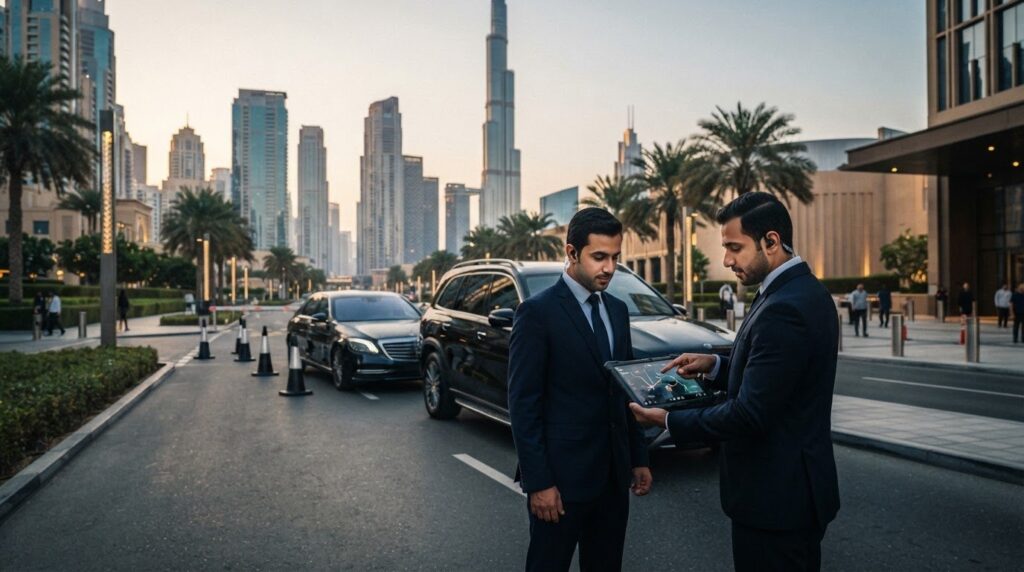
What makes a VIP arrival feel effortless to the guest? Careful planning behind the scenes. VIP security chauffeur route advance scouting protocols for high level events help align transport with the authorized security plan, venue operations, and the guest’s needs without exposing sensitive details.
Event schedules, access arrangements, and passenger requirements can change. The practical challenge is to make responsibilities clear and keep transport, venue, event, and security teams working from the same approved information. This guide explains what to plan, how to coordinate each handoff, and how to prepare for changes with the appointed security lead.
Route reviews, venue coordination, arrival and departure planning, and discreet communication all contribute to a more considered guest journey. A chauffeur provides premium transport and guest care. The chauffeur supports the security plan, but does not replace qualified protection personnel. Delta Rentals Dubai’s VIP Chauffeuring and close security chauffeuring can provide the transport layer within a wider event plan, coordinated with the authorized security lead. Use the guidance below to assess transport needs, clarify responsibilities, and prepare for changes without creating confusion.
Key Takeaways
- Use advance scouting to align transport with venue operations and reduce uncertainty, not to publish a guest itinerary.
- Follow a clear planning sequence: define passenger needs, coordinate stakeholders, review venue logistics, brief teams, and reassess changes.
- Compare chauffeur-only, coordinated, and multi-vehicle arrangements against event complexity, passenger requirements, and the security lead’s direction.
- Apply VIP security chauffeur route advance scouting protocols for high level events with a privacy-safe checklist, sharing sensitive movement information only with authorized participants.
- Keep the client-appointed security lead responsible for protection decisions while VIP or close security chauffeuring supports the event’s transport plan.
What VIP Security Chauffeur Route Advance Scouting Means for High-Level Events
Advance scouting is the pre-event assessment and coordination of approved transport arrangements. It helps teams understand how transport fits the schedule and venue operations. It is not a public itinerary, a list of live movements, or tactical instruction. The purpose of VIP security chauffeur route advance scouting protocols for high level events is to reduce uncertainty before guests travel while keeping sensitive information within the authorized planning group.
This work is one part of a broader protection plan. Executive protection can involve multiple responsibilities, and chauffeur transport is a supporting layer. A chauffeur provides premium transport and guest care. Protection decisions remain with the qualified professionals appointed to the event.
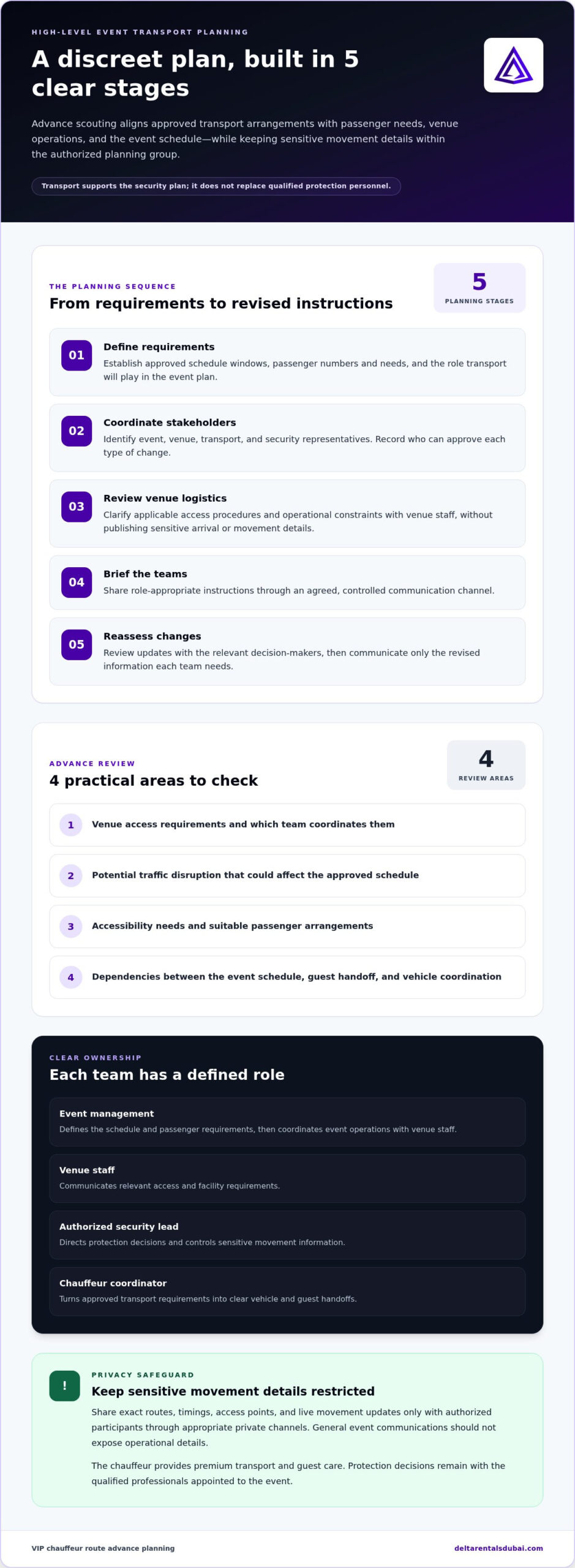
Clear ownership helps prevent gaps. Event management defines the schedule and passenger requirements, then coordinates event operations with venue staff. Venue staff communicate relevant access and facility requirements. The authorized security lead directs protection decisions and controls sensitive movement information. A chauffeur coordinator turns approved transport requirements into clear vehicle and guest handoffs. Each team has a defined role, so instructions do not conflict.
What does route advance scouting cover at a high level?
At a planning level, stakeholders review approved arrival and departure arrangements together. They consider how transport aligns with the event program, venue procedures, passenger needs, and known changes that could affect timing. Useful checks include:
- Venue access requirements and which team coordinates them.
- Potential traffic disruption that could affect the approved schedule.
- Accessibility needs and suitable arrangements for passengers.
- Dependencies between the event schedule, guest handoff, and vehicle coordination.
Keep the review useful without making it public. Share exact routes, timings, access points, and live movement updates only with authorized participants through appropriate private channels. General event communications should not expose operational details.
Why does chauffeur coordination matter at executive events?
Even a carefully prepared plan can become confusing if each team assumes another person is managing the handoff. The guest needs to know who will guide them to the vehicle. The chauffeur needs approved transport instructions. Event staff need a clear way to coordinate pickup status, while the security lead retains authority over protection-related changes. Naming the decision-maker in advance helps prevent conflicting instructions when the schedule shifts.
Communication should be concise, privacy-conscious, and limited to what each participant needs for their role. For example, a chauffeur coordinator can manage passenger and vehicle coordination without circulating sensitive route information to the wider event team. If conditions change, the designated security lead directs any relevant adjustment. Event and transport teams then receive the instructions they need to carry it out.
Coordinated VIP event transport connects the guest, chauffeur, venue, and event team through clear handoffs under the direction of the authorized security lead. That division of responsibility supports a composed guest experience without asking the chauffeur to act as a protection professional.
How a Discreet VIP Chauffeur Advance Plan Comes Together
A dependable advance plan turns event requirements into clear, approved handoffs. Keep the process orderly and discreet: the event coordinator gathers practical needs, venue contacts clarify operating arrangements, the chauffeur coordinator aligns transport, and the authorized security lead retains control of route and protection decisions. These VIP security chauffeur route advance scouting protocols for high level events help teams prepare without circulating a detailed itinerary.
Work through the planning sequence before the event, then revisit it whenever the schedule or venue arrangements change:
- Define requirements. Establish approved schedule windows, passenger numbers and needs, and the role transport will play in the event plan.
- Coordinate stakeholders. Identify the representatives for event management, venue operations, transport, and security. Record who can approve each type of change.
- Review venue logistics. Clarify applicable access procedures and operational constraints with venue staff without publishing sensitive arrival or movement details.
- Brief the teams. Share role-appropriate instructions through an agreed, controlled communication channel.
- Reassess changes. Review updates with the relevant decision-makers and communicate only the revised information each team needs.
Which information should the event coordinator prepare?
Build a concise planning record, not a dossier. Include approved event timings or schedule windows, guest mobility and accessibility needs, vehicle access requirements, and key contacts for event, venue, transport, and security coordination. Record who makes operational decisions and who approves protection-related changes. Use a secure method for sharing updates, and limit access to people who need the information for their roles.
Collect only what helps deliver the transport arrangement. Avoid unnecessary personal details, complete movement histories, or broad distribution of guest information. Venue rules, legal requirements, and event conditions can vary, so confirm relevant requirements with the appropriate venue or authority rather than treating one arrangement as universal.
How should teams handle changes before and during an event?
Agree on an escalation contact and a simple update process in advance. If the schedule or access arrangements change, the coordinator should send the update to the responsible people rather than distributing it widely. Ask recipients to acknowledge important updates through the designated channel, so the guest, chauffeur, and event team do not act on different versions of the plan.
Prepare for change by deciding who will review an issue, who will communicate approved updates, and how teams will keep information private. Do not publish specific alternate routes, response triggers, or live movement details. The authorized security lead approves security-related adjustments. The chauffeur follows approved transport instructions and does not make protection decisions.
For event planners arranging premium guest transport, VIP Chauffeuring and close security chauffeuring can serve as the mobility layer within a wider, client-led event plan.
Chauffeur-Only, Coordinated, or Multi-Vehicle Transport: How to Compare Options
The right transport setup depends on the event, not on how many vehicles can be arranged. Consider passenger needs, schedule complexity, venue access, and the authorized security lead’s direction. One guest attending a scheduled function may need a different arrangement from a group with separate arrival windows or accessibility requirements. The aim of VIP security chauffeur route advance scouting protocols for high level events is to match transport to the approved plan, not to add complexity for its own sake.
Use this comparison as a starting point. It describes transport coordination, not levels of protection. Additional vehicles are not automatically safer, and no arrangement can guarantee protection or prevent delays.
| Arrangement | Best-fit scenario | Coordination needs | Key considerations |
|---|---|---|---|
| Chauffeur-only | Straightforward passenger transport within an event plan directed by the security team. | Confirm the passenger handoff, approved schedule window, and venue access arrangements. | Comfort and service should suit the guest’s needs. This transport arrangement does not itself provide executive protection. |
| Coordinated transport | A VIP journey where the chauffeur plan needs to align closely with event and security teams. | Set clear contacts, approved instructions, and a private channel for relevant updates. | Share only role-relevant information, and leave security decisions with the authorized lead. |
| Multi-vehicle transport | More complex passenger schedules or distinct vehicle requirements, when approved by the security lead. | Coordinate passenger assignments, communication, venue procedures, and schedule dependencies across vehicles. | More vehicles can create additional logistical and privacy demands. Use them only when the plan calls for them. |
When can a chauffeur-only arrangement be appropriate?
A chauffeur-only arrangement may suit a defined transport need when the event security team directs the wider plan and no additional transport coordination is required. Assess whether the vehicle arrangement supports passenger comfort, accessibility, and coordination with the event schedule. Make the guest-to-vehicle handoff clear, including who at the event is responsible for guiding the passenger. A chauffeur provides transport and guest care, not executive protection.
When might coordinated or multi-vehicle transport be considered?
Coordination can be useful when guest schedules, passenger needs, or venue requirements call for closer alignment between transport and event teams. Multiple vehicles may suit distinct transport needs, but the authorized security lead determines whether separate roles are appropriate. More moving parts require tighter communication, clear passenger assignments, and careful control of shared information. Keep planning at the operational level. Do not publish vehicle formations, routes, or live movements.
Before selecting an arrangement, weigh the expected passenger experience against the coordination it requires. A simpler setup can be easier to manage when it meets the approved requirements. A more involved setup should have a clear purpose, named coordination contacts, and defined decision authority. Choose the option that fits the event plan, then keep chauffeur operations aligned with the security lead’s direction.
A Practical, Privacy-Safe Checklist for Event Chauffeur Route Planning
A useful checklist keeps responsibilities visible without turning the event plan into a public itinerary. Use these VIP security chauffeur route advance scouting protocols for high level events to give each team the information it needs, protect guest privacy, and keep changes moving through an agreed process.
- Stakeholder roles: Record the event coordinator, venue contact, chauffeur coordinator, and authorized security lead. State who handles passenger coordination and who approves security-related decisions.
- Passenger needs: Note relevant accessibility or mobility requirements and any guest assistance expectations. Keep personal details to the minimum needed to arrange transport.
- Venue coordination: Document approved vehicle access requirements and the venue contact responsible for coordinating them. Restrict sensitive access and movement information.
- Communication: Name the update contact, select a controlled channel, and establish how changes are shared and acknowledged.
- Post-event review: Capture useful operational lessons, such as unclear handoffs or schedule dependencies, without retaining or circulating unnecessary guest information.
Good preparation gives authorized teams what they need. It does not publish routes, access details, or live movements.
What should a chauffeur briefing include?
Keep the chauffeur briefing practical and appropriate to the role. Cover service expectations, relevant guest assistance needs, approved timing information, and the designated event contact. Explain which channel carries schedule updates and how recipients should acknowledge them, so the event team and chauffeur work from the same approved information. Security-sensitive instructions belong only in the authorized briefing channel under the security lead’s direction.
How can planners protect guest privacy?
Limit passenger information to what is operationally necessary and authorized. Avoid public calendars, open group messages, or forwarding guest details to people who do not need them. Share sensitive movement information only with authorized participants, and keep general event communications free of operational specifics. For guest journeys where comfort and discreet coordination matter, a luxury chauffeur service can support the transport layer of the wider event plan.
Before the event, make sure the contact list is current, decision ownership is clear, accessibility needs have been communicated appropriately, and the update process is understood. Afterward, review whether handoffs and communications worked as intended. Focus the review on improving coordination, not recording unnecessary personal movement details.
For premium event transport aligned with your planning requirements, VIP chauffeuring arrangements are part of Delta Rentals Dubai’s service offering.
Coordinating VIP Chauffeur Transport with Delta Rentals Dubai
VIP chauffeur transport works best as the mobility layer of a client-led event plan. Delta Rentals Dubai provides VIP Chauffeuring and close security chauffeuring for premium guest transport, coordinated with the client-appointed security lead. The chauffeur supports approved arrangements. The security lead retains authority over protection decisions and sensitive route information.
That distinction keeps responsibilities clear. Transport coordination can cover passenger comfort, vehicle logistics, approved schedule windows, and event contacts. Protection planning remains with the security professionals appointed by the client. These VIP security chauffeur route advance scouting protocols for high level events connect the two functions without blurring who makes security decisions.
For planners arranging executive and guest journeys, a luxury chauffeur service can form part of the event’s wider transport requirements. Share practical needs with the transport coordinator, then align vehicle and chauffeur logistics with the security lead’s approved arrangements. Keep sensitive routes, live movements, and confidential security instructions within authorized channels.
What to align before arranging VIP event transport
Prepare the information that helps shape the transport plan without oversharing. Start with the event schedule or approved timing windows, passenger requirements, relevant accessibility needs, vehicle access requirements, and the authorized coordination contact. Record who can approve operational changes and who is responsible for security-related decisions.
- Passenger requirements: Share assistance or accessibility needs that affect the journey.
- Schedule and venue needs: Provide approved timing information and relevant vehicle access requirements.
- Coordination contact: Identify the event contact and the client-appointed security lead.
- Information boundaries: Keep sensitive route plans and security details in the appropriate authorized channel.
This gives the transport team a useful planning framework while leaving protection decisions with the appointed lead. It also helps prevent contradictory instructions if event arrangements evolve. Provide the event scope and transport needs, but keep confidential route plans out of public or broadly shared channels.
To discuss a transport plan, share your event scope and VIP transport requirements with Delta Rentals Dubai. Keep the initial conversation focused on service needs and the coordination contact, not sensitive security information.
Make the next step simple and discreet
A clear point of contact makes coordination easier for the event team, transport coordinator, and security lead. Agree on how approved schedule changes will be relayed, and keep communication concise and limited to the people who need it. The result is a considered guest journey, discreet chauffeur support, and a transport plan aligned with the client-led event arrangements.
Set a Clear Standard for Your Next VIP Event
Use the next planning cycle to create a concise mobility brief that teams can adapt for future events. Record which handoffs worked, where responsibilities needed clarification, and how schedule updates reached the right people. Keep the lessons useful without retaining unnecessary passenger details or sensitive movement information.
Strong VIP security chauffeur route advance scouting protocols for high level events depend on more than a well-planned journey. They support a calm, considered experience by giving every participant a clear role and a trusted point of coordination. Keep the event plan in the hands of its appointed decision-makers, and let chauffeur transport support the guest experience with discretion.
Delta Rentals Dubai provides VIP Chauffeuring and close security chauffeuring around your event scope and passenger requirements. Contact Delta Rentals Dubai to coordinate VIP chauffeur transport for your event, and keep confidential security details within the authorized planning channel.
Frequently Asked Questions
What is advance route scouting for VIP events?
Advance route scouting is a pre-event review of how approved transport arrangements fit the event and venue. The VIP security chauffeur route advance scouting protocols for high level events should help planners identify dependencies, such as an arrival window that relies on a venue handoff or accessibility arrangement. It is a planning conversation, not a public itinerary. Keep exact routes, access details, and live movements restricted to authorized participants.
Does a chauffeur provide executive protection?
No. A chauffeur’s role is to provide transport and guest care, not to replace qualified executive protection personnel. If a passenger’s event plan includes protection arrangements, the appointed security professionals direct those decisions while the chauffeur follows approved transport instructions. Make that distinction clear in written briefs and team introductions. Delta Rentals Dubai provides VIP Chauffeuring and close security chauffeuring as transport services within a wider, client-led event plan.
What information should an event planner share with the chauffeur?
Share the information needed to deliver the approved journey: the relevant schedule window, passenger count, practical assistance or accessibility needs, vehicle requirements, and a designated event contact. For example, if a guest needs help entering or exiting a vehicle, communicate that requirement without circulating unrelated personal details. Keep confidential security instructions and sensitive movement information within the authorized channel, and make clear who can approve changes to the transport plan.
How should teams handle a last-minute venue or schedule change?
Use the agreed escalation contact and update channel, then make sure affected participants acknowledge the revised instruction. If a venue changes its vehicle access arrangements, the event coordinator can relay the operational update to the transport contact, while the authorized security lead assesses any protection implications. Avoid informal messages that create competing instructions. Keep revised routes or sensitive movement information private, and share only what each recipient needs to act.
Is a multi-vehicle arrangement always safer for a VIP event?
No. More vehicles do not automatically mean more safety. The appropriate setup depends on passenger needs, event complexity, venue requirements, and the authorized security lead’s plan. One vehicle may meet a straightforward transport need; separate vehicles may suit distinct passenger schedules or requirements. Each additional vehicle also adds coordination and communication demands. Treat the choice as a planning decision, not a guarantee of protection or punctuality.
How far in advance should chauffeur route planning begin?
Begin once the event schedule, venue arrangements, and passenger requirements are defined well enough to support planning. There is no universal lead time: a straightforward event may need fewer planning rounds than one with changing schedules, multiple guests, or complex venue coordination. Start early enough to clarify roles and review updates, then revisit the plan as details change. Avoid sharing sensitive routes or movement timings in general event communications.