

Could a tire replacement charge after a burnout depend on more than the tire’s condition at return? Understanding tire replacement surcharge clauses for excessive burnout wear starts with two things: the rental agreement and a clear record of the vehicle’s condition before and after your drive. A performance car’s tires can wear through ordinary use, but severe, localized tread damage may raise different questions under the agreement.
It’s sensible to understand the terms before taking the wheel, especially when an unexpected charge could affect your rental experience. Before driving a Porsche 911 GT3 RS or another performance car, read the tire and wheel provisions carefully, including any language about misuse, excessive wear, and replacement costs. This guide explains how to compare gradual wear with signs that may prompt closer scrutiny, what inspection records and photos can help establish, and how to respond if a surcharge appears after the rental. A careful review before departure can help you understand your responsibilities and enjoy the drive with greater confidence.
Key Takeaways
- Understanding tire replacement surcharge clauses for excessive burnout wear starts with reading how the agreement defines damage, excessive wear, misuse, and renter responsibility.
- Read the clause alongside its exclusions and inspection terms to understand what may affect a tire replacement charge.
- Look at the full pattern and condition of a tire, but treat any visual sign as evidence to assess, not proof of when or how damage occurred.
- If you receive a surcharge, request its basis and itemized tire-condition records, then compare them with your own documentation.
- Before a performance-car rental, record the vehicle’s condition and drive within the agreement to make a more informed decision.
What does an excessive burnout wear clause mean in a rental agreement?
A tire replacement surcharge clause is contract language that may make a renter responsible for specified tire damage or wear beyond the agreement’s stated limits. The clause does not mean every tire that shows wear during a rental automatically triggers a charge. The wording, any exclusions, the tire’s starting condition, and the available evidence all matter when assessing a particular situation.
Gradual wear from using a vehicle and sudden, avoidable damage are not automatically the same. Tires change through driving, while an event such as deliberate wheelspin may cause rapid wear or damage. But a visible change alone doesn’t establish when it happened or what caused it. The signed agreement and documented condition before and after the rental help frame the assessment, though neither guarantees a particular outcome.
What counts as a burnout in this context?
A burnout generally involves deliberate wheelspin while the vehicle is stationary or moving slowly. The spinning tire creates concentrated heat and friction where the rubber meets the road. That differs from routine acceleration, braking, or normal road use, which can contribute to gradual tire wear without deliberate wheelspin. A burnout doesn’t automatically mean a tire needs replacement. The result depends on the event, the tire’s prior condition, and the damage observed.
How is excessive wear different from ordinary wear?
Ordinary wear is a gradual change associated with vehicle use. Excessive wear is a concern defined or described by the agreement, so it should be considered in context rather than inferred from a single mark or impression. Tire condition can also be affected by factors such as inflation and alignment. General tire maintenance and wear information can help explain why appearance alone may not reveal the cause.
For example, a return inspection may show a visibly worn area, while the pickup record also notes pre-existing wear. The observation matters, but it doesn’t settle whether the condition worsened during the rental or resulted from a burnout. The assessment may need to consider the tire’s condition at pickup, the location and extent of the wear, any reported driving incident, and inspection records from both ends of the rental.
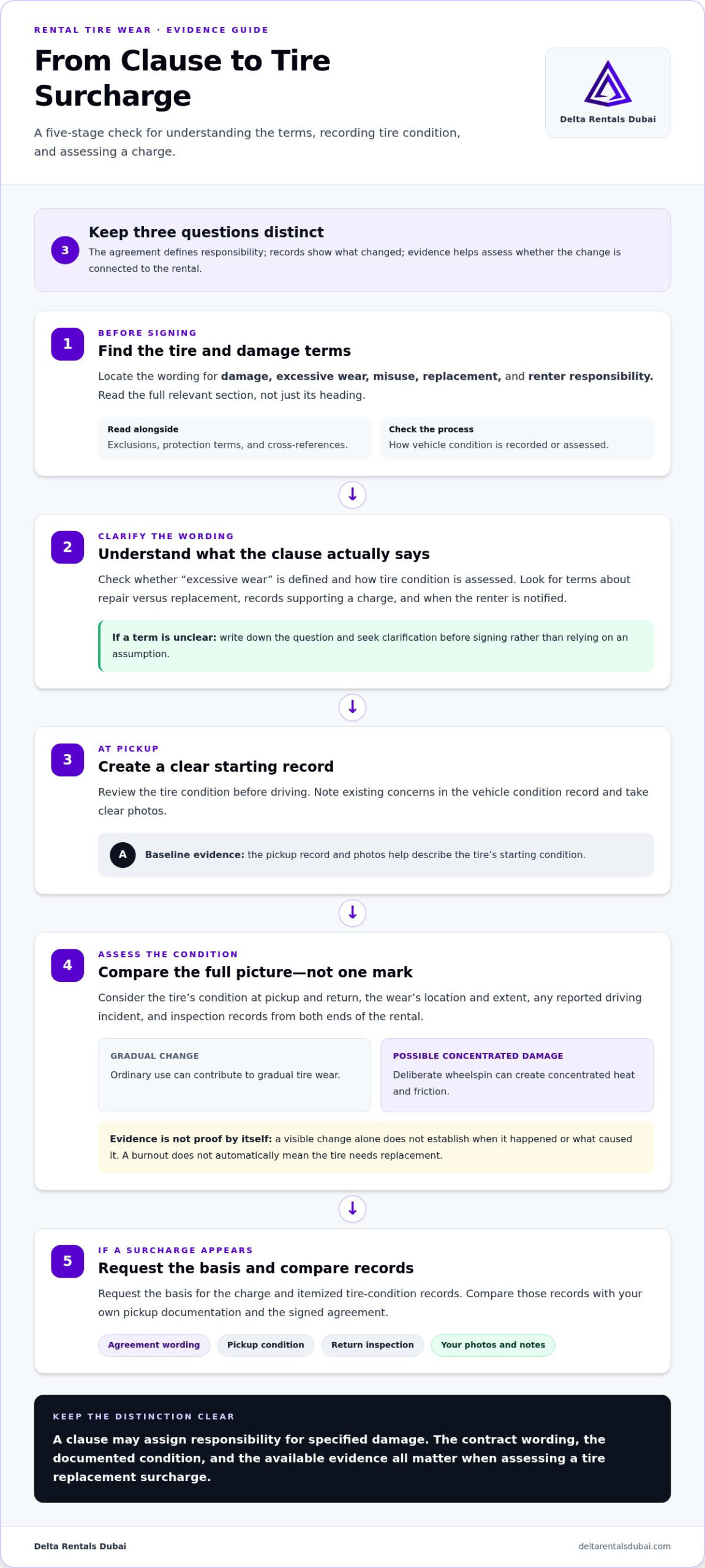
For a performance-car renter, understanding tire replacement surcharge clauses for excessive burnout wear means separating three questions: what the agreement says, what changed, and what evidence connects that change to the rental. Read the clause alongside related terms on damage, misuse, replacement, and inspection. Before driving, note existing tire concerns in the condition record and take clear photos. If a charge is later raised, those records can help you compare the documented starting condition with the return assessment.
Keep the distinction clear: a clause may assign responsibility for specified damage, but the word “excessive” needs to be understood through the contract’s language and the available facts. Careful review supports a more confident rental decision without treating suspicion as proof or assuming every tire change reflects renter-caused damage.
How to read a tire replacement surcharge clause before driving
Read the tire terms before signing, not after a return inspection raises questions. Find the agreement’s definitions of damage, excessive wear, misuse, replacement, and renter responsibility. Then read the surrounding paragraphs, including exclusions and any terms describing how vehicle condition is recorded or assessed. A bold heading can point you to the right section, but it rarely tells the whole story.
The exact wording you sign matters more than a generic rule about rental tires. Two agreements may use similar labels but assign different responsibilities or describe different assessment steps. Don’t assume a familiar phrase means the same thing in every rental contract, or that a general industry practice forms part of your agreement.
Which words and conditions deserve close attention?
Check whether the agreement defines “excessive wear” or explains how tire condition will be assessed. Look for terms covering tire damage, repair versus replacement decisions, the records used to support a charge, and how or when the renter is notified. Note any exclusions, protection terms, and cross-references to separate vehicle-condition forms. If a key term is unclear, write down the question and seek clarification before signing rather than relying on an assumption.
Next, connect the wording to the condition record. If the agreement refers to a handover inspection, condition report, or photographs, understand how that record relates to the clause. A method for assessing damage is not automatically a rule that imposes a charge in every case. For example, a term might describe how tire wear is reviewed without stating that any visible wear requires full replacement. Don’t infer an outcome unless the signed terms support it.
What should a renter understand about responsibility?
Responsibility for documented damage is different from ordinary vehicle use, but the agreement determines how that distinction is framed. Read the full relevant section, including definitions, exclusions, and any language explaining the renter’s obligations. A heading such as “Tire Damage” is only a signpost. The detailed wording and the vehicle’s recorded condition provide the useful context.
Keep contract terms separate from tire-safety guidance. For practical background on treadwear indicators and tire condition, consult the NHTSA tire safety guidelines. That information can help you understand visible tire features, but it doesn’t replace the rental agreement or decide who is responsible under it. Responsibility may also depend on applicable law, so don’t treat a general explanation as a legal conclusion about a particular rental.
Before you drive, save a copy of the completed agreement and any condition records you receive. If the contract refers to an attachment, read that too. For anyone considering a performance-car experience, including a Porsche 911 GT3 RS rental, a careful review helps set expectations before the drive begins. You can discuss a performance-car rental as part of planning your experience.
In short, understanding tire replacement surcharge clauses for excessive burnout wear means reading the complete signed terms, not relying on the clause title or a general rule. Compare the wording with the inspection records and clarify ambiguous terms before setting off. That gives you a firmer basis for understanding your responsibilities.
Normal tire wear versus burnout damage: what evidence helps distinguish them?
Tire condition is easier to assess through a comparison than from a single snapshot. Gradual wear may be consistent with routine use, while localized marks or unusual patterns may warrant closer inspection. Neither appearance alone nor a driver’s account necessarily establishes when the condition changed or what caused it. Record observations separately from conclusions, then compare the evidence with the agreement and handover records.
| What you observe | What it may indicate | What it cannot establish alone |
|---|---|---|
| Gradual, broadly even tread reduction | Wear accumulated over vehicle use | Whether wear occurred before or during a specific rental |
| A cut, puncture, bulge, or other visible damage | A condition that may need inspection or repair | When it happened or who caused it |
| Localized smoothing, heat-related marks, or an unusual wear pattern | A reason to document the tire and seek qualified interpretation | That a burnout occurred or that replacement is necessary |
Before-and-after records make tire-condition comparisons clearer, but they don’t prove cause on their own. An image can show a visible feature at a particular point in time. By itself, it cannot reliably establish the tire’s earlier condition, the event that produced a mark, or whether the tire requires replacement.
What can a handover inspection record show?
At pickup and return, record the condition of every tire and note visible concerns through the handover process described in the agreement. Take clear, dated photos from consistent angles, including the tread area and sidewalls. Photograph marks close up, then take a wider view that identifies which tire you photographed. Keep the images with the condition report; treat them as useful records, not conclusive proof.
Consistency helps. Use similar angles and lighting where practical, and don’t rely on a close-up with no context. If you spot an existing mark, have it documented through the rental’s stated handover process before setting off. A written note paired with photographs can make later comparisons more informative than either record alone.
What tire indicators can and cannot tell you
Treadwear indicators help show how much tread remains relative to the indicator, but they don’t identify who caused the wear or when it developed. Heat-related marks and uneven patterns are observations, not diagnoses. If the cause or significance matters, an appropriately qualified professional should inspect the tire rather than relying on a renter’s visual assessment.
For understanding tire replacement surcharge clauses for excessive burnout wear, use a simple evidence framework: describe what is visible, compare pickup and return records, and avoid treating suspicion as fact. A darkened patch, for example, may deserve attention, but it doesn’t prove a burnout by itself. A stronger assessment considers the full condition record, relevant agreement terms, and qualified interpretation where needed.
Handling rental tire replacement surcharges
A tire replacement surcharge can feel unexpected, but a calm, document-led review gives you a practical way to understand it. Start with the signed agreement, then compare the stated reason for the charge with the vehicle’s recorded condition. Keep your questions specific and factual. The aim is to understand how the charge was assessed, not to assume either party is right before reviewing the evidence.
How to review the charge and supporting records
Work through the issue in sequence. Match the explanation you received to the exact agreement wording, then compare the return condition with the pickup record. Request itemized documentation identifying the tire involved, the condition observed, and the basis for the amount charged. Ask for relevant dated inspection photographs, handover records, and any repair or replacement documentation used in the assessment.
- Locate the relevant term. Note the clause and any related definitions or exclusions that appear to apply.
- Request the assessment basis. Identify which tire is involved, what condition was found, and how that condition relates to the agreement.
- Compare the records. Review pickup and return reports alongside your dated photos and notes. Check that they refer to the same tire and describe comparable areas.
- Keep the exchange together. Save messages, emails, attachments, and receipts in one place, with dates and times where available.
Photos can support a factual comparison, especially when they show the same tire from similar angles at pickup and return. Handover notes matter too: a written record of an existing mark may add context that a close-up image cannot provide. Still, a photo or timestamp doesn’t establish the cause of damage by itself. Treat each item as one part of the record, not a complete verdict.
How to raise a concern professionally
Keep your message concise. Identify the specific point you dispute, cite the clause or record you’re referring to, and state what supporting information you’d like reviewed. Don’t admit an unverified cause, such as assuming a visible mark came from your driving, or make accusations the documents don’t support. A clear, neutral request is easier to assess than a broad complaint.
For example, you might write: “I’m reviewing the tire replacement charge for the vehicle return. Please share the itemized basis for the charge, the relevant tire-condition evidence, and the inspection records used in the assessment. My pickup notes and dated photographs show the condition recorded at handover.” Adapt this to your actual records; don’t claim to have evidence you don’t hold.
If the explanation doesn’t resolve your concern, keep the response and supporting documents, and consider independent legal advice for a contract-specific dispute. Understanding tire replacement surcharge clauses for excessive burnout wear means comparing the signed wording with evidence, not relying on assumptions about what a tire mark proves. For a considered performance-car rental experience, explore a performance-car rental and make agreement review part of your preparation.
How to approach a performance-car rental with confidence
A rewarding performance-car rental starts before the engine does. Use a simple framework: understand the tire clause, record the vehicle’s condition, and separate what you can observe from what you’re assuming. Preparation won’t predict the outcome of a future assessment, but it can help you make a clear, informed decision and keep useful records throughout the rental.
A concise checklist for pickup and return
Build the inspection into your handover routine. Review the tire clause and the agreement’s vehicle-condition procedure before accepting the car. At pickup and return, photograph each tire clearly and keep the images with the relevant handover records. If you notice a mark or concern, report it promptly through the process described in your rental documents.
- Before accepting the car: Read the tire and wheel terms alongside any inspection instructions or condition report.
- At pickup: Photograph each tire, including visible tread and sidewall condition, and make sure existing concerns are recorded through the documented handover process.
- At return: Take a fresh set of photos from similar angles and retain your dated images and completed records.
- If something needs attention: Report the observation clearly and keep a copy of the communication.
Make the rental decision with clarity
Performance driving brings responsibility as well as excitement. Drive within the signed agreement, follow the vehicle’s instructions, and avoid deliberate wheelspin or other conduct that could damage the tires or compromise safe use. A premium vehicle deserves considered handling. The goal is to enjoy its performance while respecting the rental terms and vehicle condition.
Delta Rentals Dubai offers premium performance-car options, including the Porsche 911 GT3 RS. If you’re weighing up the experience, the Porsche 911 GT3 RS rental guide provides relevant vehicle context. Pair that research with a careful agreement review: understanding tire replacement surcharge clauses for excessive burnout wear means knowing what the contract says, preserving condition records, and resisting assumptions about cause or responsibility.
With the documents reviewed and the handover condition recorded, you can approach the drive with greater confidence. If you’re ready to discuss a performance-car rental, message Delta Rentals Dubai on WhatsApp to explore your rental.
Make your next drive a confident choice
The right performance-car rental is about more than the moment you turn the key. Choose an experience that fits how you want to drive and the responsibilities you’re comfortable taking on. Give yourself time to decide before the excitement of the handover takes over. A clear understanding of the agreement can help you focus on the drive, not unanswered questions.
Keep understanding tire replacement surcharge clauses for excessive burnout wear in perspective: the aim isn’t to anticipate every possible dispute, but to understand the commitment you’re making. Delta Rentals Dubai specializes in premium supercar and luxury vehicle hire, including the Porsche 911 GT3 RS, for drivers considering a distinctive performance experience.
Ready to explore your options? Discuss your next performance-car rental with Delta Rentals. Take the next step with clarity, and look forward to a drive that feels as considered as it is memorable.
Frequently Asked Questions
Can a rental company charge for tire replacement after a burnout?
A rental company may seek payment if the signed agreement makes the renter responsible for the specific tire condition and the available evidence supports that assessment. Understanding tire replacement surcharge clauses for excessive burnout wear means checking the actual wording, not relying on a heading such as “tire damage.” Ask which tire is involved, what condition was recorded, and how the evidence connects it to your rental. For UAE-specific legal questions, seek current advice from an appropriate professional.
What counts as excessive tire wear on a rental car?
There’s no single definition that applies to every rental contract. One agreement may explain how wear is assessed, while another may describe responsibility more generally. A worn area could prompt a closer review, but its appearance alone doesn’t establish that it exceeds the contract’s standard. Check the agreement’s definitions and consider the tire’s condition before your trip, any recorded changes, and whether the concern relates to wear or distinct physical damage.
How can I prove the tires were already worn when I collected the car?
Use pickup records that show the tire condition at handover. Keep original, dated photos and the completed condition report, and make sure your notes identify which tire and visible area they refer to. If the tread looks worn, photograph it clearly and report the concern through the rental’s documented process before leaving. These records can show what was observable at collection, but they may not establish the cause of a later change.
Does a tire replacement clause mean I automatically pay for new tires?
No, the clause’s existence alone doesn’t mean every tire concern results in a replacement charge. Read the complete term to see what conditions it describes and how it relates to assessment or documentation. If you’re presented with a charge, clarify whether it reflects a repair, replacement, or another stated basis. Then compare that explanation with the relevant contract language and records rather than assuming a heading determines the outcome.
What evidence can show tire damage came from a burnout?
No single photo or visible mark necessarily proves a burnout caused the damage. Pickup and return records may help establish what changed during the rental, while an inspection can describe the tire’s condition. If a technical explanation is offered, ask what observations support it and whether a qualified professional assessed the tire. Keep conclusions separate from facts: a mark may be visible, but its timing and cause may require more than a visual impression.
What should I do if I disagree with a tire surcharge?
Reply in writing with the precise part of the charge you question, then request the supporting assessment and relevant records. For example, explain that the return description doesn’t appear to match the pickup report and attach the record you’re referencing. Keep the exchange and documents together. Avoid guessing how damage occurred or making accusations without evidence. If the disagreement turns on contract interpretation or UAE law, consider independent professional advice.
Can ordinary driving cause tire wear during a rental?
Yes. Tires can wear through regular driving, and the pattern and amount may be affected by the vehicle’s prior condition, road surfaces, and how it’s driven. That doesn’t make ordinary wear the same as a sudden damaging event. If you notice a change during your rental, record what you observed and when, then follow the agreement’s reporting process. This creates a clearer account than trying to reconstruct the details after returning the car.