

What if the extra amount due before a yacht charter isn’t another fee, but a working budget for the experience you’ve planned? That’s the key to understanding advance provisionings allowance in luxury maritime charters. It’s natural to want clarity on what you’re paying for, how the funds are used, and what happens to any balance.
On a plus-expenses charter, the Advance Provisioning Allowance (APA) is separate from the base charter fee. It’s an advance for variable operating expenses, which may include fuel, food and beverages, and port or marina fees. The amount spent depends on the agreed itinerary and your preferences, so think of the APA as a working budget, not a fixed charge for the yacht itself.
This guide explains what the APA may cover, how it differs from the charter fee and crew gratuity, and how expenses are typically documented and reconciled at the end of a charter. You’ll also learn why unused funds are generally returned and why additional payment may be due if spending exceeds the allowance. Sharing your preferences and reviewing the terms before departure can help you plan with greater confidence.
Key Takeaways
- Understand the advance provisioning allowance in luxury maritime charters by treating the APA as a working budget for agreed charter expenses.
- Learn why possible APA expenses depend on the charter agreement, itinerary, and guest preferences.
- See how the charter fee, APA, deposit, and crew tip serve different purposes and may follow different settlement terms.
- Use a practical sequence to review the estimate, share preferences, and keep track of changes during the charter.
- Understand how documented expenses shape the final reconciliation and what to look for in the closing account.
What Is the Advance Provisioning Allowance in a Luxury Yacht Charter?
What do you pay in advance, and what does that money cover? On a luxury yacht charter, the answer depends on the agreed arrangement. In a plus-expenses charter, the Advance Provisioning Allowance (APA) is generally an advance fund for operating expenses incurred during the trip. It is separate from the yacht’s base charter fee, while the signed charter agreement sets out the specific terms.
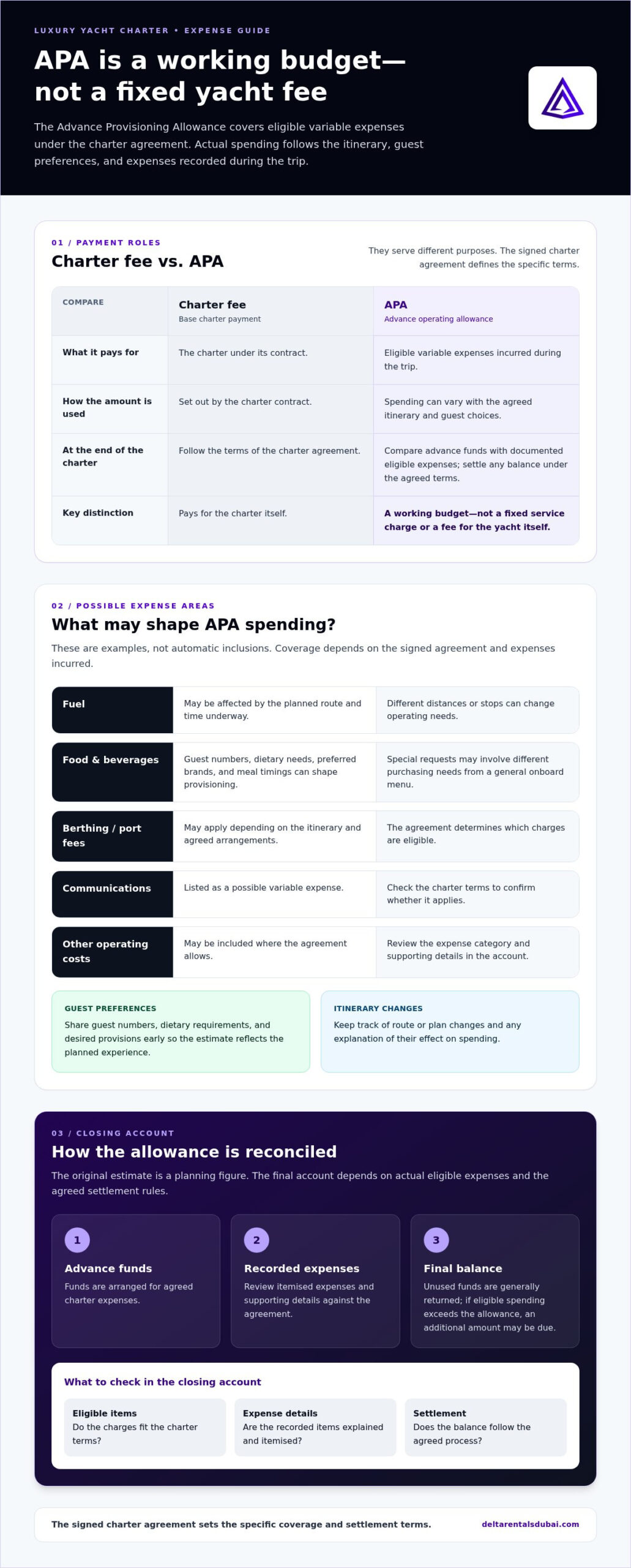
The APA is a working allowance for agreed charter expenses, not a fixed service charge or an additional fee for the yacht itself. The charter fee pays for the charter under its contract, while the APA is intended for variable costs arising from the planned experience. The amount used can change with the itinerary and choices made during the trip.
For a general overview of the Advance Provisioning Allowance (APA), including its role in yacht charters, see the reference linked here. For a specific booking, rely on the signed agreement. It defines the allowance, applicable expenses, and settlement process.
What does APA mean in yacht-charter language?
APA stands for Advance Provisioning Allowance. In plain language, it means funds arranged in advance to cover expenses that arise while the yacht is operating during the charter. It isn’t automatically a flat payment that the yacht keeps in full. Its purpose and treatment depend on the contract and how actual expenses are recorded.
Check the signed charter agreement to see what the allowance covers and how it is handled. This is especially useful when comparing charter estimates, since similar labels can appear in different contractual arrangements.
Why is the allowance arranged before departure?
Advance funds can help cover agreed provisioning and itinerary-related operations without interrupting the experience for repeated payment requests. The estimate may reflect both guest preferences and the planned route. For example, requested food and beverages or a longer itinerary can influence expected spending, although the agreement determines which costs are charged to the APA.
There is no single percentage, payment schedule, or policy to assume for every charter. Treat the estimate as a planning figure, then compare it with your preferences and itinerary. This is a practical starting point for understanding advance provisionings allowance in luxury maritime charters: know what the allowance is intended to fund, and use the contract to understand the details.
What Can the Advance Provisioning Allowance Cover During a Charter?
What the APA pays for isn’t identical on every yacht charter. It may cover variable expenses such as fuel, food and beverages, berthing, communications, or other operating costs. These are examples, not automatic inclusions. The signed charter agreement and actual itinerary determine which expenses apply and how they’re recorded. APA coverage depends on the agreed charter terms and the expenses incurred during the trip.
A guest-requested purchase and an operational cost may be handled differently. A special provision requested for the group could be itemised separately from fuel used for the agreed route, for example. Expense categories and supporting details help explain what was spent and why. For another practical explanation of common APA categories and reconciliation, see BeBlue Sailing’s Guide to APA.
Which guest preferences may influence provisioning?
Food and beverages are common provisioning needs, and special requests can affect what is sourced and prepared. The number of guests, dietary preferences, preferred brands, and meal timings can all shape the provisioning plan. Specific requests may involve different purchasing needs from a general onboard menu.
Share preferences early. A clear list of guest numbers, dietary requirements, and desired provisions gives the crew a better basis for planning and makes the estimate more relevant to your trip. Keep a copy of agreed requests so you can compare them with the eventual itemisation. Whether a specific purchase is charged to the APA depends on the contract and how the expense is classified.
How can itinerary-related expenses affect the allowance?
The route and pace of the charter can influence operating needs. Fuel is one possible expense, and berthing may also apply depending on the itinerary and agreed arrangements. A route with different distances or stops may therefore produce a different pattern of actual expenses. These examples don’t mean every charter incurs the same costs. The agreement determines which items are chargeable.
Before departure, compare the estimate with the experience you’ve requested. Consider the planned route, time underway, and provisions you’d like onboard. If plans change during the charter, keep track of what changed and any explanation of its effect on spending. That context can make the final account easier to review.
The allowance is not automatically spent in full. At settlement, compare the advance funds with documented eligible expenses under the contract. A remaining balance or additional amount depends on actual spending and the agreed settlement rules, not the original estimate alone. Clear preferences and itinerary details make the estimate more useful, while itemised records help explain the final total. To discuss a luxury yacht rental or another tailored experience, start a conversation with Delta Rentals Dubai.
How Is APA Different From a Charter Fee, Deposit, or Tip?
Several payments may appear in a yacht-charter proposal, but they serve different purposes. To understand the advance provisioning allowance in luxury maritime charters, separate the agreed price for the charter from funds set aside for expenses, security arrangements, and any crew gratuity. Labels are a starting point, not a substitute for reading the contract.
| Payment | Purpose | Timing | Settlement |
|---|---|---|---|
| Base charter fee | Payment for the charter under the agreed contract. | As set out in the contract. | Handled under the agreed payment terms. Inclusions and exclusions depend on the contract. |
| APA | Advance funds for eligible operating expenses during the charter. | As specified in the agreement, generally arranged before departure. | Compared with documented eligible expenses; the balance depends on actual spending and agreed rules. |
| Deposit | May provide security for obligations or potential liabilities defined in the agreement. | According to the contract. | Returned, applied, or otherwise handled under the stated terms. |
| Crew gratuity | A separate payment intended as a tip for the crew. | Timing and method depend on the arrangement. | Handled separately from the APA unless the agreement explicitly states otherwise. |
APA versus the base charter fee
The base charter fee is the agreed consideration for the charter itself. The APA, by contrast, is an expense fund, not a second payment for access to the yacht and not a guaranteed final cost. In a plus-expenses arrangement, it is generally treated separately from the base fee. Exactly which services, operating costs, or other charges sit outside that fee depends on the contract.
Review the line items rather than assuming a familiar label means the same thing in every proposal. Look for what the charter fee covers, which expenses may be charged to the APA, and how actual spending will be documented. Two proposals can use similar terms but describe different inclusions.
APA versus deposits, gratuities, and other charges
A deposit and an APA may both involve funds arranged before departure, but their purposes differ. A deposit is tied to the security or obligations described in the agreement; an APA is intended to fund eligible charter expenses. Don’t treat the APA as a security deposit or assume it will be returned in full. Its closing balance depends on the expenses incurred and the agreed settlement method.
A crew gratuity is distinct from both. Don’t assume it’s included in the APA or base fee. Check how the agreement addresses it and follow the applicable arrangement. Before signing, match each payment label to its purpose, due timing, and settlement terms. That comparison helps keep the charter budget clear without treating any estimate as a universal policy.
How to Plan and Track an APA Before and During a Charter
A well-planned APA starts with your actual charter, not a generic estimate. Compare the allowance with the itinerary and experience you’ve requested, then clarify how the agreement treats spending and changes. This preparation won’t make variable expenses fixed, but it can help you spot assumptions early and make the final account easier to follow.
Use this preparation sequence
- Review the estimate. Read the allowance estimate alongside the proposed route, time underway, guest count, and requested onboard provisions. Note the assumptions that appear to shape the estimate, and identify any itinerary details or preferences that have changed since it was prepared.
- Share preferences early. Provide relevant food and beverage choices, dietary needs, special requests, and timing preferences before provisioning is arranged. Clear details help align the estimate with the experience you want and reduce the chance that an unplanned request is mistaken for an expected provision.
- Confirm the contract terms. Check how the agreement defines eligible APA expenses, when funds are due, how spending is recorded, and how the final account is prepared. Clarify how itinerary changes and additional requests are handled. Keep the written terms and estimate together so you can refer to the same details throughout the charter.
- Track changes during the trip. Keep a simple record of approved itinerary adjustments, new requests, and expense questions. If a plan changes, note what changed and when. This gives you useful context when you review the itemised account later, especially if actual spending differs from the original estimate.
Keep expectations clear, not fixed
A written estimate is a planning tool, not a guarantee of final expenditure. Actual costs may shift if the route, provisioning choices, or timing changes. For example, a revised itinerary may affect operating needs, while a new onboard request may add a provision that wasn’t part of the original plan. Those changes can influence the final reconciliation under the charter agreement.
During the charter, keep a brief, practical record: the date of a change, what was agreed, and any question you want resolved in the expense summary. You don’t need to recreate the crew’s accounts. The goal is to preserve enough context to understand the entries and compare them with the agreed terms.
This is the practical side of understanding advance provisionings allowance in luxury maritime charters: align the estimate with your plans, make preferences clear, and follow changes as they happen. To explore a luxury yacht rental or another tailored experience, discuss your plans with Delta Rentals Dubai.
How APA Reconciliation Works After a Luxury Maritime Charter
Once the charter ends, reconciliation compares the advance funds with documented expenses that qualify under the signed agreement. The final account shows how the allowance was used and whether the balance reflects unspent funds or spending beyond the advance. It isn’t automatically the original estimate, nor does it guarantee a particular final cost. The outcome depends on actual expenditure and the contract’s settlement rules.
This closing review is a practical part of understanding advance provisionings allowance in luxury maritime charters. It connects the estimate and agreed terms to what happened during the trip, including any approved changes. A clear account gives you a basis for understanding the result instead of relying on assumptions about how much should remain.
What happens to unused funds or a shortfall?
If eligible expenses are lower than the advance, there may be a remaining balance. If they exceed it, an additional amount may be due. How either outcome is handled depends on the signed agreement and its settlement procedure, so don’t assume a specific refund method, timing, currency, or payment process unless the contract sets it out.
Actual expenditure can differ from the initial estimate because itinerary details or guest requests may change. That difference alone doesn’t explain the final balance. Compare the account with the expenses permitted by the agreement and the records supplied for settlement.
What should a clear final account show?
Review the closing account line by line. Look for understandable expense descriptions, amounts, relevant supporting records such as receipts where provided, and a clear calculation of the remaining balance or shortfall. Compare each entry with the contract’s APA terms and any documented itinerary changes or approved requests. An itemised account makes it easier to see why the final figure differs from the estimate.
If something is unclear, note the specific entry and raise it through the process set out in the agreement. Keep your question factual: identify the charge, the supporting detail you need, and any related written approval or itinerary update. This creates a focused record and helps resolve the point against the agreed terms.
- Match listed expenses to categories allowed by the agreement.
- Check that the closing calculation accounts for the advance and actual eligible spending.
- Use the stated settlement process to query missing details or apparent discrepancies.
Transparent planning and a careful closing review support a more considered luxury charter experience. To explore luxury yacht rentals and premium vehicle experiences, start a conversation with Delta Rentals Dubai.
Shape Your Next Luxury Experience With Confidence
Let your preferences lead the planning. A considered charter begins with a clear picture of the experience you want, from the pace of the itinerary to the details that make time onboard feel personal. Keeping those priorities in view can make financial conversations more focused and help you approach the agreement with confidence.
For readers exploring understanding advance provisionings allowance in luxury maritime charters, the next step is to turn that knowledge into a tailored plan. Delta Rentals Dubai offers luxury yacht rentals alongside premium vehicle and chauffeuring experiences, giving you different ways to shape a memorable occasion.
Ready to explore what suits your plans? Discuss a tailored luxury yacht rental or vehicle experience with Delta Rentals Dubai.
Frequently Asked Questions
Is the advance provisioning allowance included in the yacht-charter fee?
Usually, the APA is listed separately from the base fee on a plus-expenses charter. Some charter arrangements handle expenses differently, so compare the proposal’s line items instead of assuming every quote uses the same structure. Check whether the quoted fee includes provisions or operating expenses, and note any separate allowance. The signed agreement determines which charges apply and how each payment is settled.
How much is the advance provisioning allowance for a luxury yacht charter?
For plus-expenses charters, a commonly cited planning range is 30 to 35% of the base charter fee; motor-yacht estimates may be higher, depending on the vessel and expected use. Treat this as an industry guide, not a guaranteed amount or a quote for a specific charter. Understanding advance provisionings allowance in luxury maritime charters means comparing the written estimate with the agreed itinerary, preferences, and contract terms.
Can guests choose what the APA is spent on?
Guests can share preferences and request provisions or itinerary choices, but the APA isn’t an unrestricted personal spending account. The agreement sets which expenses may be charged, and the captain or crew may coordinate practical arrangements onboard. For example, provide dietary needs or preferred beverages before provisioning begins, then check how any special purchase will be recorded. Personal spending ashore may be handled separately.
What happens if the APA is not fully spent?
If eligible expenses come in below the advance, the unused balance is generally returned after the accounts are reconciled. The signed agreement governs the settlement process, so don’t assume a specific refund method, timing, or currency. Review the closing statement to see how the balance was calculated, and keep the agreement available if you need to compare the account with the terms.
What happens if actual charter expenses exceed the APA?
If documented eligible expenses exceed the advance, the charterer may need to pay the difference under the agreed settlement terms. The closing account should show how actual spending produced the shortfall. Before settling, compare the listed expenses with the contract and any approved changes to the itinerary or onboard requests. If a charge is unclear, raise that specific item through the process in the agreement.
Does APA cover fuel, food, and berthing?
Fuel, food and beverages, and berthing may be charged to the APA, but coverage depends on the charter agreement and the trip’s arrangements. A route can affect fuel use, while guest preferences influence provisioning; berthing charges depend on the itinerary. Check how each category is described in the contract rather than treating examples as automatic inclusions. The final account should reflect eligible expenses actually incurred.
Are APA expenses itemised after a yacht charter?
APA spending is typically reconciled against an itemised account after the charter, with expense descriptions and supporting records such as receipts. Review the entries, check the closing balance, and compare the account with the agreed expense categories. If an item lacks enough detail, note the specific entry and request clarification through the agreed settlement process. This makes it easier to understand differences between the estimate and actual spending.