

What if being blameless in a collision doesn’t mean you owe nothing? Understanding your liability in a rental car accident in the UAE means looking beyond who caused the crash. Fault may determine responsibility for the collision, while your rental agreement and insurance terms can affect what you’re asked to pay.
It’s natural to focus first on the damage and the other driver’s actions. But the excess, coverage exclusions, reporting requirements, and evidence you preserve can also shape the outcome. Missing a key step or misunderstanding a contract clause can make an already stressful situation harder to resolve.
This guide explains how fault, insurance, and rental terms work together, and what to do after a collision. You’ll learn which clauses to read before driving, why prompt accident reporting matters, and how to document the scene and keep relevant records. Whether you’re renting a high-performance model or another premium vehicle, knowing your responsibilities can help you drive with greater confidence and respond calmly if plans take an unexpected turn.
Key Takeaways
- Separate responsibility for causing a collision from financial or contractual obligations under the rental agreement.
- For understanding your liability in a rental car accident, read the agreement’s insurance wording, exclusions, and excess carefully.
- Fault is only part of the picture; coverage and contract conditions can also affect what you may owe.
- After a collision, prioritise safety, follow UAE reporting instructions, and preserve useful records and evidence.
- Before driving, review who can drive the car, permitted use, incident contacts, and the rental company’s accident procedure.
Rental car accident liability in the UAE: what responsibility can mean
Liability means responsibility that may follow an accident. It can involve legal responsibility for causing harm, financial responsibility for damage or injury, or contractual responsibility under a rental agreement. These are related, but they aren’t interchangeable. A finding about who caused a collision doesn’t, by itself, explain every amount or duty that may apply to the renter.
When understanding your liability in a rental car accident, keep two questions separate: what happened on the road, and what do the rental and insurance documents require? The answer can depend on the circumstances, applicable UAE rules, policy wording, and the agreement you signed. A general overview of the transportation system in the UAE offers background on the country’s road networks, but it doesn’t determine responsibility in a specific crash.
Who may have responsibility after a rental-car collision?
The drivers involved may give different accounts of the collision. Insurers assess claims under applicable policies, while the rental company may address damage to its vehicle and the renter’s contractual obligations. These roles can overlap, but they aren’t the same. Damage to the rental car is also distinct from injury or property damage involving other people. Don’t assume fault from a driver’s explanation or the appearance of the damage alone. Responsibility needs to be assessed using the available facts and relevant process.
Why the rental agreement matters alongside traffic fault
Your agreement may specify who is permitted to drive, how and when to report an accident, and what steps the renter must follow. The applicable policy documents explain the cover and limits that may apply. These terms can affect a renter’s financial exposure, but they don’t establish what caused the collision or replace an assessment of the incident. Read the signed agreement alongside the relevant policy wording instead of relying on a general description of rental insurance.
In practice, incident records and the applicable UAE process help establish what happened, while the agreement and policy clarify the renter’s obligations and potential exposure. Keep these questions separate before drawing conclusions about who pays. Next, examine the specific cover, exclusions, and excess stated in the rental documents.
Rental agreement and insurance: what can change your liability?
Insurance wording and rental terms determine what protection applies and what responsibilities may remain with you. Some cover may be included, while other cover may be optional, limited, or subject to conditions. Don’t assume a description such as “covered” means every type of damage or every circumstance is covered. The signed agreement and applicable policy documents are the references for your rental.
An excess is an amount you may have to pay toward a claim, as set out in the applicable terms. Its amount and when it applies depend on those documents, not on a universal UAE figure. Coverage can also leave obligations in place, so understanding your liability in a rental car accident means checking both the protection provided and the conditions attached to it.
Excess, exclusions, and coverage limits in plain language
An exclusion is a situation or type of loss that the policy says it won’t cover. Limits describe the boundaries of cover. The exact wording matters, so check your rental documents rather than assuming a particular item is covered or an exclusion applies.
Before signing, locate the clauses that explain:
- The excess and when it may apply.
- Who is authorised to drive the vehicle.
- Permitted vehicle use and any conditions attached to it.
- How and when an accident must be reported.
How driver eligibility and agreement terms can affect a claim
Driver eligibility matters because the agreement may define who is authorised to use the car. Licence, age, vehicle-use, and other requirements can vary by agreement and policy. Check the specific wording rather than assuming another person is covered or that a valid licence alone meets every condition. These terms may affect cover or contractual responsibility, but they don’t establish who caused a collision.
Illustrative scenarios: These examples show how cover and contractual terms can intersect. They don’t determine the outcome of a real UAE accident.
| Scenario | What to consider |
|---|---|
| Damage appears to fall within covered circumstances | Check the applicable cover, limits, excess, reporting requirements, and any remaining renter obligations. |
| Damage occurs during use that the agreement excludes or restricts | Review the relevant exclusion and permitted-use clauses. Don’t assume cover applies or is automatically void without reading the terms. |
| Fault remains unresolved | Keep the incident assessment separate from contract questions. Review the reporting process and policy wording while the circumstances are being established. |
A clear agreement makes it easier to enjoy a premium vehicle with informed expectations. As you review your rental plans, explore premium car rental options with the terms in mind.
Common rental-car accident scenarios: fault is only part of the picture
A collision can look straightforward at first, but the traffic assessment, insurance response, and rental agreement each address different questions. A driver may appear responsible for the impact, for example, while the agreement separately sets out how damage must be reported and what conditions apply to cover. These examples are illustrative only and don’t determine the outcome of any real accident in the UAE.
If you may have caused the accident
Put safety first. Follow official instructions for reporting the incident and the procedure in your rental agreement. Don’t speculate about legal fault at the scene or rely on assumptions based on the damage. Give factual information to the relevant authorities and cooperate with the required process. The circumstances may be assessed under applicable procedures, while the rental agreement and policy wording determine what renter obligations or charges may apply. A possible finding of fault doesn’t, by itself, tell you the final amount or outcome.
If another driver may be at fault or responsibility is unclear
Follow the agreement’s reporting and cooperation requirements, even if you believe the other driver caused the collision. Preserve available evidence, such as photographs of vehicle positions and damage, and record factual details while they’re fresh. Note the time, location, and contact details of people involved or witnesses, where safe and appropriate. Avoid confrontation and don’t treat an initial account as a final decision. A disputed or unclear account may need assessment; it doesn’t guarantee reimbursement or remove every possible renter obligation.
For example, imagine a rental vehicle is struck while changing lanes. The visible damage alone may not establish which driver had responsibility. Or a renter may collide with an object while manoeuvring, but the renter’s potential financial exposure still depends on the applicable coverage and contract terms. In either case, report and document the incident rather than trying to settle fault yourself.
Responsibility depends on the available evidence, applicable UAE rules, and the rental agreement and policy terms. Understanding your liability in a rental car accident means keeping those factors distinct: an assessment of collision fault is not the same as a decision about cover, excess, or contractual duties. Avoid assuming a particular outcome before the facts and relevant documents have been reviewed.
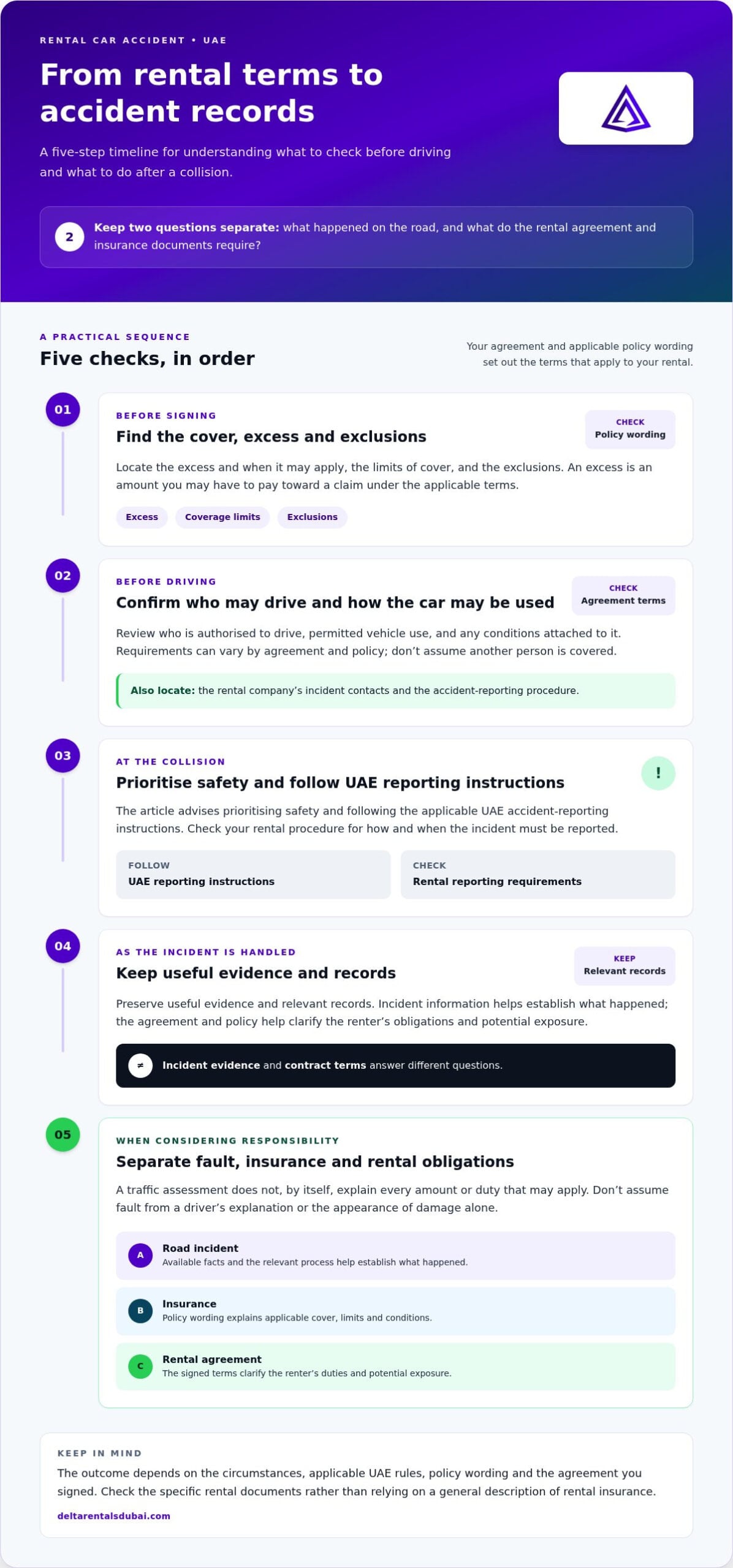
What to do after a rental-car accident in the UAE
Act in order: protect people first, follow official reporting instructions, then notify the rental company and preserve the details. In the UAE, accidents must be reported to the police, including minor collisions. Keep your rental agreement accessible so you can follow its specific incident procedure too.
Prioritize safety and follow official reporting instructions
- Check for injuries and immediate danger. If anyone is injured, call 999 for police and 998 for an ambulance. Follow emergency-service instructions. Don’t move an injured person unless leaving them where they are presents an immediate safety risk.
- Make the scene safer if you can. Stay clear of moving traffic and hazards. Don’t put yourself or others at risk to photograph the vehicles or gather information.
- Report the collision to police. Use the official reporting channel or method directed by the authorities. For a minor, non-injury collision, follow the relevant police reporting instructions. Don’t assume that a small amount of visible damage means reporting can be skipped.
- Cooperate and stick to facts. Follow instructions at the scene and describe what you observed. Avoid guessing about the cause or accepting blame before the incident is assessed.
Notify the rental company and preserve useful records
- Notify the rental company promptly. Use the contact method and timing stated in your signed agreement. Note the next steps it gives you, and keep a record of when and how you reported the incident.
- Document what you can safely verify. Take clear photographs of vehicle damage, positions, road signs, and the wider scene when safe and permitted. Write down the time, location, vehicle details, witness contact information, and a factual account while your memory is fresh. Don’t confront other people to obtain details.
- Keep the paperwork together. Save the rental agreement, relevant policy documents, messages with the rental company, photographs, and any police report reference or incident record you receive. These records can help with later discussions about the incident and applicable terms.
Following these steps won’t decide fault or guarantee a particular claim outcome. It creates a clearer record and helps you meet reporting and contract requirements. Understanding your liability in a rental car accident starts with acting safely and documenting events accurately, not drawing conclusions at the roadside.
Planning a future drive? Explore premium car rental options and review the agreement before setting off.
Before renting: reduce uncertainty about accident responsibility
Reviewing the agreement before driving can make your responsibilities clearer if an incident occurs. Don’t rely on a general description of insurance or assume every rental follows the same terms. Read the documents for your specific vehicle and rental, and make sure you know what to do after a collision.
Questions to resolve in the agreement before driving
Use this checklist to focus your review:
- Drivers: Who is authorised to drive, and what licence or eligibility conditions apply?
- Permitted use: What uses or restrictions are stated for the vehicle?
- Coverage: What does the policy wording say is covered, and what limits or exclusions apply?
- Excess: What amount may you have to pay under the stated terms, and in which circumstances?
- Accident procedure: How must you report a collision, which contact method should you use, and what steps does the agreement require?
If a term is unfamiliar or unclear, get an explanation in writing before you sign. Don’t assume a standard answer applies across all vehicles or agreements. Save a copy of the signed agreement and relevant policy documents somewhere accessible, and keep the rental company’s incident contact details available in the car or on your phone.
Make an informed rental enquiry with Delta Rentals Dubai
Clear terms are part of a confident premium-car rental experience. Explore premium vehicle rentals, then review the agreement and policy wording for the vehicle and rental period you’re considering. This helps you understand the stated responsibilities without assuming a particular type of cover, excess, or accident outcome applies.
For a focused enquiry, have your preferred vehicle, intended rental dates, and questions about the agreement ready. Message Delta Rentals Dubai on WhatsApp about a rental. Reviewing the terms before driving is a practical first step toward understanding your liability in a rental car accident.
Drive prepared, rent with confidence
Understanding your liability in a rental car accident starts with separating collision fault from the responsibilities set out in your rental agreement and insurance documents. Neither an assumption at the roadside nor a general description of coverage can answer every question. Review the specific terms before driving, especially who may drive, permitted use, excess, exclusions, and the accident procedure.
If a collision happens, put safety first, follow official UAE reporting instructions, notify the rental company through the stated channel, and keep a factual record of the incident. These steps help you respond calmly while the relevant details are assessed.
Delta Rentals Dubai offers premium and high-performance vehicle rentals across the UAE, including the Porsche 911 GT3 RS, Rolls-Royce Cullinan Black Badge, and McLaren Artura. For a considered rental enquiry, share your preferred vehicle and plans, then review the applicable agreement carefully. Ask Delta Rentals Dubai about a premium rental. A little preparation can make the drive ahead feel more assured.
Frequently Asked Questions
Who is liable if I have an accident in a rental car in the UAE?
Liability depends on the accident circumstances, the applicable UAE process, policy terms, and your rental agreement. Collision fault and contractual responsibility are related, but they aren’t identical. Even if another driver appears responsible, you may still have reporting or cooperation duties under your agreement. Follow official reporting instructions, notify the rental company as required, and keep relevant records rather than assuming fault alone settles every obligation.
Does rental car insurance mean I cannot be charged after an accident?
No. Insurance doesn’t necessarily remove every renter responsibility or potential charge. The policy and agreement may set out limits, exclusions, an excess, and steps you must follow after an accident. The effect depends on the wording and circumstances of your rental. Read the specific documents provided, and get unclear terms explained before signing. Don’t rely on a general statement about insurance to predict a claim outcome.
What should I do immediately after a rental car accident in the UAE?
Put safety first, check for injuries, and follow official emergency and accident-reporting instructions. For an emergency involving injuries, call 999 for police and 998 for an ambulance. Don’t move an injured person unless leaving them in place creates an immediate safety risk. Follow instructions from responders, notify the rental company through the channel and within the timing stated in your agreement, and preserve factual notes and available evidence.
Can I be responsible if another driver caused the rental car accident?
Possibly, because another driver’s apparent fault doesn’t automatically settle your rental obligations or the insurance response. You may still need to report the incident, cooperate with the process, and follow the agreement’s instructions. Keep factual records and available evidence, but don’t assume you’ll be reimbursed or owe nothing. The outcome depends on the evidence, applicable procedures, and the terms governing your rental.
What does the excess mean on a rental car agreement?
An excess is an amount you may have to contribute in circumstances described by the applicable rental and insurance terms. The amount and when it applies can vary, so don’t assume one figure or rule applies to every UAE rental. Check the agreement for the excess, coverage conditions, exclusions, and claim process. If the wording isn’t clear, seek clarification before driving and keep a copy of the relevant documents.
Do I need to report a rental car accident even if the damage looks minor?
Yes. UAE accident-reporting requirements apply even when a collision appears minor, so follow the official police reporting instructions for the emirate and situation. Don’t decide based only on visible damage or rely on an informal exchange with the other driver. Also notify the rental company as required by your agreement and keep a record of the reporting steps. This general information doesn’t replace instructions from the authorities.
What documents should I keep after an accident in a rental car?
Keep your signed rental agreement, the policy documents supplied for the rental, and communications with the rental company. Save any official accident report or reference details, along with factual notes, relevant photographs, and witness information where appropriate. Follow the authorities’ and rental company’s instructions about sharing records. Keep original information unchanged, and remember that photographs can support your account but don’t necessarily replace an official report.
Does liability change if someone else is listed as the driver?
It may. The agreement’s authorised-driver wording and the circumstances of the incident can affect how responsibilities are assessed. Don’t assume verbal permission or a valid licence automatically meets the rental terms. Before driving, check who is expressly permitted to use the vehicle and any stated eligibility conditions. After an accident, follow the reporting procedure and avoid assuming that a particular policy will cover the driver or the damage.