
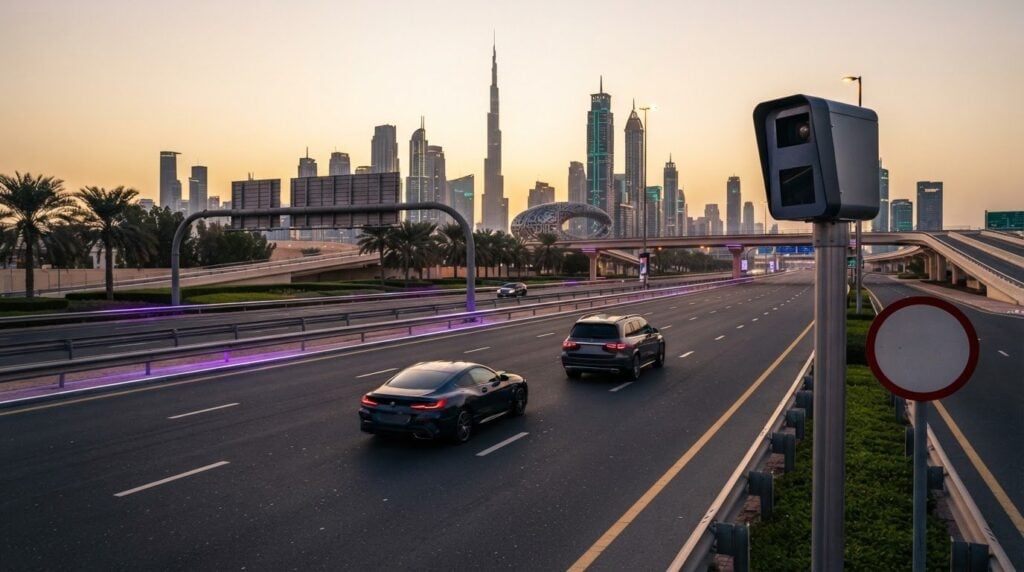
A radar buffer isn’t permission to speed. If you’re wondering about legal speed limit tolerance and automated camera enforcement on national motorways, the safest rule is simple: follow the number on the sign, not the speed at which you think a camera might activate. That distinction matters when you travel across different jurisdictions, where enforcement practices can vary.
The uncertainty is understandable. Certain regions apply zero tolerance for exceeding the posted limit, while a buffer is commonly used in other parts of the country. But an enforcement margin isn’t a higher legal speed limit. Electronic signs can also change the limit, so don’t rely on a number you saw earlier on the route.
This guide explains how to read motorway signs, why camera tolerance shouldn’t shape your driving, and what automated enforcement can establish. You’ll also find practical advice for checking limits and handling a rental-car notice from Delta Rentals Dubai, so you can travel across the UAE without relying on hearsay or outdated information.
Key Takeaways
- Follow the speed sign that applies to your lane and current road section. Limits can change along a motorway.
- Separate a camera’s possible enforcement threshold from legal permission to drive faster. This guide clarifies legal speed limit tolerance and automated camera enforcement on national motorways.
- Automated cameras can record a potential speeding violation. Don’t treat an assumed threshold as a safe margin.
- Before and during a drive, watch for updated signs and temporary instructions, and choose a speed at or below the posted limit.
- Use the same disciplined approach in a rental car. A premium performance vehicle never changes the rules or replaces sound driving judgement.
UAE motorway speed limits: what the posted signs require
The posted limit is the speed drivers must follow. On a UAE motorway, read the sign that applies to your lane and the road section you’re travelling on. Don’t assume a limit stays the same because you’ve driven the route before, or because traffic around you is moving faster.
A motorway may have different limits along its length. Electronic signs and temporary traffic controls can also change the instruction drivers need to follow. Check signs as you travel, and respond to updated information promptly and safely. If a sign or instruction is unclear, use current guidance from the relevant UAE traffic authority rather than relying on memory or informal advice.
A posted limit tells you the speed you must obey. An enforcement tolerance, if applied, is not permission to drive faster. That distinction is central to understanding legal speed limit tolerance and automated camera enforcement on national motorways. For a general overview of how limits and enforcement approaches may differ across the country, see Speed Limits in the UAE. Treat that overview as background, and use current road signs and official guidance for your journey.
How to read motorway speed-limit signs
Read each displayed limit as an instruction for the road section ahead, not as a reminder of what applied earlier. Check which lanes a sign covers, particularly where lanes split, merge or follow different routes. Electronic signs can provide updated instructions, while temporary controls may apply around roadworks or changing conditions. Keep your attention on the road, leave enough space to react, and follow the latest applicable sign.
Do UAE motorways all have the same speed limit?
No. Don’t assume one speed applies across every motorway or every part of the same route. The posted limit applies to a specific road section and may be accompanied by road-specific instructions. Enforcement details can also differ, so a tolerance you’ve heard about elsewhere shouldn’t be treated as a nationwide rule. Plan to follow signs throughout the journey rather than choosing a target speed based on a previous trip.
Is speed-limit tolerance legal on UAE motorways? Separate the rule from the rumour
A supposed radar tolerance isn’t a blanket legal allowance to drive above the posted limit. Obey the sign, regardless of stories about a camera’s trigger point. Any enforcement margin is separate from the speed limit itself, and shouldn’t be treated as permission to exceed it.
There’s no safe basis for assuming one tolerance applies across every UAE motorway. Enforcement practices may differ by road or jurisdiction, and information repeated by other drivers can be outdated or incomplete. For current, location-specific details, rely on the relevant official traffic authority. If an authoritative source doesn’t establish a threshold for your route, don’t plan around one.
An assumed enforcement margin does not change the signed limit. That’s the clearest way to approach legal speed limit tolerance and automated camera enforcement on national motorways: treat the posted limit as your driving limit, not as a starting point for calculating how much faster you might go.
What drivers mean when they say “radar tolerance”
“Radar tolerance” is a commonly used phrase for an assumed gap between the posted limit and the speed at which a camera might record a potential violation. The phrase alone doesn’t prove that a legal allowance exists. Your dashboard displays the vehicle’s speed; an enforcement system may assess measured speed. How those readings are established and used is technical and may vary, so don’t infer a local threshold without current authoritative information.
Why an assumed buffer is not a safe driving strategy
Relying on a supposed buffer turns uncertain information into a driving target. The claim may refer to another road, another jurisdiction or an earlier enforcement practice. It may also confuse a device’s possible operating threshold with the speed drivers are required to follow.
Keep it simple: choose a comfortable speed at or below the applicable sign, then adjust safely when signs or road conditions call for it. Don’t calculate an extra margin, and don’t match a faster vehicle just because it appears to be travelling without consequence. Cameras and enforcement processes aren’t necessarily identical everywhere, so a rumoured threshold is no substitute for the posted instruction.
Planning a drive in a premium rental? Review route signs and traffic instructions before setting off, and make performance part of a smooth, responsible drive. Explore a premium rental from Delta Rentals Dubai.
How automated motorway cameras enforce speed limits
Automated speed enforcement compares a vehicle’s movement with the applicable speed limit and may create a record for further processing if a possible violation is detected. The equipment, measurement method and review procedure can vary. Don’t assume every camera uses the same system or that every camera event automatically leads to the same outcome.
Keep two functions separate: road signs communicate the limit drivers must follow, while enforcement equipment may assess whether a vehicle has exceeded it. A camera doesn’t replace a sign or tell you which limit applies to your lane. If an electronic sign changes the limit, respond to the sign rather than relying on what a camera may or may not detect.
A speed camera may record evidence of a possible speeding violation; the applicable sign remains the driver’s reference for the limit. That distinction helps make sense of legal speed limit tolerance and automated camera enforcement on national motorways without turning assumptions about camera settings into driving advice.
What happens when a camera records a possible violation?
A detected event may be handled under the relevant authority’s procedures before a notice or other outcome follows. The process and responsible authority can depend on the road and how enforcement is administered, so don’t assume every event is reviewed or notified in the same way. If you receive a traffic notice, use the issuing authority and official response channel shown on it, and follow its instructions. Don’t rely on an informal message or a general description of what a notice should contain.
Can motorway cameras detect every type of driving offence?
Don’t assume a camera used for speed enforcement also detects every other offence. Capabilities depend on the specific equipment and its authorised use. Broad claims about camera technology, vehicle identification or linked databases need current official support. For information about a particular camera’s functions, consult the relevant UAE traffic authority. As a driver, focus on what you can act on directly: follow the posted speed limit and all other road signs.
For a practical check, note the applicable limit as the road changes, watch for updated or temporary instructions, and keep your speed at or below the sign. A camera’s possible role in documenting an event doesn’t make it a reliable source of guidance about the limit or a reason to test how enforcement works.
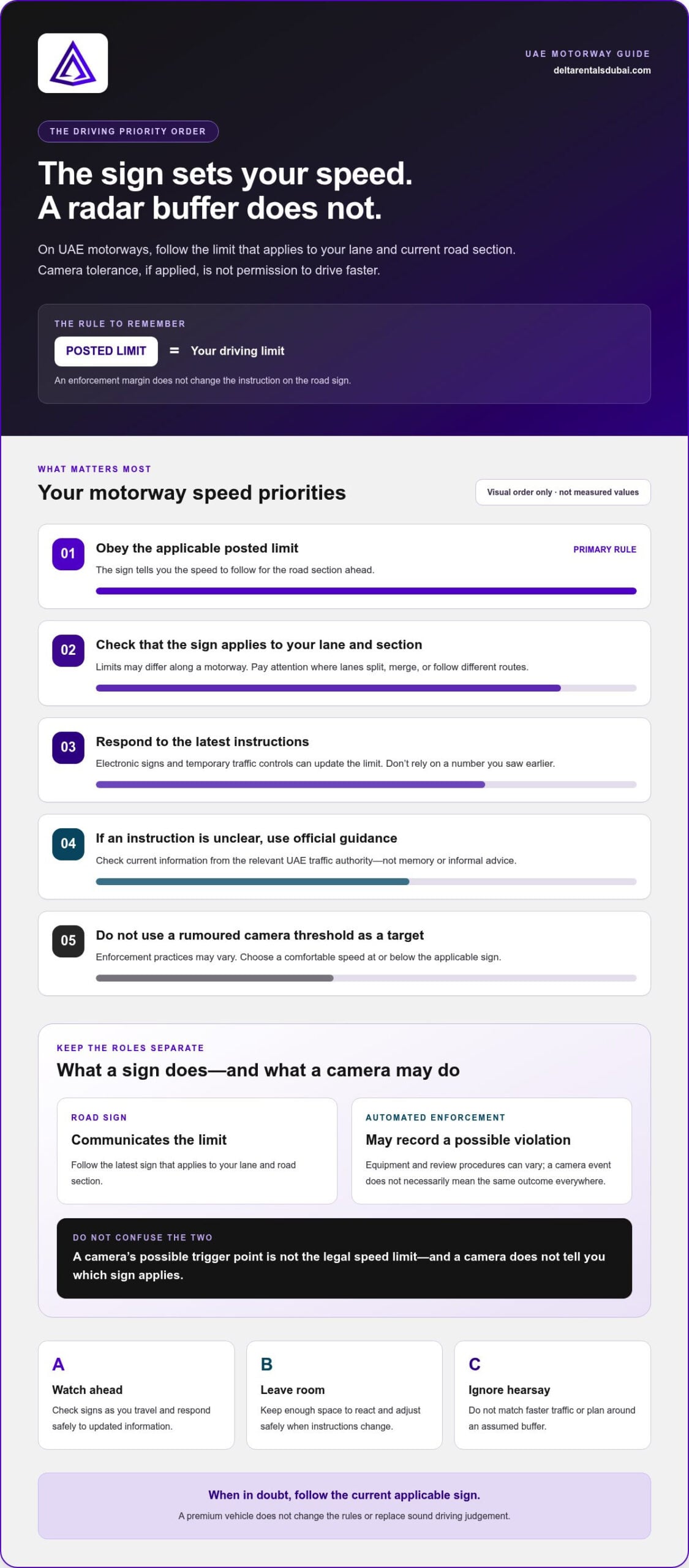
A practical checklist for following UAE motorway limits
A calm, prepared drive is easier to manage than one built around guessing. Use this checklist before setting off and as road conditions change. It keeps your attention on the instructions that matter, rather than another driver’s speed or a rumoured camera threshold.
Before and during a motorway journey
- Check the route: Before leaving, review current route information through authoritative UAE traffic or transport channels. Roadworks and temporary controls can affect the instructions you encounter.
- Follow the signs for your lane: Read the displayed limit that applies to your road section. Watch for electronic signs and updated instructions as you travel.
- Choose a measured pace: Set a comfortable speed at or below the signed limit. Don’t add a supposed enforcement margin or use the pace of surrounding traffic as your guide.
- Allow time: Build enough time into the journey to avoid feeling pushed to drive faster. If you’re unsure, stay attentive, follow visible signs and obey official traffic directions.
This routine turns questions about legal speed limit tolerance and automated camera enforcement on national motorways into a practical decision: follow current signs, not assumptions about how enforcement might work.
If you receive a camera-related notice in a rental vehicle
Read the notice carefully and follow the issuing authority’s instructions. Keep the notice and your rental agreement together so you can refer to the relevant dates, vehicle details and terms. Rental-car procedures depend on current rules and the agreement, so consult both rather than relying on general claims about how every rental notice is handled.
Keep copies of related correspondence and use the official channels named on the notice for questions or next steps. Don’t assume that a rental company notification replaces the authority’s instructions, or that every notice follows the same process. If something is unclear, rely on the issuing authority’s published guidance and the terms in your agreement.
Premium performance deserves composed, informed driving. Keep these checks in mind before setting off in a rental car. Browse premium rental options from Delta Rentals Dubai.
Drive a UAE rental car with confidence: know the rules before setting off
Make the journey feel premium through preparation, not speed. Follow the posted limit on every road section, and don’t treat a presumed camera tolerance as permission to go faster. The same principle applies in any rental vehicle: performance doesn’t override traffic rules or sound judgement. Understanding legal speed limit tolerance and automated camera enforcement on national motorways helps you start with a clear, responsible plan.
A simple pre-drive routine for a premium vehicle
Before joining a motorway, take a moment to review the vehicle controls and rental instructions. Familiarise yourself with the indicators, lights, wipers and driving displays before traffic demands your attention. If you’re exploring a high-performance model, the Porsche 911 GT3 RS rental guide can help you learn more about the car. Public roads are for composed, rule-abiding driving, not performance testing.
Once on the motorway, set a comfortable pace at or below the limit shown for your lane and section. Leave room to respond to traffic, weather and changing signs. Don’t experiment with a supposed enforcement margin, and don’t let another vehicle’s speed influence your decision. Aim for smooth progress.
Plan a premium journey around comfort, not speed
Build in enough time to travel without pressure. Keep your attention on the road, watch for updated signs and temporary instructions, and adjust calmly when conditions change. If you’re unsure which instruction applies, follow visible signs and official traffic directions rather than relying on memory or hearsay.
Prefer to leave the driving to a professional? Read the UAE luxury chauffeur service guide for another way to plan a comfortable journey. Whether you drive yourself or choose chauffeuring, thoughtful preparation and steady judgement make the experience more relaxed.
Choose a premium vehicle for the experience, then enjoy it with care and respect for the rules. If you’re considering a rental for your UAE journey, see premium rental options from Delta Rentals Dubai.
Make your next UAE drive smooth and informed
Keep three principles in mind before you set off: follow the limit displayed for your road section, respond to updated signs and instructions, and never treat a presumed camera tolerance as permission to speed. The key to understanding legal speed limit tolerance and automated camera enforcement on national motorways is to separate the posted rule from assumptions about how enforcement may work.
That same care belongs in every rental journey. A premium vehicle can make the experience memorable, but it doesn’t change road rules or replace sound judgement. Delta Rentals Dubai offers premium vehicle rentals across the UAE, including the Porsche 911 GT3 RS. Take time to understand the vehicle, plan your route and enjoy a composed drive.
Ready to plan your next journey? Enquire about a premium UAE rental with Delta Rentals Dubai. Travel attentively and let the road experience speak for itself.
Frequently Asked Questions
Is there a legal speed-limit tolerance on UAE motorways?
Don’t assume a single legal tolerance applies across UAE motorways. The posted speed limit is the instruction drivers should follow, while any enforcement margin is a separate matter that needs current, authoritative confirmation for the relevant road and jurisdiction. A camera’s possible threshold doesn’t establish a legal allowance. For the safest interpretation of legal speed limit tolerance and automated camera enforcement on national motorways, drive at or below the displayed limit.
Can I legally drive above the posted motorway speed limit if cameras allow a buffer?
No. Don’t treat a presumed camera buffer as permission to exceed the posted limit. An enforcement threshold, if officially applied, isn’t the same as the speed limit shown for the road. Threshold claims may be misunderstood, out of date or specific to another location. Follow the sign that applies to your lane and road section, and choose a comfortable speed at or below it rather than calculating an extra margin.
How do automated speed cameras enforce motorway limits in the UAE?
At a high level, a speed-enforcement system measures a vehicle’s speed and may record information about a potential violation for processing under applicable procedures. The equipment and process can differ, so don’t assume every camera works identically or that every detected event has the same outcome. Signs show the applicable limit; cameras don’t replace them. For details about a particular system or process, consult current information from the relevant UAE traffic authority.
What happens if a speed camera records a rental car in the UAE?
A camera-related event involving a rental car may be handled through the relevant authority’s procedures, while the rental arrangements are also governed by the agreement’s terms. If you receive a notice, read it carefully and follow the issuing authority’s instructions. Keep the notice and rental agreement available for reference. Don’t assume a particular notification process, charge or timeframe applies to every rental. Follow current official guidance and the terms of your agreement.
Do all UAE motorways use the same speed limit and camera threshold?
No. Posted limits can vary by road and section, so follow the sign that applies to your lane and current location. Don’t assume a camera threshold is uniform across motorways, jurisdictions or devices; specific threshold claims need current authoritative support. A limit seen earlier in the journey, or remembered from another route, may not apply now. Watch for updated signs and follow official traffic instructions throughout the trip.
Can motorway speed limits change during a journey?
Yes, the displayed limit or applicable traffic instruction may change along a route. Keep checking signs as you travel, including electronic signs and temporary instructions, and respond safely when they update. Don’t rely on a limit from a previous section or journey. If road conditions or instructions are unclear, follow visible official directions and consult the relevant UAE traffic authority’s current guidance when it’s safe to do so.
How can I check the current speed limit before driving on a UAE motorway?
Before setting off, check current route or traffic information published by the relevant UAE government or traffic authority. Use that information to prepare, then follow the road signs that apply to your lane and section while driving. Limits or instructions can change en route, so a pre-drive check doesn’t replace watching the road. Avoid relying on old posts, hearsay or another driver’s speed as a source of current limits.