
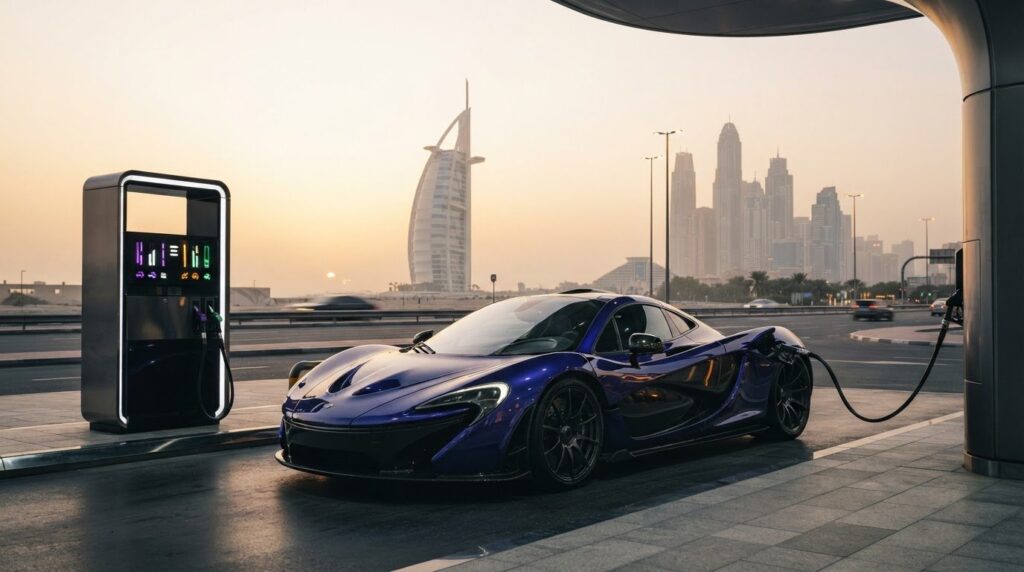
What if the right fuel for a supercar isn’t the grade its badge or the pump name seems to suggest? Refueling a supercar with the correct octane rating starts with the specific car’s instructions, not guesswork. UAE pumps display grade names alongside octane numbers, so the useful question is not simply which option sounds premium. It’s which rating the vehicle requires.
Before fuelling, check the owner’s manual or the label inside the fuel flap. UAE petrol grades include Super 98, Special 95 and E-Plus 91, with the octane number shown at the pump. Compare that number with the vehicle’s stated requirement, using the same rating system. A Porsche 911 GT3 RS, for example, is a high-performance car, but its badge alone doesn’t tell you which grade to choose.
This guide shows you how to find the vehicle’s fuel information, compare it with UAE pump labels and respond calmly if you select the wrong grade. If you’re renting, make the fuel check part of getting familiar with the specific car before setting off.
Key Takeaways
- Octane measures fuel’s resistance to premature ignition under pressure, not how much energy it contains.
- For refueling a supercar with the correct octane rating, follow the instructions for the exact vehicle and model year, not its badge or a habit from another car.
- Compare the rating and rating system in the car’s instructions with the grade and number shown at the UAE pump.
- If you select the wrong grade, pause and follow the vehicle’s instructions instead of guessing what to do next.
- Use a short checklist before fuelling, especially when driving an unfamiliar rental car.
Why the Correct Octane Rating Matters When Refuelling a Supercar
Should a supercar always receive the highest grade available? No. Use the rating specified for that particular vehicle rather than automatically choosing the pump’s highest number. Understanding what octane measures helps explain why: the number indicates resistance to knock, while the vehicle’s own instructions tell you which rating its engine needs.
In the UAE, petrol grades include E-Plus 91, Special 95 and Super 98. A higher number means greater resistance to knock, not more energy in every litre or a guaranteed performance upgrade. The appropriate grade depends on the engine’s design and the vehicle’s stated requirements.
What does an octane rating tell a driver?
Octane rating measures how well petrol resists uncontrolled ignition under pressure in an engine. That resistance helps limit knock, a sharp, irregular combustion event that can occur when part of the fuel-air mixture ignites at the wrong time. The Octane Rating Explained reference outlines how ratings relate to knock resistance in spark-ignition engines.
Octane isn’t a direct measure of fuel quality, power or energy content. A higher rating doesn’t automatically make a car more powerful. It means the fuel can withstand more pressure before knocking. Whether a particular engine needs that resistance depends on its design and calibration.
Does every supercar need the highest-octane fuel?
No single grade suits every supercar. Manufacturers specify fuel according to each engine’s requirements, and the instruction can vary between models and model years. A performance badge doesn’t reveal the correct rating. Check the owner’s manual or fuel-door label for the exact car, and pay attention to the rating system as well as the number.
Using the specified fuel supports the engine’s intended operation. Choosing the highest available grade may not provide a benefit if the vehicle doesn’t call for it. Equally, don’t assume a lower grade is suitable just because another high-performance model can use it. One engine’s requirement isn’t a rule for another.
Consider a Porsche 911 GT3 RS. The name identifies a high-performance model, but it doesn’t replace the fuel instruction for the specific car. Model year and market can matter, so use that vehicle’s manual or fuel-door label rather than a general online claim or another driver’s experience.
- Read the requirement. Find the manufacturer’s fuel guidance for the exact vehicle.
- Check the rating system. Confirm that the number on the pump is being compared with the same type of rating stated in the instructions.
- Choose by specification. Select the matching grade, not automatically the highest option.
This simple check turns a general question about octane into a specific decision at the pump. Next, locate the car’s instructions and work through the match step by step.
How to Find the Correct Octane Rating for Your Supercar
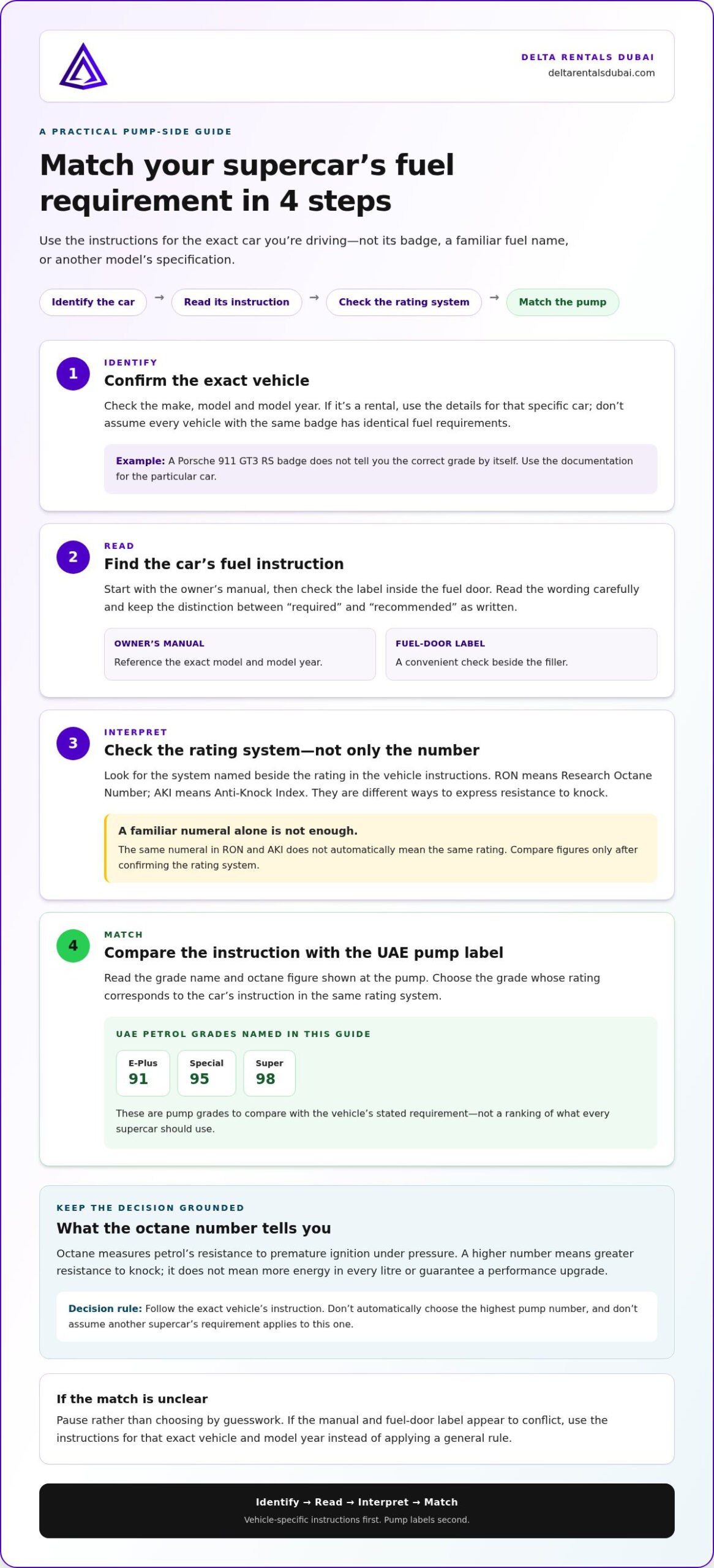
Use a four-step check: identify the exact car, read its fuel instruction, identify the rating system, then match it to the pump. This method for refueling a supercar with the correct octane rating avoids relying on a badge, a familiar fuel name or the specification of another model.
- Identify the vehicle. Confirm its make, model and model year. If you’re driving a rental, use the details for that specific car rather than assuming every vehicle with the same badge has identical requirements.
- Read its fuel instruction. Start with the owner’s manual, then check the label inside the fuel door for the required or recommended grade.
- Identify the rating system. Look for the system named beside the number, such as RON or AKI. Don’t compare figures until you know which system the vehicle instruction uses.
- Match the pump. Choose the pump grade whose rating corresponds to the car’s instruction in the same system. If you can’t make a clear match, pause rather than choosing by guesswork.
Where can you find the vehicle’s fuel requirement?
The owner’s manual is the main reference for the exact model and model year. The fuel-door label is a convenient check beside the filler. Read the wording carefully: “required” and “recommended” don’t mean the same thing, so keep the distinction as written. If the documents appear to conflict, use the instructions for that exact vehicle and model year rather than applying a general rule.
For a Porsche 911 GT3 RS, use the documentation for the particular car you’re driving. Don’t transfer a figure from a different model year, another Porsche or an online discussion. Vehicle-specific instructions are more useful than a generic list of “supercar fuel requirements,” which may not account for differences between versions or markets.
How do octane numbers and fuel labels differ?
RON, or Research Octane Number, and AKI, or Anti-Knock Index, are different ways to express a fuel’s resistance to knock. The same numeral in one system doesn’t automatically mean the same rating in the other. Match the rating system as well as the number; a familiar figure alone isn’t enough to choose a pump reliably.
In the UAE, pump names include E-Plus, Special and Super, alongside octane figures. Read the current pump label and compare its stated rating with the system in the vehicle instructions. The EPA regulations on octane ratings describe a US vehicle-testing context; they don’t replace the fuel instruction for a car being driven in the UAE.
Keep the sequence simple: identify, read, interpret, match. If you’re considering a high-performance rental, you can discuss a supercar rental as part of planning your drive.
UAE Pump Labels Compared: Match the Fuel, Not Just the Name
UAE petrol pumps display local grade names alongside octane figures. The names help you identify a grade, but they don’t tell you whether it suits every supercar. Check the number and rating system, then compare them with the fuel instruction for the exact car.
How should drivers read UAE petrol-pump grades?
The UAE petrol grades are Super 98, Special 95 and E-Plus 91. The figures refer to RON, or Research Octane Number. Before selecting fuel, read the pump’s grade label and octane information. Don’t use US terms such as Regular, Midgrade and Premium as a direct guide to UAE pumps, because those labels and rating conventions aren’t a like-for-like comparison.
Use this table as a quick reference, not as a substitute for the vehicle’s manual. It shows how to compare a pump grade with the car’s stated requirement without assigning one grade to all supercars.
| UAE pump label | Verified rating system | Matching manual requirement |
|---|---|---|
| Super 98 | 98 RON | Match if the vehicle documentation calls for 98 RON. |
| Special 95 | 95 RON | Match if the vehicle documentation calls for 95 RON. |
| E-Plus 91 | 91 RON | Match if the vehicle documentation calls for 91 RON. |
These grades and ratings are used by major UAE fuel distributors, including ADNOC, ENOC and Emarat. Check the information on the pump in front of you, even if you recognise the supplier or grade name. Read the current label rather than relying on an old photo, a sign you can’t interpret or memory.
What if the manual and pump use different terms?
First, identify the rating system printed in the vehicle documentation and on the pump. UAE grades are stated in RON, while some vehicle information may use another system, such as AKI. Similar numbers don’t establish equivalence, and a name like “Super” doesn’t state the car’s exact requirement.
If the systems differ, use a verified conversion or manufacturer guidance to interpret the requirement. Don’t select a grade by matching numerals alone. If the vehicle’s instructions remain unclear, pause before fuelling and refer to the exact model-year documentation instead of making an assumption.
For refueling a supercar with the correct octane rating, compare the pump’s verified rating with the car’s stated requirement. A Porsche 911 GT3 RS, for instance, should be matched to the fuel instruction for that particular vehicle, not a general assumption about Porsche or supercars. This keeps the decision based on the car’s specification even when a pump name sounds familiar.
Safe Supercar Refuelling: What to Do After a Mistake
A calm pause can prevent a pump-side mix-up from becoming a bigger concern. Before fuelling, confirm the car, read its fuel instruction and compare it with the pump information. When refueling a supercar with the correct octane rating, a brief check is more reliable than choosing from habit or memory.
What should you check before you start refuelling?
Start with the exact vehicle, especially if you’ve switched cars or are driving a rental. Check its manual or fuel-door label, then compare the stated rating and system with the pump information. Don’t rely on the grade you used in a previous car or assume that a supercar badge tells you what to select.
Before dispensing fuel, match the vehicle’s requirement to the displayed grade. Focus on the pump selection and the car’s instructions rather than making assumptions based on a familiar label. If the information doesn’t line up clearly, pause and consult the vehicle documentation before proceeding.
- Confirm the car. Check the make, model and relevant fuel instruction.
- Verify the grade. Read the pump’s grade and octane information.
- Follow the vehicle guidance. Use the procedure described in the manual or on the vehicle label.
What should you do if you choose the wrong fuel?
If you notice the mistake before starting the engine, don’t start it. Stop fuelling and refer to the vehicle instructions. If the engine has already been started, stop safely as soon as it’s practical, then follow the car’s guidance or contact roadside assistance. Don’t try to diagnose the situation yourself or assume the vehicle will respond in a particular way.
The next step depends on the car and the fuel selected. An octane grade that differs from the instruction is not the same situation as putting the wrong fuel type in the tank. When seeking guidance, describe exactly what happened: provide the vehicle details, the pump grade and whether the engine was started. This gives the person advising you the relevant facts without requiring you to guess at the cause or outcome.
If you’re driving a rental, contact the rental provider promptly and follow its instructions. Don’t continue driving to see what happens, and don’t assume a rental’s fuel policy covers an accidental selection. Keep the vehicle stationary if advised, and use roadside assistance if the vehicle guidance directs you to do so.
For a Porsche 911 GT3 RS or another high-performance rental, let the specific vehicle’s instructions guide every fuel decision. A confident drive begins with informed choices before you leave the pump. Explore a supercar rental and plan your time behind the wheel.
Refuelling a Supercar Rental: Follow the Specification, Then Enjoy the Drive
Renting a high-performance car means taking responsibility for the specific vehicle in your care. Make its fuel instructions part of your handover routine, before the first fuel stop. Knowing where to find the information and how to read it makes the pump choice more straightforward and avoids a rushed decision later.
What should a renter check before driving away?
Locate the owner’s manual and fuel-door label while you’re with the car. Read the fuel requirement and note whether the instruction says a grade is required or recommended. Keep the wording in mind. Don’t assume that a previous rental, another car from the same manufacturer or a familiar supercar badge uses the same fuel.
Use this quick renter checklist:
- Confirm the vehicle. Make sure the manual and fuel-door label belong to the car you’re driving.
- Record the instruction. Note the specified rating and the system used to express it.
- Check the pump at each stop. Match its displayed rating to the vehicle documentation before selecting a grade.
- Keep the reference handy. Return to the manual or label if you’re unsure, rather than relying on memory.
If the instruction isn’t clear, resolve the question before fuelling. Don’t guess based on another vehicle’s requirements. The same approach applies throughout the rental, even if you’ve refuelled a similar model before. The car’s own documentation remains the reference.
How does correct refuelling support a more confident rental?
Preparation removes one avoidable uncertainty from the drive. You’ll know where to find the vehicle’s instruction and what to compare with the UAE pump label, rather than making a rushed choice based on the fuel name alone. This is useful when the car is unfamiliar or the pump uses terminology you haven’t seen before.
For example, the Porsche 911 GT3 RS is a high-performance rental, but its badge doesn’t tell you which pump grade to choose. Follow the instructions for the exact car and model year. You can explore the Porsche 911 GT3 RS rental guide for context on this model, then use the vehicle’s own documentation for its fuel requirement.
Choosing a car that suits your plans is part of a considered rental experience. Explore supercar rental options, and make a habit of reading the specific car’s instructions before setting off. Refueling a supercar with the correct octane rating is a practical detail that can help you approach the drive with confidence.
Make Your Next Supercar Drive a Confident One
A considered drive begins before you turn the key. Build one small habit into your preparation: understand the specific car you’ll be driving and keep its fuel instructions easy to find. That simple step makes refueling a supercar with the correct octane rating part of a more composed experience, rather than a decision made in a hurry at the pump.
For a high-performance rental, preparation also means choosing a car that suits the experience you have in mind. Delta Rentals Dubai offers luxury and high-performance vehicles across the UAE, including Porsche 911 GT3 RS rentals. Keep the practical details in hand so you can focus on enjoying the drive.
Explore Porsche 911 GT3 RS and other supercar rental options and start planning your drive.
Frequently Asked Questions
Should every supercar use the highest octane fuel available?
No. Use the highest grade only if the vehicle’s instructions call for it or permit it. The highest pump option isn’t automatically right for every engine, and choosing it doesn’t guarantee extra power or protection. Check whether the manual states a minimum, a recommended grade or an approved alternative. Follow that wording rather than applying a blanket rule to all supercars.
Is RON the same as AKI when refuelling a supercar?
No. RON and AKI are different rating systems, so their figures aren’t interchangeable. If a manual uses AKI and a UAE pump displays RON, don’t choose by matching the digits. Find a reliable conversion or manufacturer guidance that relates the two systems for the stated requirement. If you can’t establish a dependable match, pause before selecting a grade instead of estimating one.
Can I use a different octane rating if the required grade is unavailable?
Only if the vehicle’s instructions or manufacturer guidance allow that alternative. Some cars may permit another grade under specified conditions, but don’t assume this applies to your vehicle or that the next grade down is acceptable. For a rental, follow the car’s instructions and contact the rental provider if the specified grade isn’t available. Don’t turn a one-off pump situation into an ongoing fuel choice without guidance.
What happens if I put the wrong octane fuel in a supercar?
The effect depends on the fuel and the engine, so the outcome can’t be diagnosed from the pump choice alone. A lower-than-specified octane may contribute to knock or cause the engine to adjust its operation, while using a different fuel type is a separate issue. Note the grade selected and whether the engine was started, then follow vehicle or roadside guidance instead of continuing to test the car.
How do I find the correct octane rating for a rental car?
Use the specific rental vehicle’s manual or fuel-door label, not information from a previous car. At handover, locate the instruction and note its rating system as well as the stated grade. You can then compare it with the pump information without relying on memory. If the label is missing or unclear, contact the rental provider before fuelling; don’t infer the requirement from the model badge alone.
Does higher-octane fuel automatically improve a supercar’s performance?
No. Higher octane means greater resistance to knock, but it doesn’t automatically make an engine produce more power. Any performance benefit depends on whether the engine is designed and calibrated to use that rating. Follow the manufacturer’s specified grade. If the car doesn’t call for a higher rating, don’t assume that choosing one will improve its response or output.
Can fuel-grade names like Special and Super be compared directly?
No. Grade names are labels, not a universal measure of suitability. In the UAE, Special 95 and Super 98 identify petrol grades with different RON figures, but the name alone doesn’t tell you what a particular car requires. Read the pump’s rating information, then compare it with the vehicle’s requirement in the same system. Don’t infer equivalence from a familiar word or a similar-looking number.