
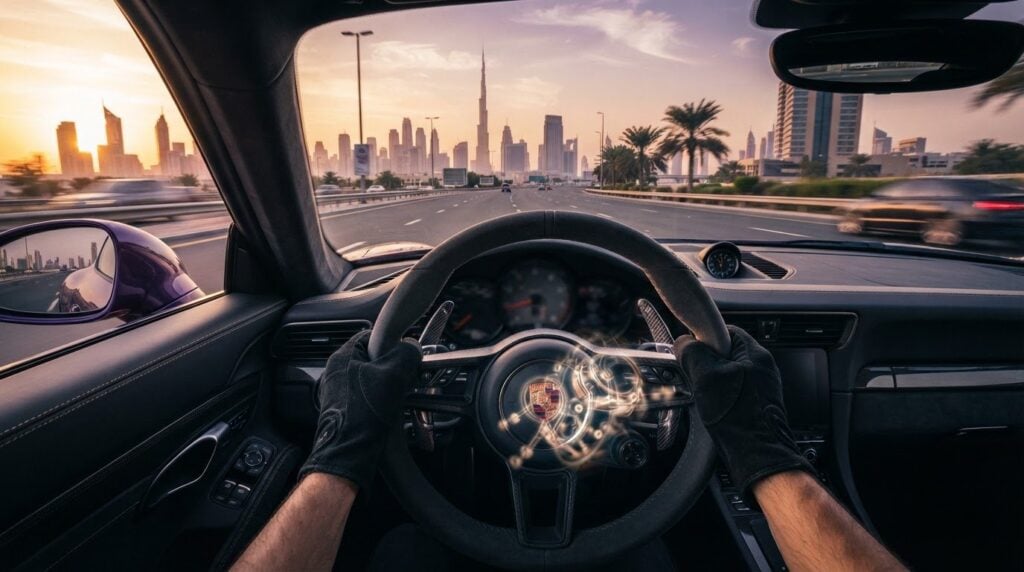
A headline shift-time figure can’t tell you what a gear change feels like from the driver’s seat. The Porsche 911 GT3 RS PDK paddle shift driving experience is about the full shift event: your paddle input, the car’s response, and the sensation as power returns. It’s natural to compare that immediacy with a sequential motorsport gearbox, but the two systems aren’t mechanically equivalent.
PDK is a dual-clutch transmission, while a true sequential racing gearbox uses a different design and operates in a different context. Both can deliver rapid, purposeful shifts, but a number alone won’t explain their distinct character. Any comparison also depends on how response is measured and the conditions behind the claim.
This guide explains how PDK processes paddle commands, what you may notice behind the wheel, and how its shift feel differs from a motorsport sequential. It also covers factors that shape the response, without treating unlike systems as a straight performance contest. If you’re considering a GT3 RS rental, contact the provider to confirm the current vehicle specification and rental details before making plans.
Key Takeaways
- In the Porsche 911 GT3 RS PDK paddle shift driving experience, consider the shift as a complete event, not just a momentary response.
- PDK’s dual-clutch layout differs from sequential gearboxes, whose designs can vary across motorsport applications.
- Shift-time comparisons depend on how a test is measured and the setup used.
- Drive mode, engine speed, selected gear, and driving conditions can shape the car’s response to a paddle command.
- Before enquiring about a GT3 RS rental, confirm the vehicle specification, availability, rental terms, permitted use, and any relevant driver conditions directly with the provider.
What the Porsche 911 GT3 RS PDK paddle-shift experience actually feels like
Paddle shifting lets you request a gear change without reaching for a conventional gear lever. In a Porsche 911 GT3 RS PDK paddle shift driving experience, the interaction is direct: make a deliberate input, let the drivetrain respond, then feel acceleration continue in the next gear. The shift may feel rapid and composed, but its character can vary from one moment to another.
Gear selection, engine speed, the chosen driving mode, and road or circuit conditions all shape what you perceive. A shift at one engine speed may feel different from one at another, while changes in grip, load, or pace can affect the overall impression. That’s why a response-time claim needs context, not just a headline figure.
What happens when a driver pulls a PDK paddle?
A paddle pull is an electronic request, not a mechanical linkage that moves a gear directly. The transmission’s control systems interpret the request and coordinate gear selection and clutch operation. PDK is Porsche’s name for a dual-clutch transmission (DCT), a design that uses separate clutches for different gear sets. The system manages the change; the driver doesn’t operate those clutches by hand.
The paddle command starts the shift process; the transmission completes the gear change. This distinction matters because the time from a finger movement to a completed shift depends in part on how and where it’s measured. Without a defined test method, an exact response figure doesn’t tell you what you’ll feel.
What does a GT3 RS shift feel like from the driver’s seat?
You pull a paddle. The engine note changes as the selected gear changes, and acceleration resumes in the new ratio. The input feels deliberate, while the gearbox handles the mechanical work. How pronounced the sequence feels is subjective: attention, speed, engine load, and driving conditions all influence the sensation.
Keep that impression separate from measurable performance. A driver may describe shifts as crisp or immediate, but those words aren’t a timed test. For broader GT3 RS context, including what to confirm before a rental, check the provider’s current details and verify the vehicle specification directly. The Porsche 911 GT3 RS rental listing can be a starting point, but confirm the exact model year and transmission configuration.
How PDK and sequential motorsport gearboxes deliver a shift
PDK stands for Porsche Doppelkupplung, or Porsche dual clutch. Its two clutches serve alternating gear sets, allowing the transmission to prepare a gear that may be needed next while the current gear is engaged. When a shift is requested, the system coordinates the clutch and gear change. The result can be a rapid transition, but the exact feel depends on the car’s calibration and operating mode.
A dual-clutch road-car system and a motorsport sequential gearbox aren’t identical benchmarks: they use different designs and are tuned for different operating demands. A fair comparison looks beyond the driver’s paddle or lever. Consider what the input requests, how the gear is selected, how clutch operation is managed, and the conditions each system is built to handle.
How PDK prepares and makes a gear change
With alternating gear sets available through separate clutches, PDK can have a likely next gear ready before the shift request arrives. The control system then manages the transition between clutches and gears. That doesn’t mean every shift takes a fixed amount of time: software, mode, engine speed, and the test method all affect observed response. Confirm the exact model year and transmission configuration before applying general PDK details to a specific rental car.
This is why the Porsche 911 GT3 RS PDK paddle shift driving experience is best understood through the complete shift, rather than a single response-time claim. For related circuit context, Hagerty’s review of the 2022 911 GT3 describes an on-track driving experience with PDK. It’s useful background, but it isn’t a direct test of every GT3 RS configuration.
How a sequential motorsport gearbox differs
A sequential gearbox selects the next or previous gear in order, rather than letting the driver choose any gear directly from a conventional H-pattern. The driver may operate it with a lever or paddles. The internal design varies across systems, including gear mechanisms, electronic controls, and clutch strategies. Some use clutch input for launch and manage subsequent shifts differently, depending on the system and application.
The operating context matters. A road-car PDK is designed to combine rapid response with controlled behaviour across varied driving conditions. A competition gearbox is configured for its specific motorsport role. Neither label proves that one system is always quicker or more responsive. To confirm what you’d experience in a GT3 RS rental, ask the provider about the current vehicle specification and rental details through a rental enquiry.
PDK vs. sequential gearbox: compare response without misleading numbers
A shift-time figure is useful only if you know what the timer measures. Does it start when the driver touches a paddle, when the control system registers the request, or when the gear change begins? Does it stop at gear engagement or when torque delivery stabilises? Different start and end points can produce different results, even before test conditions and gearbox setup are considered.
| Comparison point | PDK | Sequential gearbox |
|---|---|---|
| Architecture | Dual-clutch system with electronically managed gear changes. | Gears are selected in sequence; internal designs vary. |
| Driver input | Paddles request a shift; control systems manage the change. | A lever or paddles may request the next or previous gear. |
| Intended context | Performance driving in a road-car transmission. | Motorsport applications with designs tailored to their use. |
| Response factors | Mode, gear, engine speed, calibration, and conditions. | Gearbox design, control strategy, clutch approach, and conditions. |
Which comparison criteria matter more than a headline time?
Assess the whole shift, not just one stopwatch interval. Command recognition describes how the system responds to the driver’s input. Torque interruption helps explain whether power delivery feels continuous or briefly interrupted. Gear engagement describes how the new ratio takes effect, while consistency asks whether the system behaves similarly across operating conditions.
Instrumented testing can quantify defined events under controlled conditions. Driver feedback answers a different question: whether shifts feel smooth, decisive, or confidence-inspiring. Neither replaces the other. To assess a numerical claim, check that both systems were tested with comparable start and end points, setup, operating conditions, and gearbox configurations. Verify figures against primary information or a technically credible test before repeating them.
Why a sequential gearbox isn’t a like-for-like PDK benchmark
These systems serve different operating environments. A road-car transmission must respond within its intended range of driving conditions; a motorsport gearbox is configured around the demands of a specific competition application. Their control strategies and setup priorities can shape the shift event differently. Sequential designs also vary, so the label alone doesn’t establish how a particular unit shifts.
A sequential gearbox isn’t automatically faster or more responsive than PDK, and PDK isn’t another name for a racing sequential. Don’t assume the GT3 RS uses a motorsport sequential gearbox. Confirm the exact vehicle specification before making model-specific claims. For the Porsche 911 GT3 RS PDK paddle shift driving experience, compare how each system handles the request, transfers torque, and behaves in its intended setting, rather than relying on an isolated time without test context.
What changes the GT3 RS paddle-shift response on the road or circuit?
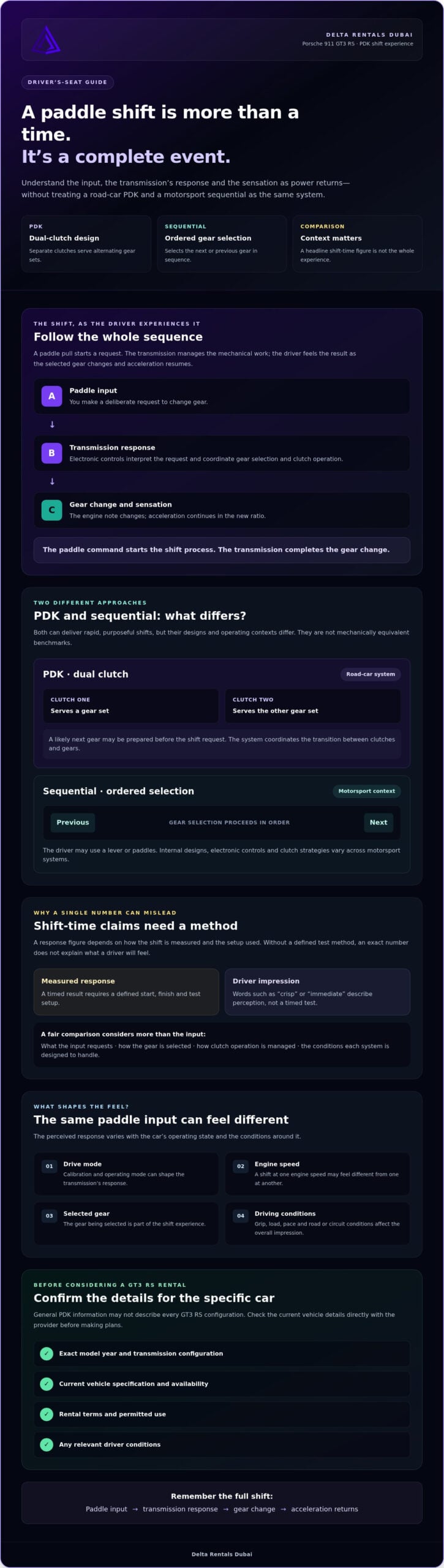
A paddle pull doesn’t produce one fixed sensation every time. The Porsche 911 GT3 RS PDK paddle shift driving experience depends on the car’s setup, what it’s doing at that moment, and the conditions around it. Four variables help explain why a shift may feel different from one situation to another:
- Mode: Transmission calibration can affect shift behaviour and how the car responds to a request. Available modes and features depend on the vehicle’s exact specification, so confirm them rather than assuming.
- Engine speed: A shift request at one point in the rev range may feel different from one at another because the engine and transmission are operating under different conditions.
- Selected gear: The gear being changed from and the gear being requested affect the shift event. Don’t assume every upshift or downshift will feel identical.
- Driving conditions: Vehicle load, road surface, grip, and pace can shape the driver’s impression. A public-road drive and a controlled performance test aren’t equivalent settings.
How driving mode and engine speed shape the shift
Transmission software manages the driver’s request, so a paddle input doesn’t guarantee that every shift will feel exactly the same. The selected mode may influence how the system responds, while engine speed and gear affect the circumstances of the change. For a specific GT3 RS, confirm the model year, transmission configuration, and available settings with the provider before relying on a particular mode name or feature.
Any shift-response time claim should state the test conditions and measurement method alongside the figure. Without those details, a number can’t show whether timing began at the paddle input or elsewhere in the shift, or what conditions shaped the result.
How to assess the experience responsibly
Pay attention to the sequence and consistency of shifts rather than trying to reproduce a performance figure on public roads. Road impressions can help you understand how the controls feel in ordinary conditions, but they can’t replace instrumented testing in a controlled environment. Follow the rental provider’s instructions and applicable UAE road rules throughout your drive.
Before enquiring, review Porsche rental information and confirm the current GT3 RS specification, availability, and rental details directly. For a vehicle-specific enquiry, ask about a GT3 RS rental.
How to arrange a Porsche 911 GT3 RS PDK driving experience
Understanding the transmission is one part of planning a drive. Next, confirm exactly what’s included and which conditions apply. Delta Rentals Dubai offers Porsche 911 GT3 RS rentals, but confirm the vehicle’s current specification and availability directly before making plans. This checklist can help you get clear answers first.
What to confirm before making an enquiry
- Vehicle specification: Ask which model year is currently available and confirm its transmission configuration. Don’t assume every GT3 RS rental has the same setup.
- Availability and rental terms: Check your dates, the rental conditions, and any requirements that apply to your intended use.
- Driver documents and conditions: Ask which documents are required, and confirm applicable age, licence, and insurance conditions directly with the provider.
- Delivery and permitted use: Confirm whether delivery arrangements are available for your booking, and clarify where and how the vehicle may be driven. Don’t assume delivery or a particular type of driving activity is included.
These details matter to the Porsche 911 GT3 RS PDK paddle shift driving experience because the exact vehicle configuration shapes what you’ll encounter at the wheel. They also help you plan around the provider’s terms rather than relying on general descriptions of the model.
Turn gearbox curiosity into a clear enquiry
Make your questions specific. Ask how the paddle-shift controls operate in the vehicle being offered, whether any familiarisation is provided, and what you should understand before driving. Confirm the rental details in the same conversation, including applicable conditions and permitted use. This keeps the discussion practical without assuming a particular route, setting, or inclusion.
Delta Rentals Dubai’s GT3 RS rental offering gives interested drivers a way to enquire about experiencing paddle-shift performance firsthand, subject to confirmation of the vehicle and booking details. You don’t need to commit before you have the information you need. If you’re ready to ask, ask about a GT3 RS driving experience and confirm the current specification, availability, and rental conditions directly.
Make Your GT3 RS Enquiry With Confidence
The Porsche 911 GT3 RS PDK paddle shift driving experience is shaped by the whole shift, from your paddle input to the gearbox’s response and the continuation of acceleration. PDK and a motorsport sequential gearbox use different designs, so headline shift times aren’t a fair comparison unless test methods and conditions match. Mode, engine speed, gear, and driving conditions can also influence what you feel.
Delta Rentals Dubai offers Porsche 911 GT3 RS rental across the UAE. Before planning a drive, confirm the current model year and transmission configuration, availability, rental terms, and permitted use. Check applicable insurance, licence, age, and delivery conditions directly with the provider.
Ready to ask about the experience? Enquire about a Porsche 911 GT3 RS experience and confirm the details you need before deciding.
Frequently Asked Questions
Is the Porsche 911 GT3 RS PDK a dual-clutch transmission?
Yes. PDK, short for Porsche Doppelkupplung, is a dual-clutch transmission. Separate clutches serve alternating gear sets, allowing the transmission to prepare a possible next gear while another is engaged. The driver requests changes through the controls, and the system coordinates the shift. If you’re enquiring about a GT3 RS rental, confirm its model year and transmission configuration directly with the provider.
How fast does the GT3 RS PDK change gears?
There isn’t one response-time figure that describes every shift in every condition. A published number is meaningful only when its test method defines when timing starts and ends, along with the vehicle setup and operating conditions. Paddle input, gear engagement, and the resumption of torque are different points in the shift process. Without comparable test details, treat a headline figure as incomplete rather than a promise of what you’ll feel.
Is PDK faster than a sequential motorsport gearbox?
Not as a blanket rule. PDK and sequential gearboxes use different designs and may be developed for different operating environments. Sequential systems also vary in their mechanisms, controls, and clutch strategies, so the label alone doesn’t predict response. A fair comparison needs comparable tests, matching measurement points, and clearly identified gearbox configurations. Without that evidence, it’s more useful to compare how each system operates than to declare one universally faster.
What does paddle shifting a Porsche 911 GT3 RS feel like?
It feels like making a deliberate request and sensing the drivetrain complete the gear change, with engine sound and acceleration changing as the next ratio takes effect. The precise impression varies with engine speed, selected gear, mode, and driving conditions. The Porsche 911 GT3 RS PDK paddle shift driving experience is about the whole shift event, not just a claimed time. Sensations such as “crisp” or “immediate” are subjective, not measured results.
Can I compare PDK shift response with a racing gearbox using published times?
Only if the figures come from comparable tests. Check the measurement start and end points, test conditions, vehicle and gearbox configuration, and whether the number describes a shift command or completed gear change. Published times from different methods may measure different events, making a direct ranking unreliable. Instrumented figures describe a defined test; driver impressions explain how a shift feels. They answer related but distinct questions.
What should I ask before booking a GT3 RS driving experience?
Ask which model year and transmission configuration are currently available, then confirm availability, rental terms, and permitted use. Check directly with the provider for insurance conditions, required licence and documents, age requirements, and whether delivery arrangements apply. You can also ask how the paddle controls operate and whether vehicle familiarisation is provided. Confirm these details before making plans, since specifications and rental conditions shouldn’t be assumed.
Does a paddle-shift experience mean I can drive on a racetrack?
No. Paddle shifting describes how gear changes are requested; it doesn’t establish where the car may be driven or whether track access is included. Confirm permitted use and any location or activity conditions directly with the rental provider. Don’t assume a rental includes a circuit session, coaching, or a particular route. Follow the provider’s instructions and applicable UAE road rules, and keep public-road driving separate from controlled performance testing.