
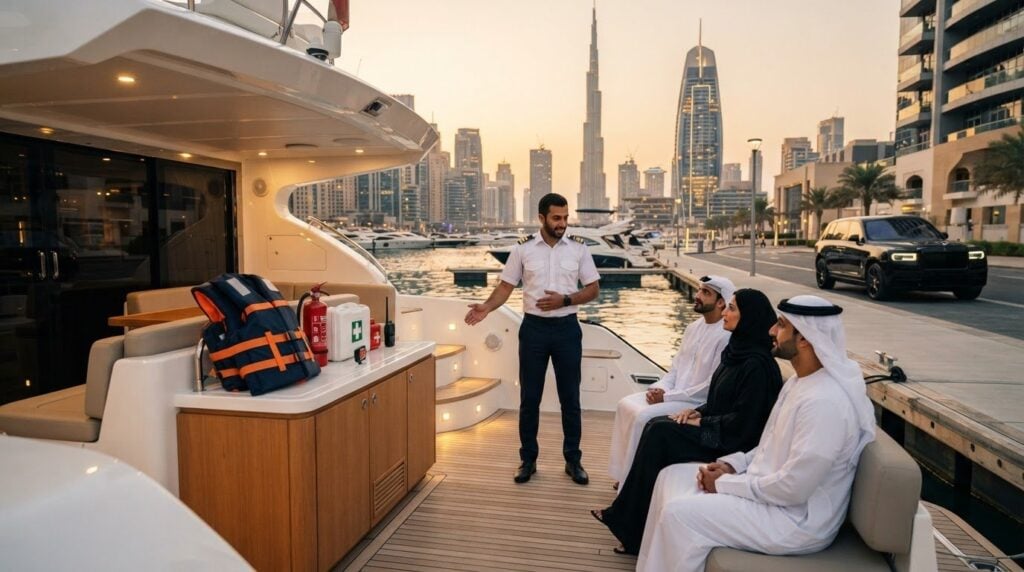
Luxury should feel effortless, but safety should never be left to assumption. Before you confirm a charter with Delta Rentals Dubai, use the safety standards to check on a luxury yacht charter as a practical way to distinguish polished marketing from clear, vessel-specific answers.
Ask what safety equipment is onboard, who is responsible for responding to an emergency, and how guests will be briefed. Have the crew point out where lifejackets, fire extinguishers, and first-aid supplies are kept. You can also ask how they communicate instructions if plans change. Look out for visible concerns, but leave technical checks to the responsible operator and relevant authorities.
This guide covers emergency equipment, crew readiness, vessel condition, and pre-departure procedures. Use it to prepare questions before booking and to follow the briefing before sailing. If the crew can’t explain an important procedure or locate relevant equipment, pause and ask for clarity before departure.
Key Takeaways
- Assess safety through equipment, crew preparation, vessel condition, and clear procedures, not polished presentation alone.
- Use the safety standards to check on a luxury yacht charter in Dubai as a starting point for asking about arrangements suited to the specific vessel and voyage.
- Before departure, ask who is in charge, where relevant emergency equipment is kept, and how the crew would respond if something went wrong.
- Listen to the safety briefing and ask for clarification before the yacht sets sail if you don’t understand an instruction.
- Compare operators by the clarity and relevance of their answers. It’s reasonable to pause if important details remain unclear.
Why yacht charter safety standards deserve a check before departure
A polished interior, attentive service, and premium amenities can make a charter feel reassuring. They don’t show whether emergency equipment is accessible and ready to use, whether the crew knows how to use it, or whether guests understand what to do if a problem arises. Check safety separately from the onboard experience.
Safety readiness means the equipment and procedures are appropriate for the specific vessel and voyage, and the crew can explain how they work. There isn’t one fixed checklist for every yacht. Arrangements can vary with vessel type, passenger capacity, planned itinerary, and applicable rules. Ask about the yacht you’ll board and the trip you’re planning, rather than relying on a generic list.
International guidance can offer useful context, but it doesn’t replace vessel-specific answers. For an overview of the International maritime safety standards, see the SOLAS Convention reference. Treat it as background reading, not confirmation that a particular charter meets a requirement.
What does safety readiness mean on a private yacht?
Readiness means more than having equipment somewhere onboard. Relevant items should be available when needed, in serviceable condition, and understood by the crew. A comfortable lounge, sound system, or dining setup may enhance the trip, but these are amenities, not emergency provisions. Ask the operator which safety arrangements are suitable for this yacht and itinerary.
Who should answer your safety questions?
Ask the charter operator or responsible captain about the equipment, crew roles, and emergency procedures. Look for clear answers about the specific vessel and planned trip, not broad assurances about a luxury experience. You can request clarification before boarding or departure. If an explanation isn’t clear, ask again. You should understand the arrangements before setting sail.
Use the safety standards to check on a luxury yacht charter in Dubai to guide a direct conversation, not as a substitute for one. Ask where relevant emergency items are kept, who takes charge in an incident, and how guests will receive instructions. Clear answers help you make an informed decision. If essential information remains unclear, pause before proceeding.
Emergency safety equipment to check aboard a charter yacht
Use equipment examples as prompts for questions, not as a universal or legally complete checklist. What’s appropriate can depend on the yacht and planned voyage. Ask which emergency provisions are carried for this charter, where they’re stored, and how the crew checks that they’re ready to use.
For general background, the ABYC safety standards are developed for recreational boats and cover areas including design, construction, maintenance, and repair. They can help explain the wider safety context, but they don’t replace questions about the vessel you’ll board or confirm which requirements apply.
Are lifejackets and lifesaving devices accessible?
Ask where lifejackets are stored and how guests can reach them promptly. Have the crew explain how to put them on and use any relevant lifesaving devices, such as lifebuoys. If children are joining or anyone needs a different fit or assistance, ask how the operator will accommodate them. Don’t assume equipment is suitable simply because it’s onboard. Request a clear answer for your group and vessel.
Are fire, first-aid, and communications provisions ready?
Ask where fire extinguishers and first-aid supplies are located, and who among the crew can assist if they’re needed. Then ask how the crew would communicate in an emergency. A VHF radio or EPIRB may be relevant where fitted and applicable, but don’t assume every yacht carries the same devices. The operator or captain should explain the communication method for this vessel and voyage.
Presence, accessibility, and crew familiarity are separate checks. An item may be onboard but difficult to reach, or easy to locate but unfamiliar to the people expected to use it. Ask the crew to point out relevant equipment during the briefing and explain its purpose. You’re not conducting a technical inspection. You’re checking that the provisions are appropriate, available, and part of a clear response plan.
These questions are a practical way to apply the safety standards to check on a luxury yacht charter in Dubai. If you’re considering a charter, you can send a direct inquiry and ask what vessel-specific safety information is available.
Crew, vessel, and rules: how to assess safety beyond the equipment
Equipment is only one part of a safe charter. The crew needs to communicate clearly, the vessel should appear orderly and free of obvious problems, and the procedures should make sense for the trip. You don’t need to perform a technical inspection. Ask specific questions and notice whether the answers are clear and consistent.
What should you ask about crew readiness?
Before departure, ask who will lead the safety briefing and who is responsible for giving instructions in an emergency. Find out how guests should raise an alarm and what to do while waiting for crew direction. The crew should be able to explain the response in plain language. Don’t assume a particular qualification or crew-to-guest ratio applies to every yacht. Ask what’s relevant to this vessel and verify any claims that matter to your decision.
How can you assess vessel condition and applicable rules?
Look for visible concerns, such as damage, loose fittings, or access routes blocked by stored items. These observations aren’t a substitute for a professional inspection. Ask the operator what checks are completed before a charter and how issues are handled. A useful answer describes the process rather than relying only on a general claim that the yacht is maintained.
Rules can depend on the vessel, its registration, the activity, and the planned voyage. Don’t assume an international convention or a particular UAE requirement applies in the same way to every private charter. If an operator cites a regulation or standard, ask which authority or document supports the claim, then confirm its relevance with an authoritative UAE maritime source. Apply the same care to references to SOLAS. Its applicability should be checked against the vessel and voyage, not presented as universal.
Use the safety standards to check on a luxury yacht charter in Dubai to assess more than equipment. Listen for a clear chain of responsibility, a practical explanation of emergency procedures, and specific information about pre-departure checks. If the operator can’t explain who is in charge, how guests should respond, or which rules apply, ask for clarification before boarding or sailing. You don’t need to settle technical or legal questions yourself, but you do need enough reliable information to make an informed choice.
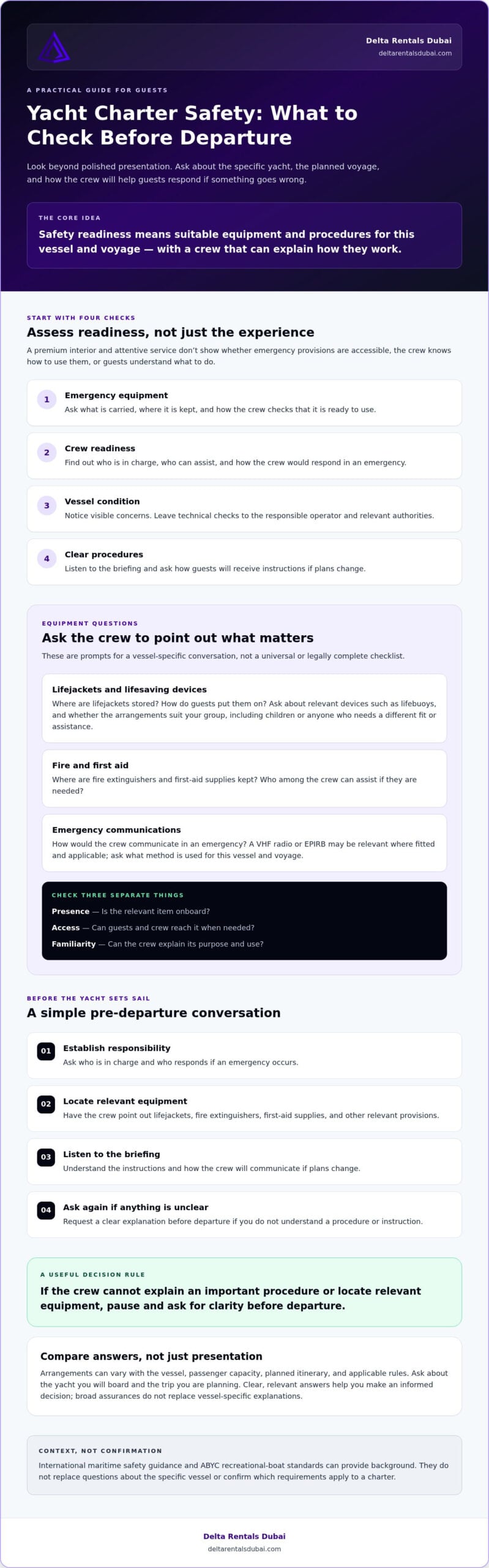
A pre-departure yacht safety checklist: what to see and ask
Use the final briefing to connect the operator’s answers with what you can see onboard. You don’t need to judge technical compliance. Focus on who to follow, where relevant equipment is, and how to get help. The safety standards to check on a luxury yacht charter in Dubai are easier to assess through three simple checks:
- Ask: Who is leading the safety briefing? How should guests raise an alarm or request assistance?
- Locate: Ask the crew to point out relevant lifesaving equipment, first-aid supplies, fire response equipment, and emergency communication devices carried on this vessel.
- Understand: Confirm the crew’s instructions, the route to follow if directed, and any designated meeting point or procedure for your trip.
What should you confirm during the safety briefing?
Listen to the briefing before departure, even if you’ve sailed before. Confirm who gives instructions and how the crew will communicate them. Ask how to request help, where to go if told to move, and what guests should do if someone has a medical issue or there’s a fire onboard. The crew should explain the response in clear, practical terms. Ask for any unclear step to be repeated before the yacht leaves.
Make sure you understand the access routes identified by the crew and whether any areas are off-limits. If the operator identifies a meeting point, confirm where it is and when guests should use it. Don’t guess or rely on another passenger to interpret instructions.
What warning signs should prompt a follow-up question?
Notice if equipment the crew identifies appears missing, obstructed, or visibly damaged. Point it out calmly and ask the crew to clarify its status. A blocked route or an item you can’t locate deserves a direct answer, but appearance alone doesn’t establish whether equipment meets technical requirements. Leave that assessment to the responsible operator and relevant authorities.
Pause if the briefing is skipped, instructions conflict, or the crew can’t explain how guests should raise an alarm. Take unresolved concerns to the operator before departure and ask how they’ll be addressed. If the answer still doesn’t give you confidence, you can delay boarding or decline to sail.
For a yacht charter inquiry, contact Delta Rentals Dubai and ask about vessel-specific safety information before confirming your plans.
How to choose a yacht charter with safety questions answered clearly
A polished booking experience is only one part of choosing a charter. Compare operators by how clearly they discuss safety, how closely their answers relate to the yacht and planned trip, and whether guests receive a useful briefing before departure. Asking these questions is a normal part of planning a premium charter.
Which answers should a responsible operator provide?
Look for direct, practical explanations. The operator should be able to tell you how guests can access relevant safety equipment, who gives instructions, and which procedures are covered before departure. Strong answers refer to the actual vessel and itinerary. “Everything is taken care of” doesn’t tell you where to find equipment or what to do if plans change.
Use the same questions when comparing options. For each charter, note whether you’ve received:
- Clear answers about equipment access, crew instructions, and emergency communication.
- Vessel-specific details relevant to your passenger group and planned trip.
- A proper briefing that explains what guests should do and gives them a chance to ask questions.
If an important answer is given verbally and you’re still uncertain, ask for clarification in writing before confirming. Keep the response with your booking details so you can refer to it later.
What should you do if a safety answer is unclear?
Ask the operator to explain the issue in plain language. If you still don’t understand what equipment is available, who is responsible, or what guests should do, don’t feel pressured to proceed. Pause before confirming or raise the concern with the responsible crew before departure. If essential information remains unresolved, postponing or declining the trip is a reasonable choice.
The safety standards to check on a luxury yacht charter in Dubai are about confidence based on clear information, not promises you can’t verify. Delta Rentals Dubai offers luxury yacht rental services, but confirm specific details about the vessel, equipment, crew, and procedures directly rather than assuming them.
If you’d like to ask about yacht charter arrangements and safety details, contact Delta Rentals Dubai with your questions. Check the prefilled message before sending and edit it to clearly refer to your yacht charter inquiry.
Set sail with clear answers and confidence
A premium experience should come with clear information, not assumptions. Check that relevant emergency equipment is accessible and ready, ask who leads the crew’s response, and listen closely to the pre-departure briefing. The safety standards to check on a luxury yacht charter in Dubai depend on the vessel and planned trip, so look for specific answers rather than broad assurances.
If details about equipment, crew instructions, or procedures remain unclear, ask again before confirming or departing. Taking time to clarify is a sensible part of planning. You can pause if you’re not comfortable with the answers.
Delta Rentals Dubai offers luxury yacht rentals, but confirm vessel-specific equipment, crew credentials, and safety procedures directly. Ask about yacht charter arrangements and safety details. Review and edit the prefilled message so it reflects your yacht inquiry.
Frequently Asked Questions
What safety equipment should be on a private yacht?
The right equipment depends on the yacht, passenger capacity, planned voyage, and applicable rules. There isn’t one universal checklist for every private charter. Examples to ask about include lifejackets, lifebuoys or other lifesaving devices, fire extinguishers, first-aid supplies, and emergency communications. Use the safety standards to check on a luxury yacht charter in Dubai as prompts, then ask the operator what this vessel carries, where it’s stored, and how the crew checks it.
How can I check whether a yacht’s lifejackets are ready to use?
Ask the crew to show you where lifejackets are stored and explain how guests can access and use them. Check that the storage area isn’t blocked, but don’t attempt a technical inspection or assume every yacht uses identical equipment. If children are travelling or anyone needs a different fit or assistance, ask how the operator will accommodate them. The responsible crew can explain what’s available and describe the vessel’s arrangements.
Is a safety briefing required before every yacht charter?
A safety briefing is a sensible pre-departure safeguard, but don’t assume it’s a blanket legal requirement for every charter. Applicable requirements can depend on the vessel and relevant rules. Ask the crew to explain emergency instructions, point out relevant equipment, and tell guests how to request help. If no briefing is offered or an instruction remains unclear, raise the issue with the operator and seek clarity before the vessel departs.
Can I ask to see a yacht’s safety equipment before departure?
Yes. Politely ask the crew to point out relevant emergency equipment and explain how guests can access it. Treat this as a practical conversation, not a guest-led technical inspection. The crew should explain the arrangements for that yacht and trip. Ask about anything you can’t locate or understand. If access is obstructed or the explanation is unclear, discuss the concern with the operator before departure rather than making assumptions.
What should I do if emergency equipment appears damaged or inaccessible?
Tell the crew or operator promptly and ask for a clear explanation. Don’t attempt repairs or move safety equipment yourself. Let the responsible crew address the concern. If it remains unresolved, or essential instructions are still unclear, pause and discuss whether departure should proceed. You don’t need to diagnose technical compliance from appearance alone. Focus on getting a specific answer before deciding what to do.
Does SOLAS apply to every private yacht charter?
Don’t assume SOLAS applies identically to every private yacht charter. Whether an international convention is relevant can depend on the vessel’s characteristics and use, the voyage, and applicable rules. Check the specific situation with an authoritative maritime source or qualified operator, and verify current UAE requirements separately. SOLAS isn’t a universal guest checklist or a substitute for confirming which standards and procedures apply to the charter.