
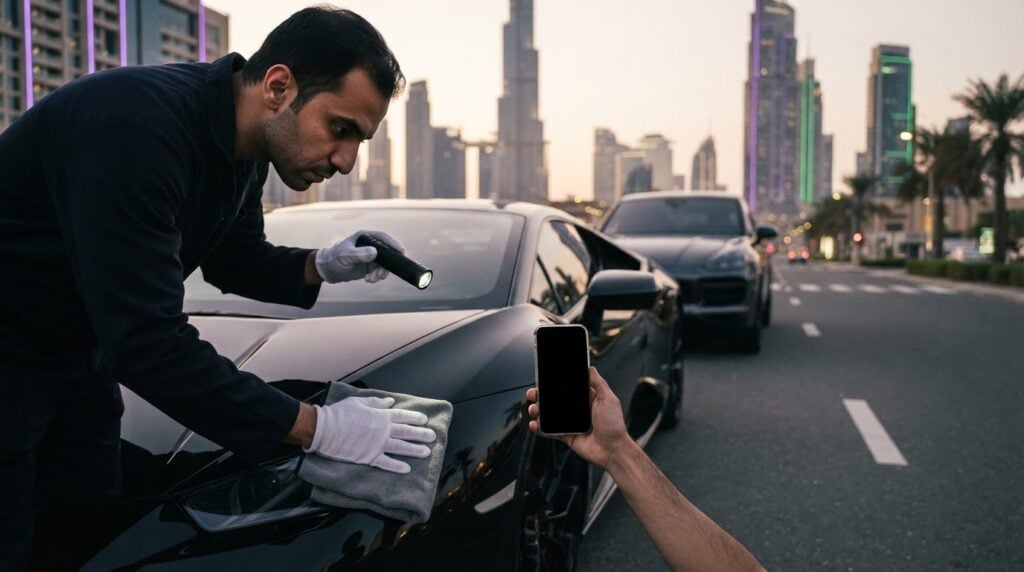
What if the smallest paint mark becomes the hardest detail to explain at return? A luxury vehicle return inspection protocol for exterior paintwork integrity gives you a consistent way to check and record what you see, before the handover feels rushed.
It’s understandable to feel unsure about which marks deserve a closer look. Reflections, dust and poor lighting can hide or exaggerate scratches, while a quick walk-around may leave gaps in your records. Inspect the car in good light, follow the same sequence each time and compare your observations with the initial condition report.
This guide provides a practical exterior checklist for reviewing each panel, noting scratches, chips and dents, and taking useful, time-stamped photos. You’ll learn how to distinguish marks already recorded from newly observed ones, and why your rental agreement matters when assessing condition. The goal is a calm, well-documented handover, with records that make the comparison straightforward, whether you’re returning a supercar or another premium vehicle.
Key Takeaways
- Prepare with a clean, dry vehicle, suitable lighting and the initial condition records close at hand.
- Describe scratches, chips, scuffs and residue as visible observations rather than assuming what caused them.
- Use a luxury vehicle return inspection protocol for exterior paintwork integrity to check panels in a consistent order, including low and high surfaces.
- Take clear, time-stamped photos that show both each mark and its location on the vehicle.
- Compare your notes with the initial report, review differences calmly at handover and keep copies of the records.
Why a luxury vehicle return inspection should start with the paintwork
A luxury vehicle return inspection protocol for exterior paintwork integrity is a consistent visual review and written record of a vehicle’s exterior paint condition at handover. It helps you record what you observe and compare it with the original condition report, without treating every mark as damage or assuming how it happened.
Start with the paintwork because it covers broad, visible surfaces that can look different as the light and viewing angle change. A small mark may be easy to miss in shadow or difficult to distinguish from residue in bright reflections. Give the finish a measured inspection rather than jumping to a conclusion. A careful record makes the comparison clearer, while the rental documentation and process guide the assessment.
Modern automobile paint commonly uses layers such as primer, basecoat and clearcoat. A visual check can describe what appears on the surface, but it cannot reliably identify which layer is affected or diagnose a repair need. Keep the handover record factual.
What counts as an exterior paintwork inspection?
Include painted body panels, the visible finish and relevant painted exterior trim. Check the vehicle systematically, then record each notable observation by location, appearance and approximate size. For example: “fine line on the lower left front door, approximately 4 cm long.” That description is more useful than “new damage,” which asserts timing and cause that a visual check alone may not establish.
Use neutral terms such as scratch-like line, small chip, scuff or surface residue. Note whether a mark is easy to see from a normal viewing angle or only under close inspection. Photograph it for reference, but don’t present an image as a repair diagnosis. The purpose is to capture visible condition, not determine when a mark appeared, who caused it or what work it may need.
Why the initial condition record matters at return
A like-for-like comparison gives both parties a clearer reference. If the vehicle’s original condition documentation includes a photo or note for a particular panel, compare the same area and describe any visible difference precisely. Refer to the rental’s initial report rather than relying on memory.
Keep observations separate from conclusions. A mark absent from one photograph is not, by itself, proof of when it appeared. Lighting, angle and image quality can affect what a record shows. Note any difference calmly and refer to the rental agreement and condition records for the applicable handover process. Clear documentation supports an orderly conversation without predicting charges or assigning responsibility.
Prepare the vehicle and inspection conditions before checking the paint
A reliable luxury vehicle return inspection protocol for exterior paintwork integrity begins before the walkaround. Set up a fair comparison: make the vehicle’s visible finish easier to assess, gather the original condition records and have a camera ready. A few minutes of preparation can reduce guesswork and help keep your observations factual.
- Choose suitable light: Look for bright, even conditions and check panels from more than one angle.
- Allow access: Make room to walk around the vehicle and see lower and higher painted areas.
- Review the records: Bring the initial condition report and any existing handover photos.
- Prepare a camera: Use a phone or camera to capture both the vehicle’s overall context and close views of individual marks.
- Check the surface: A clean, dry exterior can make visible marks easier to assess.
Choose lighting and conditions that make marks easier to see
Even, bright light helps you notice differences across a panel. View each area straight on, then shift your position to catch marks that appear only at an angle. Harsh glare can exaggerate reflections or wash out detail, while deep shade can conceal fine lines. Dirt, water and surface residue may also affect what’s visible, so don’t treat a limited view as definitive.
If conditions aren’t suitable, note that in your records. For example: “Lower right door viewed in shade; visibility limited.” This gives context without guessing about the mark. Where practical, continue the comparison when lighting improves, using a similar angle to the original condition photo.
Gather the return inspection essentials
Keep the initial report open as you prepare, so you can locate existing notes and images before starting the walkaround. Use consistent framing: take one photo that shows where a mark sits on the vehicle, followed by a closer image that captures its appearance. Include enough surrounding panel to make the location clear.
Avoid rubbing an unfamiliar mark or applying a cleaning product while documenting it. That could change what’s visible or make comparison harder. If dust or residue obscures the surface, record the limitation rather than assuming what lies underneath. Use neutral wording, such as “dark residue near the rear bumper,” and refer to the relevant condition records during handover.
Once the return is documented, you can turn your attention to the next drive. Explore your next luxury car rental with Delta Rentals Dubai.
Compare paint marks carefully: scratches, chips, scuffs and surface residue
Use neutral descriptions to separate what you can see from what you can’t establish by looking. A scratch-like line, a small chip or a patch of residue may look similar at a glance, but recording its location, shape and visibility from different angles makes the account more precise. The luxury vehicle return inspection protocol for exterior paintwork integrity is a visual comparison, not a diagnosis of damage, cause or age.
| Observation | What to record | Photo approach |
|---|---|---|
| Scratch-like line | Panel, direction, approximate length and whether it catches the light at an angle. | Take a context image showing the panel, then a closer view from the angle where the line is visible. |
| Chip-like spot | Panel, approximate size and visible colour or shape. Don’t infer when it occurred. | Capture the spot close up, with enough surrounding panel to show its location. |
| Scuff | Area and visible appearance, such as a pale or dull patch. | Photograph from straight on and, if useful, a second angle that shows its outline. |
| Surface residue | Location and appearance, such as a streak or dark deposit. | Record the area as seen without wiping it first; note if residue limits visibility. |
How to describe common paintwork observations
Be specific and brief. “Fine horizontal line on the left rear door, approximately 5 cm long, visible in angled light” gives a clearer account than “scratch on the side.” For a chip, record where it appears and its approximate size. Describe scuffs and residue by location and visible colour or texture, without assuming a scuff will wipe away or that a mark needs repair.
Compare each observation with the initial condition record. If you’re uncertain whether something is a mark or surface residue, say so. A careful description is more useful than a confident guess.
When a mark may involve clear coat or paint protection film
A mark’s appearance alone may not show whether it affects clear coat, another paint layer or paint protection film. Film edges, lifting or a visible change in surface appearance can be recorded if they’re clear, but don’t treat them as proof of what lies underneath. Avoid scraping, polishing or testing an uncertain area during handover.
Keep the record factual: note the panel, visible feature and conditions that affect what you can see. This keeps the return discussion focused on documented observations rather than assumptions about cause or responsibility.
Use this step-by-step checklist to inspect every exterior panel
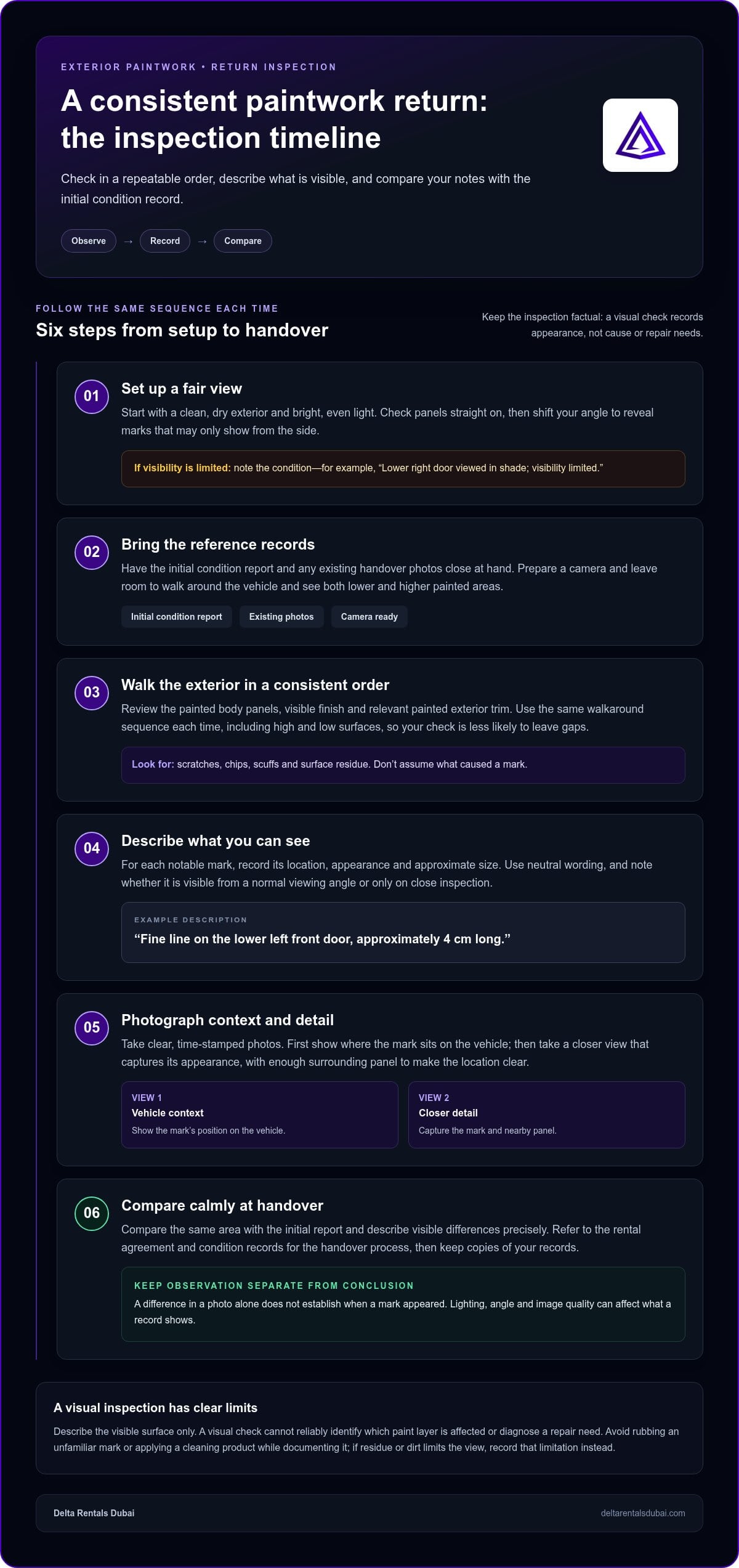
Turn your preparation into a repeatable walkaround. The luxury vehicle return inspection protocol for exterior paintwork integrity works best when you follow the same route, check each painted area and record observations before completing the handover. Keep the original condition report nearby and describe what you can see rather than assuming when or how a mark appeared.
Follow a consistent panel-by-panel walkaround
Start with a full-vehicle photo that establishes the car’s overall condition and orientation. Then move around it in one direction, checking each surface from more than one angle. A fixed route helps prevent missed areas, especially low panels and painted trim.
- Front: Check the bumper, bonnet, grille surrounds and visible painted trim.
- One side: Inspect the front wing, doors, door edges, side skirts and mirror housing.
- Rear: Review the rear quarter panels, boot or tailgate, bumper and painted trim.
- Other side: Continue along the remaining doors, edges, wing, mirror and lower panels.
- Higher areas: Check the roof and other visible upper painted surfaces, using a safe viewpoint.
At each area, look for chips, scratch-like lines, scuffs and visible changes in finish. Don’t rush past edges, bumpers or lower sections because they’re less prominent. If a surface is difficult to see, note the limitation rather than treating the check as complete.
Create photos and notes that are useful later
For each notable observation, take a wider image that identifies its position, then a focused close-up. Keep the subject in focus and include enough surrounding detail to connect both images. Use a simple note format: panel, visible observation and image reference. For example, “right front wing, short diagonal line, photos 06-07.”
Compare each observation with the initial condition report before describing it as newly observed. If a similar mark appears in the original record, note the match. If the images don’t allow a clear comparison, say so. Keep your wording neutral and factual.
Before completing the return, review the notes and images with the handover representative where possible. Discuss differences calmly, refer to the relevant records and keep a copy of the documentation. Ready to plan your next premium drive? Explore your next luxury car rental.
Complete a clear handover and make your next luxury rental effortless
A composed return closes the experience on a clear note. Use the records you’ve gathered to review visible differences calmly, keeping observations separate from assumptions about cause or responsibility. A consistent luxury vehicle return inspection protocol for exterior paintwork integrity supports an organised handover, while the rental agreement and its documentation remain the reference for the return process.
Finish the return review with clear records
Before completing the handover, check that your notes and images tell the same story. Match each photo to the relevant panel and written observation, then refer to the initial condition report when discussing a difference. If a detail is unclear, describe what you can see and where, rather than making a claim about when it appeared.
- Review the notes together: Confirm that each observation identifies the correct panel and visible feature.
- Reference the images: Match close-ups with wider photos that show the mark’s position on the vehicle.
- Compare the records: Refer to the original condition documentation when discussing a difference.
- Retain copies: Keep the completed handover records and relevant images in line with the rental agreement.
Keep the conversation factual and measured. For example, “This line is visible on the left rear door; I’ve included the close-up and wider view” focuses on the record without assigning blame or predicting an outcome. A calm review helps make the final exchange clear.
Plan your next premium vehicle experience
Once the paperwork is in order, you can turn your attention to what you’d like to drive next. Delta Rentals Dubai offers premium vehicles across the UAE, including the Porsche 911 GT3 RS, Rolls-Royce Cullinan Black Badge and McLaren Artura. Explore the premium vehicle rental options and consider which model suits your next journey.
For a personal next step, message Delta Rentals Dubai about your next luxury rental.
Make every luxury rental handover a confident one
A clear return starts with a consistent routine. Inspect the exterior in suitable light, follow the same route around the vehicle and record marks with neutral descriptions. Pair close-ups with wider photos, then compare your notes with the initial condition report before discussing differences.
This luxury vehicle return inspection protocol for exterior paintwork integrity helps keep the handover organised. Visible marks are observations, not proof of their cause or age. Factual notes and matched images make it easier to review the vehicle’s condition calmly and retain a useful record.
When you’re ready for another drive, Delta Rentals Dubai offers premium supercar and luxury vehicle hire across the UAE. The fleet includes the Porsche 911 GT3 RS, Rolls-Royce Cullinan Black Badge and McLaren Artura. Explore the premium fleet and plan your next drive. A thoughtful handover today sets the tone for your next luxury experience.
Frequently Asked Questions
What should I check on a luxury car before returning it?
Inspect every visible painted area in good, even light and compare it with the initial condition report. Follow one route around the vehicle, checking bumpers, doors, wings, mirrors, roof, lower panels and painted trim. Note scratches, chips, scuffs or residue by location and appearance. Take a full-vehicle photo and clear images of notable marks, then keep your records ready for the handover.
How do I document scratches on a rental car at return?
Record the panel, direction, approximate length and whether the scratch-like line is visible from more than one angle. Take a wider photo to identify its position, followed by a focused close-up, and match both images to a short written note. Compare them with the original condition report before calling the mark newly observed. The luxury vehicle return inspection protocol for exterior paintwork integrity captures visible facts, not guesses about cause or timing.
Can lighting affect a car paintwork inspection?
Yes. Even, bright light can make surface details easier to see, while harsh glare may exaggerate reflections and deep shade may hide fine marks. View a panel straight on and from another angle, if possible. Dirt, water and residue can also affect visibility. If lighting or surface conditions limit the review, note that in your records instead of treating the inspection as definitive.
What is the difference between a scratch, chip and scuff?
A scratch usually appears as a line across the finish; a chip is a small spot where the surface looks missing or interrupted; a scuff often appears as a broader rub or dull patch. These are visual descriptions, not diagnoses. Record what you can see, including the panel and approximate size. Don’t assume how the mark happened, when it appeared or whether it can be removed.
Should I clean or polish a mark before returning a luxury rental car?
Avoid polishing, scraping or rubbing an unfamiliar mark during the handover inspection. These actions can change its appearance and make comparison with the condition records less clear. If the surface is dirty or residue obscures the area, note the limitation and photograph it as seen. Keep your description neutral, such as “streak on the rear bumper,” rather than guessing what is underneath or attempting a repair.
How many photos should I take during a vehicle return inspection?
There’s no single photo count that suits every vehicle or inspection. Take enough to show the overall car, each relevant panel and every notable observation clearly. Pair a wider image that identifies the mark’s location with a close-up that shows its appearance. Keep the images focused and match them to brief notes or image references. Coverage and clarity matter more than reaching an arbitrary number.
What should I do if the return inspection identifies a paint mark?
Stay calm and review the mark with the handover representative. Describe its visible location and appearance, then refer to the matching images and initial condition report. If the records don’t make a clear comparison possible, say so without assigning blame or predicting an outcome. Keep copies of relevant notes, photos and completed handover documents, and refer to your rental agreement for the applicable return process.