
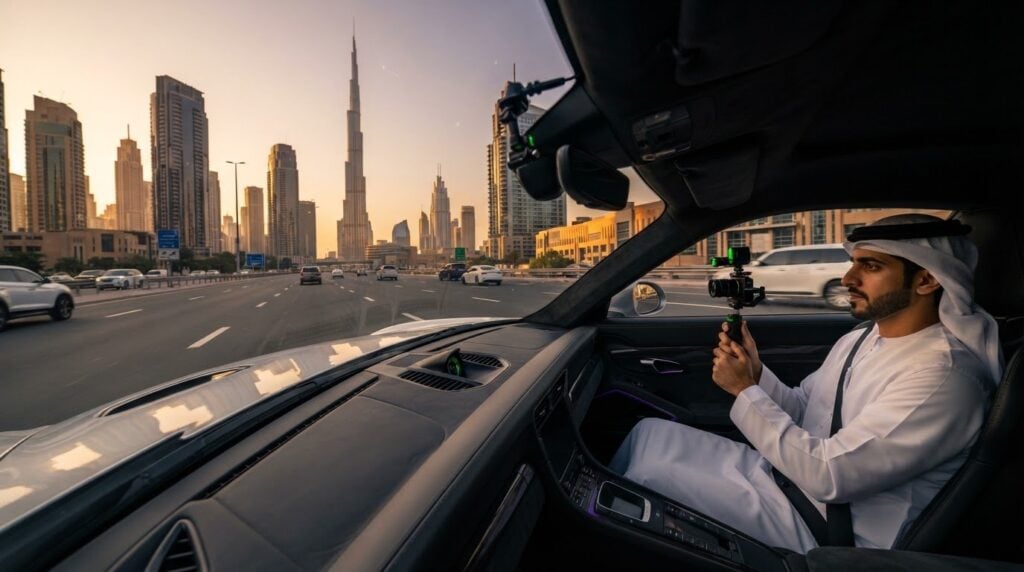
Could a few seconds of supercar footage create more risk than the drive itself? If you’re asking, “is it legal to film yourself driving a supercar in UAE,” the answer depends on how you operate the camera, what appears in the frame, where you film, and whether you share the footage.
Wanting to capture the sound and feel of a memorable drive is understandable, but filming should never compete with driving. Holding or operating a phone is different from using a camera mounted before you set off or having a passenger film. Privacy questions may also arise if footage shows identifiable people, number plates, conversations, or private spaces. Publishing a clip adds considerations beyond simply recording it for yourself.
This guide explains those distinctions and offers practical ways to reduce distraction and review footage carefully. Rules and permissions can depend on the circumstances, so check current UAE requirements before recording or posting, especially for a planned production. Enjoy the car, and make safety and privacy part of the plan.
Key Takeaways
- The answer to “is it legal to film yourself driving a supercar in UAE” depends on how you record, what your footage captures, and how you use it.
- Handheld phone use, a fixed camera, and passenger filming raise different considerations. No setup is automatically safe or lawful in every circumstance.
- Review footage for identifiable people, number plates, conversations, and private spaces before sharing it online.
- Plan the camera setup while parked, keep your attention on the road, and verify current UAE rules and any location-specific permissions before a production.
- Keep the focus on the drive, then consider a Porsche 911 GT3 RS rental from Delta Rentals Dubai for a premium supercar experience.
Is it legal to film yourself driving a supercar in the UAE?
There isn’t a blanket yes or no. The answer may depend on how the camera is operated, whether the driver handles a device, what the footage captures, and where and why the recording is made. Recording yourself doesn’t automatically make phone use while driving permissible. A camera mounted before setting off can reduce the need to handle a device, but it doesn’t settle every traffic, privacy, or filming-permission question.
What does the answer depend on?
Start by considering who operates the camera and what the car is doing. A driver reaching for a phone, a fixed camera recording without interaction, and a passenger filming are different situations. None should be treated as automatically lawful. The driver still needs to maintain attention and control, so even a brief adjustment can create a distraction.
Location and purpose matter, too. Recording on a public road raises road-safety and traffic-rule considerations. Filming at a private or controlled location may involve separate access or permission requirements. For road context, the Speed limits in the United Arab Emirates overview shows why rules can vary across the Emirates. Follow posted limits and check applicable requirements for your route and filming location.
Recording is different from sharing
Footage kept for personal use is not the same as a public post, commercial production, or distribution to others. Sharing may expose details that raise separate privacy concerns, such as identifiable faces, number plates, conversations, or views into private spaces. A person or vehicle in the background can make a clip sensitive, even when you are the main subject. Consider what the camera captures before recording, then review the complete footage before sharing it.
In short, how, what, and where you record matters, and sharing adds another layer. A personal intention doesn’t automatically settle whether a recording or its publication complies with the rules.
Rules and enforcement can change, and the answer may depend on the specific circumstances. Before recording or posting, check current UAE requirements against official sources, including relevant federal traffic and privacy rules and any applicable emirate or location permissions. Treat this as general information, not legal advice. If you’re planning a production rather than recording a private drive, confirm the applicable requirements before filming.
Can you use a phone or camera while driving a supercar?
How you use the equipment matters, but no camera setup is a reason to take your attention off the road. If you’re asking, “is it legal to film yourself driving a supercar in UAE,” distinguish between handling a phone, a camera secured before the drive, and a passenger recording. Each creates different safety and legal considerations, and none should be treated as automatically permitted.
Handheld phones and driver distraction
Holding, tapping, adjusting, or checking a phone can divert your eyes and hands from driving, even if you intend to capture only a short clip. Don’t operate a phone to film while the car is moving, and don’t assume a pause in traffic makes interacting with it acceptable. UAE traffic requirements can change, so check current official guidance on device use before setting out. This section is general information, not legal advice.
Hands-free equipment may reduce the need to hold a device, but it isn’t blanket permission to record or interact with equipment in every situation. The driver remains responsible for maintaining attention and control. If a setting, angle, or alert needs your attention, leave it until the vehicle is safely parked.
Mounted cameras and passenger filming
A securely mounted camera can help keep the driver’s hands free, but secure mounting is a safety measure, not proof of legal compliance. Position it before moving, make sure it doesn’t obstruct your view or interfere with vehicle controls, and don’t reach over to adjust it on the road. A fixed camera also doesn’t settle separate questions about what’s captured or how the footage is used.
Having a passenger operate the camera can reduce driver interaction. Agree on framing before departure and leave the device in the passenger’s hands. This doesn’t remove privacy considerations if the footage includes identifiable people, number plates, or private spaces. If setup requires the driver’s focus, wait until the car is safely parked.
- Handheld phone: avoid operating it while driving, and verify current UAE traffic rules.
- Mounted camera: secure and frame it before moving, and don’t adjust it from the driver’s seat.
- Passenger filming: let the passenger handle the camera, while considering what enters the frame.
Keep the order simple: prepare the equipment, drive attentively, and review footage only when parked. If you’re planning a drive in a Porsche 911 GT3 RS, you can discuss a supercar rental while keeping recording decisions separate from the driving experience.
What if your supercar footage captures other people or is posted online?
A clip can feel personal while it sits on your phone, then take on a different significance once you upload or distribute it. Recording and publishing are separate actions, and each may raise different legal questions. If you’re considering “is it legal to film yourself driving a supercar in UAE,” remember that being the main subject doesn’t mean every detail in the frame is yours to share.
Privacy and identifiable details in recordings
Other people may appear in reflections, roadside views, or passing vehicles, even when you’re filming yourself. Faces, number plates, recognisable voices, and views into private spaces can make footage more sensitive. UAE privacy and cybercrime rules may be relevant, but how they apply depends on the facts and current law. Check official UAE sources before recording or sharing, rather than assuming that footage made in a public place can be shared without concern.
Reduce what the camera captures at the planning stage. Frame the shot around the interior or driver, avoid pointing toward bystanders or private property, and review the full clip before sharing. Cropping or blurring may help limit exposure, but don’t assume either step, or consent in one situation, automatically resolves every legal concern.
Posting, monetising, or using footage commercially
A private keepsake, a public social-media post, paid creator content, and an organised commercial shoot are not interchangeable. A social platform makes footage accessible to others, so treat an upload as publication rather than an extension of a private camera roll. Monetising a clip or producing content for a business may add further considerations.
Commercial filming can involve permissions beyond ordinary personal recording, depending on the location and purpose. Before planning a shoot, check current requirements with the relevant UAE authorities and whether permissions apply to the specific place and activity. Don’t assume that permission to access a location also authorises filming or publication. This is general information, not legal advice.
- Before recording: choose a frame that avoids unrelated people, plates, conversations, and private spaces.
- Before posting: review the entire clip, not only the moment that features the car.
- Before a production: check current official guidance for the intended location, use, and distribution.
Keep the distinction clear: capturing footage isn’t the same as publishing it. Careful framing and review can reduce avoidable exposure, but neither replaces checking the rules that apply to your particular recording.
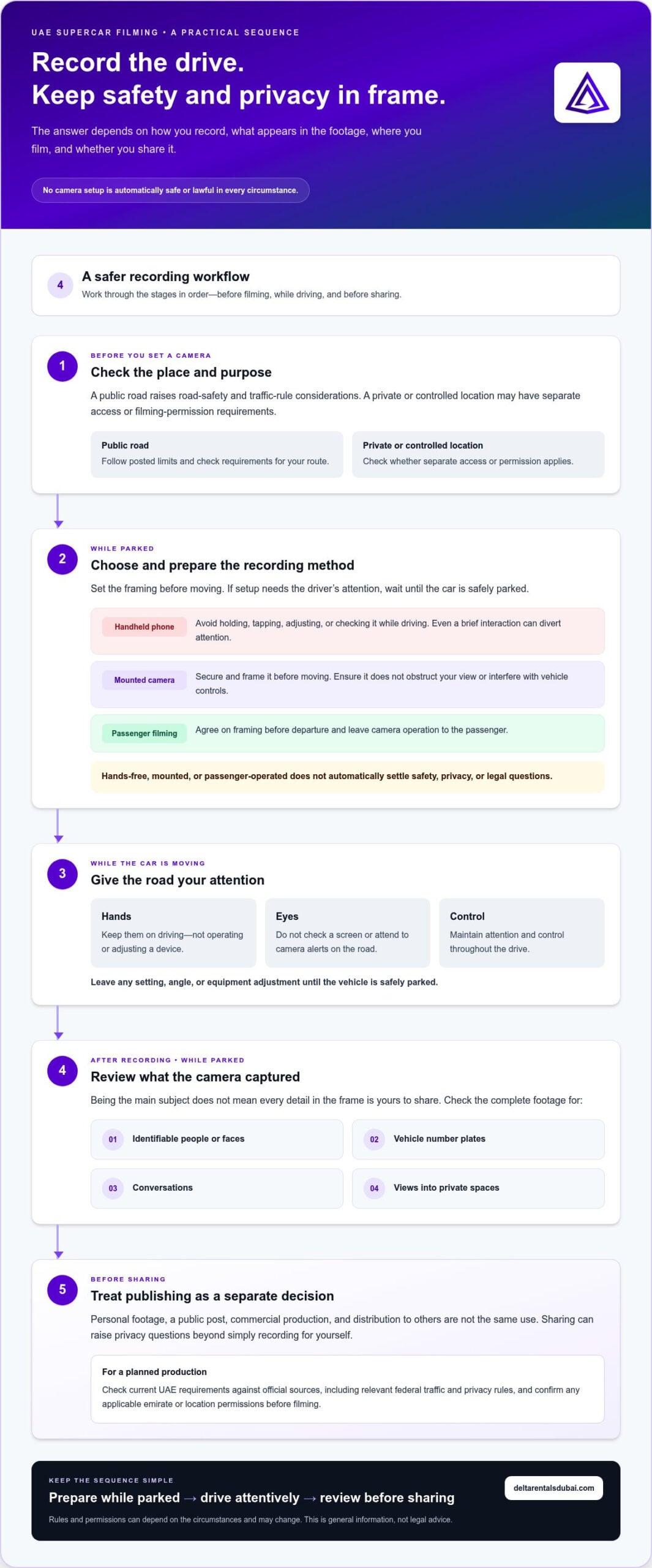
How to record a supercar drive more responsibly in the UAE
A considered setup lets you focus on the drive instead of managing a camera on the road. If you’re still asking, “is it legal to film yourself driving a supercar in UAE,” use this checklist to reduce distraction and identify questions that need a current, official answer. It’s practical guidance, not legal advice.
Before the drive: plan the setup
- 1. Check current guidance. Review official UAE traffic and privacy information relevant to your recording plan. If you’re filming at a particular location or creating public, promotional, or commercial content, check whether location-specific permissions or other requirements apply.
- 2. Choose the operator. Plan for a passenger to manage recording where appropriate. Agree on the shot before departure so the driver doesn’t need to frame, start, stop, or adjust a device while driving.
- 3. Configure while parked. Secure the camera and check the framing before setting off. Make sure equipment doesn’t obstruct the driver’s view, cover controls, or create another distraction. If anything needs adjustment, do it only when safely parked.
- 4. Keep the drive in control. Don’t change the plan to chase a shot, react to the camera, or interact with recording equipment on the move. If the setup becomes distracting, stop recording and concentrate on driving.
Before sharing: review the footage
Watch the complete clip before uploading it. Look beyond the supercar and check the background, reflections, and audio. A careful review may reveal people, vehicle plates, private conversations, or a location that needs extra care.
- 1. Limit exposure. Consider removing footage that includes unrelated people or sensitive details. Cropping or blurring may help, but don’t assume either automatically resolves every legal concern.
- 2. Check the intended use. A private recording, public post, promotional clip, and organised commercial production can raise different questions. Check current requirements for the purpose and location before publishing or arranging a shoot.
- 3. Use reliable guidance. For a specific legal answer, consult current UAE government information or a qualified legal professional. Don’t rely on old posts or general online commentary for a decision about your circumstances.
Keep the priority order simple: safety first, then recording, then careful review and sharing. For a premium drive, you can discuss renting a Porsche 911 GT3 RS, and keep the camera secondary to the experience.
Enjoy a supercar drive without making filming the priority
A supercar deserves your attention on the road, not constant attention from a camera. The order is simple: drive safely, record only in a way that follows applicable rules, share footage carefully, and enjoy the experience. If you’re still weighing up “is it legal to film yourself driving a supercar in UAE,” remember that the answer depends on the circumstances. Choosing a rental car doesn’t change the legal or safety considerations.
Choose the experience, not a risky shot
You don’t need to document every moment to remember a great drive. Decide in advance whether a passenger will record, or plan to capture a few moments only when the car is safely parked and filming is appropriate for the location. Don’t reach for a phone or adjust a camera while driving to get a better angle.
Keep the legal questions separate from the car choice. Check current official guidance for your recording plans, and confirm any location-specific permissions before a planned production. If the requirements are unclear, consult a qualified legal professional. General article guidance can’t determine how a rule applies to every situation.
Plan your next supercar rental
For drivers considering a high-performance car, Delta Rentals Dubai offers Porsche 911 GT3 RS rentals as one premium vehicle option. Choose the car for the drive itself, then make recording decisions around safe driving and careful sharing. Renting a vehicle does not determine whether a particular filming plan is permitted.
Explore the premium supercar rental options if you’re comparing vehicles for your next drive. For a specific Porsche 911 GT3 RS rental guide, use the relevant guide on the site rather than relying on a guessed page address.
Make the camera secondary. Let the road, the car, and the moment take priority.
Ready to discuss a supercar rental? Message Delta Rentals Dubai about your rental.
Make the drive memorable for the right reasons
So, is it legal to film yourself driving a supercar in UAE? It depends on how you record, what your footage captures, where you film, and whether you share it. Keep your hands and attention on driving, prepare equipment before setting off, and let a passenger handle recording where appropriate. Before publishing or planning a production, review footage for identifiable people and private details, and check current UAE rules and location-specific permissions through official guidance.
A camera doesn’t need to capture every moment. Put safety first, record responsibly, and share with care. That leaves more room to enjoy the sound, design, and feel of the car itself.
Delta Rentals Dubai offers premium supercar and luxury vehicle rentals across the UAE, including the Porsche 911 GT3 RS. If you’re ready to plan your drive, discuss your supercar rental plans with our team. Enjoy the road, and let the experience take the lead.
Frequently Asked Questions
Is it legal to record yourself driving a car in the UAE?
There isn’t a single answer for every recording. If you’re asking “is it legal to film yourself driving a supercar in UAE,” consider how the camera is operated, whether the driver handles a device, what the footage captures, and where it’s made. Recording yourself doesn’t automatically make device use while driving permissible. Check current official UAE traffic, privacy, and location-specific guidance before recording or sharing, especially for planned productions.
Can I use my phone to film while driving in the UAE?
Don’t hold, operate, or adjust a phone to film while driving. Even a brief glance or tap can take attention from the road, and interacting with a phone at a traffic stop may still raise concerns. A holder or hands-free setup isn’t blanket permission to interact with a device. Check current official UAE traffic guidance for the rule that applies, and set up or review your recording only when safely parked.
Can a passenger film inside a moving car in the UAE?
A passenger operating the camera can reduce the driver’s need to handle recording equipment, but it doesn’t automatically make every recording lawful. The driver still needs to maintain attention and control, and footage may capture other people, number plates, conversations, or private spaces. Agree on framing before the journey and ask the passenger to manage the device. Check current UAE privacy and filming requirements before posting or using the footage.
Is a dashboard-mounted camera automatically legal in the UAE?
No camera setup should be treated as automatically lawful in every circumstance. A securely mounted camera may help avoid handling a device, but placement, driver visibility, the recording’s purpose, what it captures, and how footage is shared can all matter. Fit and test the camera while parked, ensuring it doesn’t obstruct the view or controls. Check current official UAE traffic and privacy guidance for your specific use.
Can I post driving footage that shows other people or number plates?
Be cautious before posting footage that makes people or vehicles identifiable. Faces, number plates, voices, and private settings can raise privacy concerns, and uploading a clip is separate from recording it. Don’t assume that filming in a public place, blurring details, or having consent in one context resolves every issue. Review the entire clip and consult current official UAE guidance or a qualified legal professional for a specific case.
Do I need permission to film a car on a public road in the UAE?
Whether permission is needed depends on the location, purpose, and nature of the filming, so don’t assume that a public road permits every kind of shoot. A personal recording and an organised promotional or commercial production may involve different requirements. Before planning a production, check current rules with the relevant UAE authority and any location-specific conditions. This is general information, not a determination of what applies to your situation.
Can I film a rental supercar for social media in the UAE?
You can’t assume that renting a supercar gives you permission to film or publish any footage. Keep the driver focused on driving, arrange passenger-led recording where appropriate, and review the clip for identifiable people, number plates, and private details before posting. Social-media publication can raise separate concerns from a private recording. Delta Rentals Dubai offers premium vehicle rentals across the UAE, including the Porsche 911 GT3 RS. A rental does not determine whether a filming plan or post is permitted.