

What if the most important check before driving a six-figure supercar isn’t under the bonnet, but in the paperwork? The insurance verification steps when renting six figure exotic machinery can feel dense, especially when policy wording and rental terms use different language. A card or certificate may show that a policy exists, but it may not explain which vehicles, drivers, or types of damage are covered.
Before accepting the keys, get a clear view of the coverage, exclusions, driver conditions, and responsibilities set out in the rental agreement. Check that the documents match the vehicle and rental period, then record the car’s condition at handover. That gives you a practical record to refer to if a question comes up during or after the rental.
This guide offers a document-led checklist for reviewing insurance evidence, comparing it with the agreement, and recording key details before you set off. You’ll know what to look for, which questions to resolve in writing, and how to finish the handover with clear records, whether you’re preparing for a Porsche 911 GT3 RS, a McLaren Artura, or another premium rental in the UAE.
Key Takeaways
- Use the insurance verification steps when renting six figure exotic machinery to compare policy documents with the rental agreement, not just an insurance card.
- Check that the vehicle, rental dates, permitted drivers, geographic scope, and permitted use align wherever these details appear.
- Review the policy wording for relevant conditions and exclusions, and resolve unclear or conflicting terms before accepting the keys.
- At handover, match the vehicle identity to the paperwork and record existing damage in agreed written and photographic records.
- Keep copies of the documents and handover evidence so you have a clear record of the rental details and vehicle condition.
Why insurance verification matters when renting six-figure exotic cars
A premium vehicle deserves more than a quick glance at an insurance card. The insurance verification steps when renting six figure exotic machinery involve reviewing current documents tied to the rental, understanding the stated coverage scope, and comparing those details with the rental agreement and its conditions. The aim is clarity before you accept the vehicle, not an assumption that every policy works the same way.
Insurance evidence and a rental agreement serve different purposes. Policy documents describe insurance terms, while the agreement sets out the rental arrangements and may explain the renter’s responsibilities. Read both together. A certificate alone may not show every relevant condition, and a rental agreement alone should not be treated as a substitute for the applicable insurance wording. Terms vary by policy and contract, so don’t rely on a presumed standard level of cover.
What does insurance verification mean for an exotic-car renter?
Start with the documents that apply to the specific vehicle and rental period. Review the insurance certificate or schedule, relevant policy wording, and rental agreement. Check which vehicle the documents refer to, who is named or permitted to drive, and any conditions that affect how it may be used. Foundational vehicle insurance principles can help explain terms such as liability and property damage, but the actual documents determine the terms relevant to your rental.
Read unclear wording before accepting the keys. A document review helps you understand what the papers say; it doesn’t guarantee that a future claim will be accepted. A claim may depend on the facts, applicable terms, and how the relevant conditions apply.
Why a premium vehicle still needs a careful coverage check
A car’s prestige or market value doesn’t, by itself, establish what a particular policy covers. The documents may identify a high-performance model, while the policy wording sets out specific conditions for drivers or use. Look for relevant exclusions, confirm how authorized drivers are described, and understand any deductible or excess stated in the documents. Don’t infer that a term applies, or is absent, just because it’s common in other agreements.
Insurance verification is a pre-rental review of the documents and contract to understand the stated coverage, conditions, and responsibilities for the specific vehicle and rental. Use that review to spot mismatches, clarify wording, and make an informed decision before handover. With a premium rental such as a Porsche 911 GT3 RS or McLaren Artura, a calm, document-led check helps keep the experience clear from the outset.
Which insurance documents and coverage terms should you inspect?
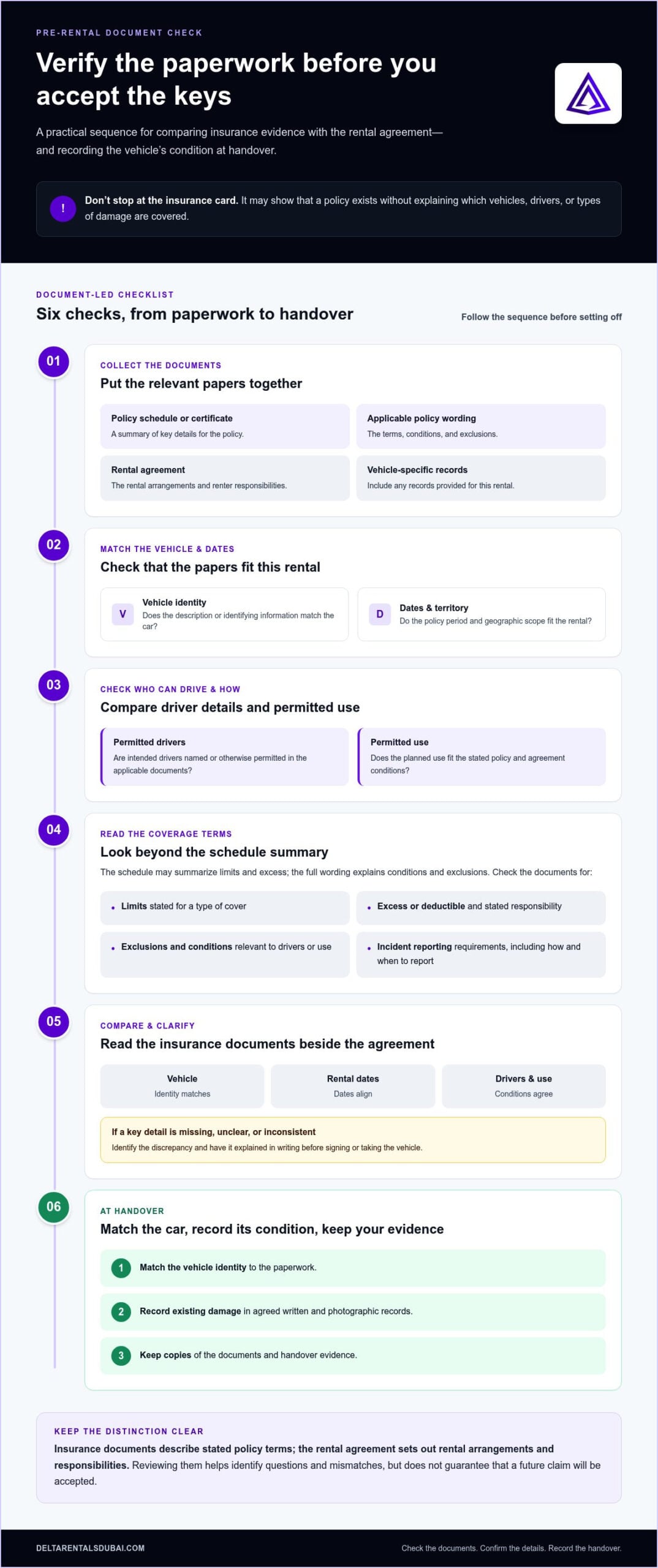
Put the documents side by side before signing or taking possession. A useful review usually includes the policy schedule or certificate, applicable insurance wording, rental agreement, and any vehicle-specific records provided for the rental. Each serves a different purpose: the schedule summarizes key details, the wording explains how the policy operates, and the agreement sets out rental terms and responsibilities.
Use the FTC consumer advice on rental cars as a general introduction to rental-car insurance concepts, not as a guide to UAE law or a substitute for your rental documents. Then check the actual terms that apply to your booking.
How to read the policy schedule, limits, and exclusions
Start with the schedule, but don’t stop there. It may summarize the insured vehicle, policy period, limits, and excess, while the full wording explains conditions and exclusions. A limit is the maximum amount stated for a type of cover; an excess or deductible is the amount you may be responsible for under the terms. Look for exclusions, conditions, and claim-notification requirements, including how and when an incident must be reported. Don’t assume a particular limit or protection applies unless the documents say so.
For the insurance verification steps when renting six figure exotic machinery, check these details wherever they’re stated:
- Vehicle: Does the description or identifying information match the car being rented?
- Dates and territory: Do the policy period and stated geographic scope fit the rental?
- Drivers and use: Are the intended drivers permitted, and does the planned use fit the conditions?
- Responsibility: What do the documents say about damage, excess, exclusions, and incident reporting?
How to compare the insurance documents with the rental agreement
Next, compare the insurance evidence with the agreement line by line. Match the vehicle identity and rental dates. Check that driver conditions in the agreement and policy documents are consistent with who will drive. Compare any stated geographic or use restrictions, and note how each document describes responsibility for damage and the steps for reporting an incident.
Pause if a key detail is missing, unclear, or inconsistent. For example, a difference in dates or driver names can leave you unsure which terms apply. Identify the discrepancy and have it explained in writing before signing or taking the vehicle. For a premium rental, you can also discuss your rental through the rental communication channel as you prepare your document checklist.
A practical insurance verification checklist before you book
Make the paperwork review a booking step, not a last-minute glance at handover. These insurance verification steps when renting six figure exotic machinery help you identify mismatches early and keep a record of what was clarified. Focus on what the documents actually say; requirements and terms can differ between policies and rental agreements.
Five checks to complete before signing
- Gather the relevant documents. Review the policy schedule or certificate, applicable wording, rental agreement, and any vehicle-specific records provided for your booking.
- Match the vehicle and dates. Check that identifying details for the car and the rental period align across the paperwork. For a specific example of a premium model, see the Porsche 911 GT3 RS rental information.
- Check drivers, territory, and use. Compare the intended drivers with any named or authorized-driver conditions. Review stated geographic boundaries and restrictions on vehicle use. Don’t assume a condition is universal; follow the wording in the documents that apply to your rental.
- Understand financial and incident terms. Find the stated excess or deductible, exclusions, damage responsibilities, and claim or incident notification process. For a general example of why excluded-vehicle wording matters, read about insurance for excluded vehicle types. This US insurer’s guide is an illustration, not evidence of the terms or rules for a UAE rental.
- Save a complete record. Keep copies of the documents and written answers to any questions. Note the document version or date where available, so you can tell which wording you reviewed.
This is a practical review, not a universal legal checklist. Treat each item as a prompt to understand the terms that apply, rather than assuming every policy must use the same limits, protections, or conditions.
How to handle unclear or inconsistent paperwork
If the vehicle description, rental dates, driver details, or stated responsibilities conflict, pause before signing or taking possession. Identify the exact wording and document, then request clarification in writing through the rental communication channel. A verbal explanation may be helpful, but a written response is easier to retain alongside the agreement and policy papers.
Keep the answer with your records and check that it addresses the discrepancy directly. If the explanation results in a change to a document or agreement, retain the updated version too. Once the essential details align and you understand the stated conditions, you can make a considered decision about proceeding. To discuss a premium rental, use the rental communication channel.
At handover: match the documents to the car and record its condition
Insurance verification doesn’t end when you finish reading the paperwork. At pickup, connect the documents you reviewed to the actual vehicle, then make a clear record of its condition before driving away. These final insurance verification steps when renting six figure exotic machinery help keep the vehicle, agreement, and handover evidence aligned.
What to document before driving away
Follow a simple sequence. First, compare the vehicle’s identifying details with the rental agreement and any vehicle-specific records. Next, check that the agreement reflects the rental dates and intended driver details. Then inspect the car in good light, including the exterior, wheels, glass, interior, and any accessories listed in the handover record.
Note visible marks, scratches, dents, warning indicators, or other condition details. Use the rental process for written notes and photographs, and retain copies where available. Take images that show where each mark is on the vehicle, along with closer views. If the written record doesn’t reflect what you see, ask for the difference to be recorded through the agreed handover procedure before leaving.
Dated handover records give both sides a clearer account of the vehicle’s condition at the start of the rental. Keep copies of the signed agreement, condition notes, photographs, and relevant messages together. A tidy record is easier to refer to later than scattered images or verbal recollections.
What to do if an incident occurs during the rental
If an incident happens, follow the reporting instructions in the rental agreement and applicable policy documents. Record the time, place, and circumstances while they’re clear, and preserve relevant photographs, messages, and other records. Don’t assume that a particular type of damage is covered or that a claim will be accepted; those outcomes depend on the applicable terms and circumstances.
Reporting duties can depend on the location and circumstances of an incident. Avoid relying on generic advice for a different jurisdiction. Check current authoritative UAE guidance for any reporting requirements relevant to the specific situation, and follow instructions in the rental documents as well.
Keep the rental contact informed through the stated communication channel and retain a copy of your notification and any response. If you’re arranging a premium vehicle rental, discuss your rental with Delta Rentals and prepare to complete the handover with clear, agreed records.
Make an informed exotic rental decision with Delta Rentals
A confident rental decision comes down to alignment. The vehicle, rental dates, permitted drivers, stated terms, and supporting records should tell a consistent story. Complete the insurance verification steps when renting six figure exotic machinery by reviewing the actual documents for your rental, not by relying on assumptions about what a premium-car policy usually includes.
A final go-or-pause checklist for renters
Before accepting the keys, take one last pass through the essentials. Proceed when you’ve reviewed the applicable documents, understand the responsibilities they describe, and the records match the vehicle and rental arrangement. Pause if an important detail is missing, unclear, or inconsistent. Resolve it in writing before signing or taking possession, then keep a copy of the final agreement and handover record.
- Vehicle and dates: Do the car details and rental period align across the documents?
- Drivers and conditions: Are the intended drivers and stated use consistent with the applicable terms?
- Responsibilities and records: Do you understand the stated conditions, and do you have copies of the final paperwork?
A clear answer matters more than a quick assumption. If one document appears to say something different from another, return to the relevant wording and written clarification before proceeding.
Plan your rental with clarity
Delta Rentals Dubai offers premium vehicle rentals, including the Porsche 911 GT3 RS, McLaren Artura, and Rolls Royce Cullinan Black Badge. Explore premium vehicle rental information as you consider the experience that suits your plans. Keep model-specific details separate from your insurance review: the car you choose doesn’t, on its own, tell you what the applicable documents provide.
Once your document checks are complete, bring any rental questions to Delta Rentals Dubai. A prepared conversation can focus on the vehicle and rental details you’re considering, while your understanding of coverage stays grounded in the actual policy and agreement. Take the time to align the paperwork, clarify open points, and keep your records together. Then you can make your decision with greater confidence and a clear account of the terms you reviewed.
Message Delta Rentals Dubai to discuss your rental.
Make your next rental decision with confidence
A polished exotic-car experience starts with clear paperwork. Review the applicable insurance documents alongside the rental agreement, and make sure the vehicle, rental dates, permitted drivers, and stated conditions align. The insurance verification steps when renting six figure exotic machinery also include resolving unclear terms before accepting the keys and keeping a dated record of the vehicle’s condition at handover.
Use the actual policy and contract as your guide, not broad assumptions about what a premium rental includes. Delta Rentals provides premium vehicle hire across the UAE, with models such as the Porsche 911 GT3 RS and McLaren Artura. A careful document review helps you approach your chosen rental informed and ready.
Ready to explore your options or discuss a premium vehicle rental? Discuss your premium vehicle rental with Delta Rentals. Take the time to get the details clear, then enjoy the experience with confidence.
Frequently Asked Questions
What insurance documents should I check before renting an exotic car?
Review the policy schedule or certificate, applicable policy wording, rental agreement, and any vehicle-specific records provided for the rental. Compare the vehicle identity and rental dates, then check permitted drivers, geographic scope, permitted use, stated limits, excess or deductible, exclusions, and incident-reporting instructions wherever these details appear. The schedule is a summary, so read the relevant wording too. Keep copies of the documents and any written clarification you receive.
Does renting a six-figure exotic car mean it is fully insured?
No. The car’s value or prestige doesn’t establish what a specific policy covers, and “fully insured” can mean different things to different people. Coverage depends on the applicable policy wording, rental agreement, conditions, exclusions, and circumstances. Read the documents together and clarify terms you don’t understand before accepting the keys. A document review helps you understand stated terms, but it can’t guarantee how a future claim will be assessed.
How can I check whether I am an authorized driver on a rental car policy?
Look for driver eligibility and authorization wording in both the applicable insurance documents and rental agreement. Check whether your name must be listed, whether additional drivers need to be recorded, and whether any stated conditions apply to each driver. Don’t assume that permission from one document automatically settles the terms in another. If the wording is unclear or inconsistent, request written clarification before driving and keep the response with your rental records.
What does an excess or deductible mean when renting an exotic car?
An excess or deductible is the amount the renter may be responsible for paying toward a covered loss, as described by the applicable terms. The wording may explain when it applies, whether different situations have different amounts, and how it relates to exclusions or other conditions. Read the relevant policy and rental clauses rather than assuming a standard figure. Ask for unclear terms to be explained in writing before signing.
Can insurance exclude certain uses or locations during a rental?
Yes, a policy or rental agreement may state restrictions on vehicle use or geographic scope. Read the applicable wording for conditions that relate to your planned journey and how you intend to use the car. Check both sets of documents because they serve different purposes and may describe responsibilities differently. If a location or activity isn’t clear, get written clarification before proceeding. Don’t assume that a restriction in one rental applies to every policy.
What should I photograph at an exotic car handover?
Photograph visible marks, scratches, dents, wheels, glass, interior condition, warning indicators, and any accessories or items noted in the handover record. Take clear, dated images that show both the overall vehicle and close views of specific damage. Follow the agreed handover process, make sure written notes reflect what you observed, and retain copies of photographs and condition records where available. This creates a clearer record of the vehicle’s condition at pickup.
What should I do if the insurance documents and rental agreement do not match?
Pause before signing or taking the vehicle if a material detail conflicts, such as the car description, rental dates, driver conditions, or stated responsibilities. Identify the wording and documents involved, then request a written explanation through the rental communication channel. Keep the response with the applicable insurance documents and agreement, and retain any revised paperwork. The insurance verification steps when renting six figure exotic machinery are only useful if unresolved differences are addressed before handover.