

What if the most polished part of arriving in a low-slung sports car is the exit? A low seat, raised door sill, and fitted business clothes can make standing up awkward, especially when you’re trying not to brush the car or crease a jacket. Learning how to safely exit low stance sports cars in formal business attire starts with a controlled movement, not a rushed push upward.
Tailored trousers, a fitted jacket, or a skirt can limit your range of motion, while an unstable step can affect your balance, outfit, or the car’s finish. A composed exit is easier with a little preparation and a deliberate sequence.
This guide explains how to arrange your clothing, turn your legs toward the doorway, place your feet securely, and rise steadily. You’ll also learn how to adapt the movement to your outfit, when to pause, and when assistance may help. Whether you’re stepping out of a Porsche 911 GT3 RS or another low-stance car, the aim is simple: leave the cabin with confidence and keep the moment professional.
Key Takeaways
- Use a calm, controlled sequence to exit low-stance sports cars in formal business attire.
- Assess the doorway, seat, and ground before shifting your weight out of the car.
- Choose movements that suit your outfit and footwear. Don’t force a pose or expect clothing to stay completely wrinkle-free.
- Follow a simple routine, then adapt it to the car’s layout, including models such as the Porsche 911 GT3 RS.
- If your footing or movement feels uncertain, pause and consider asking for assistance.
How to Safely Exit a Low-Stance Sports Car in Formal Attire
A low seat changes the movement from sitting to standing. Add a fitted jacket, tailored trousers, or a skirt, along with a narrow doorway or raised sill, and getting out can feel less straightforward than expected. The goal isn’t to move quickly or strike a particular pose. It’s to stay balanced, give your clothing room to move, and avoid brushing against the car.
Start by preparing your outfit and checking the space around you. Turn toward the open doorway, place both feet on stable ground where the opening allows, then rise in a controlled way. Once upright, pause to settle your clothing. These general principles draw on the principles of ergonomics: make the movement manageable for your body rather than forcing an awkward position.
Use this guidance as a starting point, not a substitute for the vehicle’s instructions. Follow the owner’s manual for model-specific guidance, and stop if a movement causes pain or you feel unsteady.
What makes a low sports-car exit feel difficult?
In a low seat, your body starts closer to the ground, so standing requires a larger change in height than rising from a standard chair. The doorway may also require you to place your feet around a sill before you can stand. If you’re unfamiliar with the seat or opening, it can be harder to judge where your feet will land. Fitted garments and restrictive footwear can further limit comfortable movement. Assess the space before shifting your weight.
The quick sequence before you stand
Set up first. Confirm that the car is safely parked, stationary, and secured according to its instructions. Keep your seat belt fastened until you’re ready to exit, then release it without rushing. Check the ground through the open doorway for obstructions or uneven footing. Turn toward the opening, make room for your clothing, and place your feet outside before rising. If your outfit catches, your footing feels uncertain, or you need to adjust your position, pause and reset. A deliberate exit is more composed than trying to recover from a rushed one.
When learning how to safely exit low stance sports cars in formal business attire, focus on controlled movement, not a flawless pose. The seat, sill, and doorway vary by car, so adapt the sequence to the space available. If you can’t find stable footing or movement hurts, remain seated and seek assistance rather than forcing your way up.
Use the Seat, Doorway, and Footing to Stay Balanced
A steady exit begins before you lift your weight from the seat. Turn your hips toward the open doorway in small, controlled movements, then check the space outside. Look for traffic, nearby obstacles, and uneven ground. Protect your balance, clothing, and the vehicle by moving only when the path is clear.
Once you’ve assessed the space, bring your feet toward the opening and place them on firm ground where the doorway allows. Check that your footwear isn’t caught against the sill and that both feet can support you before you rise. If one foot lands awkwardly, reposition it while you’re still seated. Avoid twisting quickly or standing while your weight is shifting between the cabin and the ground.
These small adjustments support proper body mechanics to prevent back pain, especially when a low seat makes standing more demanding. If a movement causes discomfort or you feel unsteady, pause rather than pushing through it.
Where to place your hands without stressing the car
Use a support point only if the vehicle provides a firm, suitable surface for that purpose. Depending on the layout, a stable seat area may help you steady yourself, but the same grip won’t work in every car. Avoid pulling on the open door, steering wheel, movable controls, or delicate trim. These parts may shift or be unsuitable for bearing your weight. If you can’t identify a dependable support point, rely on secure footing and ask for assistance if needed.
How to move your feet and hips through the doorway
Turn your hips toward the opening before lifting your body, giving your legs and clothing room to follow. Move one foot at a time if that feels more controlled, and keep your movements small enough to notice a snag or loss of balance. If a shoe catches on the sill or a tight garment restricts your turn, stop and reset instead of forcing the movement.
Vehicle layouts differ, so these are general guidelines rather than model-specific instructions. Follow the owner’s manual for the car you’re driving, including a Porsche 911 GT3 RS, and use only the support points its design permits. This practical approach to how to safely exit low stance sports cars in formal business attire keeps your movement deliberate without treating the car as a handhold. For a premium drive in a low-stance performance car, explore a Porsche 911 GT3 RS rental.
Protect Formal Clothing Without Making the Exit Awkward
A careful exit doesn’t need a dramatic pose. Small adjustments before you move can keep fabric clear of the seat and doorway while allowing a natural movement that suits you and the car. Clothing may still crease when you sit or move, so focus on comfort and avoiding snags rather than aiming for a perfectly wrinkle-free result.
Fit and fabric affect how easily you can turn and stand. A fitted jacket may pull across the shoulders, tailored trousers may restrict a wide step, and a skirt or dress may need arranging before you pivot. Smooth fabric with your hands instead of pulling sharply on a seam, waistband, or hem. If movement feels restricted, pause and make a small adjustment before continuing.
Jackets, tailored trousers, and skirts
While seated, settle jacket panels and trouser fabric so they aren’t trapped beneath you or caught near the seat edge. Arrange a skirt or dress comfortably before turning toward the doorway; don’t force your legs into a position that feels restrictive. Check that loose hems and jacket panels are clear of the door hinge and sill. There’s no single posture for every garment, body, or vehicle, so choose adjustments that preserve your range of movement.
Shoes, accessories, and discreet preparation
Before standing, make sure your footwear feels stable on the ground and isn’t caught against the sill. A narrow heel, smooth sole, or restrictive shoe can affect your footing, so place your feet deliberately. Keep a handbag, briefcase, or loose accessory out of the footwell and doorway, where it could obstruct your movement or snag your clothing.
- Before you move: Smooth or arrange fabric with a light touch, and clear loose items from your path.
- As you exit: Let your outfit move with you. Don’t force a wide step or pull hard on tailored fabric.
- Once standing: Move to a safe spot away from traffic, then settle your jacket, hem, or trousers.
Adapt the sequence to your mobility and comfort. If reaching to adjust clothing affects your balance, leave it as it is until you’re safely upright, or ask someone nearby for help. That’s the practical approach to how to safely exit low stance sports cars in formal business attire: composed, comfortable, and suited to the person wearing it.
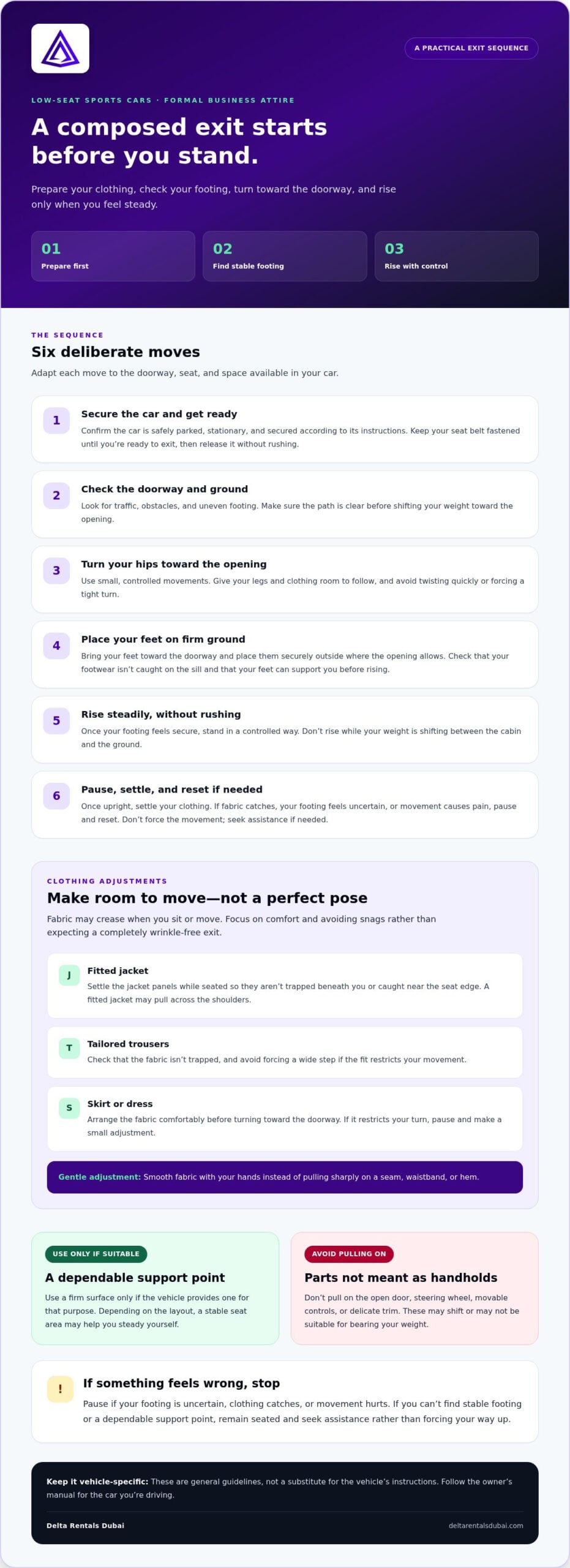
Follow These Steps to Exit a Low Sports Car Smoothly
A repeatable routine makes the exit easier to manage, especially when formal clothing or limited space calls for an extra moment. Never attempt to get out while the vehicle is moving. Park securely, follow the vehicle’s instructions, and take each step at your own pace.
A practical five-step exit routine
- Park and assess. Make sure the vehicle is fully stopped and secured. Check for traffic, obstacles, and uneven ground before opening the door. Open it only when it’s safe to do so.
- Prepare to turn. Arrange clothing that could catch on the seat or doorway. Keep bags and loose items out of your path. Release the seat belt when you’re ready to exit.
- Pivot toward the opening. Turn your hips and legs toward the doorway in a controlled way. Avoid twisting quickly or forcing a movement that feels restricted.
- Place your feet, then rise. Put your feet on stable ground where the opening allows, checking that your footwear isn’t caught on the sill. Shift your weight gradually and stand steadily, using only a suitable support point provided by the vehicle.
- Pause and settle. Once upright and safely clear of the doorway, check your footing and smooth your clothing with a light touch. Move away from traffic before making further adjustments.
Stop if you feel unsteady, pinched, or obstructed. Reposition your feet or clothing before continuing. Don’t pull on the door or delicate trim to force yourself upright, and follow model-specific instructions in the owner’s manual.
When to adapt the routine or ask for assistance
Pain, restricted movement, unstable ground, or footwear that won’t grip securely are reasons to pause rather than push through. If the movement still doesn’t feel comfortable, ask a passenger for help if you want it. Explain what support would be useful before they assist. Accepting help is a considered safety choice, and your comfort and dignity come first.
With practice, how to safely exit low stance sports cars in formal business attire becomes less about perfecting a pose and more about using a calm, repeatable sequence. If you’re ready to experience a low-stance performance car, ask about renting a Porsche 911 GT3 RS.
Make a Confident Exit Part of the Sports-Car Experience
A composed arrival includes a comfortable exit. The same technique won’t feel identical in every performance car because seat shape, doorway clearance, and sill design vary. Take a moment to understand the space around you and adapt the steps to the vehicle rather than forcing yourself into a fixed pose.
Apply the technique to an unfamiliar performance car
Notice how the seat supports you, how far the doorway opens, and where the sill and ground sit in relation to your feet. Check for nearby obstacles. This quick assessment helps you decide how to turn and where to place your feet before shifting your weight. In a Porsche 911 GT3 RS, use the same general principles while assessing the actual vehicle in front of you. Don’t assume its layout or exit details based on another car.
Follow the owner’s manual for model-specific controls and procedures. If anything about the seat, door, or opening is unfamiliar, pause and orient yourself before getting out. Calm preparation is a practical way to move with confidence in a new car. For more about the vehicle, explore the Porsche 911 GT3 RS rental guide.
Choose a hands-free arrival when that suits the occasion
Driving isn’t the only way to enjoy a premium arrival. If you’d rather not manage the car and the exit yourself, chauffeured travel can be a comfortable alternative, particularly when formal clothing or mobility needs make getting in and out less convenient. Choose the option that suits your plans and comfort. You can learn more in the luxury chauffeur service guide.
The key to how to safely exit low stance sports cars in formal business attire is adapting the method to both the car and yourself. Allow time to assess the opening, respect your comfort, and ask for assistance if needed. Make your next premium drive feel considered from arrival to departure. Ask about a Porsche 911 GT3 RS rental or a chauffeured experience.
Make Your Next Sports-Car Arrival Feel Effortless
A confident exit doesn’t depend on speed or a special pose. Prepare your clothing, pivot toward the open doorway, check your footing, and rise steadily. Adapt the movement to the car and your comfort, and pause or ask for assistance if you feel unsteady or restricted.
That’s the practical approach to how to safely exit low stance sports cars in formal business attire: protect your balance, avoid catching your outfit, and give yourself time to move with control. Follow the vehicle’s instructions, especially when getting out of an unfamiliar model.
Ready to pair a composed arrival with a memorable drive? Delta Rentals Dubai offers Porsche 911 GT3 RS rentals across the United Arab Emirates. Explore the Porsche 911 GT3 RS experience and speak with the team on WhatsApp. Take your time, trust your footing, and enjoy every part of the experience.
Frequently Asked Questions
Can I exit a low sports car in a fitted business suit?
Usually, yes, if you can move comfortably and the car’s doorway allows it. Before turning, arrange loose jacket panels or trouser fabric so they’re not trapped beneath you or caught at the seat edge. Pivot toward the doorway, place your feet securely, and rise at a controlled pace. Don’t force a posture that pulls at seams. If fabric catches or movement feels restricted, pause and adjust before continuing.
What is the safest way to get out of a low sports car?
Park securely, check for traffic, obstacles, and uneven ground, then open the door when it’s safe. When you’re ready, release the seat belt and turn toward the doorway. Place your feet on stable ground before standing, where the opening allows. Use a suitable support point only if the car provides one. Rise steadily, check your balance, and make sure your clothing is clear before walking away.
How do I get out of a low car without creasing my suit?
No exit technique can guarantee crease-free clothing, but preparation can help prevent avoidable creases and snags. Before moving, smooth fabric that may be trapped beneath you and keep jacket panels clear of the seat edge and doorway. Pivot toward the opening instead of twisting abruptly, then rise steadily. Once upright and safely clear of traffic, settle your garment gently rather than pulling sharply on the fabric.
Can high heels or dress shoes make exiting a sports car harder?
Yes. Footwear can affect your grip, balance, and ability to place your feet securely outside a low cabin. Look at the ground before shifting your weight, and avoid stepping onto uneven or obstructed surfaces. If your shoes feel unstable or catch on the sill, pause and reposition your feet while seated. Choose a secure stance before rising. Comfort and reliable footing matter more than maintaining a particular exit style.
Should I hold the door when getting out of a low sports car?
Don’t assume the door is a safe handhold. It may move, and its position and design vary by vehicle. Use an interior support point only if the car provides a stable one. Avoid pulling on delicate trim, controls, or unsupported surfaces. If you can’t identify secure support, move carefully and rely on stable footing. You can also ask a companion for help if you’re comfortable accepting it.
What should I do if my clothing gets caught while exiting?
Stop moving instead of pulling harder. Check whether the fabric is caught on the seat, sill, or door edge, then free it gently if you can do so without straining or losing balance. If you feel unstable, pause and return to a secure seated position if it’s safe. Ask for assistance if needed. Forcing the movement may damage clothing or affect your footing.
Is it acceptable to ask someone to help me out of a sports car?
Yes. Asking for assistance is a sensible choice if the seat is unfamiliar, the ground is uneven, or your movement feels restricted. A companion should help only with your consent. Explain what support you need, and ask them not to pull on your clothing or limbs. Take the time you need. A calm, safe exit protects your comfort and dignity, and accepting help is a practical decision.