

What if the most useful protection against an interior damage charge starts before you turn the key? With a luxury rental, delicate leather, trim and controls can make ordinary use feel unexpectedly risky, while a mark already present at pickup can be difficult to explain later. Avoiding interior damage charges on a rented luxury car begins with a clear record of its condition, not guesswork.
It’s sensible to wonder what counts as normal wear and what a rental agreement may treat as damage. Policies vary, so don’t assume every provider draws the line in the same place. This guide shows you how to inspect and photograph the cabin before driving, protect surfaces during everyday use, and clean carefully without risking delicate materials. You’ll also learn how to report a concern, review the return requirements and keep useful records if a charge is questioned. Before booking in the UAE, ask your rental provider about the vehicle’s care expectations and the terms that apply to your agreement.
Key Takeaways
- Make a calm handover routine: review the agreement, check the cabin in good light, and report any concerns before setting off.
- Compare marks with the rental record and agreement before drawing conclusions; appearance alone may not establish when or how damage occurred.
- Protect delicate upholstery and trim with careful entry, clean hands, and secured belongings. Check care instructions before using any cleaning product.
- For avoiding interior damage charges on a rented luxury car, keep a clear record of its condition at pickup and return, and follow the provider’s handback process.
- Before booking, ask the rental provider about vehicle-specific care expectations and the terms that apply to interior concerns.
Avoiding interior damage charges starts with knowing what you can control
A luxury rental’s cabin deserves care, but the handover doesn’t need to feel intimidating. Take a measured approach: understand the agreement, note the vehicle’s condition, and use the interior thoughtfully. These steps make avoiding interior damage charges on a rented luxury car more manageable, while giving you a clear process if a concern comes up.
A damage charge is a provider’s claim for an interior issue, assessed under the rental agreement and the available condition records. It isn’t possible to promise that every charge can be prevented or resolved in a renter’s favour. This guide focuses on what you can control: reducing the chance of avoidable damage, keeping useful evidence, and communicating concerns promptly and clearly.
What interior damage can involve in a luxury rental
Interior concerns may include a drink stain on upholstery, a tear or burn in a seat, a broken control, or a visible scratch on trim. But a mark’s appearance alone doesn’t settle whether it’s damage, pre-existing, or ordinary use. Material, location and severity can all matter, along with the agreement’s wording and the condition recorded at handover. Avoid assuming that a small mark is automatically chargeable, or automatically harmless.
Why careful use is only one part of protection
Good habits help protect the cabin during your rental, but they can’t establish what it looked like before you received it. That takes a clear handover record. Before accepting the vehicle, read the sections covering interior condition, cleaning expectations, reporting concerns and return procedures. For background on common rental conditions and optional products, see Wikipedia’s overview of car rental; rely on your own provider’s agreement for the terms that apply to your booking.
Care helps prevent new marks; documentation helps show what was already there. Keep those two protections distinct. If you’re unsure how a particular vehicle’s trim or upholstery should be handled, ask the rental provider before collection rather than guessing or applying a cleaning product. Delta Rentals Dubai offers premium vehicles including the Porsche 911 GT3 RS, Rolls-Royce Cullinan Black Badge and McLaren Artura. Asking about vehicle-specific care expectations and reviewing the agreement before booking can help you start with a clearer plan.
How to inspect and document a rental car’s interior before driving
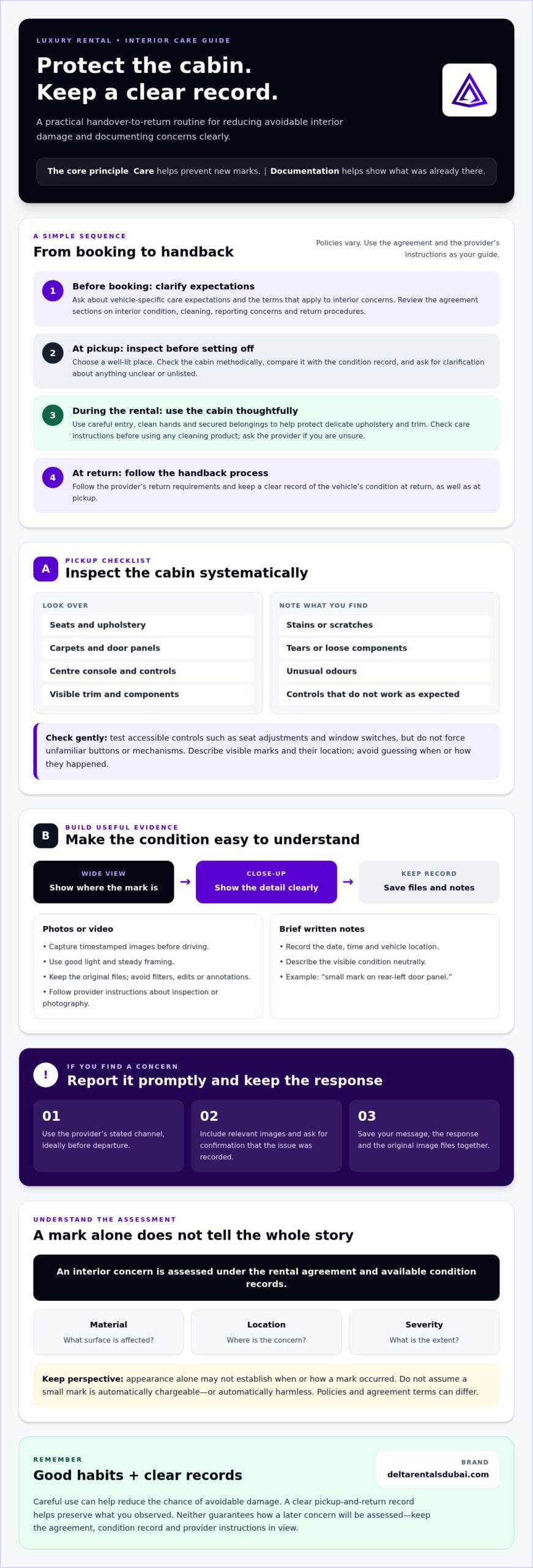
Before setting off, use a simple handover sequence: review the relevant terms, inspect the cabin, record what you find, report concerns, and keep the response. A systematic check helps you catch details while the vehicle and its condition record are still in front of you.
Follow a consistent inspection sequence
Choose a well-lit place and check the interior methodically. Look over the seats, carpets, door panels, centre console, controls and visible trim. Note stains, scratches, tears, loose components or unusual odours. Gently test accessible controls, such as seat adjustments and window switches, but don’t force unfamiliar buttons or mechanisms.
Compare your observations with the vehicle’s condition record. If an entry is unclear, or a visible mark isn’t listed, ask the provider to clarify it before you leave. Describe what you can see and where it is. Don’t speculate about when or how it happened.
Make the evidence easy to understand
Take timestamped photos or video before driving. Begin with wider views that show where a mark is, then capture close-ups of the detail. For example, photograph the whole seat and then the specific area of a scuff. Steady framing and good light make it easier to identify the location and understand what the image shows.
- Keep original files. Avoid filters, edits or annotations that could make the record harder to assess.
- Make brief notes with the date, time, vehicle location and a neutral description, such as “small mark on rear-left door panel.”
- Follow any provider instructions about inspections or photography.
If you find a concern, report it promptly through the provider’s stated channel, ideally before departure. Include relevant images and ask for confirmation that the issue has been recorded. Save your message and the response with the original files. This process supports avoiding interior damage charges on a rented luxury car by creating a clearer pickup record, though it can’t guarantee how a later concern will be assessed.
For a specific vehicle, care expectations and rental terms may differ. Before collection, ask Delta Rentals Dubai about rental terms and inspection expectations.
Damage, wear, or uncertainty: how to assess an interior concern
A mark’s appearance alone may not reveal when it appeared or who is responsible. A small scuff isn’t automatically chargeable, and it isn’t automatically harmless. The rental agreement, recorded vehicle condition, available evidence and provider’s review can all affect the assessment. Start with what you can observe, then check the records before drawing conclusions.
| Observable condition | Possible concern | Sensible next action |
|---|---|---|
| Light surface scuff on a door panel | It may have been present at pickup or may need further assessment. | Compare it with your pickup record and ask the provider to clarify if it isn’t documented. |
| Stain or discolouration on a seat or carpet | The location and appearance may prompt questions about soiling or a spill. | Check the agreement’s interior and cleaning terms, and describe only what you observed. |
| Tear, burn or broken control | It may be treated as damage, but the records and agreement remain relevant to the assessment. | Compare pickup and return records, then contact the provider through its stated channel. |
Describe the evidence, not the conclusion
Use neutral wording, such as, “There is a mark on the rear seat; I can’t confirm when it appeared.” Compare the pickup and return records with your own photos. These details can help explain the concern, but they may not settle every disagreement. Keeping observation separate from assumptions makes avoiding interior damage charges on a rented luxury car a more considered process.
What to review if a charge is raised
Check the agreement, condition records, original photos and the provider’s stated review process. Ask for a written, itemised explanation that identifies the location, the claimed issue and the records supporting the assessment. Keep your reply factual, include relevant evidence, and save copies of all communications.
Before taking further steps, check the agreement for the provider’s process and any applicable timeframes. Ask the provider to explain anything unclear, and consider qualified advice if you need help understanding your options. An organised record can make the discussion clearer, but it can’t guarantee a particular outcome.
How to protect delicate trim and upholstery during the rental
Prevention is mostly about small, deliberate habits. Keep hands clean before handling pale upholstery or glossy surfaces, and take care as you enter and exit. A buckle, ring, bag zip or shoe edge can catch a seat or door panel. Set belongings securely in a suitable area rather than letting them slide across trim or press into the upholstery.
Keep food and drinks away from seats where possible. If you do carry them in the cabin, secure containers and avoid placing them where they could tip during a turn or stop. Keep wet, dirty, sharp or unstable items off the seats and away from delicate surfaces. These straightforward habits support avoiding interior damage charges on a rented luxury car, but always follow the rental agreement and the provider’s vehicle-specific care instructions.
How to avoid marks on high-gloss piano-black trim
High-gloss piano-black trim can show fine marks, so resist the urge to dry-wipe visible dust. Loose particles may be dragged across the surface and contribute to scratches. Avoid paper towels, rough cloths, household cleaners and abrasive products unless the provider has approved them for that vehicle. If the trim needs attention, ask for the recommended method before cleaning it. Don’t improvise with a product that may affect the finish.
Everyday habits that protect seats and cabin surfaces
Slow down at the door. Keep bags from rubbing against the seat bolster, mind footwear when stepping in, and check that jewellery or clothing details aren’t catching on upholstery. Place luggage and other belongings carefully, especially if they have hard edges or could move while driving.
- Use cupholders or other intended storage areas for drinks, and keep food away from upholstery.
- Don’t place damp clothing, sandy items or sharp objects on seats or trim.
- Follow the provider’s instructions before applying any cleaner or attempting to remove a mark.
If a spill or new concern occurs, contact the provider promptly through its stated channel. Describe what happened and ask how to proceed. Avoid rubbing, applying a household cleaner or attempting an unapproved repair, since that could affect the surface or make the condition harder to assess.
Care expectations can vary by vehicle and finish. Before collection, ask Delta Rentals Dubai about vehicle-specific interior care and the instructions that apply to your rental.
Return the car with a clear record, and ask about care before booking
A careful return closes the loop on your condition record. Follow the provider’s documented handback procedure and return the vehicle as agreed. Before handing over the keys, take a final look through the cabin and record its condition where permitted. This won’t guarantee that no charge will arise, but it gives you a clear reference if a question comes up later.
A simple interior handback checklist
- Remove personal belongings, then check the seats, footwells, trim, centre console and storage areas.
- Take clear, timestamped photos in good light. Use angles similar to your pickup images so the same areas can be compared.
- If something happened during the rental, report it honestly through the provider’s stated channel. Keep a copy of your message and any response.
- Follow the agreed handback steps and ask for confirmation that the return inspection has been completed, where applicable.
Keep your agreement, pickup and return images, inspection notes, and relevant messages together. A consistent record can make the discussion easier to follow if the vehicle’s condition is later questioned. It’s one practical part of avoiding interior damage charges on a rented luxury car, alongside careful everyday use.
Questions to ask before booking
Clarify the process before you collect the vehicle, while there’s time to understand the answers. Ask how pre-existing interior marks are recorded and how the return inspection is conducted. Confirm which cleaning methods or products are approved for that specific vehicle, and how the provider documents and reviews any interior-condition concern. Check the agreement for the applicable terms and handback procedure, rather than relying on assumptions.
Clear answers help you prepare for the car you’re renting, whether it’s a Porsche 911 GT3 RS, Rolls-Royce Cullinan Black Badge or another premium vehicle. Delta Rentals Dubai offers luxury rentals across the UAE, and you can ask the team about rental terms and vehicle-specific care expectations before booking. Ask Delta Rentals Dubai about rental terms and interior care.
Make your next luxury rental feel effortless
A smooth handover starts with two things: careful use and a clear record. Inspect the interior before driving, note and report concerns through the provider’s stated channel, and keep your original photos and messages. During the rental, follow vehicle-specific care instructions and avoid improvised cleaning. These habits make avoiding interior damage charges on a rented luxury car more manageable, though no checklist can guarantee that a charge won’t arise.
Before booking, review the agreement and ask how the provider records existing marks, handles return inspections, and assesses interior concerns. Knowing the process in advance helps you enjoy the drive with fewer unanswered questions.
Delta Rentals Dubai offers premium and ultra-luxury vehicles, including the Porsche 911 GT3 RS, Rolls-Royce Cullinan Black Badge, and McLaren Artura. For straightforward guidance on rental terms and care expectations for a specific vehicle, ask Delta Rentals about rental terms and vehicle-care expectations. Prepare well, treat the cabin with care, and enjoy the experience with confidence.
Frequently Asked Questions
Can I be charged for a mark that was already inside the rental car?
Possibly, but whether you’re responsible depends on the rental agreement, condition records and available evidence. Before departure, photograph existing marks in good light, note where they are, and report them through the provider’s stated channel. Keep your message and any reply with the original files. Photos can help show what you observed, but they don’t guarantee a charge will be prevented or settle every disagreement. Review the provider’s process if a concern arises.
What should I photograph before driving a rented luxury car?
Take clear, well-lit overview and close-up images of the seats, carpets, door panels, controls and visible trim marks. Pair a wider view that shows each item’s location with a close-up of the detail. Keep the original files and note when they were taken. Follow the provider’s inspection or photography instructions, and report any pre-existing concern promptly so it can be considered alongside the vehicle’s condition record.
Is normal wear and tear different from interior damage?
It can be, but there’s no single definition that applies to every rental. The distinction may depend on the agreement, the item’s recorded condition and the provider’s assessment. Read the relevant wording and document the cabin before departure. If you disagree with a return assessment, ask for a specific explanation and the supporting records. Comparing pickup and return evidence can inform the discussion, but may not resolve every disagreement.
How do I clean piano-black trim without scratching it?
Be cautious: dust and unsuitable cloths or cleaners can mark high-gloss trim. Don’t dry-wipe a dusty surface, use an abrasive product or apply an unapproved household cleaner. Care instructions may vary by vehicle, so ask the provider for the approved method before trying to remove a mark or spill. If you’re unsure, leave the surface untouched until you receive guidance rather than risk making the condition harder to assess.
What should I do if I spill something inside a rental car?
Notify the provider promptly through its stated channel. Describe what spilled, where it landed and when you noticed it, then follow the instructions you receive. Avoid scrubbing or using solvents and household cleaners, which could affect upholstery or worsen a stain. Keep a copy of your report and the provider’s response. A clear, timely record helps explain what happened without making assumptions about how the concern will be assessed.
Can a rental company charge me for interior damage without showing evidence?
That depends on the rental agreement and applicable requirements, so there isn’t a universal answer. Ask the provider for an itemised description of the claimed issue, relevant condition records and details of the review process. Keep your agreement, photos and communications together, and respond factually. If the explanation remains unclear, check the agreement for escalation steps and consider seeking qualified advice about your particular circumstances.
Should I clean a luxury rental car before returning it?
Follow the rental agreement and the provider’s return instructions rather than assuming deep cleaning is required. Avoid unapproved products or techniques on delicate trim, leather or upholstery. If there’s a spill or mark, ask the provider what to do before attempting to clean it, and retain a record of the guidance. A careful return check and clear documentation support avoiding interior damage charges on a rented luxury car, but can’t guarantee a particular outcome.