

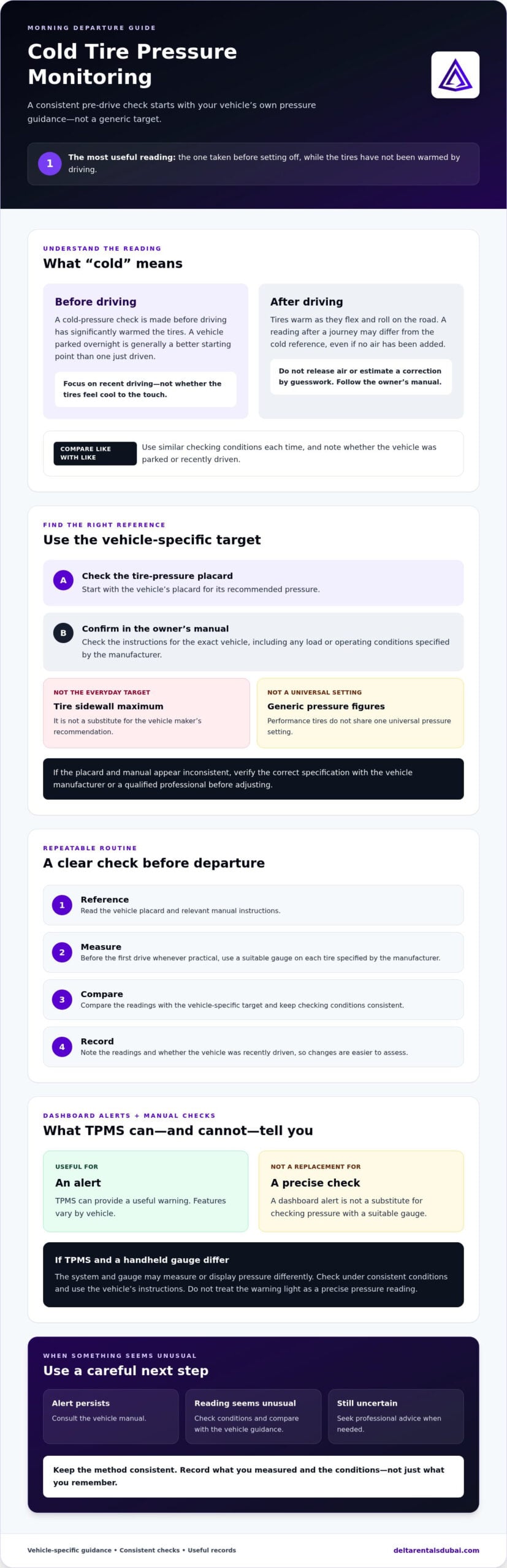
The first pressure reading of the day is often the most useful, not the one displayed after a drive. For high performance tire cold tire pressure monitoring during morning departures, check before setting off, while the tires have not been warmed by driving, and use the pressure specified for your exact vehicle. The tire sidewall maximum and a dashboard alert are not substitutes for that vehicle-specific target.
It’s understandable to wonder what “cold” means, especially when a TPMS reading differs from a handheld gauge. The system and gauge may measure or display pressure differently, and a warning light isn’t a substitute for a precise check. A consistent morning routine helps you spot a genuine pressure change without adjusting based on heat from driving.
This guide explains when tires count as cold, how to check them before departure, and where to find the correct pressure specification. It also covers how to interpret TPMS alerts, compare them with a gauge, and recognize readings that call for professional attention. Start with the right reference, then use the same checking method each time.
High performance tire cold tire pressure monitoring during morning departures
Before your first drive, check the vehicle’s placard or owner’s manual, then measure each tire specified by the manufacturer with a suitable gauge. Note the readings and whether the vehicle was recently driven. This gives you a useful baseline without relying on a generic pressure figure or guessing at a correction.
Key Takeaways
- Build your check around the vehicle’s pressure guidance, not a generic target.
- Use the same suitable gauge and a consistent method to make readings easier to compare.
- Treat TPMS as a useful alert, not a replacement for a manual pressure check. Features vary by vehicle.
- Record readings and checking conditions so you can spot meaningful changes instead of relying on memory.
- If an alert persists or a reading seems unusual, consult the vehicle manual and seek professional advice when needed.
What Does Cold Tire Pressure Mean Before a Morning Departure?
Cold tire pressure is the pressure measured before driving has significantly warmed the tires. It provides a consistent starting point for comparing inflation with your vehicle’s recommendation. “Cold” doesn’t mean the tires must feel cold to the touch. In the UAE, they may feel warm because of the surrounding air, even after the vehicle has been parked. For a concise reference to the concept, see Cold inflation pressure.
A morning check is useful because a parked vehicle hasn’t recently added heat through road contact and driving. That makes it easier to compare readings with the vehicle’s specified target. Focus on whether the vehicle has been driven recently, not just the time of day or how cool the tires feel.
When are tires considered cold for a pressure check?
Check before the first drive whenever practical. A vehicle left parked overnight is generally a better starting point than one that has just completed a journey, but follow the specific definition and instructions in its owner’s manual. If the car was driven recently, its tires may be warmer and the reading may differ from a cold measurement. Don’t treat that difference as a reason to adjust pressure by guesswork. Consult the manual for the correct procedure.
Consistency matters. Use similar checking conditions each time where possible, and note whether the vehicle was parked or recently driven. That context helps you compare like with like rather than interpreting every change as a pressure problem.
Where should you find the correct pressure target?
Start with the tire-pressure placard on the vehicle and confirm the guidance in its owner’s manual. The recommended pressure is specific to the vehicle and may depend on the load or operating condition described by the manufacturer. Check the relevant instruction before taking a reading or making an adjustment.
Don’t use the maximum pressure marked on the tire sidewall as your everyday target. That marking isn’t a substitute for the vehicle maker’s recommendation. Performance tires don’t share one universal pressure setting, either. Two vehicles with similar-looking tires may have different specified pressures, so rely on the placard or manual for the exact car rather than a general figure found online. If the placard and manual appear inconsistent, verify the correct specification with the vehicle manufacturer or a qualified professional before adjusting.
How Temperature and Recent Driving Change Tire Pressure Readings
A tire’s pressure reading can change as the tire warms or cools. Driving generates heat through tire flex and contact with the road, so a check after a journey may not match one taken before departure. Ambient temperature also affects readings. A change from one morning to another doesn’t automatically point to a leak or fault.
The same tire can show different pressure readings when its temperature and recent driving conditions differ. A cold-pressure recommendation and a reading from warm tires aren’t directly comparable. Use the vehicle maker’s specified checking conditions, and don’t estimate a correction based on how much the reading has changed.
Why a recently driven tire may show a different reading
As tires flex and roll during a drive, they warm up, and the pressure reading can rise. A reading taken after a journey may therefore sit above the vehicle’s cold reference, even if the tire hasn’t been adjusted. Avoid treating that warmer reading as an instruction to release air. Follow the owner’s manual for guidance on checking or adjusting pressure when the tires are warm.
For a consistent baseline, compare readings taken under similar conditions rather than comparing a pre-drive check with a post-drive one. The National Highway Traffic Safety Administration also offers practical guidance on how to check your tire pressure. Use the vehicle’s own instructions for its recommended target and procedure.
How ambient temperature affects morning checks
Air temperature can influence tire pressure, so readings may vary as conditions change. A vehicle parked in a cooler setting may show a different reading from the same vehicle checked after warmer conditions. Don’t apply a universal pressure-change formula or make an adjustment from memory. The right response depends on the vehicle’s specifications and the conditions of the check.
If a morning reading seems unexpected, pause before changing anything. Confirm that you’re using the gauge consistently, then recheck when the tires and surroundings are under comparable conditions. Record the reading and whether the vehicle was recently driven. If the result remains unusual, consult the owner’s manual or a qualified tire professional rather than guessing at a correction.
How to Check High-Performance Tire Pressure Before Driving
A consistent check is more useful than a rushed glance at a dashboard display. Before driving, prepare the correct vehicle reference and a suitable gauge, then follow the same sequence each time. Don’t use a general performance-tire figure as your target. The vehicle’s placard or owner’s manual takes priority.
What equipment and reference information should you prepare?
Keep the owner’s manual or a clear record of the tire-pressure placard recommendation close at hand. Choose a reliable pressure gauge that displays the units used by the vehicle’s guidance, and follow the gauge maker’s instructions. If the manual specifies different targets for different loads or conditions, identify the one that matches your planned use.
Articles about competitive driving pressures can provide useful background, but don’t treat general guidance as the setting for your vehicle. Confirm the correct pressure and checking procedure against its own manual or placard.
What is a repeatable pre-departure pressure-check routine?
Use this sequence before the first drive, while the tires haven’t been warmed by recent driving:
- 1. Park safely. Stop on a stable, level surface where you can reach each tire without obstructing traffic.
- 2. Confirm the reference. Check the vehicle placard or manual for the recommended pressure, units, load condition, and which tires to inspect.
- 3. Measure each required tire. Remove the valve cap, attach the gauge as instructed, and note the displayed reading. Check every tire specified by the manufacturer. Include the spare only if the vehicle has one and the manual says to check it.
- 4. Compare and record. Compare each reading with the matching vehicle-specific recommendation. Record the reading, date, and conditions so future checks can be compared fairly.
- 5. Respond carefully. If a reading differs from the target, adjust only according to the vehicle maker’s instructions. Recheck the measurement, and don’t rely on a guess or a generic target.
If a reading seems unexpected, check that the gauge is attached and being used correctly, then measure again. A recurring pressure loss or a reading that remains unusual deserves qualified assistance. If you’re considering a performance-car rental, you can ask about a performance-car rental and confirm the vehicle-specific guidance before setting off.
What TPMS Can and Cannot Tell You About Cold Tire Pressure
A tire pressure monitoring system (TPMS) is a useful alert, but it isn’t a universal substitute for a gauge and your vehicle’s specified pressure targets. Some systems display pressure information; others may provide a warning without showing an exact reading for every tire. Features and displays vary, so check the owner’s manual to understand what your vehicle’s system can tell you.
Don’t take a dashboard without a warning as proof that every tire is at its recommended pressure. A warning threshold may not match the precise target specified for your vehicle. Use the manual or tire placard as the reference, and check with a suitable gauge when readings seem unusual or the vehicle alerts you.
Should you rely on TPMS instead of checking with a gauge?
Use TPMS as one source of information, not the final word. A manual gauge lets you compare each required tire directly with the vehicle’s specified pressure, while the system’s available information depends on the vehicle. Neither a warning nor the absence of one should replace checking against the correct manufacturer reference.
| Check | What it can tell you | What to keep in mind |
|---|---|---|
| TPMS | May provide a warning or pressure information, depending on the vehicle. | Features and displayed detail vary. Consult the manual. |
| Manual gauge | Measures pressure at the tire valve for comparison with the vehicle specification. | Use it correctly and consider whether the tires are cold or recently driven. |
What should you do if the TPMS warning appears?
Take the warning seriously. Stop somewhere safe and consult the vehicle instructions before deciding what to do next. When conditions allow, check the tires with a suitable gauge and compare the results with the correct vehicle-specific targets. Don’t simply reset or dismiss a warning without following the manual’s guidance.
If the warning stays active, returns after a check, or appears alongside visible tire damage or recurring pressure loss, arrange a professional inspection. Avoid continuing a drive if the vehicle manual advises against it or the tire appears unsafe. For a performance-car rental enquiry, ask about renting a performance car and confirm which vehicle manual to follow for pressure checks and TPMS alerts.
Build a Reliable Morning Tire-Pressure Routine for Performance Driving
A dependable routine turns a single reading into useful information over time. Check before driving, use the vehicle’s own pressure guidance, measure with the same gauge where possible, and follow up on alerts. Performance driving doesn’t change the vehicle maker’s instructions. Keep your driving within those instructions and suited to road conditions.
- Check under comparable conditions: Measure before driving when practical, and note if the vehicle was recently driven.
- Use the correct reference: Follow the vehicle placard or manual, including any specified load condition.
- Keep your method consistent: Use the same gauge when possible, follow its instructions, and check all tires the manufacturer specifies.
- Record and review: Log readings and conditions so you can spot meaningful changes rather than relying on memory.
- Follow up: Consult the vehicle manual if an alert appears or remains active. Seek qualified help for recurring pressure loss or visible tire damage.
Which pressure-check habits make readings easier to compare?
Check under similar parked conditions whenever practical. A simple note with the date, readings, and whether the vehicle was recently driven gives each result context. Use the same gauge when possible, and investigate a notable change instead of immediately assuming it is normal. Follow the manufacturer’s guidance for inspection intervals and tire condition, too.
How can renters clarify vehicle information before setting off?
If you’re renting, ask the provider where to find the specific vehicle’s tire-pressure guidance. Before departure, review its owner’s manual, placard, and dashboard instructions so you know which reference to use and how to interpret alerts. Don’t assume every performance car has the same pressure targets or TPMS display. Confirm the details for the exact vehicle.
Delta Rentals Dubai lists performance-car rentals, including the Porsche 911 GT3 RS. For a considered enquiry, ask about a performance-car rental, and confirm where to find the vehicle-specific guidance before setting off.
Make Every Morning Check Count
Confident performance driving starts with a consistent pressure check. Measure before driving when practical, use the exact vehicle’s placard or manual as your reference, and compare readings taken under similar conditions. Temperature and recent driving can change readings, so don’t guess at a correction or use the tire sidewall maximum as your target.
TPMS is useful for alerts, but its features vary by vehicle, and a dashboard without a warning doesn’t confirm that every tire matches the specified pressure. Use a suitable gauge, record readings, and follow the manual if a warning appears or a pressure change keeps returning. A simple routine makes morning checks more consistent and helps you act on unusual readings with confidence.
Delta Rentals Dubai offers premium vehicle rentals across the UAE, including the Porsche 911 GT3 RS. Before setting off, review the guidance for the specific vehicle, then ask about renting a performance car.
Frequently Asked Questions
How do you check tire pressure when tires are cold?
Check before driving, using a suitable gauge and the pressure guidance on the vehicle’s tire placard or in its owner’s manual. Remove the valve cap, attach the gauge as instructed, and note each required tire’s reading. Compare results with the correct vehicle-specific target, then record them for future checks. This supports morning monitoring without relying on guesswork or a dashboard alert alone.
What tire pressure should I use for a high-performance car?
Use the pressure specified for that exact vehicle, not a universal performance-tire figure. Find the recommendation on the tire placard and confirm it in the owner’s manual, including any target for a particular load or operating condition. The maximum pressure printed on a tire’s sidewall isn’t a substitute for the vehicle maker’s recommendation. If the guidance is unclear or appears inconsistent, ask the vehicle manufacturer or a qualified professional to confirm it.
Does cold weather change tire pressure?
Yes. Tire pressure responds to temperature, so readings can differ between checks made under cooler and warmer conditions. A change alone doesn’t confirm a leak or another fault. For a meaningful comparison, measure under similar parked conditions and use the same gauge when possible. Avoid applying a universal pressure-change formula or adjusting by estimate. If a reading remains unexpected, consult the vehicle manual and seek qualified advice as needed.
Can I rely on TPMS for a morning tire-pressure check?
Use the Tire Pressure Monitoring System (TPMS) as an alert, not as a replacement for checking the manufacturer’s specified pressure. System features vary: some vehicles may display pressure information, while others may provide a warning without showing a precise reading for each tire. A dashboard without a warning doesn’t confirm every tire is at its recommended pressure. Check your vehicle manual, and use a suitable gauge if a reading seems unusual.
Should I release air if the tire pressure looks high after driving?
Don’t release air based only on a reading taken after driving. Tires warm during a journey, and a warm reading may differ from the vehicle’s cold-pressure reference. Follow the owner’s manual for checking or adjusting pressure when tires are warm. If practical, check again under the conditions specified by the vehicle maker and compare with the correct target. Avoid guessing at a correction or treating a warm reading like a cold one.
How often should I check tire pressure before morning departures?
Follow the inspection schedule in your vehicle’s owner’s manual. If you want a consistent morning baseline, check before departure when practical, especially when establishing a routine or after noticing a change. Keep conditions similar and record readings so you can compare them over time. Also follow the manufacturer’s instructions for tire condition and any checks before a longer journey. Don’t rely on memory or the TPMS warning alone.
What should I do if one tire repeatedly loses pressure?
Recheck the tire with a suitable gauge and compare it with the vehicle’s specified target. If pressure loss continues, arrange an inspection by a qualified tire professional rather than repeatedly topping it up and assuming the issue is resolved. Look for visible damage, but don’t attempt a repair yourself. If the tire appears unsafe or the vehicle’s manual advises against driving, don’t continue the journey until you’ve followed the recommended next steps.