

What if getting your full security deposit back from a car rental depends on what you do before you collect the keys? A smooth rental can still end with questions about a damage claim, a traffic fine or a refund that hasn’t appeared yet. It’s understandable to want clear answers before your money is tied up.
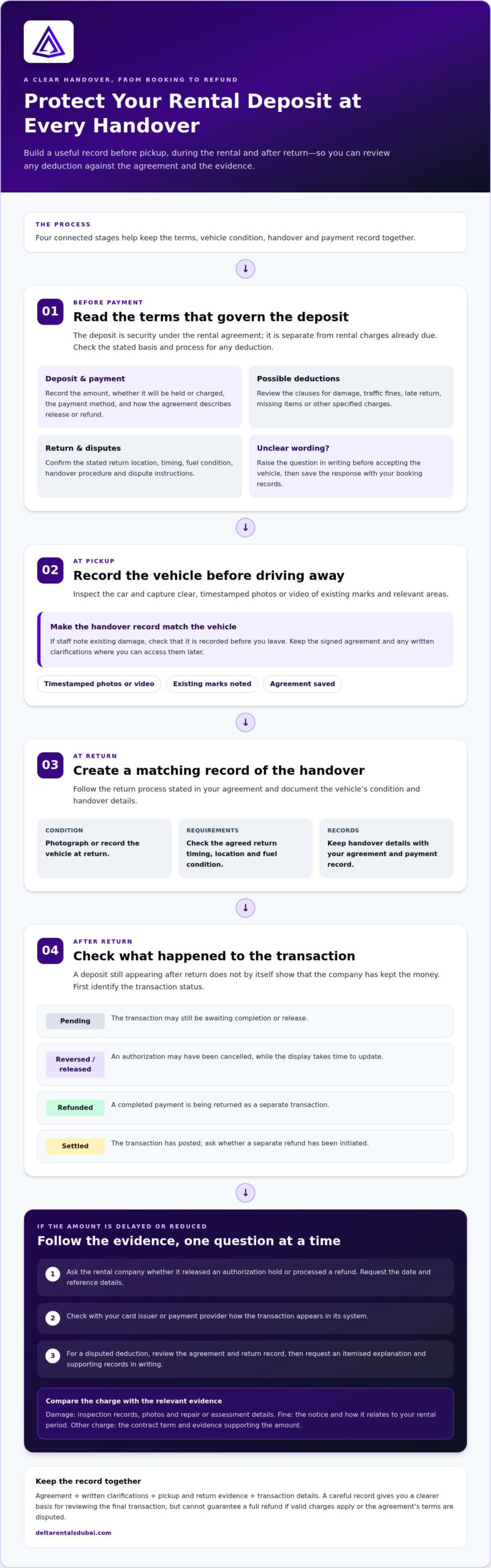
Protect your deposit with three practical habits: understand the rental agreement before paying, record the vehicle’s condition at pickup and return, and keep a clear record of each handover. This guide explains what to look for in the terms, how to capture useful photos and return evidence, and how to follow up if a deduction seems wrong or a refund is delayed. It also explains the difference between a rental company releasing a hold or processing a refund and a bank or payment provider updating your account. With some preparation, you can approach your rental with greater confidence, whether you’re choosing a premium SUV or a high-performance car for your time in the UAE.
Key Takeaways
- Read the rental agreement before paying so you understand the deposit terms and possible deductions.
- Check whether your payment appears as a temporary authorization hold or a completed charge, since the release or refund process may differ.
- Photograph or record the vehicle at pickup and return, and keep the agreement and handover details together.
- For getting your full security deposit back from a car rental, build a clear record of the vehicle’s condition, return and payment.
- If a refund is delayed or reduced, review the terms, check the transaction status and follow up in writing with relevant evidence.
Getting Your Full Security Deposit Back from a Car Rental Starts Before Pickup
A rental deposit can feel like money at risk, especially when the return conditions aren’t clear. But it isn’t automatically a final charge. It’s security held under the rental agreement, and how it’s handled depends on the terms, the vehicle’s condition, the return evidence and the payment method. Start protecting your deposit before you accept the keys, not after a deduction appears.
Preparation matters particularly for premium vehicles, where a careful handover record can help distinguish pre-existing marks from damage noticed later. A general overview of car rental explains how rental conditions, insurance and deposits fit into the wider rental arrangement. Your own agreement sets the terms for your booking.
What does a car rental security deposit cover?
A deposit provides security for obligations defined in the agreement. It’s separate from rental charges already due, such as the agreed cost of using the vehicle. Read the wording to identify which deductions may be made and what conditions apply. The agreement may address matters such as new damage, traffic fines or other charges, but don’t assume every listed charge will automatically apply. Check the stated basis and process.
Which rental terms should you understand first?
Find the sections explaining how the deposit is handled, which payment method is used, what’s required when returning the vehicle and how to dispute a deduction. Read the damage, traffic-fine and other-charge clauses closely. If any wording is unclear, raise the question in writing before accepting the vehicle and save the response with your booking records. Clear terms make the handover easier to manage.
Use this checklist while reviewing your booking and completing the handover:
- Deposit: Record the amount, how it will be held or charged, and how the agreement describes its release or refund.
- Payment method: Note which card or payment method is being used and keep the transaction record.
- Deductions: Identify the agreement’s conditions for damage, fines, late return or other charges.
- Return process: Confirm the return location, timing, fuel condition and handover procedure stated in your agreement.
- Disputes: Save the instructions for reporting a concern, including the contact method and any stated response process.
- Vehicle condition: Before driving away, inspect the car and take clear, timestamped photos or video of existing marks and relevant areas.
Keep a copy of the signed agreement and any written clarifications where you can access them after pickup. If a staff member notes existing damage, make sure the record reflects it before you leave. This gives you a useful starting point for documenting the return later.
No checklist can guarantee a full refund if valid charges apply or the agreement’s terms are disputed. Still, understanding those terms and recording the vehicle’s condition gives you a clearer basis for reviewing the final transaction. For getting your full security deposit back from a car rental, careful preparation is the first practical step.
Deposit Holds, Refunds, and Deductions: Know What Can Affect the Return
A deposit still showing after you return the vehicle doesn’t automatically mean the rental company has kept the money. First, identify what happened to the transaction. A card authorization hold temporarily reserves available funds or credit. Releasing that hold is different from refunding a completed charge. Transaction labels can vary, so check the details with the rental company and your card issuer or payment provider.
Why can a deposit appear unavailable after vehicle return?
A pending authorization may remain visible after the rental ends, even if the company has begun releasing it. Your provider may show a reversal, remove the pending item or display a separate refund. Check the transaction status rather than relying only on your available balance.
- Pending: The transaction may still be awaiting completion or release.
- Reversed or released: An authorization may have been cancelled, though the display can take time to update.
- Refunded: A completed payment is being returned as a separate transaction.
- Settled: The transaction has posted. If it appears as a settled charge, ask whether a separate refund has been initiated.
Ask the rental company whether it released a hold or processed a refund, and request the date and reference details. Then ask your issuer or payment provider how the transaction appears in its system. This helps distinguish company processing from the time the provider takes to display an update.
What deductions may a rental agreement describe?
Possible deductions depend on the agreement and the circumstances. The terms may address documented vehicle damage, traffic fines, missing items or other specified charges. A listed possibility isn’t proof that a charge applies to your rental. Check the relevant clause and compare it with the return record and your own evidence.
- Match a damage charge to the inspection records, photographs and any repair or assessment details provided.
- For a fine, request the relevant notice and information showing how it relates to your rental period.
- For missing items or another charge, ask which contract term applies and what evidence supports the amount.
If a deduction seems incorrect, request an itemised explanation and supporting records in writing. Keep your message factual: identify the transaction, state which charge you’re questioning and attach relevant return evidence. Review the basis before treating a deduction as either valid or invalid.
There’s no universal UAE refund deadline to rely on here. Don’t assume a reported timeframe, including a 30-day claim, applies to every rental or payment method. Check the written terms and ask the company and payment provider for the status of your specific transaction. For getting your full security deposit back from a car rental, knowing whether you’re waiting for a hold release or a refund is a useful first step.
If you’re planning another premium rental, you can discuss your rental with Delta Rentals Dubai and review the written terms before booking.
How to Document the Rental So You Can Challenge an Incorrect Deduction
Good evidence tells a clear story from the moment you receive the vehicle to the moment you hand it back. Keep records in chronological order so you can compare the car’s condition at pickup and return with any later claim. Dated condition records make it easier to compare a claim with the vehicle’s documented state. They can’t guarantee the outcome of a dispute, but they help you explain your position clearly.
What should you record at pickup and return?
Start with the signed agreement and any inspection record. Before driving away, take well-lit, timestamped photos or video of the vehicle’s exterior and interior. Capture close-ups as well as wider views that show where each mark is located. At return, repeat the walkaround and document the same areas. Keep written or signed confirmation that the vehicle was handed back.
- Exterior: Photograph existing marks, wheels, tyres, glass, bumpers and body panels.
- Interior: Record the seats, dashboard and any visible damage or missing items.
- Vehicle status: Capture the fuel or charge level and any dashboard warnings.
- Return: Take a final walkaround and keep any handover confirmation or written notes about the vehicle’s condition.
Keep the original photo and video files. Avoid filters, edits or cropping that could obscure the timing, location or condition shown. If you need to highlight a detail in a message, save the original alongside the marked-up copy. Back up the files with your agreement and booking records.
Which records help explain a disputed deduction?
Bring the documents together before challenging a charge. Save the signed agreement, pickup and return inspections, messages, receipts and relevant statements from your card issuer or payment provider. If a deduction appears, request its reason, an itemised amount and the supporting records. Compare those details with your evidence rather than relying on memory alone.
- Agreement and inspections: Keep the signed terms and any condition report from pickup or return.
- Communications: Save messages about damage, return arrangements or an issue raised during handover.
- Transaction records: Retain receipts and statements showing the deposit or later transaction.
Make a short timeline: note when you collected the vehicle, when you returned it, when the handover was acknowledged and when you noticed the deduction. Add the filename or record that supports each point. For example, link a pickup photo of a wheel mark to the date and inspection record, then compare it with the return images and any damage explanation. A concise, organised timeline makes your written follow-up easier to understand and keeps the discussion focused on the evidence.
For getting your full security deposit back from a car rental, consistent records are a practical advantage. Take the images, preserve the originals and document the handover.
How to Follow Up on a Delayed or Reduced Car Rental Deposit
A deposit that hasn’t appeared in your account, or a return that seems smaller than expected, can be frustrating. Start with the transaction details, not assumptions. A pending card hold may need different follow-up from a completed charge with a separate refund. A reduced return calls for a clear explanation of the deduction. Keep each enquiry calm, specific and in writing.
Use this sequence:
- Review the agreement. Recheck the stated deposit process, return conditions and possible deductions.
- Check the transaction. Look at your payment statement and note whether the entry is pending, reversed, refunded or settled.
- Write to the rental company. Ask for the transaction status or, if money was deducted, the reason and an itemised explanation.
- Contact your card issuer or payment provider if needed. If the company says it released the hold or processed the refund but the status remains unclear, ask the provider how it appears in its system and what records it needs to review it.
What should your first refund enquiry include?
Identify the rental reference, rental dates, vehicle return date and deposit transaction. Describe what your statement currently shows and attach relevant handover evidence or transaction details. Ask directly whether the payment is pending, released or refunded, and what action is being taken. Keep the tone factual, save your message and retain the reply with your rental records.
When should you contact your card provider?
Contact the issuer or payment provider when the rental company’s response doesn’t clarify the transaction status, or when the company says it has processed a release or refund that you can’t identify. Ask which reference numbers, dates or documents are needed to trace it. For any formal complaint route or deadline in the UAE, consult current official guidance rather than relying on a general timeframe.
If the return is reduced, don’t treat the difference as proof of an error. Ask for the deduction reason, itemised amount and supporting records, then compare them with the agreement and your vehicle-return evidence. If the explanation is incomplete, reply with the specific point you dispute and request the missing details. A precise written enquiry should identify the rental, the transaction and the resolution you’re requesting.
You can use a short message like this: “I’m following up on rental reference [reference], returned on [date]. My statement shows [transaction status or amount]. Please confirm whether the deposit transaction is pending, released or refunded. If a deduction was made, please send the itemised reason and supporting records. I’m requesting [specific resolution].” Attach only relevant records, and keep a copy of everything sent.
Clear communication and organised evidence make follow-up easier to manage, though they can’t guarantee a particular outcome. For getting your full security deposit back from a car rental, focus on establishing what happened to the transaction and which terms support any deduction. For a future premium rental, discuss your rental with Delta Rentals Dubai.
Choose Your Next Rental with Clear Deposit Expectations
Use what you’ve learned to make your next booking more straightforward. Before committing, understand the deposit terms, record the vehicle’s condition, confirm the return handover and retain your payment evidence. These steps won’t determine whether a charge applies, but they help you understand what to expect and give you a clear record if a question arises.
What to clarify before confirming a future rental
Compare the written deposit conditions and procedures for the rentals you’re considering. Look beyond the headline terms: identify how the deposit is handled, which payment methods are accepted, what the return requires and which agreement-based deductions may apply. Check how to report the vehicle’s condition and where to direct a payment question. Clear written procedures make it easier to follow the process from pickup through return.
- Deposit and payment: Understand how the deposit is described and how your chosen payment method affects the transaction.
- Return requirements: Review the stated return time, fuel or charge expectations and handover process.
- Possible deductions: Read the terms for damage, fines, missing items or other charges, including the conditions that apply.
- Records: Keep the agreement and payment confirmation accessible throughout the rental, along with inspection and handover details.
Don’t rely on a verbal summary if a key point affects your decision. Read the written agreement and save any written clarification with your booking documents. A few minutes spent understanding the process can prevent confusion later, especially if the transaction appears differently in your payment account than you expected.
Plan a premium rental with confidence
Preparation and a considered vehicle choice go hand in hand. Whether you’re considering a high-performance model or a premium SUV, give yourself time to review the rental terms before pickup and plan how you’ll document the vehicle and handover. Explore Delta Rentals Dubai car rental options as part of your UAE rental planning, including vehicles such as the Porsche 911 GT3 RS, Rolls-Royce Cullinan Black Badge and McLaren Artura.
Keep your approach consistent: understand the terms, record the condition at pickup and return, obtain a handover record and retain payment evidence. That preparation supports a more confident rental experience without assuming a particular deposit amount, refund timing or outcome. It’s a practical way to approach getting your full security deposit back from a car rental while keeping the focus on the written agreement and your records.
Discuss your UAE rental with our team.
Make Your Next Rental Feel More Confident
A rental experience is easier to enjoy when expectations are clear from the start. Treat the agreement and handover as part of your planning, not paperwork to rush through. That gives you a more confident basis for getting your full security deposit back from a car rental, while keeping your records ready if a question comes up later.
As you plan your next drive, choose the vehicle and rental arrangement that suit your trip, then take time to understand the written conditions. Delta Rentals Dubai serves customers across the UAE with a premium fleet of supercars and high-end luxury vehicles. A considered start can help make the whole experience feel more composed, from booking through return.
Ready to plan your next rental? Discuss your UAE rental with our team. Approach your next booking prepared and enjoy the drive with greater confidence.
Frequently Asked Questions
How long does it take to get a car rental security deposit back in the UAE?
There isn’t one verified timeframe that applies to every UAE rental and payment method. The rental company may release a card hold or process a refund, while your bank or payment provider determines when its records and available balance reflect the change. Ask the company what action it took and when, then give your provider the transaction reference to trace. Don’t treat a reported timeframe, such as 30 days, as a universal deadline.
Can a rental company deduct traffic fines from my security deposit?
It may depend on the rental agreement and the circumstances, so check the terms before assuming a fine can or cannot be deducted. If you’re notified of a charge, ask for the fine details and how they connect to your rental dates. For example, compare the notice date with your booking period. Keep the reply and any supporting document with your rental records, and question the charge in writing if the details don’t match.
Why has my car rental deposit not appeared in my bank account?
The deposit may have been placed as a card authorization hold rather than taken as a completed payment, so there may be no separate refund entry to find. A hold can remain visible as pending even after the rental company has requested its release. Check both the transaction history and available balance, then ask the company whether it released a hold or sent a refund. Your bank or payment provider can explain how it displays that transaction.
What should I do if a rental company returns less than my full deposit?
Ask for an itemised explanation before deciding the reduction is incorrect. Request the charge reason, amount and documents supporting it, then compare those details with your agreement and return records. For getting your full security deposit back from a car rental, focus your written response on the exact item you dispute, such as a damage charge that doesn’t match the inspection record. Include the rental reference and ask for a clear resolution.
Does paying a car rental deposit by credit card make the refund faster?
Not necessarily. A credit card deposit may appear as a temporary authorization hold, while another payment arrangement may show a completed charge followed by a refund. The terms and payment provider’s processing affect what you see and when. Before paying, ask how the transaction will appear on your account. If the rental company says it has released or refunded the deposit, give your card issuer the transaction reference and ask how to trace it.
Can I get my car rental security deposit back in cash?
Only if the rental company’s written terms and the agreed payment process allow a cash deposit and cash return. Don’t assume a deposit paid by card will be returned in cash, or that cash is accepted for deposits. Check the agreement before handing over money. If cash is accepted, ask for a receipt that records the amount, date, rental reference and purpose, then keep it with your booking documents.
What evidence should I keep to protect my rental deposit?
Keep the signed agreement, pickup and return inspection records, dated vehicle photos or videos, handover confirmation, relevant messages, receipts and payment statements. Preserve original files so their timing and details remain clear. A practical step is to save them in one folder with filenames such as “pickup exterior” and “return dashboard,” alongside the rental reference. This makes it easier to retrieve a relevant record if a question arises later.