

What if confidence in an 800-horsepower rear-drive supercar comes from easing off, not pushing harder? Gaining confidence behind the wheel of an 800 horsepower rear drive supercar starts with understanding how quickly acceleration can use available grip, and why smooth inputs matter when you turn or apply power.
Respect is sensible. A car with this much power can feel intimidating if you’re unsure how it responds, where its limits lie, or how to practise without unnecessary risk. Confidence doesn’t come from ignoring caution. It comes from preparing properly and building familiarity step by step.
This guide covers how to get familiar with a car’s controls and driver aids, build confidence gradually, and decide whether a controlled environment or a less demanding drive is a better fit. If you’re considering a high-performance rental in the UAE, Delta Rentals Dubai offers a Porsche 911 GT3 RS. Check the model’s specifications separately: it isn’t being presented as an 800-horsepower car.
Key Takeaways
- Define confidence as calm, attentive decision-making, not proving how fast you can drive.
- Understand that acceleration, braking and cornering all draw on limited tyre grip. Use smooth inputs to manage the demands you place on it.
- Build skills progressively: learn the controls, begin gently, and consider professional instruction in a suitable controlled environment.
- Before setting off, check your seat, mirrors, vehicle controls and warning indicators, then ask the provider to explain permitted use.
- Gaining confidence behind the wheel of an 800 horsepower rear drive supercar starts with choosing an experience that matches your readiness. That may mean postponing or selecting a less demanding car.
Why Confidence Matters in an 800-Horsepower Rear-Drive Supercar
Confidence isn’t about using all the power. It’s about staying calm, reading the situation and making deliberate choices. In a rear-wheel-drive car, the engine sends power to the rear tyres. Abrupt acceleration can ask those tyres for more grip than the road allows. If they can’t provide it, traction may break and the car’s response can change quickly.
Confidence means informed, measured control, not fearlessness. Respect what you don’t yet know about the car, keep your attention on the road and choose smooth, predictable inputs over dramatic acceleration. Gaining confidence behind the wheel of an 800 horsepower rear drive supercar begins with sound decisions, not bravado.
What makes a high-powered rear-drive car feel demanding?
Power is only part of the picture. As a car accelerates, weight shifts rearward; braking shifts it forward, while cornering changes how load is shared across the tyres. These shifts affect the grip available at each tyre. The details vary between cars, so don’t assume one model will respond exactly like another.
Grip also depends on speed, road surface, weather and tyre condition. A surface that feels predictable when dry may offer less traction when wet or dusty. If you add power suddenly while the rear tyres are already working hard through a turn, they may not have enough grip left to accelerate smoothly. Driver skill and vehicle systems matter too. Electronic stability control can help manage a loss of stability, but it can’t change the grip available or make every situation safe. Ask what the system does in your specific car; the general principles are outlined in Electronic Stability Control.
Public roads are for legal, predictable driving, not performance practice. Keep acceleration measured, leave room for changing conditions and save performance training for an appropriate controlled environment.
Confidence is not the same as overconfidence
Composure means anticipating what’s ahead, leaving yourself time to respond and resisting pressure to drive beyond your comfort or ability. Aggressive acceleration and late braking aren’t signs of confidence; they reduce your margin for error.
If you feel tense, rushed or unsure of your control, don’t force yourself to continue. Reduce the demands you place on the car and, when safe, pull over and pause. There’s no shame in ending a drive or choosing a less demanding experience. The right pace is one that lets you remain attentive and in control.
How Rear-Wheel Drive, Grip, and Driver Aids Shape the Experience
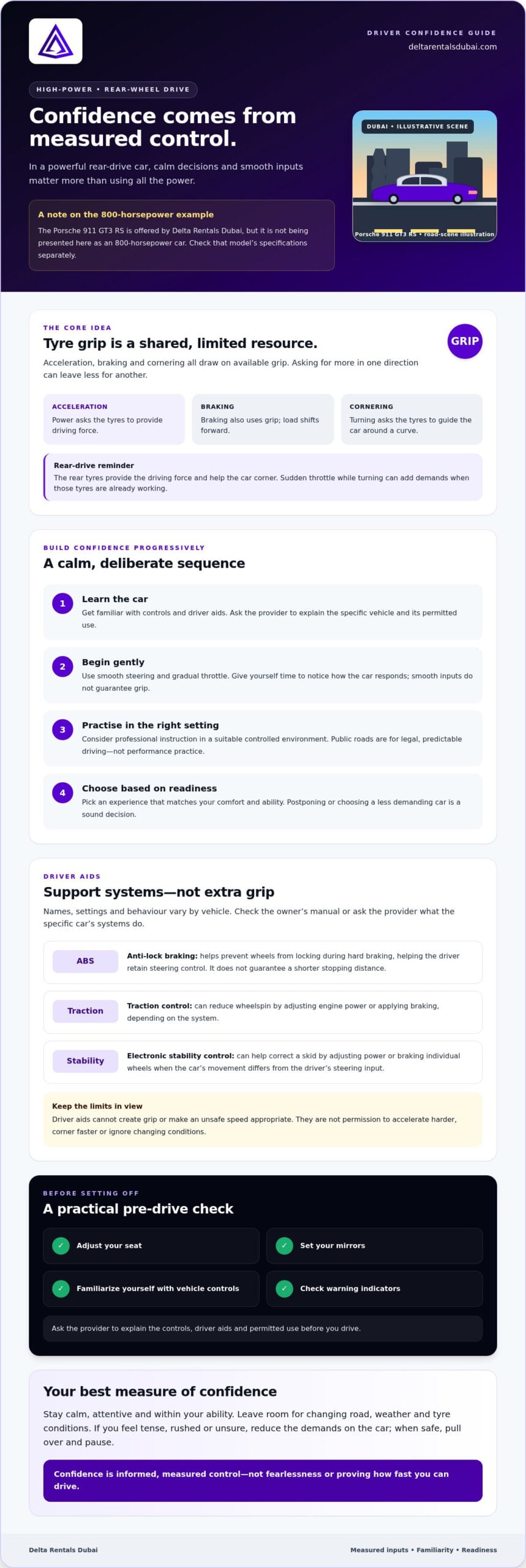
Think of tyre grip as a limited budget. Tyres use it to accelerate, brake and corner, and demanding more in one direction can leave less available for another. In a rear-wheel-drive car, the rear tyres provide the driving force as well as helping the car corner. That combination makes measured inputs especially important.
How throttle, steering, and grip interact
Imagine accelerating as you approach a bend. The tyres are already working to guide the car around the curve; adding strong throttle asks them to deliver more driving force at the same time. If the combined demand exceeds the grip available, the car may not follow the intended path. The exact response depends on the vehicle and conditions.
Ease into the throttle and steer smoothly. Gradual inputs give you more time to notice how the car responds and make calm adjustments. They don’t guarantee that grip won’t be lost, and they aren’t a reason to test the car’s limits on public roads. Keep driving legal and predictable, and leave performance practice to a suitable controlled environment.
What ABS, traction control, and stability control can, and cannot, do
Driver aids can support control, but they can’t create grip or make an unsafe speed appropriate. Their names, settings and behaviour vary by vehicle, so check the owner’s manual or ask the provider to explain the specific car before driving. In general:
- ABS helps prevent the wheels from locking during hard braking, helping the driver retain steering control. It doesn’t guarantee a shorter stopping distance.
- Traction control can reduce wheelspin by adjusting engine power or applying braking, depending on the system.
- Electronic stability control can help correct a skid by adjusting power or braking individual wheels when the car’s movement differs from the driver’s steering input.
These systems are a safety support, not permission to accelerate harder, corner faster or ignore changing road conditions. Settings and intervention can feel different from one model to another. To gain confidence behind the wheel of an 800 horsepower rear drive supercar, learn what the specific systems do and leave a generous margin for the road, tyres and your experience.
If you’re considering a high-performance rental, ask about vehicle details before deciding whether it suits your experience.
How to Build Confidence in a High-Power Rear-Drive Car Gradually
Confidence grows through familiarity, not by testing how much performance you can handle. First, learn the specific car. Keep early driving demands modest and reassess how comfortable and attentive you feel. If you want to develop performance skills, seek qualified instruction in a suitable controlled environment rather than trying to teach yourself at the limit.
A beginner-friendly progression before any spirited driving
Begin while the car is parked. Set your seat and mirrors, locate the main controls, and ask how the transmission, drive modes and driver aids work. Take a calm walkaround to get a sense of the car’s size and visibility. Don’t assume familiar controls behave identically across models.
- Get oriented: Confirm the controls and vehicle-specific instructions before setting off.
- Start gently: Familiarise yourself with steering, braking and throttle response only where permitted and appropriate to the setting.
- Pause and reassess: If the car feels unfamiliar or you’re tense, keep demands low or stop. Don’t progress because you feel expected to.
- Seek coaching: For performance skills, choose structured instruction instead of experimenting with launches, high-speed cornering or limit handling.
Public roads aren’t practice venues for performance driving. Keep driving legal and predictable, and don’t use traffic, open roads or changing conditions to explore the car’s limits.
When coaching or a controlled venue makes sense
Qualified instruction can adapt the pace and exercises to your experience and the vehicle. A controlled venue offers a more suitable setting for learning performance techniques. Before booking, check the venue’s rules, the instructor’s credentials and what the insurance arrangements cover. Confirm any rental conditions separately with the provider.
Learn the car, practise appropriately, reassess your comfort, and stop whenever you’re unsure. That measured progression is more useful than trying to appear fearless. Gaining confidence behind the wheel of an 800 horsepower rear drive supercar means making informed choices, including deciding that a particular car or setting isn’t right for you yet.
Delta Rentals Dubai provides vehicle rentals, not driving instruction. If you’re considering a rental, ask about the specific vehicle and its controls before deciding whether it matches your experience. The Porsche 911 GT3 RS is a rental option, but check its power specification separately rather than assuming it has 800 horsepower.
What to Check Before Driving an 800-Horsepower Supercar
A few deliberate checks can make an unfamiliar car feel more manageable. Before setting off, ask the rental provider to explain the vehicle’s controls and permitted use. Don’t rely on assumptions from another car, even if you’ve driven a similar model.
Your pre-drive checklist
- Set your seat and mirrors. Make sure you can reach the pedals and steering comfortably, see clearly and use the controls without stretching.
- Locate key controls. Identify the gear selector, parking brake, lights, wipers, drive modes and driver-aid settings. Ask how to use them in ordinary driving.
- Check warning indicators. Ask the provider to explain any illuminated warning and what to do if one appears while driving. Don’t dismiss an indicator you don’t understand.
- Look over the tyres and visible condition. Check for anything concerning, such as visible damage or an unusual appearance. Report concerns to the provider rather than deciding for yourself that the vehicle is ready.
- Confirm the essentials. Clarify the agreed route, permitted use, required documents and whom to contact if the car feels unfamiliar or develops a concern.
Allow time to ask questions before taking the keys. Confirm which drive mode and driver-aid settings the provider recommends for ordinary driving, and ask for a demonstration of unfamiliar controls while the vehicle is stationary. If anything remains unclear, get an explanation before setting off.
Questions to ask before taking the keys
Check the rental conditions and verify which UAE driving rules apply to your situation using current official sources. Don’t assume that another driver’s experience, an online summary or a previous rental answers questions about your documents, permitted use or insurance. Ask the provider to clarify the applicable rental terms and explain whom to contact for assistance.
Proceed only if you feel calm, attentive and clear on the controls. If visibility worsens, traffic becomes demanding or your confidence drops, reduce your demands and stop safely if needed. If a warning light appears, the car behaves unusually or you have a mechanical concern, contact the provider and follow their guidance. Don’t attempt to diagnose the issue yourself.
Careful preparation is a practical part of gaining confidence behind the wheel of an 800 horsepower rear drive supercar. If you’re considering a rental, contact Delta Rentals Dubai to ask about vehicle details and rental conditions before deciding what suits your experience.
Choose a Supercar Experience That Matches Your Readiness
The right experience isn’t necessarily the most powerful car available. Choose based on how comfortably you can manage an unfamiliar vehicle, respond calmly to changing conditions and keep your driving conservative. Postponing, seeking instruction or selecting a less demanding car are all sensible choices, not measures of your ability or ambition.
A simple readiness check before choosing a rental
Before you decide, ask yourself:
- Have I driven a powerful car before, and did I feel composed rather than rushed?
- Am I comfortable learning unfamiliar controls before setting off?
- Can I commit to driving within my ability instead of feeling pressured to use the car’s full performance?
If your experience is limited or anxiety would distract you from the road, consider postponing or seeking qualified guidance in an appropriate controlled environment. If you’re comfortable with the basics but unsure about a particular model, ask the provider to explain its controls and requirements before making a decision. Specifications and driving characteristics vary, so check each model individually rather than assuming experience in one car transfers directly to another.
Delta Rentals Dubai offers a range of rental vehicles, including the Porsche 911 GT3 RS. Check that model’s exact specifications separately; it isn’t being presented here as an 800-horsepower car. You can also read the Porsche 911 GT3 RS rental guide to learn more about that rental option.
Make the next step easy and informed
Before booking, ask about the specific vehicle, applicable requirements and rental conditions. Clarify permitted use, which documents may be needed, and whom to contact with questions. Check the details that matter to your circumstances, and don’t proceed until you understand them.
There’s no need to prove anything through horsepower or prestige. Gaining confidence behind the wheel of an 800 horsepower rear drive supercar means matching the experience to your readiness, driving within your comfort and being willing to pause or choose another option.
Ask Delta Rentals Dubai about a suitable supercar experience
Make Your Next Drive a Considered One
Gaining confidence behind the wheel of an 800 horsepower rear drive supercar is about preparation and judgment, not proving how much power you can use. Understand the car’s controls, respect the grip available and build familiarity gradually. Keep public-road driving legal and predictable. If you want to develop performance skills, seek professional guidance in a suitable controlled environment.
Before choosing an experience, consider your comfort with powerful cars and unfamiliar controls. It’s always reasonable to postpone or select a vehicle better matched to your experience. Delta Rentals Dubai serves customers across the United Arab Emirates and offers a Porsche 911 GT3 RS rental. Check that model’s specifications and rental conditions directly, and don’t assume it has 800 horsepower or is right for every driver.
Ready to explore your options? Ask Delta Rentals about a suitable supercar experience. Ask your questions, choose at your own pace, and let a composed, well-informed drive be the real measure of confidence.
Frequently Asked Questions
Is an 800-horsepower rear-drive car difficult to drive?
It can be demanding, especially if you’re unfamiliar with powerful rear-wheel-drive cars. How manageable it feels depends on your experience, the specific vehicle, available tyre grip and driving conditions. The rear tyres deliver the engine’s power, so abrupt acceleration can overwhelm traction. Focus on calm, measured inputs rather than exploring the car’s limits. Gaining confidence behind the wheel of an 800 horsepower rear drive supercar starts with preparation and realistic expectations.
How do you control a powerful rear-wheel-drive car?
Use smooth steering and gradual throttle and brake inputs, and look ahead so you have time to respond. Leave a generous margin for road conditions, traffic and your experience. Avoid sudden acceleration, particularly while turning, because the tyres have limited grip to share between cornering and driving. Learn the vehicle’s controls and driver aids before setting off. These habits support composed driving, but they can’t guarantee the car won’t lose traction.
Can traction control prevent a rear-drive supercar from sliding?
No. Traction control can reduce wheelspin by adjusting power or braking, while stability control may help respond if the car begins to deviate from the driver’s intended direction. Their design and behaviour vary by vehicle, and neither system can overcome limited grip, unsafe speed or unsuitable conditions. Don’t treat driver aids as permission to push harder. Ask the provider to explain the specific car’s systems and settings before driving.
What should a beginner do before driving a supercar?
First, check that you feel calm and ready to focus. Adjust your seat and mirrors, locate the main controls, and ask the provider to explain unfamiliar functions and warning indicators. Look over the tyres and visible condition, and raise concerns rather than assuming the car is ready. Confirm the rental conditions and permitted use before setting off. Keep initial driving demands low, and don’t practise performance driving on public roads.
Is a rear-wheel-drive supercar safe for a first-time driver?
It isn’t automatically safe or unsuitable for every first-time driver. Your experience, comfort with unfamiliar controls, the vehicle’s characteristics and driving conditions all matter. If you’re anxious or have little experience with powerful cars, consider postponing, choosing a less demanding vehicle or seeking qualified instruction in an appropriate controlled setting. There’s no need to select a car for its prestige or power. Choose an experience that lets you stay attentive and composed.
Where should you practise driving a high-powered supercar?
For performance skills, choose an appropriate controlled venue that permits the activity and offers qualified instruction. Check the venue’s rules and the instructor’s credentials before taking part. Public roads are for legal, predictable driving, not practising launches, high-speed cornering or limit handling. When driving on public roads, stay within your ability and the conditions. Don’t use traffic or open stretches as a substitute for instruction.
What should I ask before renting a high-performance car?
Ask about the specific vehicle’s controls, permitted use, requirements, rental conditions and what to do if a warning appears or the car feels unfamiliar. Clarify which insurance arrangements apply and whom to contact with questions. Verify each vehicle’s specifications rather than assuming a model has a particular power output. Delta Rentals Dubai offers a Porsche 911 GT3 RS rental, but check its specification and suitability directly.