

The mid-engine exotic isn’t automatically the better choice. If your ideal drive means covering distance in comfort, a front-engine grand tourer may suit you better. If you want a more immediate, focused feel, a mid-engine car may be the stronger match. When comparing front engine grand tourers with mid engine exotic layouts, the real question isn’t which arrangement sounds more impressive. It’s which one fits the drive you have in mind.
Engine placement can offer clues about a car’s balance and packaging, but it can’t tell you everything about its performance or everyday usability. Cabin visibility, passenger space, storage and ride comfort depend on the whole vehicle. This guide explains the practical trade-offs so you can compare specific cars against your plans, rather than relying on labels alone.
We’ll use the McLaren Artura as a mid-engine example and distinguish it from the rear-engine Porsche 911 GT3 RS. They represent different layouts, so compare each with your priorities for a spirited outing, a longer journey or a focused performance-car experience.
Key Takeaways
- Separate a car’s purpose from its layout: “grand tourer” describes the role, while engine placement describes where the engine sits.
- Compare cabin space, luggage needs and comfort alongside handling. Front-engine designs can suit longer journeys, but the experience varies by car.
- When comparing front engine grand tourers with mid engine exotic layouts, consider how mass placement may shape response instead of assuming one layout is always superior.
- Choose according to journey length, passenger needs and preferred driving style, then weigh comfort and versatility against a more focused feel.
- Use the McLaren Artura and rear-engine Porsche 911 GT3 RS to understand distinct performance-car experiences. Confirm current availability and rental details before deciding.
Front-Engine Grand Tourers vs Mid-Engine Exotics: What Does Layout Mean?
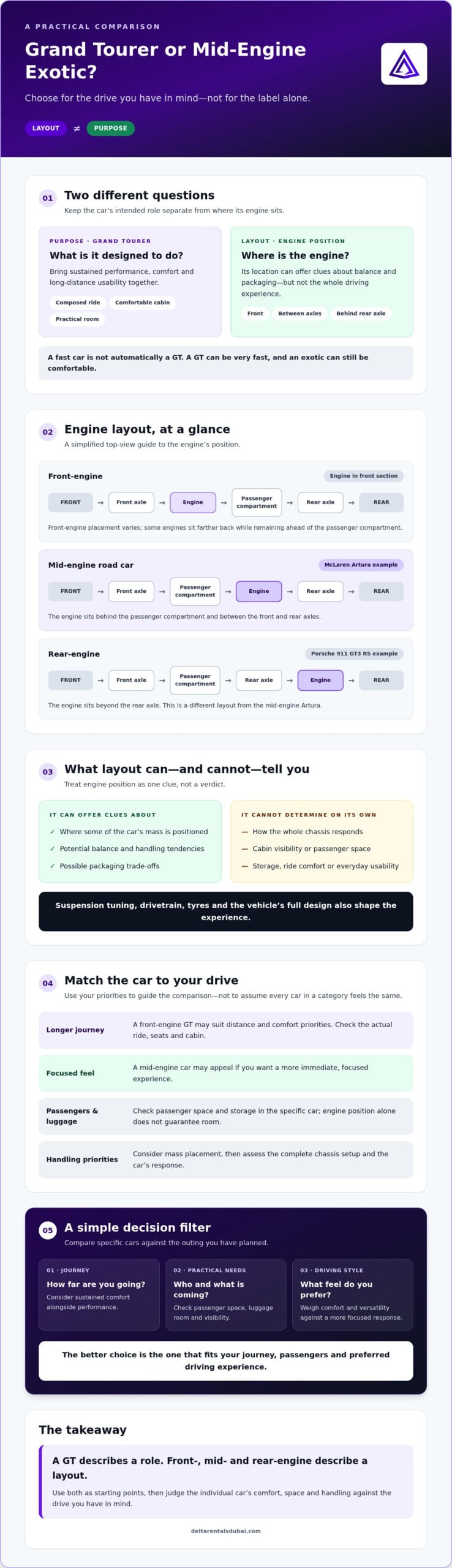
Engine layout tells you where the engine sits. Vehicle purpose describes what the car is designed to do. A front-engine car carries its engine in the front portion of the vehicle. A mid-engine road car places it between the front and rear axles, usually behind the passenger compartment. A rear-engine car puts it behind the rear axle. A grand tourer, or GT, is designed to combine sustained performance, comfort and long-distance usability. Keeping these terms separate makes comparing front engine grand tourers with mid engine exotic layouts clearer.
What makes a car a grand tourer?
A GT is intended to bring spirited driving and longer journeys together. Its priorities often include a composed ride, a comfortable cabin and practical room for passengers or luggage, as well as strong performance. A track-focused exotic may place sharp response and circuit capability higher on its list, though the categories can overlap. A GT can be very fast, and an exotic can still be comfortable. A sleek body or prestigious badge alone doesn’t make a car a grand tourer.
What does mid-engine mean in a road car?
In a mid-engine layout, the engine sits behind the passenger compartment but ahead of the rear axle, between the car’s axles. This differs from a front-engine arrangement, where the engine is in the front section, and a rear-engine arrangement, where it sits beyond the rear axle. Wikipedia’s Mid-engine layout overview describes the defining position as between the front and rear axles. This location can influence weight distribution and handling, but it doesn’t guarantee a particular driving feel.
Simplified mid-engine layout, viewed from above:
FRONT → [Front axle] → [Passenger compartment] → [Engine] → [Rear axle] → REAR
Front-engine placement also varies. Some engines sit well ahead of the front axle, while others are positioned farther back, closer to the cabin but still ahead of the passenger compartment. These arrangements can affect balance and packaging, so “front-engine” describes a broad family rather than one precise design.
In short: engine location describes the layout, while grand touring describes the intended role. Use both as clues, then compare the individual car’s comfort, space and handling instead of relying on its category label alone.
How Front-Engine Grand Tourers Balance Performance and Comfort
A front-engine layout can support a car designed for covering distance, but it’s only one part of the experience. Depending on the body and drivetrain, placing the engine in front may leave more room behind the cabin for luggage. It can also shape how the cabin is packaged. Neither benefit is guaranteed. Passenger space, storage and comfort depend on the full design, not engine position alone.
What front-engine placement can mean for a long journey
For a touring drive, check how the seats feel over time, whether the visibility suits you and whether the cabin and luggage space fit your plans. A GT is intended to combine sustained performance with comfort and usability, but a front-engine car isn’t automatically relaxed or spacious. Ride tuning and the car’s configuration matter too.
This distinction matters when comparing front engine grand tourers with mid engine exotic layouts. Layout can influence packaging, but it won’t tell you whether a specific car works for your passengers or journey. Assess the complete cabin experience, including seat comfort, storage and visibility.
How front-engine cars can deliver engaging handling
Engine position affects where some of a car’s mass sits. If more weight is concentrated toward the front, the car may feel different through a turn from one with mass positioned closer to the middle. Weight distribution is only part of the picture. Suspension tuning affects how the car responds to steering and road surfaces, while the drivetrain and tyres also influence traction and cornering feel.
Engine layout suggests handling tendencies. It can’t predict how a car will corner without the rest of its chassis setup. Jalopnik’s Pros and cons of each layout comparison offers an accessible overview of the trade-offs. A well-developed front-engine car can feel agile and precise, while another may prioritise a calmer ride. Don’t assume every GT is heavy or every front-engine car is less engaging. Assess the specific vehicle and, if possible, drive it on the kinds of roads you expect to use.
If you’re considering a performance-car rental, ask about a suitable performance-car rental and confirm current availability and rental details before making plans.
Mid-Engine Exotics Compared: Balance, Response and Everyday Trade-Offs
A mid-engine exotic is often designed to make driver response a priority. With the engine positioned between the axles, more of the car’s mass can sit near its centre. That may contribute to a car feeling quick to change direction, but it doesn’t guarantee sharper handling in every situation. Tyres, suspension, electronic systems and road conditions all shape what the driver experiences.
Why mid-engine cars can feel different on the road
With less mass concentrated far forward, a mid-engine car may feel eager to turn in and change direction. That focused character is a common design aim, not a promise. Setup matters: suspension can make a car feel composed or firm, while tyres and driver-assistance systems influence grip and responses. The same car can also feel different as conditions change.
Comparing front engine grand tourers with mid engine exotic layouts should therefore mean comparing the whole driving experience, not making a simple ranking. A mid-engine label doesn’t automatically make a car better for every driver. It may suit someone who values an immediate, concentrated feel, while another driver may prefer a more relaxed ride or different packaging.
| Layout and vehicle type | Common priorities | Potential strengths | Practical considerations |
|---|---|---|---|
| Front-engine grand tourer | Performance with comfort and touring usability | Depending on the design, cabin and luggage packaging may better support longer trips | Check actual passenger space, ride comfort and storage. Front-engine cars can vary widely in balance and feel |
| Mid-engine exotic | Focused response and an engaging driving experience | Central mass placement may contribute to agile directional changes | Cabin access, luggage space and outward visibility depend on the individual model |
Which everyday compromises should drivers consider?
Before choosing, picture the drive you’ll actually take. Check whether getting in and out feels comfortable, whether the seating position suits you and whether the sightlines work for parking, junctions and tight manoeuvres. A low cabin or restricted rear visibility can take adjustment, but these details vary by model. Passenger space and luggage capacity vary too. Don’t assume every exotic is impractical or every GT is effortless to use.
To explore the mid-engine character for yourself, ask about a mid-engine driving experience, then confirm current vehicle availability and rental details before making plans.
How to Choose Between a Grand-Tourer and a Mid-Engine Exotic
Choose for the drive you want, not the badge or layout alone. Comparing front engine grand tourers with mid engine exotic layouts becomes easier when you start with the journey, your passengers and the kind of response you enjoy behind the wheel.
- Start with journey length. For an extended drive, consider how the seat, ride and cabin feel over time. A GT’s priorities often suit sustained comfort, while an exotic may put a more focused driving experience first.
- Count passengers and belongings. Check the specific vehicle’s seating and luggage specifications. Don’t assume its layout tells you how much usable space you’ll have.
- Choose your driving character. Do you want composed performance and versatility, or sharper-feeling responses and a more concentrated sports-car experience? Neither preference is inherently better.
- Check the ergonomics. Assess entry and exit, seating position, sightlines and controls. If possible, sit in the actual model before deciding.
Choose a front-engine GT when the journey comes first
If you’ll spend substantial time behind the wheel or carry passengers and luggage, prioritise seating comfort, cabin refinement and practical storage. Verify the exact vehicle’s specifications rather than relying on category assumptions. A GT can deliver engaging performance alongside comfort. Those goals don’t have to compete.
Choose a mid-engine exotic when driver focus leads
If an immediate, focused sports-car feel is the main attraction, a mid-engine exotic may suit the occasion. First check visibility, cabin access and luggage needs against the actual model. Delta Rentals Dubai’s performance and luxury vehicle fleet is a place to explore options. Confirm which vehicles are available and check their rental details before making plans.
Quick scorecard: Rate each priority from low to high for the specific car you’re considering.
- Comfort: seat support, ride and refinement for your journey.
- Engagement: composed touring feel or sharper response.
- Practicality: passenger space, luggage, access and visibility.
- Occasion: a versatile longer drive or a focused performance outing.
Use the scorecard to identify what matters most, then compare real vehicles against those priorities. Ask Delta Rentals Dubai about a suitable performance-car rental and confirm current availability and rental details before deciding.
Explore Real Layout Differences with the McLaren Artura and Porsche 911 GT3 RS
Real cars make the layout distinction easier to picture. Delta Rentals offers the McLaren Artura, a mid-engine example, and the Porsche 911 GT3 RS, which is rear-engined. They illustrate different arrangements, not two versions of the same layout. Neither should be treated as a front-engine grand tourer. Compare each with your priorities for comfort, space and driving character.
Use the McLaren Artura to make mid-engine character tangible
In the Artura, the engine sits between the axles, behind the passenger compartment. That makes the mid-engine concept concrete, but the label alone can’t tell you whether the seating position, visibility or luggage space will suit your plans. Consider how focused a driving experience you want, then check the vehicle’s details and current availability with the rental provider before making arrangements.
Explore Delta Rentals’ performance-car rentals to review its vehicle offering. Confirm which models are currently available and check their rental details before deciding.
Why the Porsche 911 GT3 RS belongs in a separate layout category
The Porsche 911 GT3 RS is rear-engined, not mid-engined. Its engine sits behind the rear axle rather than between the axles. That distinction matters: a front-engine car places its engine at the front, a mid-engine car locates it between the axles, and a rear-engine car positions it beyond the rear axle. Each arrangement affects packaging and can contribute to a different driving character, but none guarantees a particular experience by itself.
The GT3 RS is a performance-focused Porsche example, but its rear-engine configuration means it isn’t a direct mid-engine counterpart to the Artura. Keep the categories accurate as you compare. For a fuller decision, look beyond engine position to the individual car’s ergonomics, passenger and luggage needs, visibility, and the occasion you have in mind.
Make your choice around the drive: favour touring comfort and versatility if those lead your priorities; choose a more focused sports-car experience if driver engagement comes first. Then confirm the specific model’s current availability and rental details. Discuss a performance-car rental and find an option suited to your plans.
Choose the Drive That Feels Right for You
Engine placement helps explain a car’s balance and packaging, but it can’t determine the right experience on its own. When comparing front engine grand tourers with mid engine exotic layouts, start with your journey: consider how long you’ll drive, who’s coming along, and whether comfort and versatility or a more focused response matter most. Then check the individual car’s seating, visibility and luggage space.
The examples show why accurate categories matter. Delta Rentals offers the mid-engine McLaren Artura and the rear-engine Porsche 911 GT3 RS, each representing a distinct performance-car layout. Confirm current availability and rental details before making plans.
Ready to explore an option that suits your priorities? Ask Delta Rentals about a performance-car experience. Choose the car for the drive you want and make that experience your own.
Frequently Asked Questions
Is a mid-engine car always faster than a front-engine grand tourer?
No. Engine placement alone doesn’t determine which car is faster. Acceleration and overall performance depend on factors such as power, weight, tyres, gearing and aerodynamics, while a grand tourer may prioritise comfort and sustained performance. When comparing front engine grand tourers with mid engine exotic layouts, look at the specific cars and the type of performance that matters to you instead of treating layout as a speed ranking.
What is the difference between a mid-engine and rear-engine car?
A mid-engine car places its engine between the front and rear axles, usually behind the passenger compartment in a road car. A rear-engine car positions the engine beyond the rear axle. The distinction matters because each layout places mass differently and creates different packaging choices. The McLaren Artura is a mid-engine example, while the Porsche 911 GT3 RS is rear-engined.
Can a front-engine car handle as well as a mid-engine exotic?
Yes. A well-engineered front-engine car can feel agile and precise, just as a mid-engine car’s layout doesn’t guarantee superior handling. Suspension tuning, tyres, drivetrain, chassis design and electronic systems all influence cornering and steering response. Consider how the actual vehicle behaves and feels rather than judging it by engine position alone. Your preferred balance of comfort, confidence and response matters too.
Are mid-engine cars practical for longer journeys?
They can be, but practicality varies by model. Before a longer journey, check the car’s passenger and luggage space, seat comfort, cabin access and outward visibility. A mid-engine layout doesn’t automatically make a vehicle unsuitable for touring, but a focused sports-car design may involve compromises that matter to you. Confirm the specific vehicle’s details and consider whether its storage and ergonomics fit your plans.
What makes a car a grand tourer rather than a supercar?
A grand tourer is defined by its intended role: combining performance with comfort and usability for longer drives. “Supercar” generally describes a high-performance, exotic vehicle category, but the terms can overlap. A fast car isn’t automatically a GT, and appearance or brand image alone doesn’t settle the question. Consider the vehicle’s comfort, cabin, luggage practicality and overall driving brief.
Is the Porsche 911 GT3 RS mid-engined?
No. The Porsche 911 GT3 RS is rear-engined, with its engine positioned behind the rear axle. That makes it distinct from a mid-engine car, whose engine sits between the axles. Delta Rentals offers the GT3 RS as well as the mid-engine McLaren Artura. Check current availability and rental details with the provider before making plans.
Which layout is more comfortable for a long drive?
Neither layout guarantees greater comfort. Grand tourers are designed to balance performance with sustained comfort, so that role may align naturally with a long journey. Still, seating, ride quality, cabin refinement, visibility and luggage space vary from car to car. Assess the specific model and your passengers’ needs. Choose the vehicle that feels comfortable and practical for your route, rather than relying on layout alone.