
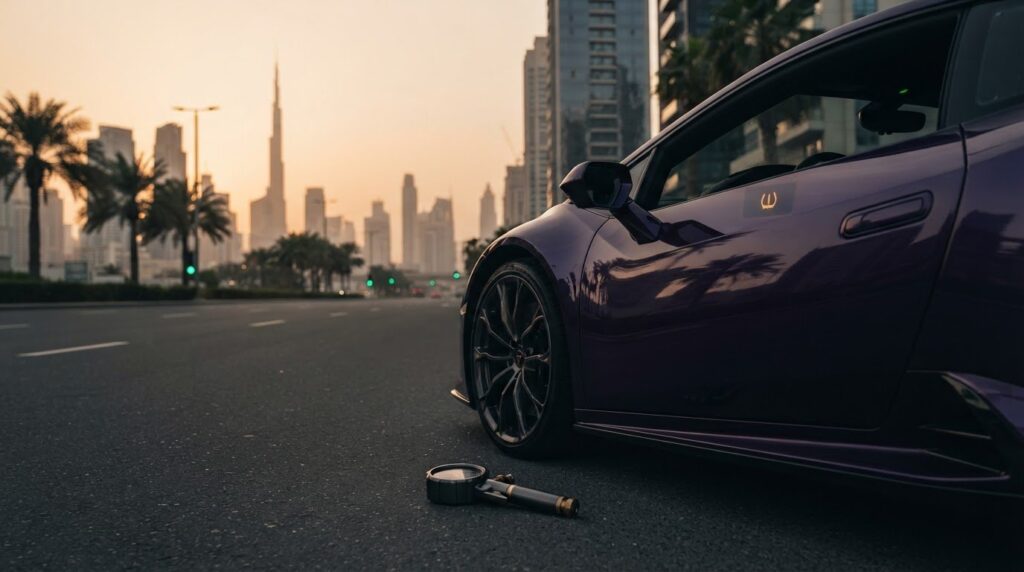
A low tire pressure warning doesn’t always mean you must stop instantly, but it should never be ignored. If you’re unsure what to do when an exotic vehicle dashboard displays low tire pressure warning, treat it as a safety signal, especially in an unfamiliar high-performance car.
The alert may indicate that a tire is losing air, that pressure has changed with temperature, or that the monitoring system has a fault. Don’t guess, and don’t use the pressure printed on the tire sidewall as your target. What to do next depends on how the car handles, what you can see, and the pressure specified for that vehicle.
This guide explains when to pull over, how to inspect tires safely, and where to find the correct pressure before adding air. It also covers when a cautious move to a safe stopping place may be reasonable and when to seek roadside assistance. If you’re driving a rental, report the warning to the rental provider promptly and follow its instructions.
Key Takeaways
- Understand what a TPMS alert tells you, and why it signals a condition to check rather than identifying the cause.
- Learn what to do when an exotic vehicle dashboard displays low tire pressure warning, including how to assess handling and decide whether to stop safely.
- Consider gradual air loss, punctures, temperature changes, and sensor issues as possible reasons for the alert.
- Find the vehicle’s recommended tire pressure and use a suitable gauge to check it, rather than relying on the tire sidewall.
- Know when to seek qualified roadside assistance and what to document and report if you’re driving a rental.
What a Low Tire Pressure Warning Means in an Exotic Vehicle
A low tire pressure warning is a Tire Pressure Monitoring System (TPMS) alert that one or more tires may be below the pressure specified for the vehicle. TPMS monitors tire pressure and alerts the driver when it detects a potential pressure problem. The warning tells you to check the tires; it doesn’t explain why pressure has changed or confirm that a tire is visibly flat.
The alert could relate to gradual air loss, a puncture, a temperature change, or a system issue. It isn’t a diagnosis. Some systems use sensors inside the wheels, while others estimate pressure changes using wheel-speed information. The Tire-pressure monitoring system overview explains these broad approaches, but the vehicle’s manual is the authority for interpreting its specific display.
High-performance tires still need the pressure specified by the vehicle maker. A performance-focused design doesn’t make a tire immune to underinflation, and it doesn’t mean the tire should be inflated to a number used by another car. Correct pressure supports the vehicle’s intended balance and handling. Guessing can create a new problem rather than resolve the alert.
What the TPMS warning can and cannot tell you
The warning signals a pressure concern, but it may not identify the cause or a failed component. An alert can appear when no tire looks obviously flat, so don’t rely on appearance alone. A tire that looks damaged or a car that handles abnormally also needs attention, even if there’s no warning. Symbols, messages, and reset behaviour vary by vehicle, so check the owner’s manual for the exact meaning and instructions.
Why exotic vehicle tires need careful attention
Pressure specifications can differ between the front and rear axles and may depend on the vehicle’s configuration or load. Don’t substitute a generic figure from another car, a forum post, or an online discussion for the vehicle-specific recommendation. The number on the tire sidewall isn’t the target pressure for your car. Check the manual or vehicle information display before making an adjustment.
Don’t assume a performance-focused tire is a run-flat tire. Tire construction and the vehicle maker’s instructions for pressure loss vary. A warning alone can’t tell you whether a tire can safely support continued driving. Follow the car maker’s guidance rather than making assumptions based on the vehicle’s price, appearance, or performance category.
First Steps for Low Tire Pressure Warnings
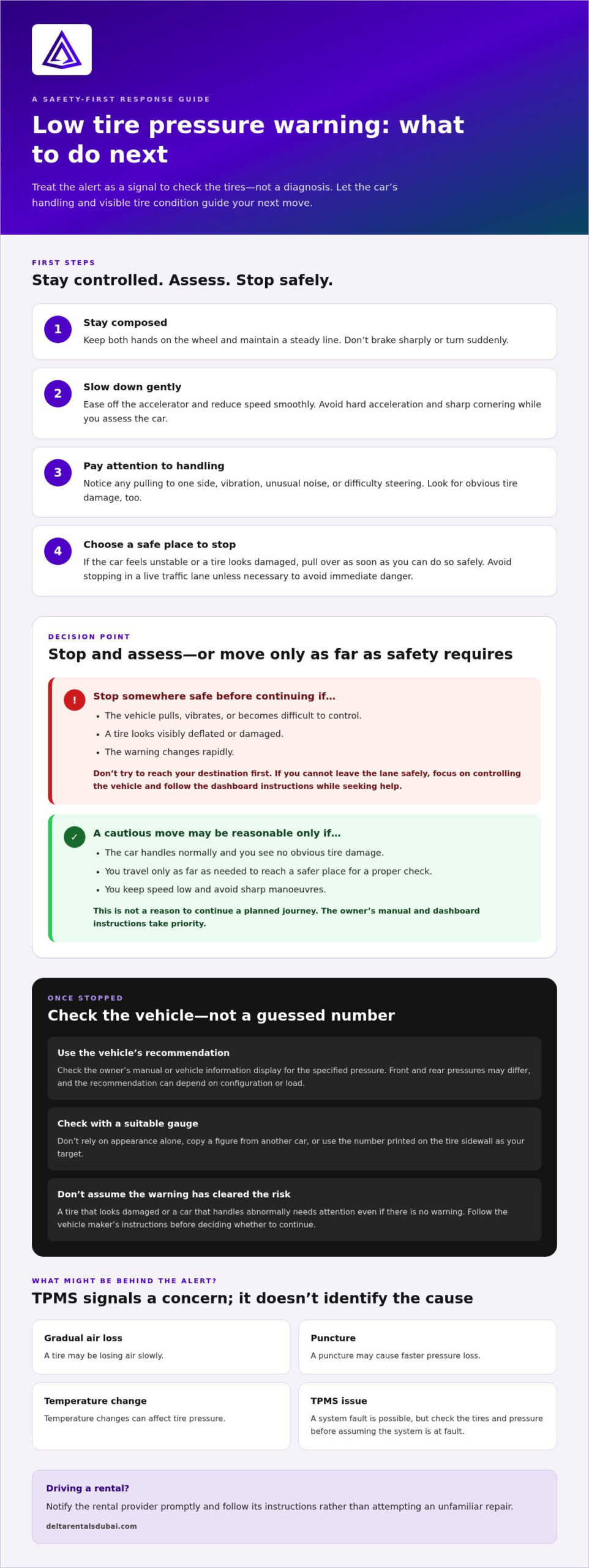
Keep your focus on the road. If you’re deciding what to do when an exotic vehicle dashboard displays low tire pressure warning, don’t brake sharply or turn suddenly. Ease off the accelerator, reduce speed smoothly, and notice whether the steering, ride, or braking feels different. Avoid hard acceleration and sharp cornering while you assess the car.
Use this sequence:
- Stay composed. Keep both hands on the wheel and maintain a steady line.
- Slow down gently. Reduce speed without abrupt braking or acceleration.
- Assess handling. Watch for pulling to one side, vibration, unusual noise, or difficulty steering.
- Look for a safe place to stop. If the car feels unstable or a tire looks damaged, pull over as soon as you can do so safely.
Visible tire damage or unstable handling means you should stop somewhere safe and assess the situation before continuing. Don’t try to reach your destination first.
When to stop driving immediately
Prioritise a safe stopping place if the vehicle pulls, vibrates, or becomes difficult to control. Treat a visibly deflated or damaged tire, or a warning that changes rapidly, as a stop-and-assess situation. Avoid stopping in a live traffic lane unless necessary to avoid immediate danger. If you can’t leave the lane safely, focus on controlling the vehicle and follow the dashboard instructions while seeking help.
When a cautious drive to a safe place may be reasonable
A short, cautious drive may be reasonable only if the vehicle handles normally and you see no obvious tire damage. Keep your speed low, avoid sharp manoeuvres, and travel only as far as needed to reach a safer place for a proper check. This isn’t a reason to continue a planned journey. The owner’s manual and dashboard instructions take priority over general advice.
Choose a stopping place clear of moving traffic, such as a suitable parking area. Don’t stand beside the car where passing vehicles could put you at risk. If the car’s behaviour worsens before you reach a safe place, respond to the immediate road conditions instead of pressing on to a preferred destination.
Once stopped, don’t assume the alert will disappear or that the car is safe just because it feels normal. Check the tires and the vehicle’s instructions before deciding whether to continue. If you’re driving a rental, notify the provider promptly and follow its directions rather than attempting an unfamiliar repair.
Planning a future drive in an unfamiliar performance car? Explore exotic car rental options and review the vehicle’s guidance before setting off.
Why the Warning Appears: Low Pressure, Temperature, or a Sensor Issue?
A low-pressure warning can have several causes, and the dashboard usually can’t tell you which one applies. Air may escape gradually through a small leak, or a puncture may cause faster pressure loss. Temperature changes can also affect tire pressure. A TPMS fault is another possibility, but check the tires and their pressure before assuming the system is at fault.
Think of the warning as a prompt to investigate, not proof that a sensor has failed. Common possibilities include:
- Gradual air loss: A tire may lose pressure over time without looking dramatically different.
- A puncture or damage: A sharp object or other tire damage can cause pressure to fall, sometimes quickly.
- Temperature-related change: Pressure readings can shift as the tire and surrounding air warm or cool.
- A TPMS issue: A sensor or system fault may affect the warning, but it doesn’t confirm that tire pressure is correct.
The key is to establish the actual tire condition before settling on an explanation. You can’t reliably distinguish a sensor fault from a genuine leak by guessing from the dashboard message. Check tire pressure and visible condition first, following the vehicle-specific instructions.
How temperature and driving conditions affect a reading
As tires warm during driving, their pressure readings can differ from readings taken before the journey. Don’t let a warm reading persuade you to release or add air without checking the maker’s guidance. For a consistent check, measure pressure when the tires are cold, as directed in the owner’s manual.
How to think about a possible TPMS fault
Consider a system fault only after checking tire pressure and inspecting the tires for visible damage. If the pressure is correct but the warning remains, returns, or behaves unusually, arrange a qualified inspection. A persistent warning still needs attention. Don’t reset or dismiss the system instead of correcting low pressure. Follow the manual’s reset instructions only after checking and setting the tires to the specified values.
Note what you observe: when the alert appeared, whether it returns after driving, and whether a gauge confirms low pressure. These details can help a qualified technician distinguish a tire problem from a monitoring-system issue. If you’re driving a rental, report the alert to the provider and follow its instructions rather than assuming it’s only a sensor fault.
How to Check and Correct Tire Pressure Safely
Once the vehicle is parked somewhere safe, use a suitable tire-pressure gauge and the car’s own pressure specification. Don’t inflate by guesswork or assume every wheel uses the same setting. A reliable reading and the correct target go together.
The driver-door placard or owner’s manual is the source for your vehicle’s correct tire pressure. Some vehicles also show the specification on a vehicle-specific display. The number on a tire’s sidewall is its maximum pressure rating, not the normal target for your car.
Find the correct pressure before adding air
Check the driver-door placard, manual, or vehicle display before connecting a compressor. Confirm whether the front and rear tires have different targets, and look for instructions that vary with load or driving conditions. Use documentation for the exact vehicle, not a generic chart or figures from an online discussion. If the approved procedure or target is unclear, don’t guess or alter the pressure setting.
Measure when the tires are cold if possible, following the manual’s guidance. Remove the valve cap, press the gauge squarely onto the valve stem, and note the reading. Repeat for each tire, since the dashboard may not identify the affected wheel. If a reading is below the specified target and there’s no visible damage, add air in small amounts and measure again rather than filling by feel.
Recheck the warning after measuring
Compare each reading with the vehicle’s specification, then follow the manual’s directions for using a compressor or tire repair equipment. Avoid using a sealant or repair kit unless the vehicle maker’s instructions permit it. After adjusting pressure, take another gauge reading rather than relying only on the compressor’s display.
Warning reset steps differ by vehicle. Some systems update after the tires have been set correctly and the car has been driven; others require a specific procedure. Follow the owner’s manual, and don’t assume the alert will clear immediately. If pressure falls again, a tire looks damaged, or the warning stays on despite correct readings, stop trying to resolve it through repeated inflation or resets and arrange qualified assistance.
If you’re driving a rental, follow the provider’s instructions before using repair equipment or making adjustments, and report the warning promptly. Planning a future drive in a premium performance car? contact us about renting an exotic car.
When to Get Help and Advice for Exotic Car Renters
Stop somewhere safe and arrange qualified roadside assistance if a tire appears damaged, pressure is dropping, or you can’t check it safely. Don’t continue just because the car still feels manageable. A high-performance vehicle may respond differently from a car you know, and a pressure warning alone doesn’t tell you whether the tire can safely support the journey.
If a rental displays a low tire pressure warning, notify the rental provider promptly. First move away from moving traffic if you can do so safely. Then explain what you observed and follow the provider’s instructions. Don’t arrange a repair, use a tire repair kit, or continue your journey without guidance.
What information to share when requesting assistance
Clear details help the assistance contact understand the situation. Describe the exact dashboard message, when it appeared, and whether it has changed. Mention any pulling, vibration, unusual noise, or change in steering. Give your location directly to the rental provider or roadside assistance contact so they can advise you on next steps.
Take clear photos of the warning and tire condition if it’s safe to do so. Capture the dashboard message and any visible tire damage, but don’t step into traffic or put yourself at risk to take pictures. If you can’t inspect the tire safely, say so rather than approaching it. Share what you observed without trying to diagnose the cause.
A calm response for an unfamiliar rental vehicle
Don’t assume the car has run-flat tires, that a particular repair method is suitable, or that a warning can be cleared with a standard reset. Procedures and equipment vary by vehicle. Refer to the specific owner’s manual and your rental instructions, then follow the provider’s direction. If the vehicle feels unstable or the tire looks damaged, wait for qualified assistance instead of attempting to reach a workshop or destination yourself.
Keep the provider updated if the warning changes or the vehicle’s handling worsens while you’re stopped. If you’re unsure whether it’s safe to move the car, ask before driving. A clear report of what you see and feel gives the provider a better basis to guide you than a guess about the tire or sensor.
For a future drive, explore Delta Rentals Dubai’s premium car rental options, including high-performance vehicles such as the Porsche 911 GT3 RS.
Make Your Next Drive More Confident
Before setting off in an unfamiliar performance car, locate its owner’s manual and find the tire-pressure information and dashboard alert guidance. That preparation can make it easier to respond calmly if a warning interrupts your plans. If you’re renting, save the rental provider’s contact details before you drive.
Knowing what to do when an exotic vehicle dashboard displays low tire pressure warning helps you make a measured decision instead of relying on assumptions. Keep the vehicle’s instructions close, take any warning seriously, and let safety guide your next move. With the right preparation, an unexpected alert doesn’t have to define the drive.
Ready to plan a premium drive? Explore Delta’s premium car rental options, including the Porsche 911 GT3 RS.
Frequently Asked Questions
Can I keep driving when the low tire pressure warning appears?
Only consider moving a short distance if the car handles normally and you can’t see tire damage. Ease off the accelerator and head to a nearby safe place for an inspection, not onward with your journey. If the steering feels unusual, the vehicle pulls or vibrates, or a tire looks deflated, stop safely and seek assistance. Follow the vehicle’s dashboard instructions and manual if they give more specific direction.
How do I find the correct tire pressure for an exotic car?
Look for the vehicle’s pressure information on the driver-door placard, in the owner’s manual, or on its vehicle-specific display. Check whether the front and rear values differ and whether the manual gives guidance for your load. Don’t apply a figure from a similar-looking model or a forum post. The number printed on the tire’s sidewall is not the vehicle’s recommended target.
Can hot weather trigger a low tire pressure warning?
Hot weather can affect tire pressure readings, but heat alone doesn’t mean a warning is harmless. Tire pressure typically rises as tires warm, including during driving. A warning can also relate to actual air loss or another issue. Don’t adjust pressure based on ambient temperature alone. Let the tires cool and check them according to the car’s manual before deciding what action to take.
What happens if the tire pressure warning stays on after inflation?
A warning that remains after inflation may need time or a model-specific reset procedure, or it may point to a continuing tire or monitoring-system problem. Recheck the pressure with a gauge and compare every tire with the vehicle’s specified values. Don’t keep adding air just to clear the alert. If the warning persists, returns, or the pressure drops again, avoid relying on the car for a normal journey and arrange a qualified inspection.
Is it safe to drive an exotic car with a slow tire leak?
Don’t assume a slow leak is safe just because the car still feels normal. A tire that continues losing air can become unsafe before the change is obvious from the driver’s seat. If a gauge shows pressure falling, or you need to reinflate the same tire again, don’t use repeated top-ups as a reason to continue your trip. Stop safely and arrange professional guidance, particularly if handling changes or damage is visible.
Do all exotic cars have run-flat tires?
No. An exotic car’s price or performance focus doesn’t confirm that it has run-flat tires. Check the owner’s manual or tire information for the exact vehicle; don’t infer the tire type from appearance or another version of the same model. If you can’t establish the specification, treat a pressure warning as a tire concern and avoid driving on a damaged or visibly deflated tire until you’ve received appropriate guidance.
What should I do if a rental car displays a low tire pressure warning?
Move to a safe stopping place if needed, then contact the rental provider and follow its instructions before arranging repairs or continuing the journey. Share the exact dashboard message, when it appeared, any handling changes, and your location. Take photos of the display and tire only if it’s safe. Don’t assume a repair kit, reset procedure, or run-flat capability is suitable for an unfamiliar rental vehicle.