
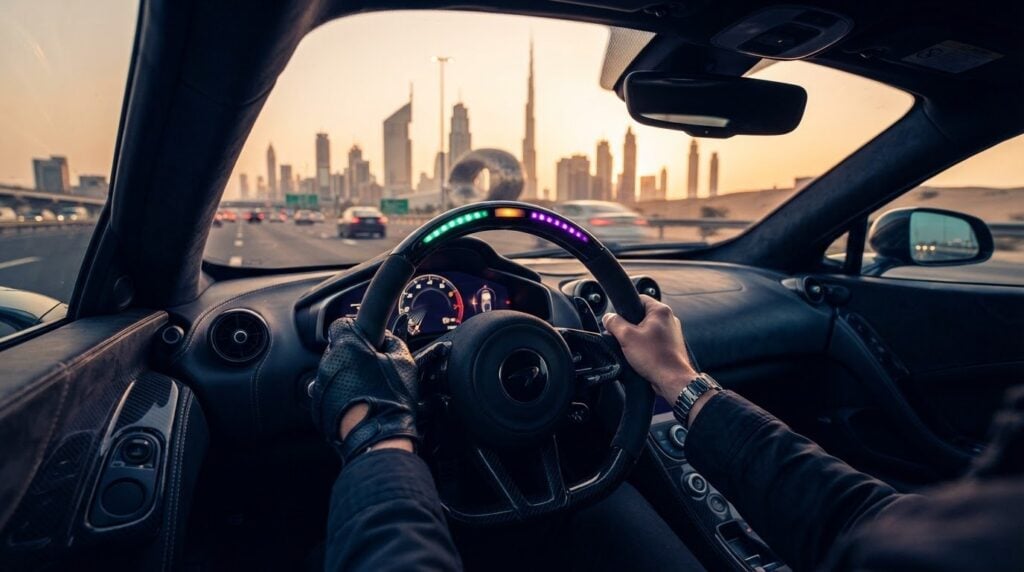
What if the shift lights on a carbon-fiber steering wheel are a prompt, not an instruction? With carbon fiber steering wheel shift light indicators explained for drivers, the key point is that the lights generally respond to engine speed, while the right moment to change gear depends on the vehicle, driving conditions, and your control of it.
It’s easy to see coloured LEDs and assume one colour always means “shift now.” In practice, colours, patterns, and RPM settings can vary. The carbon-fiber finish is separate from the electronics that read and display vehicle data, so the wheel’s appearance doesn’t tell you how its shift lights are configured.
This guide explains what the indicators signal, how they may receive engine-speed information, and why their behaviour differs between vehicles. It also covers how to interpret them without treating them as a guarantee of the right gear-change moment or letting them distract you. Use them as one visual reference, while keeping safe, attentive driving in command.
Key Takeaways
- Shift lights connect visual prompts with engine-speed information. They are not automatic gear-change instructions.
- Engine RPM may inform the prompt, but the signal path and display behaviour can vary by vehicle.
- A shift light, tachometer, and gear-position display report different things. None alone tells you everything about when to shift.
- Identify the display, consult the vehicle manual, and interpret its prompts in context while keeping your attention on the road.
- Before driving, confirm the specific vehicle’s model year, equipment, and indicator behaviour rather than assuming features are standard.
Carbon fiber steering wheel shift light indicators explained for drivers
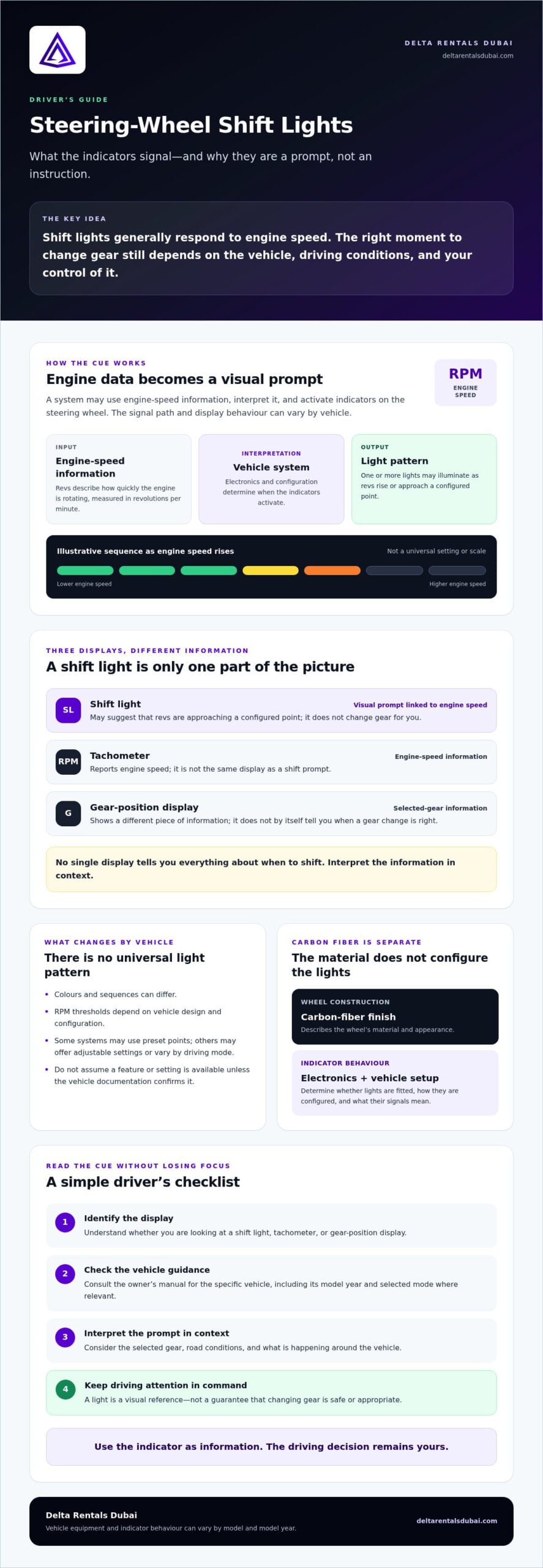
Shift lights visually communicate engine-speed information. As engine speed rises, indicators may illuminate to show that the engine is approaching a set point where a gear change could be appropriate. They provide a visual reference, not a decision about when you should shift.
A shift light is a vehicle-configured visual prompt linked to engine speed, and its meaning can differ between vehicles. The lights may support timely gear changes, but their signals depend on the vehicle setup and driving context. A prompt that may be useful during controlled performance driving doesn’t override traffic, road conditions, speed limits, or the need to stay attentive.
What information does a shift light display?
A shift-light display may respond to engine revolutions per minute, or RPM, the number of times the engine’s crankshaft rotates each minute. Some systems illuminate as RPM rises; others signal when the engine reaches a configured shift point. The Shift light reference explains the basic relationship between this indicator and engine speed.
Read the display as information, not an order. A light doesn’t change gear automatically, confirm that a gear change is safe, or account for every driving condition. Its colour, sequence, and threshold may mean different things in different vehicles. Check the relevant vehicle guidance before relying on a particular pattern.
Does carbon fiber make the indicators work?
No. Carbon fiber is a lightweight material used in some steering-wheel designs. It describes the wheel’s construction, not the indicator technology. The electronic components and vehicle systems determine when shift lights activate and what their signals mean.
This distinction matters when comparing steering wheels or preparing to drive an unfamiliar vehicle. A carbon-fiber finish doesn’t show whether shift lights are fitted, how they’re configured, or what engine speed they represent. Confirm the equipment and indicator behaviour for the specific vehicle rather than inferring it from the material.
How Steering-Wheel Shift Lights Work with Engine Speed
A shift-light system turns engine data into a visual signal. Depending on the vehicle, information may come from onboard electronics or another connected system, then be interpreted by a controller that activates the steering-wheel indicators. The signal path varies, so don’t assume every display uses the same hardware or reads data in the same way.
Engine speed, often called “revs,” describes how quickly the engine is rotating. It’s measured in revolutions per minute (RPM). As the engine works through a gear, its revs usually rise with acceleration. A shift-light system can respond to that increase, illuminating one or more indicators as the revs approach a programmed threshold. The prompt may help you consider a gear change, but it doesn’t select a gear or decide whether changing gear suits the situation.
Shift lights present engine-speed information for you to interpret, not a universal command to change gear. The display can offer a cue, while you remain responsible for the decision.
How do revs relate to a suggested gear change?
For example, a display might illuminate in stages as engine speed climbs, then signal more distinctly near a configured shift point. The sequence indicates that revs are rising and the engine is approaching a setting chosen for that vehicle or driving mode. There is no single RPM figure that applies to every car, gear, or situation, so don’t treat an unfamiliar pattern as a fixed instruction.
Gear changes also depend on context, including the selected gear, road conditions, and what’s happening around the vehicle. For background on the driving action itself, NASA’s guide to performance shifting technique offers further reading. A shift-light prompt is only one part of understanding a gear change.
Why can the light pattern differ between cars?
Thresholds and display behaviour depend on vehicle design and configuration. Some systems may use preset activation points; others may offer adjustable settings or respond differently by driving mode. Don’t assume an option is available unless the vehicle’s documentation confirms it. Indicator colours and sequences aren’t universal automotive standards.
Before driving, consult the owner’s manual for the specific model and, where relevant, its model year and selected mode. If you’re considering a performance-car rental, you can ask Delta Rentals Dubai about vehicle specifications and confirm which features are fitted instead of assuming they’re standard.
Shift Lights, Tachometers, and Gear Indicators: What Is the Difference?
These displays may sit close together in a cockpit, but they communicate different things. A shift light may prompt you to consider a gear change, a tachometer shows engine speed, and a gear-position indicator identifies the selected gear when fitted. Knowing which signal you’re looking at prevents a bright light from being mistaken for a complete instruction.
| Display | What it communicates | What it doesn’t tell you |
|---|---|---|
| Shift light | An engine-speed-related prompt, often linked to a configured threshold. | Whether a gear change is safe or appropriate at that moment. |
| Tachometer | Engine speed, shown on a dial or digital readout. | Which gear is selected or whether you should shift now. |
| Gear-position indicator | The selected gear, if the vehicle provides this display. | Engine speed or the right time to change gear. |
Shift lights versus a tachometer
A tachometer gives a more continuous view of engine speed. Depending on the vehicle, it may use a marked dial or a digital number. A shift light offers a quicker visual cue that may complement the tachometer by drawing attention to a configured engine-speed point. Neither display removes the need to monitor the road and make a considered decision.
An illuminated light doesn’t always mean “change gear immediately.” Its meaning depends on the vehicle’s setup, and the cue can’t judge traffic, road surface, or your intended manoeuvre. Treat it as information to interpret, not an instruction.
Shift lights versus gear-position indicators
A gear-position display tells you which gear is selected. A shift light, by contrast, may relate to engine speed rather than the selected gear. A gear number won’t necessarily reveal how close the engine is to a shift point, just as a shift-light pattern doesn’t necessarily identify the current gear.
Some instrument layouts place several displays close together or combine information on one screen. Don’t infer a function from colour, position, or appearance alone. Identify what each display reports, then confirm its exact meaning in the owner’s manual for that vehicle and model year.
How Drivers Should Read Shift Lights Without Losing Focus
A shift light is useful only when you understand what it signals and can interpret it without taking attention away from driving. Treat it as supporting information, not a target to chase. On public roads, traffic, road conditions, applicable speed limits, and safe control of the vehicle take priority over any performance-oriented display.
A simple process for interpreting the indicators
- Identify the display before driving. Check the vehicle’s owner’s manual to confirm what the lights represent, how their pattern works, and whether settings or driving modes affect them. If the explanation isn’t clear, ask the vehicle provider before setting off.
- Read illumination as information. A light may relate to engine speed or a configured shift point, but it doesn’t automatically mean you should change gear. The prompt can’t assess the full driving situation for you.
- Make decisions in context. Consider traffic, road surface, visibility, speed limits, and your planned manoeuvre. If changing gear would compromise attention or control, don’t let the indicator override your judgement.
This is the practical approach: learn the vehicle-specific meaning, then keep the display in perspective. Review unfamiliar controls while parked, not while moving. If you’re unsure what a light means on the road, prioritise safe driving and consult the manual when stopped in a safe place.
Why shift lights should not distract you
Keep your eyes on the road and avoid staring at the indicator or trying to follow every change in its pattern. A display is a secondary reference, not a replacement for awareness of vehicles, pedestrians, junctions, and changing conditions. A carbon-fiber steering wheel or prominent LED display doesn’t change that responsibility.
Some indicator systems are designed with performance driving in mind. That context differs from ordinary public-road driving: a track-oriented prompt isn’t a reason to accelerate, drive aggressively, or exceed posted limits on public roads. Drivers who want to develop performance skills should seek qualified instruction and use a suitable, controlled venue rather than experimenting in traffic.
Before a performance-car rental, confirm the exact vehicle specification and ask how its displays work. Delta Rentals offers a Porsche 911 GT3 RS rental, but the steering-wheel and indicator features should be verified for the specific vehicle. Ask Delta Rentals about vehicle specifications and rental options.
Explore Performance-Car Steering Wheels and Specifications Before You Drive
A performance-oriented cockpit can bring together distinctive materials, steering-wheel controls, and driver displays. Appearance alone can’t confirm what equipment is fitted or what a shift-light pattern means. Before driving, verify the exact vehicle specification, including its model year and the manual’s explanation of any indicators. Check the individual vehicle rather than making assumptions based on its model name or finish.
What to confirm about a vehicle before driving
Ask the vehicle provider for details about the specific car you’ll receive. These questions can help you understand the controls and displays before setting off:
- Does this vehicle have shift-light indicators, and how does its manual describe their function?
- Do the steering-wheel material and visible controls match the supplied vehicle?
- Can the indicator behaviour vary by model year, driving mode, or configuration?
Seek current, vehicle-specific confirmation. Features can differ, and an answer about one vehicle shouldn’t be assumed to apply to another. If the provider can’t confirm a detail, treat it as unverified rather than expecting a particular colour, sequence, or shift point.
When a performance-car experience makes sense
Understanding the wheel and its displays is one part of getting familiar with a performance-oriented cockpit. Delta Rentals offers a Porsche 911 GT3 RS rental, but that offering doesn’t establish that a particular vehicle has carbon-fiber shift-light indicators. Confirm the available car’s model year, equipment, and indicator behaviour directly with the provider before relying on any feature.
For more context on the vehicle, look for the Porsche 911 GT3 RS guide alongside the details confirmed for your specific rental. General model information can provide background, while the provider should verify the equipment of the vehicle you’ll actually drive.
If you’re considering a performance-car experience, ask Delta Rentals about rental options and verified vehicle specifications. Confirm the details before setting off, then use the vehicle’s manual to understand its controls.
Know the Signals Before Your Next Drive
Shift lights offer a visual cue related to engine speed, but they don’t choose the right moment to change gear. Thresholds and patterns can differ between vehicles, so check the manual and interpret the display alongside road conditions and your own attention. Carbon fiber describes the steering-wheel material, not the electronics that control the indicators.
Understand what the specific display communicates and treat it as information rather than an instruction. If you’re considering a performance-car rental, confirm the model year and equipment of the exact vehicle before booking. Delta Rentals offers Porsche 911 GT3 RS rental, but its steering-wheel features should be verified for the specific car.
Ask Delta Rentals about a performance-car rental and confirm the vehicle specifications. Check the details before setting off, and keep safe, attentive driving first.
Frequently Asked Questions
What do shift lights on a steering wheel mean?
Shift lights are visual indicators that can communicate engine-speed information or a programmed shift point. Their purpose and exact meaning depend on the vehicle’s design and configuration. Treat them as prompts to interpret, not automatic instructions to change gear. If you see unfamiliar colours or sequences, check the owner’s manual for that specific vehicle before driving so you know what the display is intended to signal.
Do carbon-fiber steering wheels make shift lights work differently?
No. Carbon fiber is a material used in some steering-wheel designs; it doesn’t, by itself, determine how shift lights operate. Electronics, software, and vehicle configuration control the indicator behaviour. The material may be part of the wheel, but it doesn’t establish what the lights mean. Check the vehicle documentation for its exact setup.
Are shift-light colours the same in every car?
No. Don’t assume there’s a universal colour sequence or that a colour has the same meaning across different vehicles. Manufacturers and vehicle configurations may use different colours, patterns, and activation thresholds. A light that signals one thing in one car may communicate something else in another. Before driving, check the owner’s manual or ask the vehicle provider to explain the specific display instead of relying on a generic colour guide.
Do shift lights tell you exactly when to change gear?
Not necessarily. A shift light may indicate rising engine speed or a configured shift point, but the appropriate response depends on the vehicle, selected mode, and driving conditions. The light can’t account for traffic, road surface, or your need to maintain control. Treat it as information, not a command, and consult the vehicle’s manual to understand its intended function before relying on the display.
Can I use shift lights while driving on public roads?
You may encounter shift lights in a road car, but their presence isn’t a reason to drive at high speed or chase an indicator. Keep your attention on traffic and road conditions, and follow applicable rules and speed limits. Don’t attempt performance driving on public roads. If you want to explore performance features, seek suitable professional instruction and use an appropriate controlled setting.
How can I find out whether a rental car has shift-light indicators?
Ask the rental provider to confirm the equipment on the specific vehicle and model year, including its steering wheel and displays. Features can differ between cars with the same model name, so a general description isn’t proof of a particular setup. Before setting off, review the owner’s manual or ask about unfamiliar controls. Delta Rentals offers Porsche 911 GT3 RS rental; confirm the exact vehicle’s features before booking.