

A desert windstorm can leave a supercar’s windshield looking clean while fine sand pits catch the light and blur your view at speed. For renters, avoiding windshield sand pitting deductibles after desert windstorms starts before the first gust: your route, following distance, and decision to pause all matter. The risk isn’t limited to reduced visibility. Damage that’s hard to spot can also become a point of dispute when you return the vehicle.
Protecting the glass and understanding your financial responsibility both start with preparation. This guide explains how to plan for a shamal, adjust your driving, inspect the windshield, and document its condition before and after a rental. It also covers what to check in the rental agreement, since coverage and deductible terms vary, and how to report new damage promptly. A Porsche 911 GT3 RS’s aerodynamics can influence how debris moves around the car, but no design makes a windshield immune to abrasive sand. Delta Rentals Dubai offers No Deposit rental options, but those do not automatically remove responsibility for damage. Clear checks and careful driving help you protect visibility and avoid surprises. A zero-deductible return isn’t guaranteed, but informed steps put you in a stronger position.
Key Takeaways
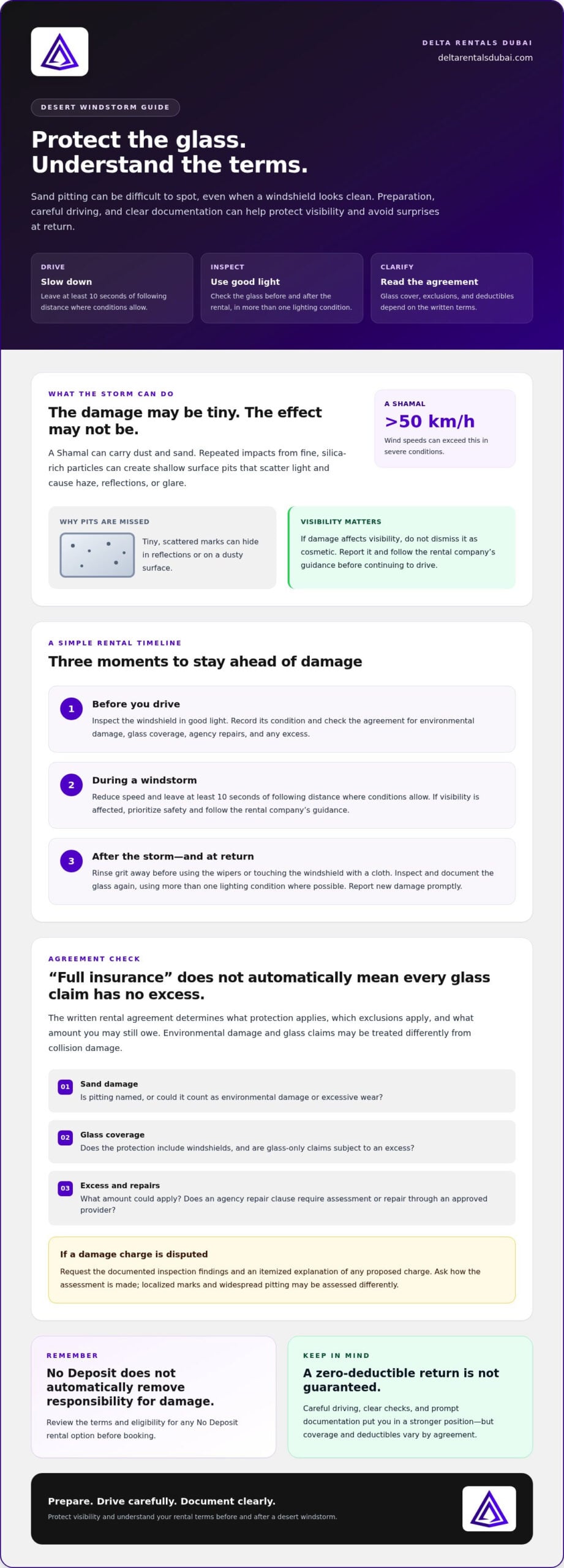
- Fine sand can pit glass without leaving obvious marks. Inspect the windshield in good light before and after your rental.
- Before driving, check your rental agreement for how environmental damage, agency repairs, and deductibles are handled.
- During a windstorm, reduce speed and leave at least 10 seconds of following distance where conditions allow.
- After the storm, rinse away grit before using the wipers or touching the windshield with a cloth.
- To support avoiding windshield sand pitting deductibles after desert windstorms, review the terms and eligibility for any No Deposit rental option before booking.
Understanding Sand Pitting: The Invisible Threat to Supercar Glass
A windshield can look flawless in daylight and still have damage from airborne grit. Sand pitting is a pattern of tiny surface craters created when silica-rich particles strike glass at speed. A windstorm can expose a vehicle to repeated impacts in a short period, so the damage isn’t always gradual.
Fresh pits may be nearly impossible to see during a quick handover inspection. They’re shallow, scattered, and easy to miss against reflections or a dusty surface. Angled or specialized lighting can make the marks easier to distinguish. Inspecting the glass in more than one lighting condition helps renters and agencies document its condition accurately.
The concern is more than cosmetic. Small irregularities can scatter light, creating haze, reflections, or glare that may be distracting at night or when facing oncoming headlights. If visibility is affected, don’t dismiss the damage as appearance alone. Report it and follow the rental company’s guidance before continuing to drive.
The Mechanics of a Shamal
A Shamal is a strong, dry wind that can lift and carry dust and sand. In severe conditions, wind speeds can exceed 50 km/h. Learn more about what a dust storm is and how airborne particles reduce visibility. Suspended grit can strike glass repeatedly, producing a sandblasting effect rather than one isolated impact.
Loose sand often travels close to the ground. A low-slung sports car may meet particles in that lower stream, while a taller SUV presents a different profile. Neither vehicle is immune. The Porsche 911 GT3 RS’s aerodynamic design shapes airflow around the car, but it can’t guarantee that sand will be deflected away from the windshield.
Supercar Glass vs. Standard Windshields
Performance cars such as the McLaren Artura are engineered with weight and vehicle dynamics in mind. Lightweight construction can involve trade-offs, but glass design and thickness depend on the vehicle. Don’t assume a supercar windshield is inherently more fragile or less resistant to pitting than standard glass. Check the vehicle information and rental terms for model-specific guidance.
If a vehicle uses thinner lightweight glass, closer inspection and greater vigilance during environmental events are prudent. To support avoiding windshield sand pitting deductibles after desert windstorms, learn what pitting looks like, assess visibility carefully, and document any marks promptly rather than waiting until return.
The Financial Impact: Insurance, Deductibles, and Exclusions
A label such as “full insurance” doesn’t automatically mean every type of windshield damage is covered without an excess. In a rental, the written agreement sets out what protection applies, which exclusions apply, and what amount the renter may still owe. Environmental damage and glass claims may be handled differently from collision damage, so don’t assume sand pitting is included unless the terms say so.
Check for an agency repair clause, too. It may require the rental company to assess damage or arrange repairs through its own approved provider. That can affect how damage is inspected and how charges are calculated. The process and any limits should be stated in the agreement. Ask for clarification before accepting the car if the wording is unclear.
Why Sand Pitting May Be a Separate Charge
Depending on the contract and the condition recorded at handover, fine pitting may be classified as excessive wear, environmental damage, or damage requiring repair. It isn’t safe to assume every agreement treats it as an accident. If damage is disputed, request the documented inspection findings and an itemized explanation of any proposed charge.
Localized marks may be assessed differently from widespread pitting that affects visibility and calls for windshield replacement. Luxury glass can involve model-specific parts and repair requirements, so the financial impact of repair or replacement may differ from that for a standard vehicle. Ask how the assessment is made rather than relying on a general “glass covered” label.
Evaluate the Agreement Before You Drive
Read the relevant clauses and search for these terms:
- Sand damage: Is pitting named, or could it fall under environmental damage or excessive wear?
- Glass coverage: Does protection include windshields, and are glass-only claims subject to an excess?
- Excess: What amount could apply, and does it differ by damage type?
A No Deposit rental model can reduce the need to tie up funds as a security deposit, but it doesn’t automatically remove responsibility for damage or override the rental agreement. Confirm the applicable terms before booking. Before setting off, inspect the windshield from inside and outside, note existing marks, and take clear photos or video in good light. Ask the rental representative to record any concerns on the handover report.
Clear terms and a documented starting condition are practical steps toward avoiding windshield sand pitting deductibles after desert windstorms. For help clarifying rental terms before choosing a vehicle, ask Delta Rentals about rental protection and deposit terms.
Proactive Driving Strategies During a Windstorm
Once sand is airborne, your best protection is to limit exposure. Reduce speed smoothly and leave room to react. In simplified physics, impact energy rises with the square of relative speed, so doubling the speed of an approaching particle can mean four times the impact energy. Actual strikes depend on wind, particle size, direction, and your vehicle’s speed, so there’s no universal speed that guarantees protection from pitting.
Control Speed and Distance
Choose a speed that gives you a clear view and lets you stop safely. A fixed figure such as 60 km/h isn’t a proven safety threshold for preventing glass damage. Visibility, traffic, road conditions, and official instructions should guide your decision. If visibility becomes poor, don’t push on simply to reach a destination. Find a safe place to stop away from moving traffic.
Leave at least 10 seconds of following distance where conditions and traffic allow. Vehicles ahead can throw up sand and dust, creating a “rooster tail” that reduces visibility and exposes your windshield to more grit. Don’t tailgate a truck or change lanes abruptly to get around one. Keep both hands steady on the wheel and make gradual inputs, since sudden steering or braking can be difficult when visibility and grip are compromised.
Choose Your Position Carefully
The middle lane isn’t automatically safest. Wind direction, roadside barriers, other vehicles, and drifting sand can change conditions along the road. Stay in a lane where you can see clearly, keep a predictable buffer from traffic, and avoid following close behind vehicles that are stirring up dust. Watch for sand accumulated on the road. Treat a drift as an unpredictable surface, slow before reaching it, and don’t swerve sharply at the last moment.
Plan Ahead and Seek Shelter
Check weather alerts and route conditions before setting out, and reconsider the trip if strong winds or poor visibility are forecast. If a storm develops, head for a safe, sheltered stopping place only when you can reach it without taking unnecessary risks. Covered parking or a suitable canopy may reduce direct exposure, but availability and safety vary. Don’t stop on a highway shoulder unless it’s necessary to address an immediate danger, and follow official directions.
If you must park, choose a secure sheltered position and avoid exposing the windshield directly to blowing sand when a safer orientation is available. Parking position is not a substitute for shelter. These driving choices can reduce exposure and support avoiding windshield sand pitting deductibles after desert windstorms, but they can’t guarantee damage-free glass.
Post-Storm Maintenance and Inspection Protocol
After a windstorm, treat every dusty surface as if it still carries abrasive grit. The first rule is simple: don’t switch on the wipers or wipe the windshield with a dry cloth. Either can drag particles across the glass and scratch it. Avoid rubbing the paint, too. Remove grit with water before touching the surface.
Rinse Before You Wash
Use a gentle, low-pressure flow of clean water to loosen and carry away sand from the windshield and bodywork. Don’t aim a pressure washer close to delicate trim or glass. Once the loose grit is rinsed off, wash with pH-neutral automotive soap and a clean microfiber mitt, working gently and rinsing the mitt often. Follow the vehicle’s care instructions if they specify a different method.
Skip automated car washes immediately after a storm. Brushes and reused wash materials may hold abrasive particles that can scratch paint or glass. If you’re unsure how to clean a high-value rental safely, contact the rental agency for its recommended procedure instead of experimenting.
Inspect and Document the Glass
When the windshield is clean and dry, inspect it from inside and outside. Use a flashlight at an angle to reveal small pits that may disappear in flat lighting. Check the driver’s line of sight closely, then examine the edges and A-pillars, where grit can collect and surfaces may rub. Look for newly visible marks, haze, or glare. Don’t try to polish or repair suspected damage yourself.
- Take sharp, high-resolution photos in direct sunlight, then use angled light for close-ups of any suspected pits.
- Include wider views that show where each mark sits on the windshield, along with the surrounding trim.
- Record a walk-around video that specifically shows the windshield’s clarity from inside and outside.
Before returning the vehicle, compare your inspection with the handover record. If you suspect new damage, notify the rental agency promptly, share your photos or video, and ask how it wants the vehicle assessed. Keep the communication factual and save the response. Clear documentation can help establish what you observed, though it can’t guarantee a particular outcome in a damage review.
Careful rinsing and a consistent inspection routine support avoiding windshield sand pitting deductibles after desert windstorms by reducing cleaning scratches and helping you report concerns early. For rental guidance before your next drive, contact Delta Rentals about vehicle care and rental terms.
The Delta Rentals Approach: Protection for Drivers
A premium rental starts with clear expectations at handover. Before setting off, inspect the vehicle in good light and make sure any existing windshield marks are recorded. Confirm how to report damage and which terms apply if the glass is affected.
Delta Rentals offers No Deposit rental options. These can reduce the need to leave a security deposit, but they don’t automatically remove an excess or make the renter exempt from damage charges. Review the applicable terms and ask how sand pitting is assessed, how concerns should be reported, and whether glass damage has separate conditions.
Transparency and Trust
Delta Rentals has 300+ 5-star Google reviews. Reviews can offer a sense of customer feedback, but they aren’t a substitute for the rental agreement. Request clear written answers about glass coverage and any applicable fees before accepting the vehicle. If a clause is unclear, ask for an explanation rather than relying on assumptions about “full insurance” or a No Deposit option.
For delivery and collection, confirm the arrangements directly, including when and how the vehicle’s condition will be recorded. A careful handover gives both parties a shared reference point. Keep your own photos and notes, too.
Choose for the Conditions
A supercar may suit a clear-weather drive, while a higher-riding vehicle such as a Range Rover may better suit some plans when wind and visibility are concerns. That doesn’t make an SUV immune to sand damage or automatically safer in a storm. Base the decision on current conditions, your route, and whether postponing travel is wiser. Don’t drive through poor visibility simply because you’ve chosen a different vehicle.
Don’t assume protective coatings or films are fitted to a rental vehicle. Ask what, if anything, is installed and whether it changes the recommended care process. Regardless of the vehicle, rinse away sand before wiping surfaces, document the glass at pickup, and report suspected damage promptly. These steps support avoiding windshield sand pitting deductibles after desert windstorms, while the written terms clarify your responsibilities.
Review the available vehicles and rental information through Delta Rentals’ luxury car rentals, then confirm the vehicle, protection, and handover details that matter for your journey.
Avoiding Windshield Sand Pitting Deductibles After Desert Windstorms
Sand pitting can be difficult to spot, but a few deliberate habits help: inspect the glass at pickup, slow down and increase your distance in a windstorm, then rinse away grit before cleaning or using the wipers. Just as important, read the rental agreement closely. Coverage labels alone don’t explain how a glass claim or excess will be handled.
These steps support avoiding windshield sand pitting deductibles after desert windstorms, but no driving or cleaning routine can guarantee damage-free glass or a zero-deductible return. Start with clear expectations, document the vehicle’s condition, and report concerns promptly.
Delta Rentals has 300+ 5-star Google reviews and offers No Deposit luxury rentals. Its fleet includes the Porsche 911 GT3 RS and Rolls Royce Cullinan. Confirm the vehicle and applicable rental terms before booking.
Ready to plan your drive? Ask Delta Rentals about your next luxury car rental.
Frequently Asked Questions
Does standard car rental insurance in the UAE cover sand pitting?
Not necessarily. Coverage depends on the rental agreement, and environmental or glass damage may be treated differently from collision damage. A “full insurance” label alone doesn’t confirm that sand pitting is included or that a glass claim has no excess. Before driving, look for terms such as “sand damage,” “glass coverage,” and “excess.” Ask the rental company to explain any unclear wording in writing.
How can I tell if a windshield has sand pitting damage?
Look for tiny, scattered marks that catch the light rather than one obvious chip. Clean and dry the glass first, then inspect it from inside and outside in bright light. An angled flashlight can help reveal shallow pits that are easy to miss during a quick handover. Check whether the marks affect your view, especially at night when headlights may create glare. Photograph any concerns and report them promptly.
What should I do if I am caught in a sandstorm while driving a supercar?
Reduce speed smoothly, increase your following distance, and avoid abrupt steering or braking. Don’t follow closely behind vehicles that are throwing up sand. If visibility becomes poor, prioritize a safe place to stop away from moving traffic and follow official instructions. Don’t continue just to reach your destination. After conditions improve, report any suspected damage to the rental company and follow its guidance before cleaning or inspecting the car.
Can sand pitting be repaired, or does the windshield need to be replaced?
It depends on the depth, spread, and location of the damage, as well as its effect on visibility. A qualified glass professional should assess whether localized repair is appropriate or whether replacement is needed. Don’t try to polish pits yourself, since that may worsen the surface or visibility. For a rental, contact the agency before arranging work, and document the marks so there’s a clear record of your concern.
Why is the deductible for supercar glass so high compared to regular cars?
There isn’t one universal deductible, and the amount a renter may owe depends on the rental agreement. Supercar glass can be model-specific, and repair or replacement may involve specialist parts or procedures. Some vehicles also have systems that require attention after glass work. These factors can influence repair costs, but they don’t determine your rental excess by themselves. Check the written terms for the glass-specific excess before accepting the car.
Is it safe to drive a Porsche 911 GT3 RS during a UAE windstorm?
A Porsche 911 GT3 RS isn’t immune to airborne sand, poor visibility, or changing road conditions. Its aerodynamic design may influence airflow around the vehicle, but it can’t guarantee that debris will miss the windshield. Avoid setting out if severe wind or low visibility is forecast. If a storm develops during your journey, slow down, leave more space, and stop somewhere safe when conditions make continuing risky.
How do no-deposit rentals help with sand damage concerns?
A No Deposit option can reduce the need to leave a security deposit, which may ease concern about funds being held during the rental. It doesn’t automatically remove an excess, waive responsibility for damage, or confirm that sand pitting is covered. Terms can vary. To support avoiding windshield sand pitting deductibles after desert windstorms, review the glass and damage clauses separately and document the windshield condition at pickup.
What is the best way to clean a supercar after a desert windstorm?
Rinse loose sand from the windshield and bodywork with clean water before touching the surfaces. Don’t use the wipers or a dry cloth on gritty glass, since particles can scratch it. After rinsing, wash gently with suitable automotive soap and a clean microfiber mitt, following the vehicle’s care guidance. Avoid automated brushes immediately after a storm. Once the car is clean and dry, inspect the glass and report any suspected new damage.