

A fuel receipt can be more valuable than the fuel itself when you’re returning a high-performance rental. If the gauge reading is questioned or an unexpected refueling charge appears, clear evidence can help you understand and challenge the charge. Avoiding fraudulent fuel refill surcharge penalties on vehicle handback starts before you reach the return point.
It’s reasonable to expect a clear fuel policy, especially when you’re driving an elite model such as a Porsche 911 GT3 RS. But unclear return requirements and missing documentation can make it difficult to assess a charge. Confirm the agreed fuel level, keep your refueling receipt, and record the dashboard gauge at pickup and return.
This 2026 UAE guide explains what to check in your rental agreement, how to document the fuel level, and what evidence to preserve if a surcharge seems unfair. Delta Rentals offers high-performance and luxury vehicle rentals, including the Porsche 911 GT3 RS. Ask about the fuel terms for your chosen vehicle before confirming your rental.
Key Takeaways
- Compare full-to-full, prepaid fuel, and pay-on-return policies before choosing the option that suits your rental.
- Use pickup and return photos, fuel receipts, and clear timestamps to build a record if the gauge reading is disputed.
- Avoiding fraudulent fuel refill surcharge penalties on vehicle handback begins with checking the contract’s fuel terms and fee structure.
- Review any refueling charge that includes fees beyond the fuel shortfall you agreed to cover.
- Ask a luxury rental provider to explain the fuel policy and return process for your specific vehicle before booking.
The Reality of Fuel Refill Surcharge Penalties on Vehicle Handback
A fuel refill surcharge is a charge applied when a rental vehicle is returned with less fuel than the level specified in the agreement. A charge should be based on the agreed policy and the documented fuel shortfall. It may also include a disclosed service fee. An unexplained amount, unclear calculation, or fee that wasn’t disclosed before you accepted the rental is a reason to ask for clarification.
Pump prices and rental refueling charges aren’t necessarily the same. A rental company may add a service charge for handling refueling, but the agreement should explain how the charge is calculated. A flat fee stacked with a per-litre charge deserves careful review. Broad car rental business models can include fees beyond the base rental price, which makes checking the actual terms essential.
The financial effect can be more noticeable with a luxury vehicle: a fuel shortfall across a high-capacity tank, plus any disclosed service charge, can add up. Don’t assume a charge is fraudulent simply because it exceeds pump prices. Compare the contract, the fuel level recorded at return, your receipt, and the itemized charge before deciding whether it’s justified. That evidence is central to avoiding fraudulent fuel refill surcharge penalties on vehicle handback.
Why High-Performance Vehicles Need Careful Fuel Checks
Some high-performance vehicles require Super 98. Confirm the required grade for your rental before refueling and keep the receipt. Large-displacement engines in luxury SUVs, including Range Rover models, can make a shortfall more costly than a small gap in a lower-capacity vehicle. A gauge reading alone may not settle a dispute, so photograph it and keep proof of when and where you refueled.
A polished handback can also create pressure to accept a charge quickly. Take time to ask for the fuel reading, the calculation, and the contract clause behind any fee. A premium rental should still come with clear answers.
Understanding the Full-to-Full Contractual Obligation
Full-to-full means you receive the vehicle with a full tank and return it full. It’s a common policy, but don’t assume every premium rental uses it. Confirm the exact requirement in writing. A five-kilometre refueling radius isn’t a universal rule, so follow it only if your agreement specifies it and ask how compliance is assessed.
Full-to-full can reduce uncertainty at handback: collect the car at the recorded level, return it at the agreed level, and keep evidence of the final refuel.
Common Tactics in Fraudulent Fuel Surcharge Schemes
A fuel dispute isn’t automatically fraud, but vague readings and unexplained add-ons deserve scrutiny. Watch for claims that the tank is only 95% full despite a full gauge, or pickup paperwork that records “Full” when the display was closer to 7/8ths. If the starting point is wrong, the return comparison may be unfair from the outset.
Another concern is a stacked charge: a flat administration fee plus a separate fuel premium per litre. The contract should explain each charge and how the shortfall is measured. A claim that the wrong octane was used also calls for evidence. Check the vehicle’s fuel requirement and retain the receipt showing the grade purchased. Don’t accept a separate “cleaning” fee without a clear contractual basis and an itemized explanation.
The Admin Fee Inflation Strategy
Small fuel gaps can look much larger after add-ons. For illustration only, a 50 AED fuel shortfall plus 450 AED in processing charges totals 500 AED. These figures are arithmetic, not a standard UAE fee or market example. Check the agreement for service-charge terms and ask for an itemized calculation. Before accepting a rental, ask the provider to explain any refueling or administration fees that could apply at handback.
Digital Gauge Discrepancies
A digital gauge shows an estimate, not a direct measurement of litres, and its display may not move in a perfectly predictable way. At pickup, photograph the dashboard and note any fraction shown, especially if the record says “Full.” After refueling, don’t keep topping up beyond the pump’s automatic stop. Keep the receipt and compare the litres purchased with the before-and-after gauge images.
Some rental companies charge more for refueling than a local station. The FTC consumer advice on rental cars offers general guidance on rental fees and fuel policies, though its advice is not UAE-specific. Use your own agreement as the controlling reference. If the figures don’t match, request the return reading, fee breakdown, and relevant contract clause.
To avoid fraudulent fuel refill surcharge penalties on vehicle handback, keep the evidence together: pickup and return photos, the fuel receipt, and written messages about the policy. If you’re considering a rental, you can ask Delta Rentals about fuel terms before confirming, so you understand the expectations before collecting the keys.
Policy Comparisons: Protecting Yourself from Unexpected Penalties
The cheapest-looking fuel option isn’t always the lowest-cost one. Compare what you’ll pay under each policy, and check exactly how the rental company calculates any shortfall or service charge. A clear agreement should state the return fuel level, how it’s assessed, and what fees may apply. Vague wording leaves room for surprises.
- Full-to-full: You collect the car with a full tank and return it full. Your cost is the fuel you use, plus the time needed to refuel before handback.
- Prepaid fuel: You pay for fuel in advance. Check whether unused fuel is refundable and whether the price includes a separate service charge.
- Pay-on-return: The rental company refuels after return and bills you under the contract. Confirm the fuel rate, any handling fee, and how the remaining level is measured.
For a short supercar rental, prepaid fuel may be poor value if you return with fuel left in the tank and receive no refund. Pay-on-return can save you a stop, but convenience may come at a premium. The rental agreement should let you see that cost before you commit, not only at handback.
The Full-to-Full Advantage
Full-to-full gives you more control: refuel shortly before return, use the grade stated in the rental instructions, and keep the receipt. If the instructions for a Porsche 911 GT3 RS specify Super 98, confirm that requirement before filling up. A VAT receipt records the transaction, while a dashboard photo provides supporting evidence of the fuel reading. Together, they can help clarify a disputed shortfall.
When Prepaid Fuel Makes Sense
Prepaid fuel can suit a high-mileage trip if you expect to use nearly the whole tank, or a corporate rental where saving time is worth the added cost. Compare the prepaid total with your likely fuel use and ask what happens to any unused balance. The convenience may be worthwhile if the terms are clear and the option suits your plans, but don’t wait until after booking to ask.
Look for a transparent policy that names the required return level, explains how fuel is measured, and itemizes any refueling or administrative charges. Treat broad terms such as “fuel fee applies” as a prompt to ask for the calculation in writing. Unexplained add-ons or unclear refund terms are reasons to pause and clarify before signing. Careful policy checks are a practical part of avoiding fraudulent fuel refill surcharge penalties on vehicle handback.
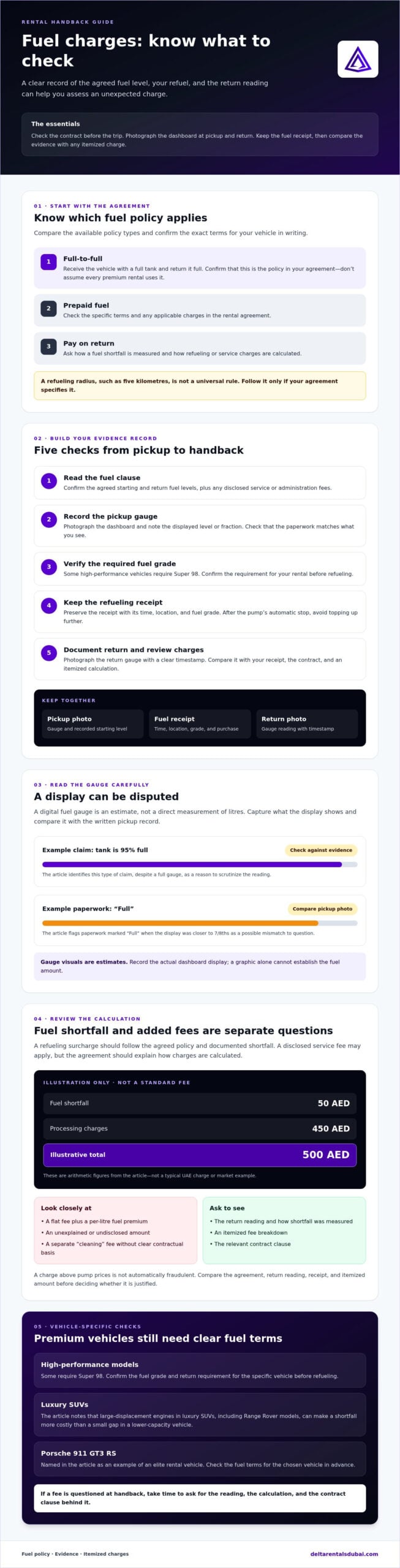
Five Essential Steps for Avoiding Fraudulent Fuel Refill Surcharge Penalties on Vehicle Handback
A tidy return depends on a clear record, not just a fuel gauge that looks full. Use these five steps to document the starting level, your refuel, and the vehicle’s condition at handback. Requirements vary by agreement, so confirm the return fuel level and inspection process before setting off.
- 1. Record pickup fuel level. Before driving away, take a sharp photo or short video of the dashboard with the fuel reading visible. If the display doesn’t show “Full,” ask the agent to record the exact level in the handover documents.
- 2. Keep a digital and physical refueling record. Use an ADNOC or ENOC app if it provides a transaction record for your purchase, but check the current app features rather than assuming it tracks your location or fuel grade. Save the transaction details and keep the station receipt.
- 3. Refuel near the return point, if practical. A station within 5 to 10 km may reduce the chance of the gauge changing noticeably before handback, but this distance isn’t a universal rule. Follow any specific distance requirement in your rental agreement.
- 4. Photograph the final reading with your receipt. Take a clear dashboard image after refueling, then keep it with a legible VAT receipt showing the date, time, station, and fuel purchased. Check that the required fuel grade is shown where available.
- 5. Request written confirmation at return. Ask the agent to complete and sign the Vehicle Inspection Report (VIR), recording the fuel level and noting any vehicle condition concerns. Keep a copy before leaving.
Make Your Digital Evidence Useful
Use your phone to create a simple, readable timeline. Record the pump display and transaction details, then photograph or film the dashboard gauge after refueling. A single continuous clip can help connect the purchase to the vehicle, but make sure both views are in focus. A blurred gauge, cut-off receipt, or unreadable timestamp weakens the record. Save original files and app confirmations; don’t rely on screenshots that hide key details.
App features can change, so treat ADNOC or ENOC digital records as supporting evidence, not a substitute for the receipt or your own photos. Check that the saved transaction is accessible before you leave the station.
Keep the Handback Inspection Clear
Ask to inspect the vehicle with the rental representative present. If they can’t sign the report immediately, request written confirmation of the return time and fuel reading through the company’s documented communication channel. Send your own photos and receipt promptly, and keep a copy of your message. A “No-Damage, Full-Fuel” sign-off is useful only if it accurately reflects the inspection and fuel level.
Before confirming a rental, ask Delta Rentals about its fuel and return documentation. Clear expectations and a complete evidence trail support avoiding fraudulent fuel refill surcharge penalties on vehicle handback.
Delta Rentals: Clearer Fuel Terms for Vehicle Handback
A luxury handback should include clear terms, a straightforward inspection, and an explanation of any fuel charge. Delta Rentals Dubai offers high-performance and luxury vehicle rentals in the UAE. If you’re renting a premium model, ask about the fuel requirement, return level, and potential charges before collecting the vehicle, rather than waiting until handback.
Delta Rentals Dubai lists 300+ 5-star Google reviews. Reviews can help you assess a provider, but they aren’t a substitute for reading your rental agreement. Confirm the refueling policy in writing, ask how any shortfall is measured, and check whether a service fee applies. These questions make expectations clear and can help reduce avoidable disagreements at return.
The Delta Difference in Supercar Hire
Every vehicle has its own requirements, so confirm the specified fuel grade and return level for the model you’re renting. For a Porsche 911 GT3 RS, ask which grade the rental instructions require and what proof to keep after refueling. Clear answers at the start make the final inspection easier to navigate. If a gauge reading or fee is unclear, request an explanation and refer to the agreement and your records.
Delta Rentals Dubai specializes in high-performance vehicles that call for careful handling. Rather than assuming every model or booking follows identical terms, ask the team to explain the fuel policy for your specific rental. Establishing the terms early and keeping your own documentation are practical steps for avoiding fraudulent fuel refill surcharge penalties on vehicle handback.
Know What Your Rental Includes
Delta Rentals Dubai lists no-deposit supercar and luxury car rentals among its offerings. Availability and conditions can vary, so confirm whether a no-deposit option applies to your chosen vehicle and clarify any other payment or fuel requirements before booking. “No deposit” doesn’t automatically mean fuel charges don’t apply. The written agreement remains your reference for return obligations.
Fuel expectations also deserve model-specific attention. Don’t assume every supercar requires the same octane grade, or that a higher grade is needed across the entire fleet. Ask which fuel the rental instructions specify, then retain a receipt that shows what you purchased. This gives you a clear record if questions arise later.
When comparing rental options, ask each provider to explain fees and return procedures in writing. Delta Rentals Dubai’s listed reviews and range of high-performance vehicles, including the Porsche 911 GT3 RS, give you a starting point for asking about the terms of your chosen rental. Your written agreement and careful handback documentation are what help keep the process clear from pickup to return.
Make Your Next Handback Clear and Confident
A smooth return starts well before you hand over the keys. Confirm the fuel policy in writing, follow the agreed return level, and keep clear evidence: pickup and return gauge photos, your refueling receipt, and a copy of the inspection report. If a charge doesn’t match the agreement, ask for an itemized explanation before accepting it. These habits put you in a stronger position when avoiding fraudulent fuel refill surcharge penalties on vehicle handback.
Before booking, confirm the terms for your chosen vehicle. Delta Rentals offers an elite fleet that includes the Porsche 911 GT3 RS and Rolls-Royce models. Ask about fuel requirements, return expectations, and any applicable charges so you know what to document.
Ready to discuss a vehicle rental and clarify the handback details? Contact Delta Rentals about your vehicle rental.
Frequently Asked Questions
What is the standard refueling fee if I return the car partially empty?
There’s no standard UAE refueling fee. Each rental company sets its own charges under the rental agreement. The amount may depend on the fuel shortfall and any disclosed service fee. Before booking, ask for the calculation method and check whether the contract permits a separate handling charge. If billed, request an itemized breakdown showing the recorded fuel level, the amount of fuel charged, and each additional fee.
How do I prove I used the correct 98 Octane fuel in my supercar?
Keep the original station receipt or a clear digital transaction record showing the fuel grade, purchase time, and station. Check that the rental instructions specify 98-octane fuel for your particular vehicle before filling up. A receipt proves what you purchased, but may not prove which vehicle received it, so take a clear dashboard photo after refueling and save both records together.
Can a rental company charge me if the gauge shows ‘Full’ but they claim it’s not?
A “Full” display is useful evidence, but whether a charge is valid depends on the agreed fuel policy and the evidence available. Ask the company to show its return reading and explain how it calculated the alleged shortfall. Compare that with your pickup and return records, receipt, and contract. If the charge remains disputed, request the decision and supporting calculation in writing before accepting it.
Is it better to use the prepaid fuel option for a weekend rental?
Compare the prepaid price and refund terms with how much fuel you expect to use. For a short rental, prepaid fuel may cost more if you return with unused fuel and the balance isn’t refundable. Ask whether the option includes a service charge and whether unused fuel is credited. If you choose full-to-full instead, follow the stated return level and keep your refueling proof.
What should I do if the rental agent refuses to sign my handback form?
Stay calm and request written confirmation of the vehicle’s return time, fuel reading, and any concerns. Take clear photos or video of the dashboard and vehicle condition, and keep a copy of the unsigned form if available. Send the company your evidence through a documented communication channel and ask for its completed inspection report. Don’t sign a document that inaccurately describes the vehicle or return condition.
Are fuel surcharges subject to VAT in the UAE?
VAT treatment can depend on how the charge is classified and invoiced, so don’t assume every fuel surcharge is handled the same way. Ask the rental company whether VAT is included, and request an itemized invoice showing the fuel amount, service or administration fees, and any tax charged. If the invoice doesn’t explain the tax treatment, seek clarification from the company or a qualified UAE tax adviser.
How close to the return point must I refuel to avoid a penalty?
There’s no universal distance requirement. Some agreements may specify a nearby refueling radius, while others may simply require the vehicle to be returned at the agreed fuel level. Check your contract and ask the rental company to confirm any distance rule in writing. Refueling close to the return point can help limit fuel use between the station and handback, but it doesn’t replace the agreed policy.
What apps can I use in the UAE to provide proof of refueling?
ADNOC and ENOC apps may provide digital transaction records, but features can change, so check what each app currently records. Save the transaction confirmation if it shows the purchase details, and keep the station receipt as well. App records are supporting evidence, not a substitute for documenting the car’s fuel level. To avoid fraudulent fuel refill surcharge penalties on vehicle handback, preserve clear records from pickup through return.