
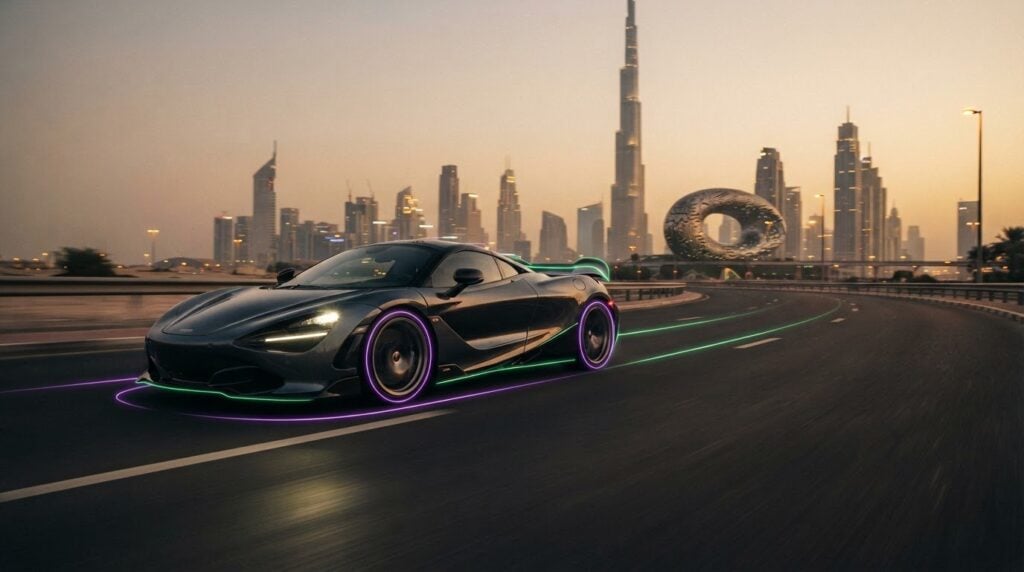
Does cutting-edge electronic intervention dilute the raw thrill of an exotic machine, or does it unlock limits you couldn’t safely reach on your own? For purists, the integration of advanced driver assistance systems in supercars initially felt like a betrayal. You invest in elite automotive engineering for visceral mechanical feedback and unfiltered power, not for the heavy-handed, intrusive alarms found on everyday commuter vehicles. The fear that automated safety nets will sanitize high-velocity performance is completely valid.
Yet the latest generation of exotic platforms tells a very different story. Discover how modern supercars balance high-velocity safety with raw driving engagement through cutting-edge driver assistance technologies designed to amplify your skill rather than restrict it. From multi-stage traction management to intelligent active aerodynamics, these systems work beneath the surface to give you total confidence behind the wheel. Here is your definitive guide to understanding, mastering, and evaluating modern supercar ADAS in 2026.
Key Takeaways
- Understand how advanced driver assistance systems in supercars differ from standard commuter safety aids by prioritizing chassis balance and controlled slip over abrupt intervention.
- Discover how real-time sensor telemetry actively communicates with dynamic suspension and active aerodynamics to maximize downforce at high velocities.
- Learn why multi-stage stability controls protect extreme horsepower on public roads without dulling steering feedback or mechanical connection.
- Master a structured framework to evaluate performance drive modes safely across elite exotic platforms.
What Are Advanced Driver Assistance Systems in Supercars?
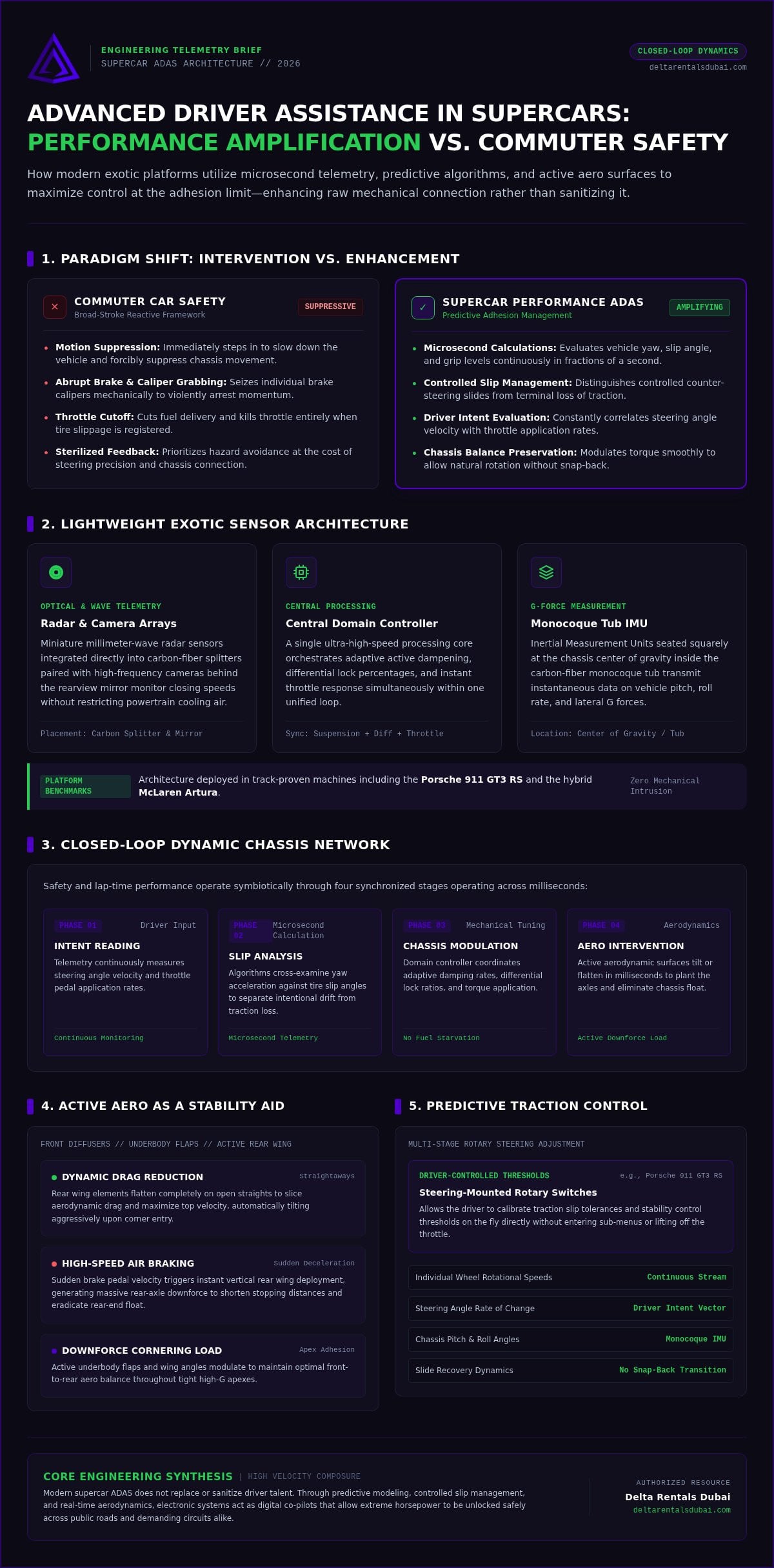
Modern exotic engineering flips conventional automotive electronics on its head. In standard daily drivers, safety networks step in to slow you down and suppress motion. In high-performance exotics, advanced driver assistance systems in supercars function as digital co-pilots engineered to maximize control precisely at the adhesion limit. Rather than abruptly cutting throttle or grabbing individual calipers to halt momentum, performance-calibrated dynamic suites calculate vehicle yaw, slip angle, and grip levels in microseconds.
While mainstream platforms rely on broad-stroke safety frameworks defined under standard Advanced Driver-Assistance Systems, an elite exotic uses predictive modeling. The system evaluates driver intent through steering angle velocity and throttle application rates, constantly comparing input against real-time telemetry. The outcome is not a sterilized driving experience. It is continuous, invisible optimization that lets you deploy high horsepower safely without sacrificing chassis balance.
Performance Philosophy: Enhancement Over Restriction
Exotic dynamic software empowers the driver rather than seizing authority. Traditional road safety seeks absolute intervention to prevent sideways movement. Track-tuned stabilization, by contrast, manages controlled slip. Modern algorithms evaluate yaw acceleration and tire slip angles continuously, calculating whether a slide is controlled counter-steering or terminal loss of traction. By modulating torque delivery across fractions of a second, the software allows natural rotation while keeping the vehicle planted.
The Sensor Architecture Behind Exotic Vehicles
Delivering high-velocity stability without adding unnecessary bulk requires a specialized hardware layout. Exotic platforms integrate ultra-compact sensor arrays engineered directly into lightweight composite bodywork:
- Millimeter-Wave Radar and Optical Cameras: Miniature radar sensors recessed into carbon-fiber splitters and high-frequency optical cameras behind the rearview mirror monitor closing speeds without disturbing cooling airflow.
- High-Speed Central Domain Controllers: A single high-speed processing unit coordinates active dampening, differential lock percentages, and throttle response simultaneously.
- Monocoque Integration: Inertial measurement units sit directly on the vehicle’s center of gravity inside the carbon tub, providing real-time data on pitch, roll, and lateral G-forces.
Engineering benchmarks like the Porsche 911 GT3 RS and the hybrid McLaren Artura utilize this cohesive sensor matrix. The electronics process dynamic loads instantaneously, providing highway composure and relentless track confidence with zero mechanical intrusion.
How Performance ADAS Elevates Modern Handling and Aerodynamics
Modern exotic platforms no longer treat active safety and dynamic performance as competing forces. While standard driver assistance technologies focus on basic hazard detection and lane corrections, the latest generation of advanced driver assistance systems in supercars operates within a closed-loop dynamic chassis network. Adaptive suspension dampers, electronic differentials, and active aero surfaces constantly feed live telemetry into the central processor. The result is fluid stability across blistering straightaways and tight apexes alike.
Predictive Dynamic Traction and Slip Control
Precision multi-stage traction control sits at the heart of this synergy. Instead of cutting fuel delivery when tires lose grip, these algorithms read individual wheel rotational speeds, steering angle rates, and chassis roll. Platforms like the Porsche 911 GT3 RS allow drivers to adjust traction slip and stability thresholds on the fly using rotary steering switches. The software allows controlled, progressive yaw, giving you track-tested confidence without risk of a violent snap-back.
Active Aerodynamics Interfaced with Driver Input
Telemetry loops transform aerodynamic surfaces into active stability aids. Front diffusers, underbody flaps, and rear wings adjust positions across milliseconds to manipulate downforce during extreme driving maneuvers:
- Dynamic Drag Reduction: Rear wing elements flatten on open straights, cutting aerodynamic drag to maximize velocity before tilting aggressively upon corner entry.
- High-Speed Air Braking: Sudden brake pedal velocity triggers instant vertical wing deployment. This creates massive downforce over the rear axle, shortening stopping distances and eliminating rear-end float.
- Crosswind and Lane Stability: Micro-adjustments to splitters actively counteract aerodynamic lift during aggressive high-speed highway lane changes.
Torque Vectoring and Electronic Differential Management
Cornering precision relies heavily on millisecond coordination between stability software and the drivetrain. Electronic limited-slip differentials pulse brake pressure on the inside rear tire, pivoting the car cleanly toward the apex. Simultaneously, modern hybrid architectures use high-response electric motors to smooth out mechanical delivery. The hybrid powertrain in the McLaren Artura provides instant torque-fill, eliminating turbo lag while dynamic traction software matches wheel spin perfectly to available road surface friction. To feel this seamless dynamic synergy for yourself behind the wheel, speak with a performance concierge to explore our pristine exotic fleet.
Track-Calibrated ADAS vs Commuter Car Safety: Crucial Differences
Placing mainstream commuter assistance software alongside track-tuned exotic dynamic software reveals two completely different engineering targets. In passenger sedans, safety software assumes the driver is inattentive or out of their depth. The computer acts conservatively, cutting throttle abruptly and wrestling the steering wheel back toward center. In stark contrast, advanced driver assistance systems in supercars assume the driver is fully engaged, working with the pilot to maintain vehicle balance at extreme velocities.
System Latency and Microsecond Processing Thresholds
Speed changes physics entirely. Cruising at triple-digit speeds means covering the length of a football field in roughly one second. Standard CAN-bus networks found in daily commuters operate with processing latencies between 50 and 100 milliseconds. That lag can prove catastrophic in high-downforce machinery. Exotic vehicles employ high-speed optical and Ethernet data networks executing cycles in under ten milliseconds. These lightning-fast sampling rates continuously read steering torque, pitch rate, and roll momentum, intervening with delicate micro-adjustments long before the chassis destabilizes during rapid lateral transitions.
Multi-Stage Engagement and Complete Disengagement Modes
Mainstream passenger vehicles rarely permit you to dial back safety nets. If you attempt an assertive maneuver, an aggressive stability alarm flashes instantly. High-end exotic platforms, on the other hand, deliver multi-tiered driver profiles tailored for varying skill levels and traction scenarios:
- Wet or Low-Grip Modes: Safety algorithms deploy maximum sensitivity, smoothing out sudden torque spikes and clamping down instantly on loose pavement or standing water.
- Sport Dynamic Configurations: Electronic intervention thresholds retreat, permitting moderate slip angles and dynamic rotation before quietly stabilizing the rear end.
- Unrestricted Track Programs: Safety limits expand to accommodate track-specific maneuvers like trail braking and sustained drift angles without software interference, while retaining core fail-safes.
- Full Hardware Defeat: Unlike commuter electronics that secretly reactivate during dynamic extremes, exotic architectures allow true complete disengagement for experienced drivers wanting raw mechanical control.
By respecting driver intent rather than overriding it, track-derived driver assistance turns high horsepower into an accessible, rewarding performance tool.
The Purist Dilemma: Does Digital Intervention Dilute Driver Engagement?
Purists often argue that computer governance kills mechanical soul. The narrative suggests that real enthusiasts must wrestle raw power without safety nets to experience true driving purity. That romantic notion collapses under the reality of modern performance figures. Today, advanced driver assistance systems in supercars don’t numb road feedback; they act as silent protectors that allow human reflexes to coexist with relentless, physics-defying performance.
The Reality of 700+ Horsepower on Modern Highways
Putting 700 to 1,000 horsepower to asphalt through modern twin-turbo V8s or instant-response electric motors completely reshapes vehicle dynamics. Mechanical breakaways occur in a split second. A cold road surface, an unexpected oil slick, or a sudden highway lane change can overwhelm standard human reaction times before you can initiate counter-steering. Dynamic electronic stability runs quietly in the background without muting acoustic exhaust notes, stiff steering feedback, or seat-of-the-pants communication. You command the vehicle entirely, but the system guarantees that unforeseen surface changes don’t end in disaster.
Transparency in Calibration Across Elite Marques
Top performance manufacturers deliberately tune their active aids to operate beneath sensory awareness:
- Ferrari Side Slip Control: Analyzes yaw angle and grip status in real time, calculating ideal steering torque so you can hold controlled, dramatic powerslides while feeling like an elite racing driver. In fact, Ferrari limits autonomous technology to Level 2 or Level 2+ specifically to preserve driver engagement.
- Porsche Stability Management: Delivers surgical precision, applying selective micro-braking only when slip exceeds calculated vehicle limits, leaving steering resistance completely natural.
- Dynamic Grand Touring Composure: Even high-output luxury icons like the Rolls Royce Cullinan Black Badge integrate predictive satellite-aided gear shifts and active roll stabilization, preserving effortless passenger comfort alongside ferocious power reserves.
Ready to experience genuine mechanical thrills backed by modern electronic perfection? Reserve your exotic driving experience today to test these benchmark dynamic systems firsthand.
How to Evaluate Supercar Safety Tech Through Real-World Driving
Reading technical specification sheets reveals only half the story. The true calibration, seamlessness, and philosophy of advanced driver assistance systems in supercars can only be measured from behind the wheel. Because every marque balances digital intervention and analog feedback differently, piloting multiple high-performance platforms across highways and open tarmac offers the clearest evaluation framework.
Key Features to Test During an Exotic Drive
Evaluating an exotic machine requires a methodical progression through its operational capabilities. Don’t rush into aggressive driving immediately. Instead, observe how the car behaves across standard cruising scenarios before exploring dynamic limits:
- Urban Ergonomics and Visibility Aids: Test digital rearview camera mirrors and high-definition blind-spot indicators. Assess how smoothly the hydraulic front-axle lift engages over steep driveways and speed bumps.
- Highway Cruising Composure: Engage adaptive cruise control and lane monitoring on long straightaways. Observe whether lane-centering corrections feel smooth or twitchy through the steering rack.
- Mode Transition Thresholds: Cycle methodically from Comfort to Sport and Track profiles. Note how throttle sensitivity tightens, damper stiffness increases, and stability intervention delays its response to throttle inputs.
Accessing Modern Exotic Engineering with Confidence
Acquiring multiple high-performance platforms outright to compare chassis dynamics simply isn’t practical. Securing a luxury exotic rental provides an intelligent, flexible avenue to evaluate cutting-edge driver aids firsthand under real-world conditions. Whether you want to test the multi-stage stability controls of a mid-engine track weapon or experience the effortless highway cruising aids of a bespoke luxury GT, verified fleets ensure factory-calibrated perfection.
Experience these pinnacle engineering achievements directly through Delta Rentals. Gain direct access to an elite, meticulously maintained fleet featuring track-engineered benchmarks and hybrid marvels. You receive complete transparency, pristine mechanical readiness, and the confidence to experience bleeding-edge automotive performance at its absolute highest level.
Master the Limit: Experience the Next Era of Performance
Digital intelligence and mechanical purity are no longer at war. As engineering leaps forward, advanced driver assistance systems in supercars have redefined what it means to drive at the limit. These ultra-responsive platforms don’t diminish your involvement. Instead, they harmonize microsecond telemetry, active aerodynamics, and dynamic stability to translate immense horsepower into controllable, exhilarating agility.
Reading about chassis dynamics only goes so far; the real transformation happens when you take the wheel. Step into our top-rated luxury rental service renowned for transparent terms and exceptional vehicle quality. Whether you demand the razor-sharp precision of the Porsche 911 GT3 RS or the electrified surge of the McLaren Artura, our pristine exotic collection puts modern automotive capability directly in your hands. Take command with complete peace of mind. Experience precision engineering with the Delta Rentals supercar fleet and discover how seamless active safety elevates every mile.
Frequently Asked Questions
Do supercars have automatic emergency braking and lane keep assist?
Yes, modern supercars now come standard with automatic emergency braking and lane keep assist. Global safety mandates require these systems across newly registered performance vehicles. Manufacturers calibrate these sensors with higher reaction thresholds than commuter cars. They won’t trigger premature false alarms during spirited cornering, ensuring that critical accident prevention stays unobtrusive until an actual emergency arises.
Can advanced driver assistance systems be turned completely off in a supercar?
Most high-performance exotics allow you to deactivate primary dynamic stability networks completely. Unlike commuter cars that quietly re-engage interventions in extreme situations, advanced driver assistance systems in supercars feature dedicated track modes and defeat switches. Pressing and holding the dynamic stability button disengages traction and yaw intervention entirely, leaving throttle moderation and tire grip purely in your hands.
How does supercar launch control relate to driver assistance technology?
Launch control is an aggressive form of dynamic driver assistance. It coordinates engine output, dual-clutch transmission engagement, active suspension dampening, and wheel-speed sensors to deliver flawless acceleration from a standstill. By analyzing surface grip in microseconds, the computer dials in the precise amount of allowable tire slip, preventing both engine bogging and violent wheel spin.
Why do exotic cars need active front-axle lift systems?
Active front-axle lift systems protect low-clearance carbon splitters and aerodynamic underbody trays from scrapes on steep inclines and speed humps. Modern systems use hydraulic or pneumatic actuators at the front struts to raise ride height by several inches in seconds. The most advanced setups integrate GPS memory, automatically raising the nose whenever the vehicle approaches previously saved obstacle coordinates.
Does advanced driver assistance make supercars easy for beginners to drive?
These systems dramatically expand the safety envelope, but they don’t replace fundamental driving discipline. Modern traction software and active stability make 700-horsepower machines manageable in regular traffic by smoothing sudden throttle spikes. Even so, the sheer width, limited sightlines, and instant acceleration of an exotic require focused respect. Digital aids catch minor errors, but they cannot rewrite physics.
What is slip angle control in modern performance cars?
Slip angle control is intelligent vehicle dynamics software that manages the angle between where tires point and where the car actually travels. Rather than cutting power when the rear steps out, the system calculates lateral grip in real time. It permits controlled, intentional drifts while ensuring the car doesn’t rotate beyond recoverable chassis angles.
Are ADAS sensors more fragile on low-slung carbon fiber supercars?
While mounted closer to road debris, exotic vehicle sensors are housed in reinforced, shock-absorbing enclosures engineered into the carbon fiber monocoque and bumpers. Front-facing radar units and optical cameras use durable sapphire or treated polycarbonate lenses designed to resist stone chips and severe heat. Routine software calibration ensures these performance arrays remain pristine and fully operational.