

A run-flat tyre can keep a luxury car moving after a puncture, but it doesn’t make a motorway stop risk-free. If you’re asking what happens if a luxury rental car suffers a flat run flat tire on the motorway, the priority is to reach a safe position without guessing how far the tyre can go.
It’s natural to worry about traffic, damage charges and how to continue your journey. Stay composed, follow the vehicle’s warnings and manual, and don’t assume every run-flat tyre has the same speed or distance limit. Your rental agreement also explains how to report damage and what steps to follow.
This guide explains how to respond safely, what run-flat capability can and can’t do, and what to record when reporting the incident. The key is to avoid making assumptions about the tyre, repairs or responsibility before you’ve followed the vehicle’s instructions and rental process.
Key Takeaways
- If you’re wondering what happens if a luxury rental car suffers a flat run flat tire on the motorway, prioritise everyone’s safety and follow the vehicle’s warnings before deciding whether to move or stop.
- Run-flat capability is limited. Check the specific vehicle manual for its operating limits, and don’t assume the tyre is safe to keep driving on.
- Choose between cautious continuation, stopping for assistance, or recovery based on the tyre’s condition, vehicle warnings and the manual’s guidance.
- From a safe place, record the warning, time, location context and visible damage, then follow the incident-reporting instructions in your rental agreement.
- Use the contact method in your rental documents to report the issue and get guidance before arranging a repair or replacement.
A run-flat puncture on the motorway: what to do first
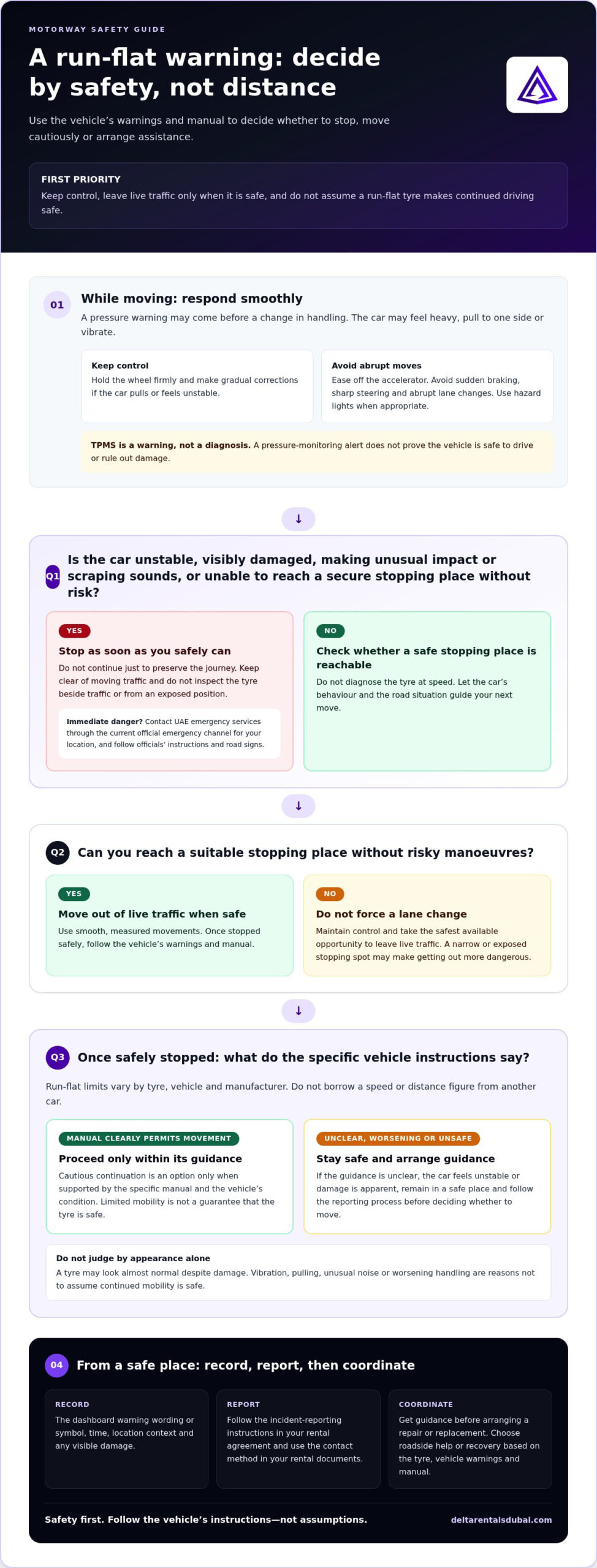
Put people’s safety ahead of the car and the journey. If a tyre-pressure warning appears, stay composed, keep control and follow the vehicle’s alerts and instructions. A run-flat tyre may offer limited mobility, but that isn’t a reason to continue automatically. The safest choice depends on how the car is handling, what you can safely observe and whether you can reach a safer stopping place without adding risk.
If you’re asking what happens if a luxury rental car suffers a flat run flat tire on the motorway, respond in a controlled way rather than trying to diagnose the tyre at speed. Use this sequence:
- Keep a steady grip. Hold the steering wheel firmly and make smooth, gradual corrections if the car pulls or feels unstable.
- Ease off the accelerator. Avoid sudden braking, sharp steering or abrupt lane changes, which can make a difficult situation harder to control.
- Warn other drivers. Activate the hazard warning lights when appropriate, especially if the vehicle is slowing or has become a hazard.
- Move out of live traffic only when safe. If you can reach a suitable stopping place without risky manoeuvres, do so. Don’t preserve the journey at the expense of a safe position.
- Stop and assess from safety. Follow the car’s warnings and manual. Don’t attempt to inspect the tyre beside moving traffic.
How to respond when tyre pressure drops while moving
A pressure warning may appear before you notice a change in handling. The car may also begin to feel heavy, pull to one side or vibrate. Keep your movements measured. If traffic or the road layout makes a lane change unsafe, don’t force one. Maintain control and take the safest available opportunity to leave live traffic. Run-flat tyre designs and limits vary, as outlined in Understanding Run-Flat Tire Technology, so rely on your vehicle’s guidance rather than a general rule.
Road conditions matter. A clear stopping area may be safer than continuing toward your destination, while an exposed or narrow spot may make getting out of the vehicle more dangerous. Don’t assume a tyre is undamaged because it still appears inflated, or that the car’s ability to move means it’s safe to keep driving.
When to stop and call for urgent help
Stop as soon as you can do so safely if you’re losing control, see obvious tyre damage, hear unusual impact or scraping sounds, or can’t reach a secure stopping place without risk. If anyone is in immediate danger, contact UAE emergency services through the current official emergency channel for your location. Follow instructions from officials and road signs. Keep clear of moving traffic, and don’t stand beside the vehicle in an exposed position.
Safety first: control the car, leave live traffic only when safe, then follow official instructions and contact emergency services if anyone faces immediate danger.
How run-flat tyres work, and when a damaged tyre is no longer safe
A run-flat tyre is designed to retain limited mobility after losing some air pressure. Its reinforced construction can help support the vehicle temporarily, but it doesn’t make a puncture harmless or guarantee that you can continue driving. When considering what happens if a luxury rental car suffers a flat run flat tire on the motorway, remember that the tyre’s capability is limited. The car’s manual, not a general rule, must guide your decision.
Some damage may leave a tyre looking almost normal, while a puncture or impact can affect how the car handles. A run-flat can also become unsafe if the damage is severe or the vehicle feels unstable. Don’t treat the technology as permission to ignore a warning, continue to your destination or decide that a tyre is safe based on appearance alone.
What the tyre-pressure monitoring system can tell you
A tyre-pressure monitoring system (TPMS) alerts you to a pressure issue. It doesn’t provide a complete diagnosis or prove that the vehicle is safe to drive. If a warning appears, read any dashboard message when you can do so without taking attention from the road. Once stopped safely, record the wording or symbol. That detail can help when you report the incident.
Sensor readings are only one piece of information. They can’t rule out visible damage, a handling problem or a tyre that has lost more air than expected. The NHTSA Tire Safety Guidelines offer general information about tyre safety and pressure monitoring, but they don’t replace the instructions for your particular rental car.
Why run-flat limits vary between vehicles
Don’t rely on a speed or distance figure you’ve seen for another car. Run-flat limits and warnings can differ by tyre, vehicle and manufacturer. Check the vehicle manual and dashboard instructions for the specific model you’re driving. If the guidance isn’t clear, remain in a safe place and follow the reporting process in your rental documents before deciding whether to move the car.
Condition matters too. A small-looking puncture may conceal internal damage, and the vehicle’s load and road conditions can affect how it responds. Treat new vibration, pulling, unusual noise or worsening handling as reasons not to assume continued mobility is safe. The practical question isn’t simply whether the tyre is a run-flat. It’s whether this tyre, on this vehicle and under these conditions, can be moved safely according to its instructions.
- Follow the specific manual. Use its operating limits and warnings, not figures from a different vehicle.
- Take the warning seriously. A TPMS alert identifies a pressure issue, not the cause or full extent of damage.
- Let handling guide your caution. Visible damage or a change in how the car drives calls for a safer next step, not guesswork.
Once you’re safely stopped, message the rental team about your vehicle’s next steps. Share the dashboard warning and what you’ve noticed, and follow the reporting instructions in your rental documents. Don’t treat a run-flat’s limited mobility as a substitute for vehicle-specific guidance.
Run-flat driving, roadside help, or recovery: compare the safest next step
There isn’t one right choice for every puncture. A run-flat tyre may allow limited movement, but the owner’s manual, dashboard instructions and observed tyre condition should guide any decision to drive. Traffic and stopping conditions matter too. Use this comparison to organise your options, not as a substitute for vehicle-specific guidance or the rental agreement.
| Option | When it may be suitable | Warning signs | Key uncertainty |
|---|---|---|---|
| Cautious continuation | The manual permits it, the car remains stable, and you can reach a safer place within the stated limits. | Pulling, vibration, unusual noise, worsening damage or a new dashboard warning. | Damage may be more serious than it looks, and safe limits vary by vehicle and tyre. |
| Stop for assistance | You can stop in a safe location and need guidance before deciding whether the car should move. | Handling feels unsafe, the tyre looks badly damaged, or the warning indicates a serious issue. | The appropriate next step and who should coordinate it depend on the rental instructions and agreement. |
| Recovery | The car shouldn’t be driven safely, or its manual or rental guidance calls for recovery. | Loss of control, severe visible damage, or no safe route to a suitable stopping place. | Recovery arrangements, authorisation and any related terms are specific to the rental agreement. |
In short, movement is a possibility, not an obligation. A tyre that still supports the car doesn’t necessarily have enough integrity for continued driving. Stopping in an exposed or hazardous location can also create immediate danger. Prioritise reaching a safer position only if you can do so without taking an unsafe risk. If you can’t, follow official instructions and seek urgent help where needed.
When limited continuation may be considered
Consider moving the car only if its manual permits this, the vehicle remains stable and conditions allow a safe, cautious drive. Follow the model-specific speed and distance limits exactly. Don’t use generic online figures. Stop if handling changes, damage appears to worsen, or a dashboard warning advises against continuing. If anything is unclear, pause in a safe place and seek guidance before proceeding.
When stopping or arranging recovery is the prudent choice
Serious visible damage, unstable handling or a warning against further driving are reasons not to continue. If the vehicle is in an exposed spot, people’s safety comes before inspecting the tyre or protecting the journey. Once safe, contact the rental provider using the method in your documents. Follow the agreement’s instructions before arranging recovery or repair.
For renters asking what happens if a luxury rental car suffers a flat run flat tire on the motorway, the decision isn’t simply “drive or recover.” Check the manual, assess only what you can safely observe, and follow the rental provider’s instructions before authorising work or arranging recovery independently.
What to document and report after a rental car gets a flat
Once everyone is safe, make a clear record while the details are fresh. If you’re wondering what happens if a luxury rental car suffers a flat run flat tire on the motorway, accurate reporting is an important next step. It helps the rental provider understand what you observed and respond according to the vehicle’s instructions and your signed agreement. Keep the account factual. You don’t need to identify the cause or decide who is responsible.
Use this checklist from a safe position:
- Vehicle details: Note the model and registration, using the rental documents if needed.
- Time and location context: Record when the warning appeared and where you stopped, such as the road direction and a nearby exit or landmark if known.
- Dashboard information: Write down the exact warning or message. If you take a photo, do it only once safely stopped.
- What you noticed: Describe changes such as pulling, vibration, noise or a visible tyre issue. Separate what you saw from what you suspect.
- Current safety situation: Tell the provider whether the vehicle is safely stopped, whether anyone needs urgent help and whether you’re still in a hazardous position.
- Communication record: Note when you reported the incident, how you contacted the provider and any instructions you received. Keep relevant messages and receipts.
Photos can help show the dashboard warning or visible tyre damage, but only take them from a safe place. Don’t walk beside live traffic, enter a roadway or put yourself at risk to get a better angle. If it isn’t safe to photograph the tyre, say so in your report instead.
A clear incident report for the rental provider
Follow the reporting method in your rental documents. Give the vehicle details, warning message, time and location context, any handling symptoms, and whether the car and occupants are now safe. Keep the description neutral. “Pressure warning appeared; car began vibrating” is more useful than guessing that a particular object caused the damage. Ask what to do next and record the response.
What rental terms may say about tyre damage
Your signed agreement and its applicable terms govern incident reporting and any later decisions about responsibility, charges or coverage. Reporting a flat promptly is not the same as agreeing to liability, and it doesn’t determine the outcome of a later assessment. Read the relevant clauses and follow the stated process. Don’t assume another rental company’s policy applies to your vehicle, or that a repair, replacement or recovery cost will be handled a particular way.
A composed, specific report keeps the conversation clear. Message the rental team to discuss your vehicle’s next steps, and follow the contact and reporting instructions in your rental documents.
Coordinate the next step with your luxury rental provider
Once you’re safe, keep the process simple: check the vehicle instructions, report the incident through the contact method in your rental documents, then follow the guidance you receive before arranging work or continuing the journey. Run-flat capability doesn’t override the manual, and the next steps for a rental car can depend on the signed agreement. Clear communication helps the provider understand the situation without you having to guess what the tyre needs or who is responsible.
- Reach a safe position. Keep occupants away from traffic and seek urgent help if anyone faces immediate danger.
- Check the vehicle guidance. Review the relevant dashboard message and manual only when it’s safe to do so.
- Report the incident. Use the contact details and reporting process supplied with your rental.
- Follow the instructions. Don’t assume it’s safe to drive or independently arrange a repair or recovery before you’ve followed the rental process.
What to have ready when you contact the provider
Prepare the vehicle model or registration, your current location context, the dashboard warning and a short description of what you noticed. State whether the car is out of traffic and whether everyone is safe. If you don’t know the cause, say so. A concise, factual account gives the provider a useful starting point without turning an observation into a diagnosis.
Ask what the rental agreement requires you to do next and whether you should remain where you are or follow another instruction. If you’re in an unsafe location or someone is in immediate danger, prioritise official emergency guidance rather than waiting for routine rental communication. Don’t put yourself at risk to gather extra details or photographs.
Keep your journey decision clear and documented
Base any decision to move the vehicle on its manual, official safety guidance and the rental instructions. A message from the provider doesn’t replace an urgent safety response, and a general run-flat guideline doesn’t replace vehicle-specific limits. If instructions are unclear, ask for clarification while remaining in a safe place. Avoid making a journey decision because you feel pressured to stay on schedule.
Record the time and channel used, the guidance you receive, and any agreed next step. Keep relevant messages with your rental records, and follow the agreement’s reporting process if further updates are needed. This creates a straightforward account of what was reported and what you were advised to do, while leaving any later decisions about damage or charges to the applicable terms.
If you’re unsure how to report the incident, message the Delta Rentals Dubai team about your rental and follow the vehicle and rental instructions. The essential sequence remains the same: reach safety, check instructions, report clearly and follow the next steps.
Make your next drive feel prepared from the start
A tyre incident can disrupt a carefully planned journey, but a little preparation can make the response clearer. Before setting off, save the rental provider’s contact details and keep the vehicle manual and signed agreement easy to access. Knowing what happens if a luxury rental car suffers a flat run flat tire on the motorway also means you can respond carefully instead of relying on assumptions when the unexpected happens.
Delta Rentals provides premium and high-performance rental vehicles across the UAE. Before driving, familiarise yourself with the vehicle’s warnings and know where to find your rental documents so you can follow the right process if plans change.
Message Delta Rentals about your rental vehicle to discuss your next step. Keep the vehicle guidance and rental contact details close at hand before your drive.
Frequently Asked Questions
Can you keep driving on a run-flat tyre after a puncture?
Sometimes, but only if the vehicle’s manual allows it, the tyre is suitable for limited movement, and the car remains safe to handle. A run-flat design doesn’t make every puncture manageable. For example, a car that begins pulling or vibrating should not be treated like one that feels unchanged. If you’re uncertain, stop in a safe place and get guidance rather than testing the tyre on the road.
How far can a car travel on a flat run-flat tyre?
There’s no single distance that safely applies to every car or puncture. Check the specific vehicle manual for its run-flat instructions, and don’t borrow a figure from another model or an online discussion. Damage type, pressure loss and driving conditions can change what’s safe. If the manual isn’t available, avoid guessing. Contact the rental provider from a safe location and explain the warning and how the car is behaving.
What should you do if a tyre-pressure warning appears on the motorway?
Keep control first, then move to a safe position only if traffic and road conditions allow. Follow dashboard instructions without trying to read or operate menus while distracted. If you’re asking what happens if a luxury rental car suffers a flat run flat tire on the motorway, treat the warning as a reason to assess carefully, not proof that the tyre is safe. If the car feels unstable or the location is hazardous, seek appropriate help.
Can a run-flat tyre be repaired after a motorway puncture?
Possibly, but the tyre needs a proper inspection before anyone can determine that. The damage’s location and extent, whether the tyre was driven while underinflated, and the tyre maker’s guidance can all affect repairability. Don’t assume a plug or sealant is suitable, or authorise work before following your rental instructions. Report what happened and let the authorised assessment determine whether repair or replacement is appropriate.
Who is responsible for a flat tyre on a rental car?
Responsibility depends on the signed rental agreement, its applicable terms and the circumstances of the incident. A puncture alone doesn’t establish who is liable or whether a charge applies. Report the event promptly using the required channel, describe what you observed, and keep a record of the response. Avoid accepting or disputing a charge based on assumptions. Review the agreement and any later assessment details.
Should you change a flat tyre yourself in motorway traffic?
Don’t attempt a tyre change where moving traffic or the stopping position puts you at risk. The vehicle may also have specific equipment or instructions, and a rental agreement may set out how to report a tyre incident. Follow current official road-safety guidance and your rental documents. If the car is stopped somewhere exposed, focus on occupants’ safety and seek appropriate help rather than standing beside traffic to inspect or change a wheel.
Does a run-flat tyre mean you do not need roadside assistance?
No. Run-flat capability is limited, and it doesn’t guarantee that a damaged tyre can be driven on safely or that the vehicle can reach your destination. A severe puncture, unstable handling or an unsafe stopping location may call for help even if the car still moves. For a rental, use the contact and reporting process in your agreement so you can follow the appropriate next steps without arranging work based on assumptions.