
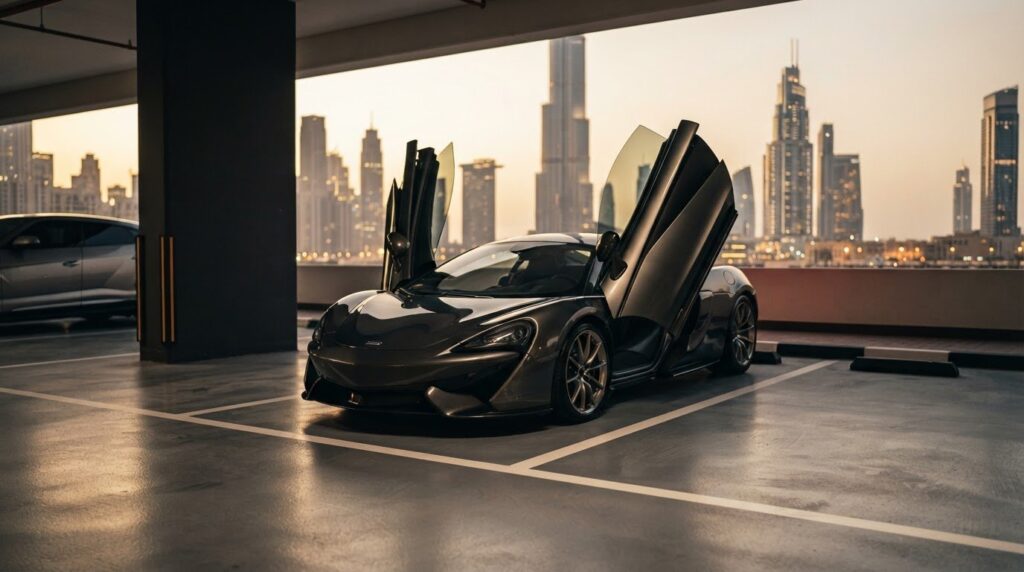
A parking space can look generous and still leave too little room for a door, a pillar, or low bodywork. These tips for parking a rented supercar in the UAE start with judging usable clearance before you commit, rather than relying on the bay markings alone.
It’s natural to feel cautious when driving a high-performance rental from Delta Rentals Dubai. Wide-opening or upward-swinging doors need room to move, while a low front splitter, wheels, and nearby kerbs call for care. Door designs vary by model, so never assume every supercar opens the same way.
Assess the bay before entering, position the car calmly, and take your time getting in and out. Check the space around the bay lines, pillars, neighbouring vehicles, kerbs, and ramps. If the space feels tight, choose another bay or request assistance instead of rushing. A few deliberate checks can help you park with greater confidence.
Key Takeaways
- Use these tips for parking a rented supercar in Dubai to judge usable clearance, not just the painted bay lines.
- Before entering, check the car’s body, door path, overhead space, and nearby vehicles for potential contact risks.
- Move slowly and make small adjustments before low bodywork gets too close to an obstacle.
- If a space feels tight, reposition or choose a more open bay instead of forcing the car into place.
- Follow a simple arrival-to-exit routine and the specific vehicle’s controls to park with greater confidence.
Why parking a rented supercar takes more than lining up inside the bay
A car can sit between the painted lines and still leave too little room to open a door, avoid an obstacle, or step out comfortably. Usable clearance depends on the car’s door movement and the obstacles around it. Consider the space needed for the car itself, its doors to open, and you to enter or exit.
Bay markings show where a vehicle is expected to sit, but they don’t account for every car’s shape or door design. A pillar may narrow one side, a wall may block the other, or a neighbouring vehicle may leave little room to get out. Assess the whole space instead of treating the lines as a guarantee.
What makes a commercial parking bay challenging for a supercar?
Look beyond the space directly ahead. Check for narrow neighbouring bays, pillars, walls, kerbs, wheel stops, and passing vehicles that could limit visibility or manoeuvring room. Wide bodywork can leave less margin on either side, while a low front splitter calls for care around raised edges and uneven transitions. Vehicle dimensions vary by model, so don’t rely on assumptions or a universal measurement.
Why scissor-door clearance needs a separate check
Conventional doors swing outward, while some designs open upward or move upward on a pivot. Scissor doors use a vertical-opening mechanism, but the exact movement depends on the vehicle. Upward travel still needs clear space beside and above the car. Check the specific vehicle’s door operation and manual, and consider whether you’ll have room to enter and exit comfortably.
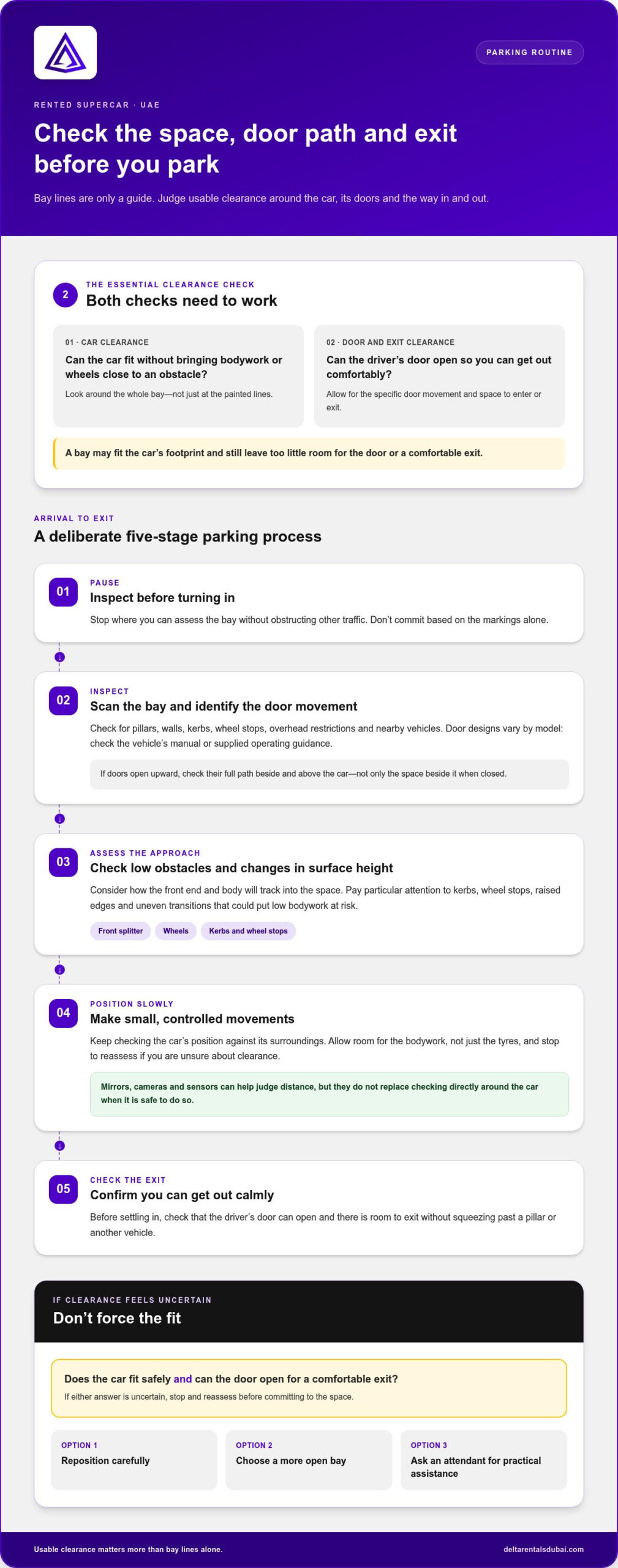
Make two separate checks: can the car fit without putting its bodywork or wheels close to an obstacle, and can its doors open so you can get out without squeezing past another vehicle or a pillar? A bay may fit the car’s footprint but still be unsuitable for comfortable access. If either check gives you pause, choose a more open space rather than forcing the fit.
How to assess scissor-door clearance before entering a parking bay
Pause before turning into a space. Assess both the parked car’s footprint and the space needed to open its doors. A careful check can reveal a tight approach, blocked door path, or awkward exit before you commit to the bay.
- Pause: Stop where you can inspect the space without obstructing other traffic.
- Inspect: Identify the door type and check for pillars, walls, kerbs, wheel stops, overhead restrictions, and nearby vehicles.
- Assess the approach: Look at the path into the space and any changes in surface height that could put low bodywork at risk.
- Position slowly: Make small, controlled movements and keep checking the car’s position against its surroundings.
- Check the exit: Before settling in, consider whether you can open the driver’s door and get out calmly.
Check the vehicle and its door movement first
Don’t assume a rented supercar has scissor doors. Door designs and opening movements vary by model. Check the vehicle’s manual or supplied operating guidance to understand how its doors should be opened, and follow any model-specific instructions. Mirrors, windows, cameras, and sensors can help you judge nearby objects, but they don’t replace looking directly around the car when it’s safe to do so.
If the vehicle has upward-opening doors, assess their full path, not just the space beside the closed car. A neighbouring vehicle, wall, or overhead obstruction could interfere with opening. Make sure there’s room for the door to move and for you to enter or exit without rushing.
Inspect the bay, approach, and exit path
Scan the whole manoeuvre, including low obstacles that may be hard to see from the driver’s seat. Consider how the car’s body and front end will track as you turn. Guidance on avoiding scrapes in a low car also highlights why the approach path matters. Don’t assume a tight turn or change in surface height will suit every model.
Check both arrival and departure: can you enter without squeezing past an obstacle, and can the driver’s door open enough for a safe, comfortable exit? If visibility is poor or clearance feels uncertain, don’t force the manoeuvre. Reposition, choose another space, or ask an attendant for practical assistance. If you’re planning a performance-car rental, you can discuss your rental plans before setting out.
How to position a rented supercar without scraping low bodywork
Once you’ve chosen a suitable bay, keep the manoeuvre slow and deliberate. A controlled approach gives you more time to judge the car’s position, notice obstacles, and stop before contact. Use the bay markings as a guide, but don’t treat them as proof that the wheels, bodywork, or front end have enough room.
Sensors assist with parking, but the driver remains responsible for checking clearances. Cameras and alerts can help you judge distance, yet their view may not show every low obstacle or precisely indicate how close a splitter is to a kerb. Check your mirrors and look around directly where safe, especially before moving near wheel stops or raised edges.
Use a measured approach around kerbs and wheel stops
Approach a kerb, wheel stop, or change in surface height at a pace that lets you stop immediately. If you can’t tell whether the front of the car will clear it, stop before the uncertain point and reassess rather than creeping forward on guesswork. Low splitters and underbody components can be vulnerable to contact, and their position varies by vehicle. Don’t assume a gap that worked in another car will suit this one.
Make small adjustments instead of correcting sharply at the last moment. Check how the car’s nose tracks as you turn, and allow room for its bodywork, not just its tyres. If the angle or clearance still looks uncertain, back out carefully when it’s safe and choose a more open space.
Use sensors, mirrors, and a spotter appropriately
Use each aid as one part of your check. Mirrors can help with the sides, while a camera may show what’s behind, but blind spots and low objects can still be difficult to judge. Pause to reassess if an alert sounds, visibility changes, or another vehicle approaches. Don’t let passing traffic rush the manoeuvre.
A spotter can help you judge distance if they can stand safely where you can see them. Agree on simple signals before moving, keep the car at a crawl, and stop if you lose sight of them or don’t understand a signal. These practical tips for parking a rented supercar in Dubai work best when you stay patient: stop, check, adjust, then continue only when the path is clear.
What to do when a standard bay is too tight for a supercar
A nearby space may save a short walk, but convenience isn’t worth a rushed manoeuvre or a difficult exit. A supercar hasn’t truly “fit” just because its wheels sit within the painted lines. The full car, mirrors, doors, and your path out all need usable room. If the bay looks marginal, reassess before entering.
When should you choose another parking space?
Move on if a pillar, wall, kerb, or neighbouring vehicle could obstruct the doors, mirrors, or bodywork. Pause if a height restriction or overhead obstacle is unclear, and don’t enter until you can judge the available space. Most importantly, don’t squeeze into a bay that would leave you unable to exit comfortably and safely. A more open alternative is the better choice.
Reposition if you’ve entered but can see that the car isn’t sitting comfortably or the exit will be awkward. Adjust only when the path is clear, and move slowly. If there’s no safe way to correct the position, stop and seek practical help rather than trying to force the car into place.
How to ask for help without creating more risk
An attendant or spotter can help you judge space, but only if you understand their directions and can see them clearly. Agree on simple signals before moving. Keep everyone clear of the vehicle’s path and door movement, and stop immediately if instructions conflict, the spotter disappears from view, or an obstacle becomes hard to judge.
Use this quick decision check before committing to a tight bay:
- Can the car enter and sit without bringing its bodywork or mirrors close to obstacles?
- Will the driver’s door open enough for a calm exit?
- Is the route out clear, including any kerbs or overhead restrictions?
- Can you make the manoeuvre without rushing or relying on unclear directions?
If you can’t answer confidently, choose another space. That’s one of the most valuable tips for parking a rented supercar in Dubai: no particular bay is worth risking avoidable contact. For help planning a performance-car rental, discuss your rental plans on WhatsApp.
A simple parking routine for a rented supercar
A repeatable routine makes each stop calmer, from choosing a space to opening the door. Follow the vehicle’s own controls and rental guidance throughout. Door operation, visibility aids, and other features differ by model, so use the instructions for the car you’re driving rather than relying on habits from another vehicle.
A quick checklist before you leave the vehicle
Work through these steps in order. Take an extra moment to look around before opening a door.
- Arrive: Slow down and choose a space that gives you room to park and exit without squeezing past obstacles.
- Inspect: Check the approach, surrounding vehicles, kerbs, pillars, and any obstacles near the car’s body or door path.
- Park: Move into position carefully. Confirm the vehicle is fully stopped and clear of visible obstacles before continuing.
- Secure: Follow the vehicle’s operating instructions and rental guidance to secure it correctly.
- Leave: Make one final visual check for possible contact, nearby people, and a clear exit path. Then open the door using the vehicle’s normal procedure.
Don’t rush the final check just because the car appears centred in the bay. Looking around the vehicle can help you spot a nearby obstacle or person before opening a door. If anything looks uncertain, pause and reassess before getting out.
Make the rental experience feel effortless
Choose a vehicle that suits your driving comfort and plans, then take time to familiarise yourself with its controls before setting off. Delta Rentals Dubai’s premium fleet includes the Porsche 911 GT3 RS, Ferrari, Lamborghini, and McLaren Artura. Door styles and features vary, so don’t assume a particular model has scissor doors. Follow that vehicle’s operating guidance for a confident experience from the first drive to the final parking stop.
Keep these tips for parking a rented supercar in Dubai in mind: take your time, complete the checks, and choose a different space if the exit feels awkward. If you’re planning a supercar rental, discuss a supercar rental with Delta Rentals Dubai.
Park with confidence and enjoy the drive
A confident parking choice starts with usable clearance, not just painted lines. Check the car’s body, door movement, obstacles, and exit path before entering. Then move slowly, use parking aids as support rather than proof, and choose another space if the manoeuvre feels rushed or uncertain.
Keep these tips for parking a rented supercar in Dubai in mind throughout your drive: assess the space, protect low bodywork, and take a final look around before opening the door. A calm routine makes it easier to enjoy the performance without turning every stop into a guessing game.
Delta Rentals Dubai provides premium supercar and luxury vehicle rentals across the UAE, with a fleet that includes the Porsche 911 GT3 RS, Ferrari, Lamborghini, and McLaren Artura. Choose a car that suits your plans, then make every stop as considered as the drive. Plan your supercar rental with Delta Rentals Dubai and enjoy the journey with confidence.
Frequently Asked Questions
How do you park a rented supercar in a standard commercial bay?
Park slowly, using the bay lines as a guide while checking the car’s full footprint and exit space. Start by pausing to inspect nearby vehicles, pillars, walls, kerbs, and the door path. Make small adjustments and stop if clearance is uncertain. Before getting out, confirm the car is fully stopped, obstacles are clear, and the door can open safely.
Do scissor doors need more clearance than standard car doors?
They need a different kind of clearance, not necessarily more space in every direction. A conventional door swings outward, while a scissor door opens upward, so check that its path is clear beside and above the vehicle. Door movements vary by model. Consult the specific car’s manual or supplied operating guidance, and make sure you’ll have room to enter and exit comfortably before choosing a bay.
Can a supercar fit in a standard parking bay?
It may fit, but the bay markings alone can’t confirm that it’s suitable. Check the vehicle’s body, mirrors, door movement, and the room available to get out. A pillar or neighbouring vehicle can make a marked space impractical, even if the wheels fit within the lines. If you can’t judge the clearance confidently, choose a more open bay rather than forcing the manoeuvre.
How do I avoid scraping a supercar’s front splitter on a parking stop?
Approach slowly and stop before the splitter or underside could touch the parking stop. Don’t rely on a camera or sensor alone to judge a low obstacle. Check your view from multiple angles where safe, and use a spotter with clear signals if needed. If you can’t see or judge the gap confidently, stop and reposition or find another space. Clearance varies by vehicle, so avoid assuming a familiar approach will work.
Are parking sensors enough to park a rented supercar safely?
No. Sensors and cameras are useful aids, but they may not show every low object, bodywork edge, or blind spot. Use them alongside mirrors and direct observation, and move slowly enough to stop if an alert sounds or visibility is unclear. The driver remains responsible for checking the vehicle’s position and surroundings. If you’re unsure about clearance, pause and reassess rather than continuing based on sensor feedback alone.
What should I do if a parking bay is too tight for the car doors?
Don’t squeeze into a bay if the door could hit a neighbouring car, wall, or pillar, or if you couldn’t exit comfortably. Choose another space or reposition if you can do so safely. An attendant or spotter may help when their instructions are clear and they can stand safely in view. Stop if directions conflict or you lose sight of an obstacle. A longer walk is better than a rushed manoeuvre.
Should I take photos of a rented supercar before parking it?
Photos can help you record the vehicle’s visible condition, but they don’t replace a careful inspection or the rental guidance. If you choose to take them, do so while safely stopped and capture clear views of the areas you want to document. Avoid stepping into traffic or delaying a safe parking manoeuvre. Follow the rental instructions for reporting any damage or concern, and keep any relevant images with your rental records.