

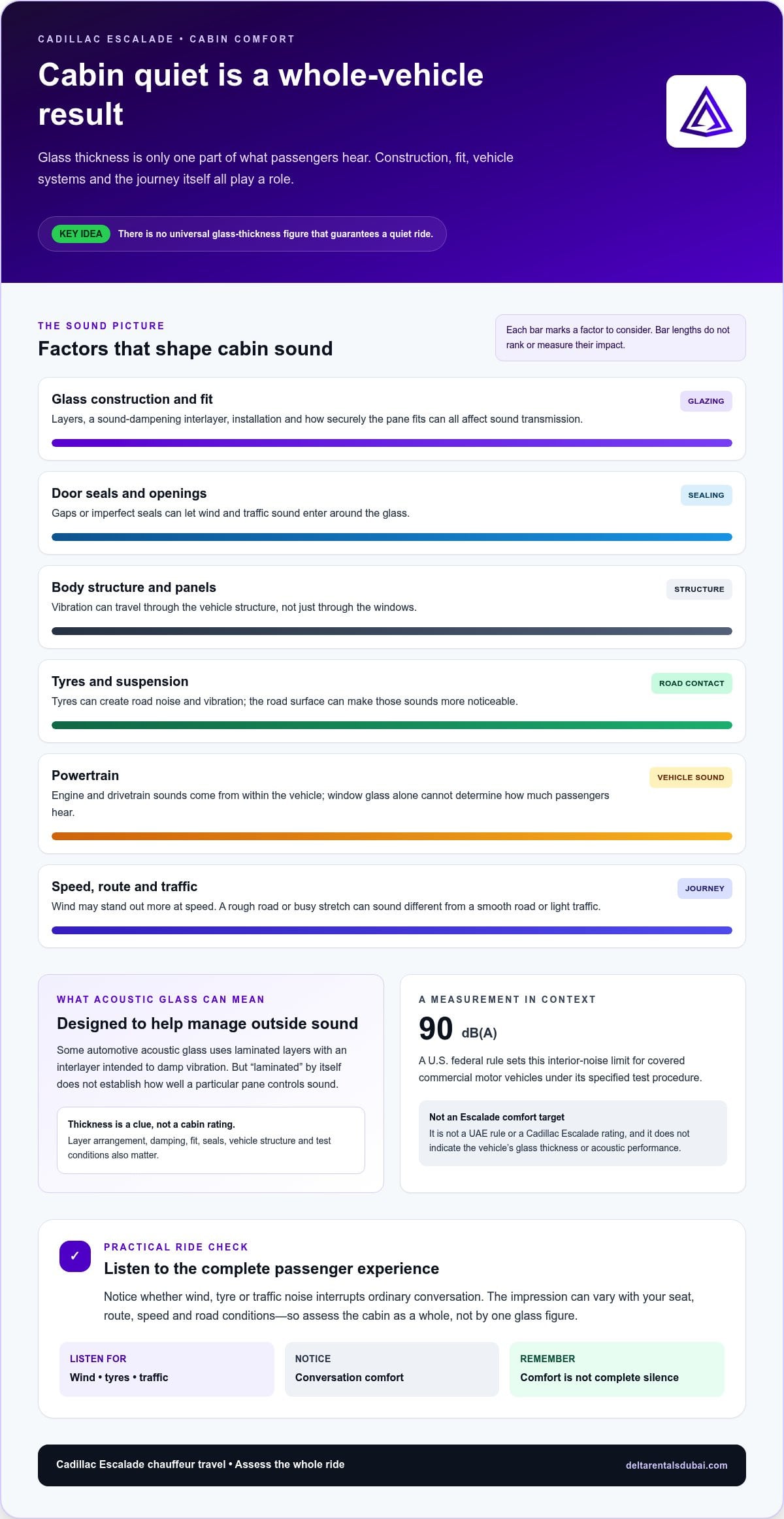
Could thicker glass alone make a Cadillac Escalade noticeably quieter? Not necessarily. A Cadillac Escalade chauffeur rental experience depends on more than a window specification. Glass construction, door seals, tyres, suspension, powertrain noise, road surface and traffic all influence what passengers hear.
Acoustic glass can help reduce some outside sound, but thickness alone does not show how effectively the whole vehicle manages wind, road or engine noise. The same SUV may sound different on a smooth road than on a rough one, or in light traffic compared with a busy stretch.
This guide explains what acoustic glass can contribute, what a thickness figure can and cannot tell you, and how to assess cabin comfort during a chauffeured ride. Use the practical checks to judge whether conversation feels easy and the cabin suits your plans, without expecting complete silence. Delta Rentals Dubai offers Cadillac Escalade rental and luxury chauffeuring, so you can enjoy spacious premium-SUV travel without driving responsibilities.
Key Takeaways
- Acoustic glass can help manage outside noise, but thickness alone cannot predict how quiet a cabin will feel.
- Door seals, tyres, road conditions, speed and powertrain can each affect what you hear.
- During a ride, notice whether wind, tyre or traffic noise interrupts ordinary conversation.
- For a Cadillac Escalade chauffeur rental Dubai, assess the complete passenger experience rather than relying on one glass measurement.
- Delta Rentals Dubai offers Cadillac Escalade rental and luxury chauffeuring for a premium journey without driving responsibilities.
Acoustic Glass in Cadillac Escalade Chauffeur Rentals
Glass thickness alone does not determine how quiet a chauffeured cabin feels. It can affect how sound passes through a window, but comfort also depends on the glass construction and fit, door seals, body structure, tyres, road surface and vehicle speed. A thicker pane is not proof of a quieter ride.
Acoustic glazing is window glass designed to help limit sound entering a vehicle’s cabin. Some automotive acoustic glass uses laminated layers bonded with an interlayer intended to damp vibration. Ordinary laminated safety glass also has bonded layers, but that does not mean every laminated pane offers the same sound-control properties. The term “laminated” alone does not establish how a particular window performs.
Cabin noise is part of the broader automotive field called Noise, Vibration, and Harshness (NVH), which considers how sound and vibration are experienced inside a vehicle. This wider view explains why one glass measurement cannot describe the whole passenger experience.
What is acoustic glass, in simple terms?
Think of it as glazing designed with sound comfort in mind, not a guarantee of silence. Layering, the interlayer and how securely the glass fits its frame can all matter. Specifications can also vary by vehicle version and model year, so do not assume every Cadillac Escalade has identical glazing or acoustic performance.
Why cabin quiet matters on a chauffeured journey
A calmer sound environment can make conversation easier, support a more restful trip and help the cabin feel composed. What you notice is personal: one passenger may be sensitive to tyre noise, while another notices traffic or wind. Your seat, route, speed and road conditions can all shape the experience.
Consider a Cadillac Escalade chauffeur rental Dubai as a complete journey, not a single glass figure. The Escalade provides a spacious premium-SUV setting, and chauffeuring lets you travel without driving responsibilities. Acoustic glazing can contribute to comfort, but it is only one part of the ride.
How Glass Thickness and Construction Affect Exterior Noise
Glass thickness can influence how readily a window vibrates when sound reaches it, but it is only one part of the result. The number and arrangement of glass layers, any sound-dampening interlayer, how the pane fits its frame and the installation can all affect how much noise passes into the cabin. Gaps or imperfect seals can also let sound travel around the glass.
Sound does not move through a vehicle as one uniform wave. Different frequencies can interact differently with glass and surrounding panels, while vibration can travel through the body structure. Doors and seals matter too. Wind may become more noticeable at speed, while tyres can transmit road noise and vibration into the vehicle.
Why two panes with similar thickness may perform differently
Two windows with similar overall thickness may use different layer arrangements or interlayers. Those differences can affect how the glass flexes and how vibration is damped. Fit and assembly matter as well: even a well-designed pane cannot control noise effectively if sound enters through gaps or resonates through nearby structures. There is no universal glass-thickness threshold that guarantees a quiet luxury vehicle.
What acoustic-glass figures can and cannot tell you
A decibel, written dB, expresses sound level on a logarithmic scale. dB(A) applies a weighting that broadly reflects how human hearing responds to different frequencies. A laboratory figure or single test result describes a measurement under specified conditions, but it cannot reproduce every road, speed, seat position or passenger’s perception.
For context, Cornell’s copy of a U.S. federal rule sets an interior-noise limit of 90 dB(A) under its specified test procedure for covered commercial motor vehicles. That is a regulatory benchmark for a particular vehicle category and test, not a comfort target, a UAE rule or a Cadillac Escalade rating. It also cannot be used to infer an Escalade’s glass thickness or acoustic performance.
Thickness alone cannot establish a vehicle cabin noise rating because sound transmission depends on glazing layers and damping, installation and seals, vehicle structure, noise frequency, vibration, speed and test conditions. For a Cadillac Escalade chauffeur rental Dubai, use glazing figures as one clue, not a complete prediction of the ride. Cadillac Escalade chauffeured travel combines premium-SUV travel with the convenience of leaving the driving to a chauffeur.
Why Thicker Glass Alone Does Not Guarantee a Quieter Escalade Cabin
Thicker glass is not a standalone guarantee of a quieter ride. It can influence sound passing through a window, but noise can also enter through seals and openings, travel through body panels, or come from tyres and the powertrain. Acoustic laminated glass can help manage unwanted sound, but glazing is only one part of a vehicle’s overall acoustic comfort.
It helps to distinguish exterior noise from sounds produced within the vehicle. Traffic, wind and tyre noise originate outside. Engine and drivetrain sounds come from the vehicle itself. A window can affect some outside sound, but it cannot determine on its own how much engine or drivetrain noise passengers hear.
The other routes exterior sound takes into the cabin
Tyres meeting the road can create noise and vibration that travel through the vehicle, while door seals and other openings can let wind or traffic sound in. Body panels may also transmit vibration. For example, a rough road surface can make tyre noise more noticeable than a smooth one, even on the same journey. These are general factors, not claims about a specific Escalade model or configuration.
A practical comparison of acoustic comfort factors
| Factor | What it can influence | What it can’t prove alone |
|---|---|---|
| Glazing | Sound passing through the windows | Whole-cabin quietness or noise entering elsewhere |
| Door seals | Wind and outside sound around door edges | How much vibration travels through the body |
| Tyres | Road noise and vibration from tyre-road contact | How much sound comes through the windows |
| Road surface | How prominent tyre noise feels on a given route | A vehicle’s performance on every other surface |
| Speed | How noticeable wind and road noise may become | A fixed cabin-noise level in all conditions |
| Powertrain | Engine or drivetrain sound inside the cabin | The effectiveness of acoustic glazing |
Perceived quiet can change with route, speed, vehicle setup and a passenger’s sensitivity to different sounds. Even an accurate glass measurement cannot tell the complete story. For a Cadillac Escalade chauffeur rental Dubai, consider the overall ride rather than treating thicker glass as a promise of silence. No single component tells the full comfort story.
How to Assess Cabin Quietness Before a Chauffeured Ride
Judge quietness as part of the passenger experience, not from a specification alone. Start with what matters for your trip: uninterrupted conversation, time to rest or a calmer setting for work. Then use this five-step check to assess the cabin during ordinary travel.
A simple five-step cabin-comfort check
- Identify your priorities. Decide whether easy conversation, a restful ride or a quieter space to focus matters most.
- Note the conditions. Road texture, traffic, weather and speed can affect cabin sound. One moment may not represent the whole journey.
- Listen from your seat. Notice whether wind seems to come from around the windows, tyres are audible over the road, or traffic sounds prominent. Seat position can change what you hear.
- Try an ordinary conversation. At typical travel speeds, speak at a comfortable volume with a passenger. Notice whether you can follow each other without strain or repeated requests.
- Compare and decide. When comparing journeys or vehicles, consider the route and conditions as well as the cabin. Decide whether the sound level suits your priorities.
This is a practical listening check, not a substitute for instrumented acoustic testing. It will not produce a technical noise rating, but it can help you describe what feels comfortable in real use.
Set realistic expectations for the ride
A quiet cabin does not mean complete silence. Passing traffic may become more noticeable, rough road texture can bring out tyre noise, and weather or speed may change the sounds around you. Comfort is a matter of degree, and passengers can perceive the same journey differently.
For a longer journey, consider whether you will want to talk, work or rest, then set your comfort priorities accordingly. A chauffeur-led Cadillac Escalade journey lets you focus on those plans without driving responsibilities. These luxury chauffeur service details and luxury SUV rental options provide more context on chauffeured travel and premium SUVs.
For a Cadillac Escalade chauffeur rental Dubai journey, focus on how the ride feels to you rather than expecting one glass feature to promise silence. Explore a Cadillac Escalade chauffeured journey around the comfort that matters most.
Cadillac Escalade Chauffeur Rental: Connecting Cabin Comfort to the Journey
The most useful measure of cabin comfort is not a single glass specification. It is how the whole ride works for you: whether you can talk comfortably, take a call, relax or simply enjoy the journey. Glazing is one part of that experience, alongside the route, road conditions, vehicle sounds and your own sensitivity to noise.
What to prioritize in an Escalade chauffeured experience
A Cadillac Escalade provides a spacious premium-SUV setting for chauffeured travel, but a particular glass thickness or noise level should not be assumed without matching specifications and test conditions. Instead, consider what you need from the cabin. If you plan to talk or take calls, comfortable conversation may matter most. If you want to unwind, pay attention to whether you feel settled and relaxed during the ride.
Delta Rentals Dubai offers Cadillac Escalade rental and luxury chauffeuring, bringing together premium-SUV travel and the convenience of leaving the driving to a chauffeur. Cabin comfort still depends on the vehicle and journey conditions, so a chauffeured ride should not be taken as a guarantee of a specific glazing package or complete silence.
Choose the experience around your travel priorities
Start with the purpose of your journey. A business trip may call for time to focus or speak with a colleague; a leisure journey may be more about unwinding and enjoying a comfortable ride. Keep expectations realistic: traffic, speed and road surface can change what you hear, and passengers may experience the same cabin differently.
For broader guidance on planning a chauffeured experience, explore luxury chauffeuring and Cadillac Escalade rental. Weigh the complete passenger experience, not one measurement. A Cadillac Escalade chauffeur rental Dubai can make travel more convenient by taking driving out of your hands, while your comfort priorities help define a successful ride.
To discuss a chauffeured journey, message Delta Rentals Dubai on WhatsApp.
Make Your Next Journey Feel Effortless
Cabin quiet is not determined by glass thickness alone. Glazing, seals, tyres, the vehicle’s structure and powertrain all shape what passengers hear, while route and speed can change the experience from one trip to another. Focus on the complete ride and notice whether conversation or rest feels comfortable under ordinary conditions.
For a Cadillac Escalade chauffeur rental Dubai, the appeal is spacious premium-SUV travel without driving responsibilities, not an assumed glass specification or promise of silence. Delta Rentals Dubai offers Cadillac Escalade rental, luxury chauffeuring and VIP chauffeuring across the United Arab Emirates.
Choose your journey around what matters, whether that is taking calls, sharing conversation or relaxing between destinations. Discuss a premium chauffeured journey with Delta Rentals Dubai.
Frequently Asked Questions
Does thicker acoustic glass make a car quieter?
Not necessarily. Greater thickness can affect how glass responds to sound and vibration, but it does not guarantee a quieter cabin. Layer arrangement, any sound-dampening interlayer, window fit and seals also matter. Noise can enter through other parts of the vehicle or come from the tyres and powertrain. Treat thickness as one detail, not a complete measure of real-world comfort.
What is acoustic glass in a luxury vehicle?
Acoustic glass is glazing designed to help reduce some sound entering a vehicle’s cabin. It may use laminated layers with an interlayer intended to damp vibration. Ordinary laminated safety glass also has bonded layers, but that does not automatically mean it offers the same acoustic performance. The label alone does not establish how quiet a particular vehicle will feel in everyday driving.
Is acoustic glass fitted to every Cadillac Escalade?
Do not assume every Cadillac Escalade has the same glazing. Glass specifications can differ by model year, trim or market, and a general description of acoustic glass does not confirm what is fitted to a particular vehicle. Manufacturer documentation for the exact vehicle is the relevant reference for model-specific specifications. A claim about one version does not establish the features of every Escalade.
How can I tell whether a chauffeured SUV cabin is quiet?
During an ordinary journey, sit in your intended passenger seat and hold a relaxed conversation at typical travel speeds. Notice whether wind, tyre or traffic noise makes listening difficult. Consider the route and road surface too, since both can change what you hear. This practical check can help you judge comfort, but it is not a substitute for instrumented acoustic testing.
Can acoustic glass block all exterior noise?
No. Acoustic glazing may help reduce some sound passing through windows, but it cannot make a moving vehicle completely silent. Wind and traffic noise may enter around seals or openings, while tyres can transmit road sound and vibration through the vehicle structure. The sound passengers notice also depends on speed, road conditions and the type of noise, so expect a matter of degree.
What affects cabin noise besides the windows?
Door seals, openings and body panels can affect how outside sound enters or travels through a vehicle. Tyres and road texture influence tyre noise and vibration, while speed can make wind and traffic sounds more noticeable. Engine or drivetrain noise comes from the vehicle itself, not the windows. Separating these sources helps explain why glazing alone cannot define the entire cabin experience.
Are acoustic-glass thickness figures comparable between vehicles?
Only with care. A thickness figure does not describe the full glass construction, including layer arrangement or interlayer, and it says nothing by itself about fit, seals or the rest of the cabin. Comparisons are more meaningful when measurements and test conditions match. Without those details, thickness figures cannot reliably predict which vehicle will feel quieter to its passengers.