

What if the track welcomes you, but your rental agreement doesn’t? Fine print exclusions regarding track day use in performance car agreements may be scattered across the rental contract, insurance documents, and event paperwork. A track organiser’s waiver isn’t the same as the rental company’s permission, and neither document alone necessarily explains who is responsible if the car is damaged.
Before booking a high-performance car, check the signed rental agreement alongside the applicable insurance terms. Ask the rental company to confirm in writing whether track use is permitted for that specific vehicle and activity. Don’t rely on a verbal assurance or assume event access means the car is approved.
This guide explains what track-use exclusions can mean, which documents to compare, and what to ask about damage and other potential losses. If you’re considering a Porsche 911 GT3 RS rental, treat it as a performance-car option, not proof of track eligibility. Confirm the current track-use policy, vehicle-specific restrictions, and applicable insurance terms directly in writing before signing.
Key Takeaways
- Performance capability doesn’t confirm track permission. Check the agreement for prohibited-use, competition, circuit, testing, and unauthorised-driver wording.
- Read the rental agreement, insurance documents, and event-organiser paperwork together. Each may clarify different responsibilities, and one doesn’t replace another.
- Exclusions may depend on defined terms and cross-references, so review the full documents before signing.
- Ask for vehicle-specific written clarification that names the event, dates, and intended activity. Keep the response with your rental documents.
- Compare rental options by the clarity of their written terms and document access, not by performance specifications alone.
Track-day exclusions in performance car agreements: what they mean
A track-day exclusion is contract wording that may limit or prohibit taking a rental vehicle onto a circuit. It can apply even when the car is built for high performance or the event welcomes road cars. Vehicle suitability describes what a car can do; contractual authorisation describes what you’re allowed to do with the rental. Treat these as separate questions.
The car rental agreement sets out terms between the provider and renter, but track restrictions may also appear in documents referenced by the agreement, including insurance terms. Read the final version you’re asked to sign, along with any incorporated documents. If a clause is unclear or documents appear to conflict, ask for written clarification before committing. Seek qualified advice if you need help interpreting your obligations.
What counts as track use under a rental agreement?
There isn’t one definition to assume across rental agreements. Wording may refer to a circuit, timed sessions, vehicle testing, racing, competition, or participation in an organised motorsport event. These are possible examples, not a universal definition or a statement of any particular provider’s policy.
Check how the agreement defines “track,” “circuit,” “testing,” and similar terms. Ask the provider whether your planned activity falls within a restriction, especially if you’ll attend an event but don’t intend to race or take part in timed sessions. Don’t rely on the event’s description alone to interpret the rental contract.
Why a performance car may still have use restrictions
A car’s engineering and a renter’s permitted use are different things. A performance model may be designed for demanding driving, but that doesn’t establish that the rental company authorises circuit use. Restrictions may appear in the rental terms, insurance documents, or both. Check each document rather than assuming one grants permission that another doesn’t mention.
An event organiser’s waiver generally addresses the organiser’s own event terms and risks. It shouldn’t be treated as permission from the rental provider. Likewise, a car being accepted at an event doesn’t confirm that the rental agreement or applicable insurance terms allow its use there.
For example, a renter considering a Porsche 911 GT3 RS should confirm the current, vehicle-specific track-use policy and applicable insurance terms directly with the rental provider. The model name alone can’t answer those questions. Keep the written response with the agreement and related documents, and check that the permission matches the activity you plan.
Which fine-print clauses can restrict performance-car track use?
Scan the full agreement, not just the page describing the car. Fine print exclusions regarding track day use in performance car agreements may sit under “prohibited use,” “competition,” or general vehicle-use conditions. Search for terms such as circuit, testing, racing, timed event, and unauthorised driver. A restriction can depend on how the contract defines a term, not how you’d describe your plans in everyday language.
Prohibited-use and event wording to read closely
Check whether the wording addresses circuits, timed laps, racing, vehicle testing, or driver training. Follow references to definitions, schedules, addenda, and other documents incorporated into the agreement. A phrase like “competition use” may have a defined meaning elsewhere, while broader wording may cover activities beyond racing. If your event doesn’t fit neatly into the language, ask the rental provider in writing whether your specific plan is allowed before signing.
Check who is permitted to drive, too. A clause may restrict use to the named renter or listed drivers, while event participation could involve another driver. Don’t assume a brief session or organised event is treated differently from other circuit use. Describe your planned activity accurately when you ask for clarification.
Damage, liability, and insurance language to cross-check
Locate the agreement’s damage-claim process and any wording on renter responsibility, excess, liability, recovery, or related charges. Treat these as terms to verify, not automatic outcomes: their effect depends on the signed documents and circumstances. Read the applicable insurance wording separately, including exclusions and conditions, and ask the provider and insurer how those terms apply to the exact vehicle and activity.
A clause permitting an activity does not, by itself, prove that insurance covers it. An event waiver is also a separate document, not a substitute for rental-company authorisation or insurance confirmation. Hagerty’s overview of specialized track day insurance offers general context on track-use insurance, but it doesn’t establish the terms that apply to a particular rental in the UAE.
- Save the signed agreement and every document it references.
- Ask for unclear terms to be explained in writing.
- Confirm the provider’s current policy and applicable insurance terms for the specific vehicle, event, and activity.
If you’re considering a Porsche 911 GT3 RS rental, the model itself doesn’t answer whether circuit use is permitted. You can ask Delta Rentals Dubai about current vehicle-specific terms, including track-use restrictions and applicable insurance wording, before you commit.
Rental agreement, insurance policy, and track waiver: compare what each says
Put the documents side by side. Each answers a different question, and a statement in one doesn’t automatically settle what another permits. Track-day exclusions may refer to separate conditions or insurance terms, so check the complete, current documents for the specific vehicle and planned activity.
| Document | What it may clarify | What it doesn’t automatically confirm |
|---|---|---|
| Rental agreement and addenda | Permitted drivers, vehicle-use limits, notice requirements, exclusions, and conditions incorporated into the signed agreement. | That an insurer will cover the proposed track use. |
| Applicable insurance wording | Whether the described vehicle use and event are addressed, along with relevant exclusions and conditions. | That the rental provider has authorised use under the rental contract. |
| Event-organiser documents or waiver | Participation requirements and matters covered by the organiser’s event paperwork. | That the rental company permits the activity or that insurance applies to it. |
What the rental agreement can clarify
Start with the signed agreement and any addenda or separate conditions it identifies as part of the contract. Check who may drive, which uses are restricted, whether you must give notice, and which exclusions apply. Then ask the provider: Which clause governs my proposed track-day use of this vehicle? If the answer points to another document, request the relevant wording or a written explanation.
What insurance terms and event waivers do not automatically confirm
Review the applicable insurance documents for wording that addresses your intended vehicle use and event. If the documents are unclear, ask the provider and insurer how the terms apply to the precise activity. Don’t treat a general description of insurance, or a waiver you sign to participate, as confirmation of cover.
An event waiver may explain conditions between you and the organiser. It doesn’t, by itself, amend the rental agreement or establish that the insurer accepts the proposed use. The reverse matters too: a rental clause that appears to allow an activity doesn’t itself prove insurance applies.
Wait for written clarification from both the rental provider and the insurer before treating track use as confirmed. The effect of any clause depends on its exact wording and the applicable circumstances. If documents conflict or the implications remain uncertain, review the complete signed terms and consider qualified advice before deciding.
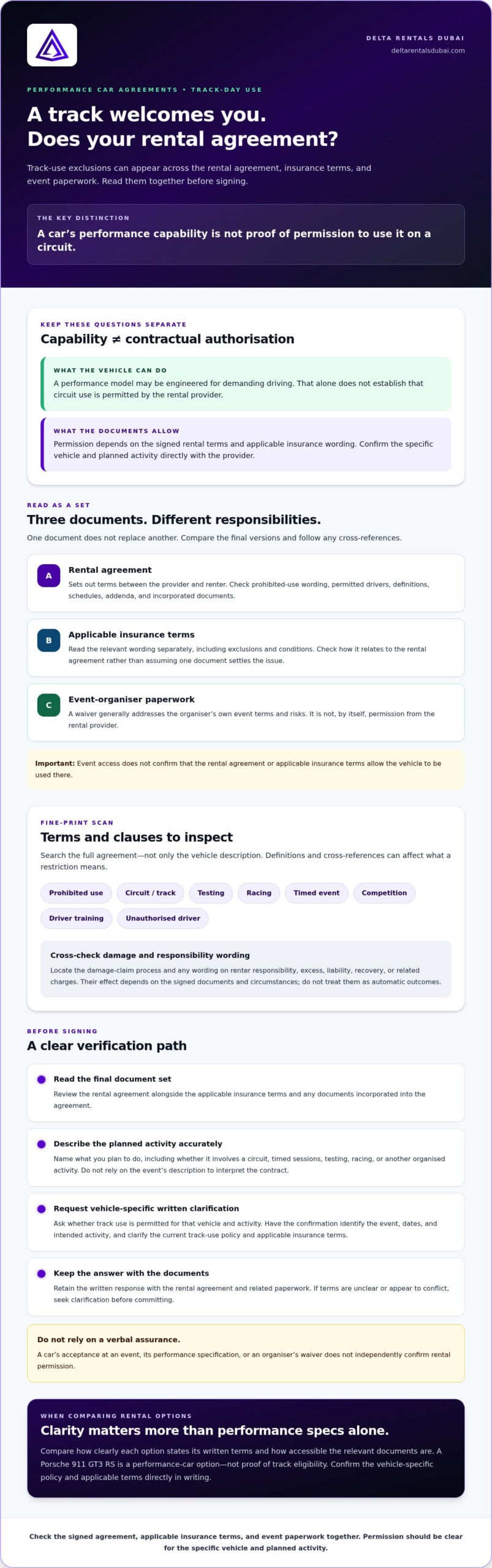
How to verify track-day permission before signing a performance-car agreement
Get clarity before you pay or collect the vehicle. Exclusions can be difficult to assess without knowing the exact event and planned activity. Use this checklist to get a vehicle-specific answer and compare it with the relevant documents.
- Identify the event. Note the event type, dates, organiser, and what you intend to do, such as attend a circuit session, take timed laps, or participate in driver training.
- Locate the relevant clauses. Search the draft rental agreement and any addenda for prohibited-use, circuit, competition, testing, driver, and notice wording. Follow definitions and references to other documents.
- Ask the rental provider directly. Name the exact vehicle, event type, dates, and intended activity. Ask whether that specific use is permitted under the rental terms.
- Request the documents. Obtain the applicable agreement version, relevant clauses, and current insurance wording. Ask the insurer separately to confirm how its terms apply to the vehicle and activity.
- Retain written confirmation. Save dated replies and the documents provided before signing. If permission or insurance remains unclear, don’t assume the vehicle is authorised for track use.
Questions to send the rental provider and insurer
Keep your enquiry specific. Ask: “May this vehicle be used for [intended activity] at [event type] on [dates]?” Request the exact rental clause and current insurance wording that address the proposed use. Then ask what conditions, exclusions, notice requirements, or written approvals apply. A general answer about the car or event may not resolve your particular question.
Confirm permission and insurance separately, before payment or collection. A provider’s response about rental terms shouldn’t be taken as the insurer’s confirmation, or vice versa.
How to document the answer and resolve conflicting wording
Keep the complete, dated email or message thread with the exact agreement version you received. If the written response conflicts with a clause, ask the provider to resolve the difference through an amended document or formal written confirmation that identifies the vehicle and planned use. Don’t rely on verbal reassurance while the signed terms remain unclear. If important questions remain unanswered, consider qualified advice before committing.
If you’re considering a Porsche 911 GT3 RS rental, you can ask Delta Rentals Dubai for current vehicle-specific terms in writing. This helps you check the applicable policy and insurance wording before deciding, without assuming track use is permitted.
Choosing a performance-car rental when track use matters
If circuit use is essential to your plans, compare providers on the clarity of their written answers, access to relevant documents, response quality, and vehicle-specific terms. Don’t use a car’s engineering, reputation, or performance specifications as evidence that track use is authorised or insured. Permission must be clear for the exact vehicle and intended activity.
A practical comparison checklist for renters
Ask each provider the same questions, then compare the answers alongside the draft agreement and applicable insurance wording. Look for specific, consistent details rather than general assurances.
- Written clarity: Does the agreement address your intended use explicitly, or leave room for interpretation?
- Document access: Can you review the current agreement, relevant addenda, and insurance terms before committing?
- Specific answers: Do replies identify the vehicle, event type, driver, dates, and conditions that apply?
- Consistency: Do the provider’s written confirmation, rental terms, and insurance wording align?
An unanswered question or conflicting document is still unresolved. Don’t treat silence, an event invitation, or a vehicle’s performance credentials as implied approval. If the wording remains unclear, ask for a formal written explanation before deciding.
Ask Delta Rentals Dubai about the exact vehicle and intended use
Delta Rentals Dubai offers the Porsche 911 GT3 RS as a rental, but that doesn’t establish that track use is permitted or covered. The Porsche 911 GT3 RS rental guide provides information about the rental option, not confirmation of track eligibility.
Ask Delta Rentals Dubai directly whether your intended use is permitted for the specific vehicle. Request current written confirmation of the track-use policy, vehicle-specific restrictions, and applicable insurance terms. The exclusions can depend on the exact documents and activity, so keep the response with the agreement and seek qualified advice if important questions remain.
Before making a booking, message Delta Rentals Dubai on WhatsApp to discuss the vehicle and request written terms. Decide only after the permission and insurance details for your proposed use are clear.
Make your track-day decision with confidence
Before committing to a performance-car rental, read the signed agreement and applicable insurance documents together. Check how the vehicle, event, driver, and planned activity are addressed. An event waiver or a car’s performance credentials don’t establish rental permission or insurance coverage.
Get separate written confirmation from the rental provider and insurer before payment or collection. Keep the responses with the exact agreement version, and resolve unclear or conflicting terms before deciding. If important questions remain, don’t assume the vehicle is approved for track use.
Delta Rentals lists the Porsche 911 GT3 RS among its rental offerings, but the model’s availability doesn’t establish track permission or insurance terms. Message Delta Rentals to ask about vehicle-specific terms, including its current track-use policy and applicable insurance wording. A clear answer gives you a better basis for choosing the right rental and planning your next step.
Frequently Asked Questions
Can I take a rented performance car to a track day?
Only if the rental terms allow your specific use and the applicable insurance wording has been checked. Don’t assume a performance car is approved for circuit use because of its design, event access, or an organiser’s waiver. Before paying or collecting the vehicle, identify the event, dates, driver, and intended activity, then request written clarification from the rental provider and insurer.
Does a track-day waiver cover damage to a rented car?
Not automatically. An event waiver may set out participation conditions or address matters between you and the organiser, but it doesn’t confirm that the rental company permits track use or that insurance covers damage to the car. Read the waiver alongside the rental agreement and insurance documents. Ask the provider and insurer to clarify any gaps in writing before the event.
What wording should I look for in a track-use exclusion?
Search for terms such as “prohibited use,” “racing,” “competition,” “circuit,” “track,” “testing,” “timed event,” and “driver training.” Check definitions, permitted-driver rules, addenda, and cross-references to other documents. Exclusions regarding track day use may depend on how a term is defined, so ask the provider to explain unclear wording for your planned activity.
Does standard rental insurance cover track-day use?
Don’t assume that it does. Coverage depends on the applicable policy wording, exclusions, conditions, and proposed use. Ask the insurer to confirm in writing whether the policy addresses the specific vehicle, event type, dates, and activity. Check the rental agreement separately, since insurance information alone doesn’t establish that the rental provider authorises track use.
Can the rental company prohibit track use even if the car is track-focused?
Yes. A car’s engineering or intended performance doesn’t establish what the renter is contractually allowed to do. The rental agreement may restrict particular uses regardless of the vehicle’s capabilities. Check the signed terms and any referenced documents, then request written clarification about the exact model and planned activity. Don’t treat a vehicle description or event organiser’s acceptance as rental permission.
What should I do if the agreement and insurance documents conflict?
Pause before using the vehicle on track. Ask the rental provider and insurer to address the conflicting wording in writing, and request current documents or a formal amendment if needed. Keep the exact agreement version and dated replies together. Don’t assume one document overrides another. If the implications remain unclear, consider qualified advice before signing or proceeding.
Is written approval from the rental company enough for track-day use?
Not by itself. Written approval can clarify the provider’s position under the rental terms, but it doesn’t automatically confirm that the insurer covers the proposed use. Obtain separate written confirmation from the insurer, and make sure both responses identify the vehicle, event, dates, driver, and activity. Review them alongside the signed agreement before treating track use as confirmed.
What should I ask before signing a performance-car rental agreement?
Ask whether the specific vehicle may be used for your named event and intended activity, and which agreement clause governs that use. Request the current insurance wording, including any exclusions or conditions, and clarify permitted drivers and notice requirements. Delta Rentals lists the Porsche 911 GT3 RS among its rental offerings, but its current track-use policy and insurance terms must be confirmed directly in writing.