
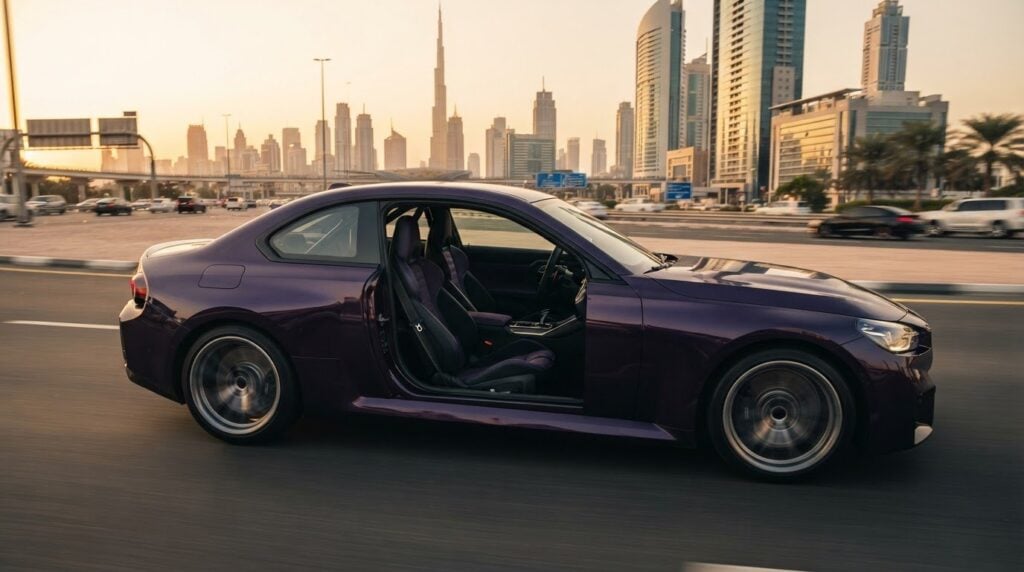
What if more side support made a spirited drive feel easier, not more restrictive? The difference comes down to fit and timing. Well-set dynamic seat bolstering adjustments for passenger comfort during spirited driving can help keep you supported through corners without making the seat feel uncomfortably tight. But “dynamic,” “powered,” and “manually adjustable” don’t mean the same thing. Knowing which controls you’re using makes it easier to find a comfortable position.
It’s reasonable to wonder whether firmer side support will pinch or limit your movement. Dynamic bolsters adjust automatically as driving conditions change. Powered bolsters move when you use a control and typically stay at the selected setting. Manual bolsters are adjusted by hand. The aim isn’t maximum pressure. It’s secure, comfortable support that suits your body.
This guide explains how the different systems work, how to set the seat before setting off, and what to check in the cabin. If you’re considering a performance-car rental, including a Porsche 911 GT3 RS rental from Delta Rentals Dubai, confirm the specific vehicle’s seat configuration and controls before booking. That way, you can arrive ready to find a confident, comfortable fit.
Key Takeaways
- Learn how side bolsters can help keep you supported through corners, and why the right fit matters more than maximum tightness.
- Understand how dynamic seat bolstering adjustments for passenger comfort during spirited driving differ from manual, powered, and fixed support.
- Use a simple parked-car sequence to adjust your seat, test bolster fit, and check belt comfort before setting off.
- Ask the driver before changing seat controls, and make adjustments only while the vehicle is stationary.
- Before a Porsche 911 GT3 RS rental, confirm the specific vehicle’s seat configuration and controls rather than assuming a particular bolster feature is included.
What dynamic seat bolstering means for passenger comfort
A seat should help you feel settled, not squeezed. Its bolsters are the raised supports along the sides of the seat cushion and backrest. Cushion bolsters help position your hips and thighs, while backrest bolsters support your torso. Together, they can reduce the sense of sliding around as a vehicle changes direction.
The effect depends on the seat’s shape and how it fits your body. A narrow seat may feel snug to one passenger and restrictive to another. Your posture matters, too. Sitting upright and centred can make the side supports feel more even than leaning against one bolster. The goal of dynamic seat bolstering adjustments for passenger comfort during spirited driving is balanced support and confidence, not the tightest possible fit.
Bolsters are not seat belts or a replacement for a vehicle’s occupant-safety systems. Airbags are part of a broader supplemental restraint system; seat bolsters have a different role, helping occupants feel supported in the seat. “Spirited driving” here means controlled, lawful driving in appropriate conditions, not aggressive behaviour on public roads.
What do seat bolsters support?
Think of the cushion as the seat’s base and the backrest as the surface behind your upper body. Their side supports should make comfortable contact without digging into your hips, thighs, or ribs. Check the fit in your normal seated posture, with room to breathe and move naturally. A secure-feeling seat should still feel comfortable while the vehicle is stationary.
What makes a bolster adjustment dynamic?
Dynamic bolsters may change side support automatically in response to driving inputs. Manual bolsters are repositioned by hand, while powered bolsters move through a switch or seat control, often to a setting chosen by the occupant. A powered adjustment isn’t necessarily automatic. The exact behaviour can differ by vehicle, trim, and seat configuration, so check the manufacturer’s information for the specific model rather than assuming how it operates.
That distinction matters for passengers, too. Automatic movement may feel unfamiliar at first, while a fixed bolster won’t adapt as driving inputs change. If a seat feels too tight or distracting, prioritise comfort and ask the driver to adjust it while the vehicle is stationary. Before a performance-car drive, confirm which controls are fitted and how they work.
How dynamic seat bolsters respond during spirited driving
As a vehicle changes direction, occupants feel a sideways force called lateral acceleration. In a gentle corner, your body may shift slightly toward the outside of the turn, even while you’re sitting upright. A well-fitting seat can make that movement feel more controlled, without requiring you to tense up or brace unnaturally.
Dynamic bolstering is designed to vary side support in response to driving inputs. The principle is simple: dynamic bolstering changes seat-side support in response to driving inputs, while the exact behaviour depends on the vehicle’s system. It’s one element of ergonomic design, but added support doesn’t change a vehicle’s handling, road grip, or safety limits. Drive within appropriate limits and follow local rules.
How cornering forces affect a seated passenger
Picture a smooth bend taken at a controlled speed. Your torso and hips may move slightly sideways as the car turns. If the seat fits your body, its side supports can help you feel settled through the movement. The aim is relaxed contact, not pressure that pinches or distracts. Passengers should stay seated normally, with their seat belt worn as intended.
How an active system may change support
Some active systems may alter the pressure or shape of the side supports as the vehicle responds to steering or other driving inputs. That differs from fixed bolsters, which keep the same shape, and manual bolsters, which the occupant adjusts by hand. Powered seat positioning uses a motor to move a selected setting; that alone doesn’t mean the bolsters adjust automatically.
System logic and available settings vary by vehicle, trim, and seat configuration. One system may respond differently from another, so check the vehicle’s manual or manufacturer information rather than assuming when or how support changes. If you’re considering a performance-car rental, confirm the specific seat controls and configuration before booking. You can ask about the vehicle’s seat configuration before making plans.
The value of dynamic seat bolstering adjustments for passenger comfort during spirited driving comes from understanding what the system actually does and choosing support that feels comfortable. Treat it as a seating feature, not a way to drive harder or compensate for poor fit. Make any adjustments while the vehicle is stationary, and let comfort guide the setting.
Dynamic, manual, or fixed bolsters: what feels different?
Seat bolsters offer different levels of adjustability. A seat that feels supportive to one passenger may feel restrictive to another, depending on body shape, posture, clothing, and personal preference. Use the comparison below to understand the controls each type may provide. Features vary by vehicle and seat configuration, so confirm what’s actually fitted.
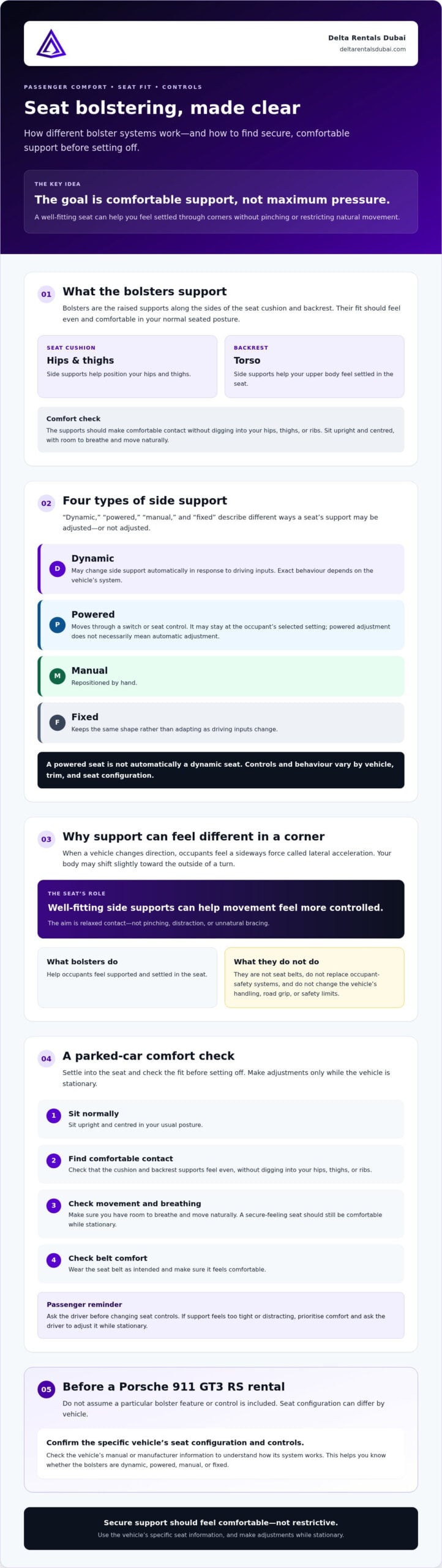
- Dynamic: The system may adjust side support in response to driving inputs. It can feel responsive, but its behaviour and settings depend on the vehicle. Give yourself a moment to get familiar with how the seat feels as support changes.
- Manual: The occupant adjusts the bolsters by hand, where that option is provided. The setting is passenger-selected, but changing it may take more effort than using a powered control.
- Powered: A switch or seat control moves the bolsters to a selected position. This gives the passenger adjustment control, but powered movement doesn’t necessarily mean the seat adapts automatically while driving.
- Fixed: The bolsters keep a consistent shape. There are no bolster settings to learn, but the support can’t be adjusted to suit every occupant.
These categories aren’t interchangeable. For example, The Drive’s coverage of Mercedes active multicontour seats describes one manufacturer-specific approach to responsive support, not a promise that another car behaves the same way. Read The Drive’s feature on active seat technology as an example, then check the exact vehicle’s manual or specifications for its controls and operation.
How can a passenger tell if the fit is right?
Start with comfort, not maximum tightness. The side supports should make even, comfortable contact around your hips and torso without pinching or forcing you into a rigid position. Sit naturally and check that you can breathe normally, maintain a relaxed posture, and wear the seat belt comfortably as intended. Clothing can affect how the seat feels, so assess the fit in what you’ll wear for the drive.
The best setting gives steady support without pressure or restricted movement. Make small changes while the vehicle is parked, then pause to notice how each setting feels. If a bolster presses uncomfortably or distracts you, ease the support rather than trying to get used to an overly tight fit. Ask the driver before changing shared seat controls.
For dynamic seat bolstering adjustments for passenger comfort during spirited driving, the useful comparison is how well each adjustment suits the passenger, not which type sounds most advanced. Before a performance-car rental, confirm the specific seat configuration and try the available controls while stationary. Comfort is individual, and the right setting should feel secure without demanding attention.
How to set seat bolsters for comfort before setting off
Take a moment to check the seat while the vehicle is parked. A comfortable fit starts with your overall seating position, not the side supports alone. Adjust in sequence, and follow the vehicle’s instructions if they differ from this general guidance.
A quick passenger fit check
- Park first. Ask the driver to keep the vehicle stationary while you adjust the seat.
- Set your position. Adjust the seat base and backrest so you can sit naturally with comfortable support.
- Test the bolsters. If adjustment is available, make a small change. Look for even contact around your hips and torso, without pinching, pressure, or a feeling of being held rigidly.
- Check the belt. Fasten it as intended and make sure the seat setting doesn’t interfere with a comfortable fit or normal movement.
Notice how the seat feels before making another change. If support feels too tight, ease it back. If one side feels uneven, check your posture and seat position before adjusting again. If you feel discomfort or distraction, ask the driver to stop safely before changing the setting.
What should passengers avoid?
Don’t experiment with unfamiliar seat controls while the vehicle is moving. Ask the driver before changing shared controls, and make adjustments only when the car is stationary. If a setting feels uncomfortable during the drive, tell the driver so they can find a safe place to stop.
Avoid adding aftermarket cushions or supports without first checking that they’re compatible with the seat and its safety features. Don’t alter the seat or cover areas that may contain airbags or other equipment. If you’re unsure, consult the vehicle’s instructions or ask the vehicle provider before using an accessory. Manufacturer guidance takes precedence over general advice.
For dynamic seat bolstering adjustments for passenger comfort during spirited driving, comfort comes from a considered fit, not from selecting the tightest setting. If you’re arranging a performance-car rental, confirm the specific vehicle’s seat controls and configuration before booking. Ask about the vehicle’s seat configuration and controls, then take time to check the fit before setting off.
Checking seat comfort in a Porsche 911 GT3 RS rental
A performance car’s name doesn’t tell you exactly which seats or adjustment controls are fitted to the specific vehicle. If you’re considering a Porsche 911 GT3 RS rental, treat its seat configuration as something to confirm, not assume. Delta Rentals Dubai offers this model, but a particular dynamic-bolster system or seat specification isn’t guaranteed.
For more vehicle context, see the Porsche 911 GT3 RS rental guide. If you’re comparing models instead, you can explore Delta Rentals Dubai rental options and ask about the specific vehicle you’re considering.
What should you confirm before a performance-car rental?
Before booking, ask which seat configuration is provided on the specific vehicle and what adjustments are available. Confirm how the seat and any bolster controls work, and whether support is fixed, passenger-adjustable, or automatic. Features and availability can vary, so rely on confirmation for the selected vehicle rather than assuming that a model name guarantees a particular seat setup.
Once you’re with the vehicle, check the controls while it’s parked. Adjust your seating position first, then try any available side-support settings and check that the seat belt sits comfortably as intended. If a control is unfamiliar, ask the rental team or consult the vehicle instructions before using it.
How to make the experience comfortable for a passenger
Agree on comfort preferences before setting off. The passenger should be able to sit naturally, breathe normally, and feel supported without being pinched or held rigidly. Make any changes while stationary, and ask the driver before operating shared seat controls. If support becomes uncomfortable or distracting on the road, tell the driver and wait until the vehicle is safely stopped before adjusting it.
The goal of dynamic seat bolstering adjustments for passenger comfort during spirited driving is a seat fit that feels settled and unobtrusive, not a reason to push beyond safe or lawful driving limits. If you’re ready to check the details for the vehicle you have in mind, ask about a Porsche 911 GT3 RS rental and confirm which seat adjustments the selected car actually has.
Settle In Before You Set Off
Comfortable support is about the right fit, not the tightest possible bolster setting. Dynamic, manual, powered, and fixed designs work differently, so check how the specific seat operates rather than assuming its features. Set your seating position first, make any adjustments while parked, and confirm the seat belt feels comfortable and unobstructed.
For a performance-car drive, a calm, confident passenger starts with a seat that supports without pinching or distracting. If you’re considering a Porsche 911 GT3 RS rental from Delta Rentals, confirm the exact vehicle’s seat configuration and controls before booking. Understanding dynamic seat bolstering adjustments for passenger comfort during spirited driving helps you ask the right questions and prepare for a more comfortable journey.
Ask about a Porsche 911 GT3 RS rental and the seat adjustments available on the selected vehicle. A little preparation can make it easier to settle in and enjoy the drive with confidence.
Frequently Asked Questions
What are dynamic seat bolsters in a car?
Dynamic seat bolsters are side supports that may adjust automatically in response to driving inputs. They’re located along the sides of the seat cushion or backrest and are intended to provide changing support as the vehicle moves. Their operation varies by vehicle and seat configuration. They’re different from fixed bolsters, which keep the same shape, and manual or powered bolsters adjusted by the occupant.
How do dynamic seat bolsters work during cornering?
As a vehicle turns, occupants can feel sideways force and shift slightly in their seats. Depending on the system, dynamic bolsters may alter side-support pressure in response to driving inputs. The timing, amount, and control logic aren’t the same in every vehicle. Check the manufacturer’s instructions for the specific model, and remember that seat support doesn’t change the vehicle’s handling or safety limits.
Can seat bolsters improve passenger comfort during spirited driving?
They can help a passenger feel more settled if the seat fits well and the support feels comfortable. The goal of dynamic seat bolstering adjustments for passenger comfort during spirited driving is balanced support, not maximum pressure. Body shape, posture, clothing, and personal preference all affect the feel. If the bolsters pinch, restrict movement, or distract you, ask the driver to adjust them while the vehicle is stationary.
Are dynamic seat bolsters adjustable by the passenger?
It depends on the vehicle. Some systems may adjust automatically, while others may offer controls that let the occupant select a setting. Automatic movement doesn’t necessarily mean a passenger can choose how the system behaves. Ask the driver before using unfamiliar or shared seat controls, and check the vehicle manual to understand the available options. Make adjustments only while the vehicle is parked.
What is the difference between dynamic and manual seat bolsters?
Dynamic bolsters may adjust automatically in response to driving inputs, depending on how the specific system is designed. Manual bolsters are repositioned by hand, where that feature is provided, and generally stay in the selected position. Powered adjustment uses a motor or control to move a seat or bolster setting, but doesn’t necessarily mean the support changes automatically while driving. Vehicle instructions can clarify which type is fitted.
Can tight seat bolsters cause discomfort?
Yes. Bolsters that press too firmly may feel restrictive, create uncomfortable pressure, or distract you from the journey. A suitable fit should feel supportive without pinching your hips or torso or affecting comfortable posture and normal breathing. Clothing and seating position can change how the support feels. If it’s too tight or uneven, ask the driver to stop safely before making a small adjustment.
Does every Porsche 911 GT3 RS have dynamic seat bolsters?
Don’t assume that every Porsche 911 GT3 RS has dynamic seat bolsters. Seat configuration and available controls can vary, so confirm the specification of the exact vehicle you’re considering. Delta Rentals Dubai offers Porsche 911 GT3 RS rentals, but a particular bolster system or seat option isn’t guaranteed. Ask about the selected vehicle’s seat setup and how its controls work before booking.