

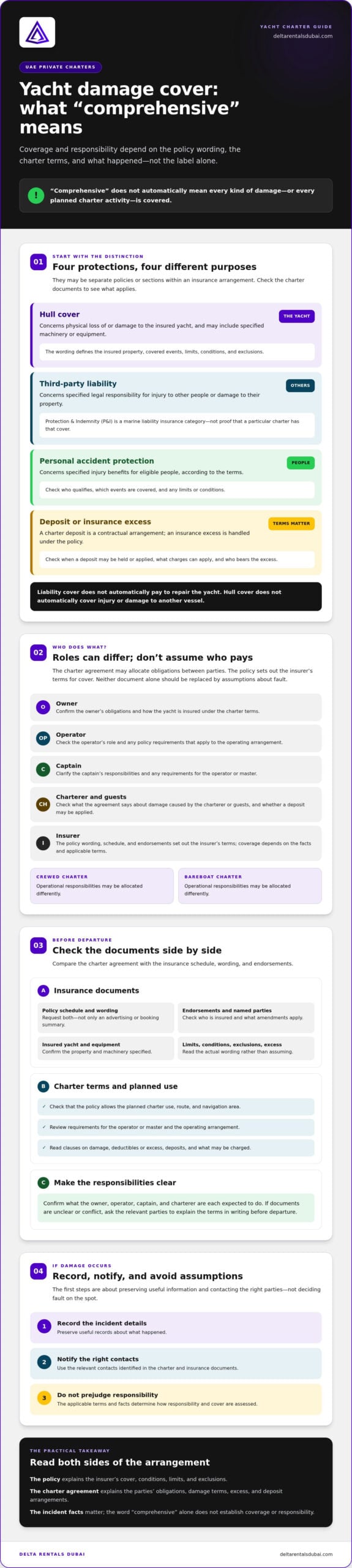
“Comprehensive” doesn’t automatically mean every kind of yacht damage is covered, or that the insurer decides who pays under the charter agreement. Comprehensive hull insurance responsibilities on private yacht charters depend on the policy wording, the charter terms, and what happened. Before departure, clarify what the owner, operator, captain, and charterer are each expected to do.
For a UAE charter, distinguish hull cover, which concerns physical damage to the yacht, from liability cover for injury or damage to others. Then check how the agreement handles damage caused by the charterer or guests, and whether a security deposit may be applied. A crewed charter and a bareboat charter can allocate operational responsibilities differently, so don’t rely on the word “comprehensive” alone.
This guide explains which insurance and charter documents to request, what to check in the terms for deductibles, exclusions, and deposits, and how to clarify responsibilities before departure. If an incident occurs, you’ll also find practical steps for recording details and contacting the right parties without jumping to conclusions about who is at fault.
Key Takeaways
- “Comprehensive” hull cover is subject to the policy wording, exclusions, and the charter activities the insurer has accepted.
- Hull cover, third-party liability, personal accident protection, and a charter deposit serve different purposes. Check the documents to see what applies.
- The owner, operator, captain, charterer, and insurer may have different roles when damage occurs.
- Compare the charter agreement with the insurance schedule, endorsements, named parties, use limits, and excess.
- If an incident occurs, notify the right contacts and preserve useful records without prejudging responsibility.
What comprehensive hull insurance means on a private yacht charter
Hull insurance covers physical loss of or damage to the insured yacht, subject to the policy’s terms. It may include the vessel and specified machinery or equipment, but the policy defines what property is insured, which events are covered, and what limits, conditions, and exclusions apply. The word “comprehensive” does not promise that every loss or charter activity is covered.
Hull cover concerns physical damage to the insured yacht; liability cover concerns the insured’s legal responsibility for injury to other people or damage to their property. These may appear in separate policies or in different sections of an insurance arrangement. Personal accident cover is another category, generally focused on specified injury benefits for people. A damage deposit or excess is a financial arrangement under the charter terms, not hull insurance. Check the agreement to understand when a deposit may be applied.
Liability arrangements may include Protection & Indemnity (P&I) insurance, a form of marine liability cover. Don’t assume hull cover includes third-party liability, personal accident benefits, or protection for the charterer. Check the documents to see which covers apply, who is insured, and how the terms interact.
What does hull and machinery insurance usually address?
Hull and machinery cover is intended to address physical damage to insured vessel property when the loss falls within the policy’s terms. The wording defines the insured yacht and equipment, covered events, limits, conditions, and exclusions. Before relying on a summary, request the policy schedule and wording. Whether a particular claim is covered depends on the facts and the applicable terms.
Why “comprehensive” does not settle charter responsibility
A label in an advertisement or booking summary is not a substitute for the policy schedule, full wording, and relevant endorsements. Confirm that the policy allows the planned charter use, route and navigation area, and operating arrangement. Check any requirements for the operator or master, too. If the documents are unclear or conflict, ask the relevant parties to explain the terms in writing before departure.
These details shape comprehensive hull insurance responsibilities on private yacht charters, but they don’t, by themselves, establish who is responsible for a particular incident. The charter agreement may allocate obligations between the owner, operator, and charterer, while the policy sets out the insurer’s terms for cover. Read both, including clauses on damage, deductibles or excess, and deposits. Check any possible exclusions against the actual wording rather than assuming they apply to every yacht policy.
How yacht charter hull cover, liability insurance, and deductibles differ
A charter can involve several kinds of financial protection, and each responds to different circumstances. Hull cover concerns damage to the yacht. Liability cover addresses specified responsibilities to other people or their property. Personal accident protection and a charter deposit serve different purposes. These may be separate policies or sections within an insurance arrangement, so confirm what applies in the documents for your charter.
| Category | What it generally concerns | What to verify |
|---|---|---|
| Hull cover | Physical loss of or damage to insured vessel property. | Insured yacht and equipment, covered events, limits, conditions, and exclusions. |
| Third-party liability | Specified liability for injury to others or damage to their property. Protection and Indemnity (P&I) is a marine liability insurance category, not proof that a particular charter has this cover. | Insured parties, covered activities, limits, and exclusions. |
| Personal accident | Specified benefits for covered injuries to eligible people, according to the terms. | Who qualifies, what events are covered, and any limits or conditions. |
| Deposit or excess | A contractual deposit may be held or applied under charter terms; an insurance excess is handled under the policy. | When funds may be retained, what charges can apply, and who bears the excess. |
Liability cover doesn’t automatically pay to repair damage to the yacht itself. Likewise, don’t assume hull cover pays for injury or damage to another vessel. The documents should explain the scope of each protection and whether it applies to the planned charter use.
Hull cover versus Protection and Indemnity liability cover
Hull cover focuses on damage to the insured vessel; P&I concerns specified third-party liabilities, subject to its own terms. Neither category should be treated as confirmed protection for a particular charter. Check the schedule, full wording, and endorsements for the insured parties, permitted activities, limits, and exclusions. If an operator’s summary uses broad labels, ask which document supports each statement.
Deductibles, deposits, and damage responsibility
A deductible, also called an excess, is the amount allocated under the insurance policy before or during settlement, as the wording provides. A charter security deposit is governed by the charter agreement and may be applied to specified costs. These terms are not interchangeable. The agreement may allocate costs between the charterer and operator differently from the policy’s obligations between the insurer and insured. Before committing, request the written terms for damage claims, deposits, and any excess. This distinction is central to understanding comprehensive hull insurance responsibilities on private yacht charters.
If you’re also arranging ground transport, you can ask about luxury car rental options separately from any yacht insurance arrangements.
Who is responsible for yacht damage during a private charter in the UAE?
There is no automatic answer. Responsibility for yacht damage depends on the policy, the charter agreement, what happened, and the applicable law. A crewed charter and a bareboat arrangement may assign operational control differently, but the labels alone don’t settle who pays or whether an insurance claim is covered.
Use this responsibility matrix as a guide to the documents, not as a universal ruling on liability:
- Yacht owner: Check who owns the vessel, who is named as insured, and who is responsible under the contract for maintenance, policy compliance, and claim coordination.
- Charter operator: Confirm whether the operator is named or otherwise covered, whether charter operations are contemplated, and who handles insurer notifications and repair arrangements.
- Master or captain: Review any policy requirements concerning the appointed master, crew, and vessel operation. Clarify who records events and reports damage under the charter procedures.
- Charterer: Read the contract for duties concerning the yacht, guests, damage, deposits, and incident reporting. Ask whether the charterer is included in any relevant policy provision.
- Insurer: The insurer assesses a submitted claim under the policy terms. That assessment is separate from resolving every contractual or legal dispute between the charter parties.
What the owner, operator, and captain should verify
Before departure, compare the insurance schedule and relevant wording with the charter agreement. Check the insured names and confirm whether the intended charter activity and voyage fit the policy’s stated scope. Verify any requirements concerning the operator, master, crew, or vessel condition rather than relying on verbal assurances. Agree who must notify the insurer, who contacts the repairer, and who gathers the claim documents. If those roles are unclear, request written clarification.
What the charterer should confirm before signing
Identify your contractual duties, the circumstances in which you may be charged for damage, how any deposit is handled, and when and how an incident must be reported. Ask whether you are named or otherwise protected under a relevant policy provision, and request the supporting document. Don’t assume the charter agreement gives you rights under the owner’s insurance.
Review the contract’s governing-law and dispute-resolution clauses. UAE legal and regulatory requirements can depend on the circumstances, so ask a qualified UAE professional to verify how they apply before relying on an interpretation. Clear paperwork makes comprehensive hull insurance responsibilities on private yacht charters easier to assess, but it cannot replace advice about a particular dispute.
A pre-charter checklist for checking hull insurance responsibilities
Check that the paperwork works together before you sign or take possession of the yacht. The charter agreement sets out your contractual commitments; the insurance schedule and endorsements help explain how the vessel and charter operation are treated under the policy. When checking comprehensive hull insurance responsibilities on private yacht charters, don’t rely on a booking summary or verbal assurance if the underlying terms are unclear.
- Request the relevant documents. Ask for available evidence of insurance, the policy schedule, relevant wording and endorsements, and the complete charter terms. Access may depend on disclosure and availability. Request enough detail to understand the cover that applies to this specific charter.
- Check the named parties and vessel. Confirm the yacht’s identity, the policy period, who is named or eligible to be insured, and whether the charterer has any stated protection. A document referring to a different vessel, party, or period may not answer your questions.
- Review use and navigation limits. Check whether the permitted use, charter status, planned voyage or navigation area, and operating arrangements match your booking. Look for requirements concerning the operator, master, or crew.
- Clarify the excess and damage terms. Ask who pays or advances any policy excess if a covered claim arises, and how the charter agreement handles deposits, damage charges, and allegations of negligence. Get the applicable terms in writing. Don’t assume an excess and a deposit are interchangeable.
- Save reporting details and contacts. Before departure, record whom to contact if an incident occurs, how quickly it must be reported, what evidence is required, and who can authorize repairs. Ask how emergency repairs should be handled if prior approval isn’t practical.
Resolve gaps before departure
Compare the charter agreement with the schedule and relevant endorsements. If descriptions conflict, ask the operator in writing which terms apply to your responsibilities and who can explain the insurer’s position. Don’t assume one document automatically overrides another. Request clarification from the relevant parties before signing or taking possession. Also ask how the contract addresses weather-related damage and third-party claims.
Use this question set: “Which documents apply to this yacht and voyage? Who is insured? What use and navigation limits apply? Who bears the excess or deposit charge? Whom do I notify, by when, and who approves repairs?” Keep the answers with your charter documents.
If you’re arranging ground transport as well, ask about luxury car rental options separately from your yacht charter arrangements.
Post-incident steps and choosing a documented charter
Stay calm and put people first. If damage occurs, address immediate safety and follow the master’s instructions. Once urgent risks are under control, use the policy and charter agreement to guide reporting. Prompt notice can matter, so contact the designated parties without waiting for every detail to be confirmed.
How to document and report yacht damage
When it’s safe, make a factual record. Note the time, location, weather or sea conditions, what happened, and who was present. Photograph or video the damage and surrounding area without disturbing evidence. Keep witness names and contact details, and save relevant messages, call records, and copies of any reports you submit.
- Protect people and notify the master. Follow onboard safety procedures and alert the captain or master promptly.
- Contact the designated parties. Use the insurer, operator, or owner contacts specified in the documents, and follow the stated reporting process.
- Preserve records. Keep original images, written notes, witness details, and copies of all communications together.
- Pause before making admissions or arranging repairs. Don’t admit liability, alter evidence, or authorize non-emergency repairs without appropriate guidance. Urgent action needed to protect people or prevent further harm takes priority.
Report the incident as soon as practicable under the applicable policy and contract. If responsibility, coverage, or jurisdiction is disputed, seek qualified legal or insurance advice before taking a position or agreeing to a settlement.
Choose a private yacht charter with clear written terms
Before booking, look for an operator willing to explain the relevant documents, how responsibilities are allocated, and which details still need confirmation. Clear paperwork is a useful quality signal, not proof that every loss is insured. Check the yacht-specific information directly. Don’t assume Delta Rentals Dubai provides insurance advice or that a particular policy benefit applies to a charter.
For broader rental enquiries, you can review Delta Rentals Dubai’s rental information. To ask about rental assistance, contact Delta Rentals Dubai. Keep rental enquiries separate from questions about yacht coverage, which should be answered through the applicable charter and insurance documents.
Set sail with clear terms and confidence
To understand comprehensive hull insurance responsibilities on private yacht charters, read the actual policy wording alongside the charter agreement. “Comprehensive” alone doesn’t confirm that every loss or charter activity is covered. Distinguish hull damage protection from liability cover, personal accident benefits, deposits, and any policy excess.
Before departure, confirm who is insured, what use and navigation limits apply, who bears any excess or damage charge, and whom to contact if something happens. If there’s an incident, protect people first, notify the designated parties promptly, and keep a factual record. Clear written terms help you know what to ask, but they don’t guarantee that a particular claim will be covered.
Delta Rentals Dubai offers luxury yacht rentals, but specific yacht insurance terms and benefits are not confirmed here. For rental assistance, contact Delta Rentals Dubai. Direct questions about your charter to the relevant operator and policy documents. For luxury yacht rental enquiries, contact Delta Rentals Dubai and confirm the applicable charter terms before booking.
Frequently Asked Questions
Does comprehensive hull insurance cover every type of damage during a private yacht charter?
No. “Comprehensive” doesn’t guarantee that every kind of damage, cause, or charter activity is covered. The policy wording and endorsements define the insured vessel and property, covered events, limits, conditions, and exclusions. For example, damage during an activity outside the policy’s permitted use may be treated differently from damage during an accepted voyage. Check the actual documents for the specific yacht and charter, rather than relying on a label or summary.
Who is responsible if a yacht is damaged during a private charter?
Responsibility depends on the charter agreement, policy terms, incident facts, and applicable law. A charterer may be contractually responsible for damage linked to their actions or their guests, while the owner, operator, or captain may have separate duties under the contract or policy. The insurer assesses any claim under its policy terms. Read the documents together: comprehensive hull insurance responsibilities on private yacht charters don’t have one universal allocation.
Does hull insurance cover the charterer’s liability to third parties?
Not automatically. Hull insurance concerns physical damage to the insured yacht, while third-party liability cover concerns specified legal responsibilities for injury to others or damage to their property. A separate policy or section, such as Protection and Indemnity insurance, may address some marine liabilities, subject to its terms. Check whether the charterer is named or otherwise eligible for cover, and confirm the activities, limits, and exclusions that apply.
Can a yacht charterer be asked to pay the insurance deductible or excess?
Yes, if the charter agreement allocates that cost to the charterer or otherwise makes them responsible under its terms. An insurance excess is handled under the policy, while a security deposit or damage charge is governed by the charter contract. They aren’t interchangeable. Before signing, ask who pays or advances any excess, when a deposit can be applied, and how the amount is determined. Get the applicable terms in writing.
What should I check in yacht insurance documents before a charter?
Request the available insurance evidence, schedule, relevant policy wording and endorsements, plus the charter agreement. Check that the documents identify the correct yacht and policy period, then review insured parties, permitted charter use, navigation area, limits, conditions, and exclusions. Confirm who must report an incident and who can authorize repairs. Compare the agreement with the insurance documents, and ask for written clarification if terms appear inconsistent or responsibilities are unclear.
What should I do if yacht damage occurs during a charter?
Protect people first and follow the master’s safety instructions. Notify the master, then contact the operator, owner, or insurer using the designated reporting process. As soon as it’s safe, record the time, location, conditions, damage, and witness details. Take photos without disturbing evidence, and retain messages and reports. Don’t admit liability, alter evidence, or authorize non-emergency repairs without appropriate guidance. Report promptly under the policy and contract, and seek qualified advice if a dispute arises.