

A splitter inspection is a condition check, not a detailing exercise. When inspecting carbon-fiber splitters before hiring a supercar across the UAE, you don’t need to touch, clean, or test the component to spot a concern. A careful visual check can help you distinguish a light surface mark from a possible crack or other damage before accepting the keys from Delta Rentals Dubai.
A low front splitter can sit close to curbs and road debris, so take your time at handover. Photograph it from several angles, capture close-ups of any marks, and make sure you raise concerns with the rental team before driving. If you can’t tell whether a mark is superficial or more serious, don’t guess or try to fix it yourself.
This guide explains how to carry out a calm, repeatable visual check, document what you find, and decide when to pause and ask for guidance. Vehicle specifications can vary, so confirm the selected car’s splitter material and visible components with the rental team rather than assuming every supercar has carbon fiber.
Key Takeaways
- Confirm the selected vehicle’s splitter material and specification instead of assuming it’s carbon fiber.
- Use good light for a safe, hands-off walk-around. Check visible edges, corners, and attachment areas without leaning on the car.
- Note visible signs that may warrant attention, but remember that appearance alone can’t confirm structural condition.
- When inspecting carbon fiber splitters before hiring a supercar in dubai, photograph the full front and any marks, and keep the original images with their capture times.
- Report concerns before departure and ask the rental team how they’ll be recorded in the handover documentation.
Why Inspecting Carbon Fiber Splitters Before Hiring a Supercar in Dubai Matters
A splitter is a low aerodynamic component fitted at the front of some vehicles. Its shape can help manage airflow around the front of the car, but its design and material vary. Before assuming a rental vehicle has a carbon-fiber splitter, ask the rental team to confirm its specification. A dark, patterned finish may be carbon-look trim or another material, not carbon fiber.
Because a splitter sits close to the road, a steep driveway, raised speed bump, parking curb, or loose road debris may expose it to scraping or impact. Carbon fiber is valued for its strength-to-weight properties, but it can also be vulnerable to damage. Read about the properties of carbon fiber for background on the material. A visual check can flag marks or changes worth discussing, but it can’t establish whether the component is structurally sound.
Keep the inspection visual and gentle. Don’t remove panels, reach underneath the car, press on the splitter, or try to clean or repair a mark. If a part looks loose or damaged, leave it untouched and ask for guidance before driving.
What does a carbon-fiber splitter do?
A splitter is part of the vehicle’s front aerodynamic design. Some carbon-fiber components show a woven pattern beneath a clear protective surface, but the visible finish alone doesn’t confirm the material. Ask whether the selected vehicle’s splitter is confirmed carbon fiber, carbon-look trim, or something else. Treat appearance as a reason to verify, not proof of construction.
Why does the rental handover matter?
A clear, dated record gives you and the rental provider a useful reference when discussing marks that were already present. Ask which condition-check and handover-record process applies to the specific vehicle. Delta Rentals Dubai offers high-performance rentals, including Porsche 911 GT3 RS rental, but don’t assume a particular model has a carbon-fiber splitter or a specific documentation process. Confirm the vehicle’s components and applicable handover steps with the rental team.
A visual check can flag concerns, but only a qualified assessment can determine whether damage is structural. Note what you can see, avoid making a diagnosis, and raise anything unclear before accepting the keys.
How to Inspect a Carbon-Fiber Splitter Safely, Step by Step
Keep the check calm and hands-off. A consistent walk-around helps you notice visible concerns without risking damage to the car or putting yourself in an unsafe position. Before starting, confirm with the rental team that it’s safe to inspect the front of the vehicle.
- Park safely. Make sure the car is stationary in a well-lit area, away from moving traffic. Don’t begin if the vehicle is being repositioned or the handover area feels unsafe.
- Ask before inspecting. Check whether the provider has a preferred process or would like to be present while you look over the splitter.
- Start with a wide view. Stand in front of the car and look across the splitter, then move to either side. Don’t lean on the bodywork or place anything against it.
- Check visible areas methodically. Look along the front edge and corners, then compare the left and right sides for obvious differences. From standing height, inspect any underside that’s already visible, along with the areas where the splitter appears to meet the vehicle.
- Pause if something concerns you. Don’t reach underneath, crawl under the car, or rely on a jack or other unsupported setup. Ask the provider to assess anything unclear before proceeding.
Which visible signs should you look for?
Look for cracks, chips, exposed fibers, lifted edges, unusual gaps, or fresh scrape marks. Note what you see without touching or testing the part. A scuff is an observation, not proof of structural damage. An apparent difference between the two sides may be worth raising, but appearance alone can’t explain its cause.
Cracks, exposed fibers, lifted edges, unusual gaps, and fresh scrapes are reasons to pause and ask the provider for professional confirmation.
How can lighting and photos improve the check?
Use daylight where possible. If the area is dim, ask permission to use a handheld light and angle it across the surface from more than one direction. Side lighting can make surface irregularities easier to notice. Don’t touch the splitter to improve your view.
Take a wide photo of the front first so the component’s position is clear. Then photograph each notable mark close up, followed by a view that shows where it sits. Keep a steady, safe stance and use your phone camera rather than moving close enough to lean on the car. If you’re arranging a high-performance rental, you can ask the rental team about the vehicle specification and how to raise a concern during handover.
Existing Marks or Possible Damage? How to Assess What You See
A mark’s appearance can help you decide what to report, but it can’t tell you whether a splitter is safe or structurally sound. Describe what you see, record its location, and let the rental provider assess anything concerning. When inspecting carbon fiber splitters before hiring a supercar in dubai, the key is to record observations without turning them into a diagnosis.
| What you observe | Why it may matter | What to do next |
|---|---|---|
| Light surface scuff | It may be cosmetic, but appearance alone can’t confirm that. | Photograph it and ask the provider to review it. |
| Crack, chip, or exposed fibers | Could indicate more than a surface mark. | Don’t touch it; pause and request an assessment. |
| Lifted edge, unusual gap, or misalignment | May point to a change in the component or its fit. | Show the location to the provider before departure. |
| Sharp fragment or fresh, deep scrape | Could present a concern that needs prompt attention. | Keep clear of it and wait for guidance. |
Which splitter marks should prompt a closer review?
Pay particular attention to visible cracks, loose or lifted edges, sharp fragments, exposed fibers, and changes around attachment points. Compare both sides for apparent differences, but don’t assume unevenness proves damage or reveals its cause. If a mark looks new, deep, or noticeably different from the other side, point it out to the provider and ask them to inspect it before you accept the vehicle.
A photograph records what was visible at a particular moment. It can’t determine safety, establish repair costs, or show who is responsible. Keep the discussion factual: identify the spot, describe its appearance, and ask for the provider’s assessment.
Can cleaning hide or worsen a problem?
Inspect the splitter before cleaning. Water, polish, or cleaning products may change how a mark appears, while rubbing could affect a delicate finish. Avoid dry wiping, abrasive cloths, polishing compounds, solvents, and chemical cleaners that haven’t been approved for the vehicle.
If dirt makes an area difficult to see, don’t try to remove it yourself. Ask the provider for material-appropriate instructions, then record the condition as it appears before any cleaning. Keep the check observational: no pressure tests, flexing, tools, or repair attempts.
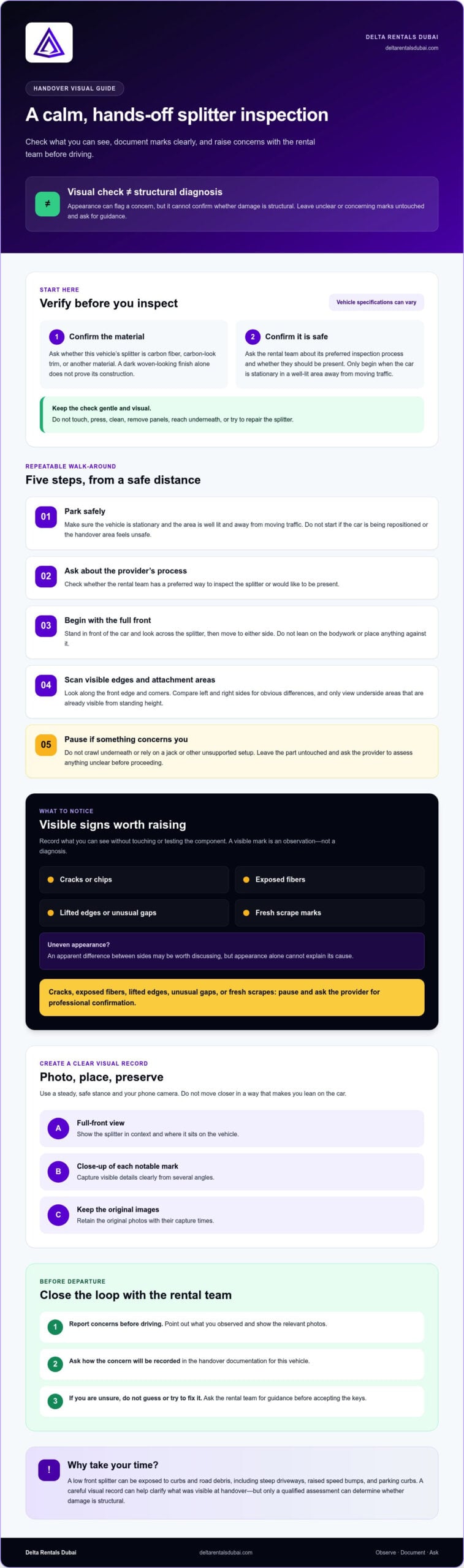
How to Document Splitter Condition Before Driving
Good documentation makes a handover discussion clearer. Before departure, capture the splitter’s visible condition and show any concerns to the rental representative. Keep the record factual: photos can help identify existing marks, but they don’t determine their cause or severity.
What should your inspection photos show?
Start with a wide image of the vehicle’s front so the splitter can be identified in context. Then photograph both corners and any underside visible from a safe standing position. For each notable mark, take a close-up and a second image that shows its location on the component. If you may need to compare conditions later, repeat the same angles consistently.
Keep the original files with their capture times. Don’t crop, filter, or annotate the only copies. If you need to mark a location for discussion, make a separate copy and preserve the originals unchanged.
How should you report a concern?
Show the images to the representative before driving and describe what you see without assigning blame or diagnosing damage. For example, “There’s a light-colored mark on the left corner” is clearer and more neutral than calling it a crack if you’re unsure. Ask what happens next and how the observation will be added to the vehicle’s handover record.
If the mark is unclear or the provider hasn’t reviewed it yet, pause the handover discussion until you understand the next step. Don’t assume a photo alone records the concern in the provider’s process. Confirm that directly with the representative.
- Photograph the full front, then both corners and visible underside.
- Capture each mark close up and in context.
- Retain original, time-stamped images.
- Show the photos and ask how concerns will be recorded.
For model-specific questions, including a Porsche 911 GT3 RS rental, ask the team to confirm the selected vehicle’s actual splitter material and visible specification. Don’t infer those details from the model name. Ask the rental team about the vehicle specification before confirming your choice.
A Confident Supercar Handover Starts with Clear Questions
A composed handover follows a simple sequence: observe the splitter, photograph what you see, report any marks, and wait for guidance if something concerns you. This keeps the conversation focused on visible facts rather than assumptions. A quick check can help you raise a question, but it can’t confirm the component’s material or structural condition.
Specifications can differ between models and individual vehicles. Don’t assume a particular supercar has a carbon-fiber splitter because of its make, model, or appearance. Confirm the selected vehicle’s actual component and ask how existing marks are recorded before you accept the keys.
What should you confirm with the rental provider?
Keep your questions concise and specific. For example:
- “Is this component confirmed carbon fiber, carbon-look trim, or another material?”
- “Can you review this visible mark with me?”
- “How will an existing mark be noted in the handover record?”
- “Who should I contact if I have a concern before driving?”
Ask which inspection and documentation process applies to the specific vehicle. Don’t assume the same procedure or component specification applies to every rental. You can browse the Delta Rentals Dubai vehicle selection and raise vehicle-specific questions with the rental team before confirming your plans.
How can you make the next step straightforward?
Have your preferred vehicle and intended rental dates ready when you get in touch. Share your splitter questions early, especially if you want to verify the material, clarify a visible mark, or understand how the handover record works. That gives the team a clear starting point without relying on guesses about the car’s specification or current availability.
If a concern appears during handover, show the representative the relevant photo, describe the location, and ask what to do next. Wait for their guidance before driving if the issue remains unclear. Message the rental team with your vehicle and handover questions to clarify details before making plans.
Make Your Handover Clear Before You Drive
A confident rental handover starts with a calm visual check. Look for visible concerns without touching or testing the splitter, photograph what you see, and describe marks clearly to the representative. Photos document appearance, but they can’t confirm whether a component is structurally sound. If anything is unclear, pause and ask for guidance before accepting the keys.
When inspecting carbon fiber splitters before hiring a supercar in dubai, confirm the selected vehicle’s actual splitter material and ask how existing marks will be recorded. Specifications can vary, so don’t assume every vehicle has the same components. Delta Rentals Dubai offers a premium fleet of high-performance and luxury vehicles, including Porsche 911 GT3 RS rental. Confirm the specific vehicle’s availability and features before making plans.
Have a preferred vehicle in mind? Ask about your preferred supercar and its handover details.
Frequently Asked Questions
How do you inspect a carbon-fiber splitter before renting a supercar?
Inspect it visually in good light, from a safe position, without leaning on or touching the vehicle. Check the front edge and both corners for cracks, exposed fibers, lifted edges, or scrape marks, then photograph anything you notice. When inspecting carbon fiber splitters before hiring a supercar in dubai, remember that a visual check records visible concerns but isn’t a structural assessment. Report anything unclear to the rental provider and wait for their guidance before driving.
What signs of damage should I look for on a carbon-fiber splitter?
Look for visible cracks, chips, exposed fibers, lifted sections, unusual gaps, sharp fragments, and fresh scrape marks. A single mark doesn’t confirm structural damage, and the absence of obvious marks doesn’t certify that the component is sound. Document what you can see, including its location, and ask the rental provider to assess anything unclear or concerning before you accept the vehicle. Don’t determine the cause or severity from appearance alone.
Can I touch or press a splitter to check whether it is damaged?
No. Don’t press, flex, pull, or lean on the splitter. These actions could risk further damage and aren’t reliable diagnostic tests. Keep the inspection visual, using safe viewing angles and good light rather than reaching beneath the vehicle. If an edge appears loose or you can see a crack, stop the inspection and ask the rental provider to assess it before driving. Leave any testing or closer examination to the provider or a qualified professional.
How should I photograph a splitter mark at vehicle handover?
Take an unedited wide photo that shows the splitter in context on the vehicle, then capture clear close-ups from more than one angle. Keep the original image files and show them to the rental representative. Describe the mark by location and appearance without guessing at its cause or severity. Ask how the observation will be recorded and follow the provider’s handover process. Photos are useful documentation, but don’t assume they alone settle a concern.
Can cleaning cause micro-abrasions on a carbon-fiber splitter?
It can, depending on the surface finish and condition. Abrasive materials, dry rubbing, unsuitable chemicals, or polishing may mark a protective coating. Inspect and photograph the splitter before cleaning so you have a record of its initial appearance. Don’t assume a particular product or technique is safe for every material or finish. If cleaning is necessary, ask the vehicle provider for approved care instructions before applying anything to the component.
Are all supercar splitters made from carbon fiber?
No. Splitter materials can vary by model, trim, and individual vehicle. A component may be carbon fiber, carbon-look trim, or another material, and appearance alone can’t confirm its construction. Ask the rental provider to verify the selected vehicle’s specification before making assumptions about material-specific care or describing a visible mark as damage to carbon fiber. Don’t rely on the model name or a patterned surface as proof of the component’s material.
What should I do if I notice a crack before driving a rental supercar?
Pause the handover and don’t attempt a repair or treat the concern as resolved. Photograph the area, describe what you can see, and show the images to the rental representative. Ask them to assess the crack and confirm how the concern will be recorded through the agreed process. Don’t decide for yourself whether the vehicle is safe to drive. Wait for the provider’s guidance before proceeding with the handover or setting off.