
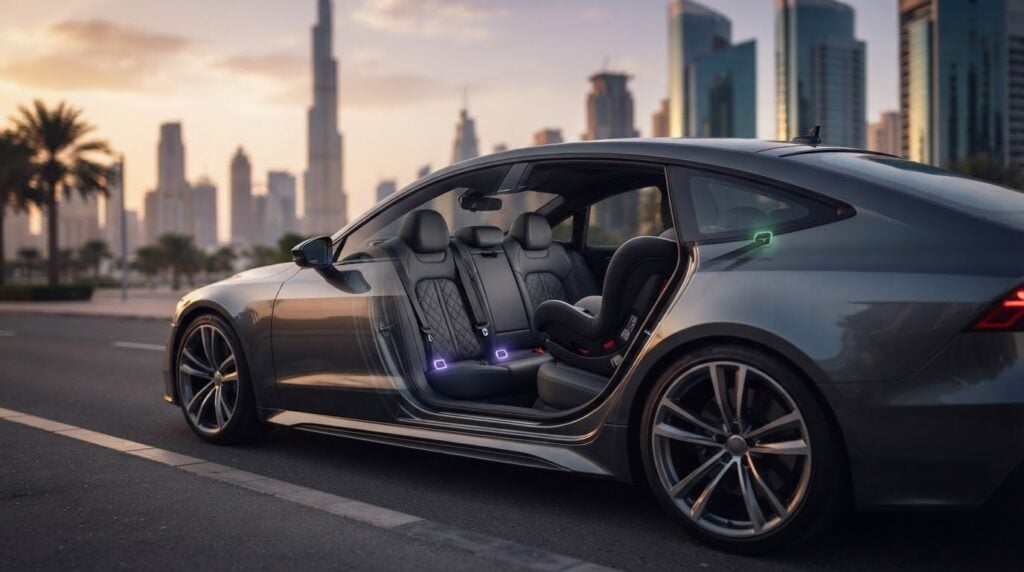
What if the best child restraint anchor points in high performance luxury saloons aren’t the easiest ones to spot? Choosing a premium car is only part of the decision. ISOFIX lower anchors, a top tether and a seat belt each serve different roles, while sculpted rear seats and limited space can affect how a particular child seat fits.
It’s sensible to get clear answers before setting off, especially when booking a vehicle for family travel in the UAE. This guide explains how to identify and compare anchor points, check the vehicle and child-seat instructions, and verify that the restraint suits your child and the rear seat. It also covers what to ask a rental provider before reserving.
Start with the exact vehicle model and model year, not just the badge. Rear-seat layouts and anchor details can vary, so confirm them with the provider before travel. Delta Rentals Dubai can answer vehicle-specific rental enquiries. Check child-seat availability and compatibility separately for the vehicle you’re considering.
Key Takeaways
- Check the exact vehicle’s owner’s manual for approved seating positions before choosing where to install a restraint.
- Compare ISOFIX, top-tether and seat-belt installation instructions in both the vehicle and child-seat manuals.
- Check that the restraint fits the rear seat correctly. Anchor points alone don’t confirm a suitable fit.
- Follow the manuals for installation, then check that the restraint is secure and its attachments are routed correctly.
- Use the best child restraint anchor points in high performance luxury saloons as a starting point, then confirm the exact model, year and seating configuration with the rental provider.
What the best child restraint anchor points in high performance luxury saloons mean
Anchor points are designated places in a vehicle for attaching a compatible child-restraint system. Their presence is a starting point, not proof that a particular seat is suitable, fits the seating position or has been installed correctly. The vehicle manual and child-seat manual need to agree on the approved installation method and position.
ISOFIX uses connectors on a compatible child seat to attach to corresponding lower anchors in the vehicle. A top tether is a separate strap that connects to a designated tether anchor when the child-seat instructions require it. A vehicle seat belt can also be an approved installation method, depending on the restraint and seating position. ISOFIX is an international standard for attachment points. Don’t assume that a familiar system name means every seat and car combination is compatible.
The best child restraint anchor points in high performance luxury saloons are the ones confirmed for the exact vehicle, seating position and restraint. A luxury badge alone tells you little about anchor locations or fit. Equipment and rear-seat layouts can also differ between model years and versions. Check the specific vehicle manual rather than relying on a general model description or a visual inspection.
What ISOFIX and top tether anchors do
ISOFIX connectors attach to the vehicle’s designated lower anchors. If the restraint requires a top tether, connect its strap to the correct tether anchor, not an unrelated hook or cargo point. Use the vehicle manual to locate the attachments, then follow the child-seat manual for the approved method and seating position. Some seats use a different approved method, so check the instructions before installation.
Why saloon design can affect child-seat fit
Check how the restraint sits against the rear seat, not just whether its connectors attach. Deep bolsters, sculpted cushions, head restraints and available legroom can affect positioning or access to attachment points. These details vary by model and year, including among performance saloons, so don’t assume that a fit in one vehicle applies to another.
Where possible, try the specific child seat in the intended seating position. Check that it rests as the manufacturer instructs, that attachments are accessible and correctly routed, and that the restraint can be secured without interference from the seat shape or nearby seats. A seat may connect to the anchors and still need a hands-on fit check. If anything is unclear, pause and consult both manuals or seek qualified installation guidance before travel.
How to identify child-restraint anchor points in the exact saloon
Follow a consistent sequence: identify the exact vehicle, check its manual, confirm the approved seating position, then test the restraint according to both manuals. This helps you avoid relying on a badge, a similar-looking model or an anchor that happens to be within reach.
- Identify the vehicle. Confirm its make, model, model year and body configuration. If you’re arranging a rental, ask which exact vehicle is being offered rather than assuming all versions share the same rear-seat setup.
- Read the vehicle manual. Find the child-restraint or safety section. Note which seating positions are approved and the installation methods specified for each.
- Check the restraint manual. Confirm the child seat’s permitted installation methods and seating-position requirements. Both manuals need to support the combination.
- Inspect, then test fit. Locate the indicated attachment points and check whether the restraint sits as instructed in the chosen position.
The National Highway Traffic Safety Administration offers a useful visual guide on how to identify anchor points and related restraint components. Use it to understand the terminology, not as a substitute for the manual for your specific vehicle. It’s U.S. guidance, so check current official UAE information separately for local child-restraint requirements.
Where to verify anchor locations and approved seating positions
Start with the vehicle’s own manual, matching it to the exact model year and body configuration. Look for diagrams and instructions that specify approved rear seating positions and attachment methods. Don’t transfer information from another trim, year or manufacturer. Upholstery seams, small labels and visible fittings may help direct your search, but they don’t prove that an anchor is present or approved for your restraint. Verify each location against the manual.
What to inspect before attempting installation
At the intended position, check that you can reach and connect the required fittings, route any top tether as directed, and access the seat-belt buckle if using a belt installation. Look for seat contours, bolsters, head restraints or other obstructions that could stop the child seat sitting correctly. Don’t force a connector or improvise a tether route.
If the manual is missing, the instructions conflict, or you can’t confidently identify the attachment points, stop and seek qualified guidance before travelling. For a rental enquiry, share the vehicle model and model year with Delta Rentals Dubai’s team and ask for vehicle-specific details. Confirm fit and child-seat availability directly. Don’t assume either from the vehicle description.
How to compare anchor setups and confirm a child seat will fit
Compare the child restraint’s instructions with the vehicle’s approved seating positions before deciding how to install it. A seat may allow ISOFIX, a seat belt or both, but that doesn’t mean every method is approved in every vehicle position. Check your child’s height and weight against the restraint manufacturer’s current limits, too. The best child restraint anchor points in high performance luxury saloons are those that support an approved method and allow the specific restraint to fit as instructed.
| Attachment method | Vehicle confirmation needed | Restraint manual check | Fit outcome |
|---|---|---|---|
| ISOFIX | Confirm lower anchors are approved for the intended position. | Check the seat permits ISOFIX installation and whether a top tether or other attachment is required. | Connectors attach as directed, and the restraint sits securely in the approved position. |
| Top tether | Locate the designated tether anchor and confirm its approved use. | Check whether the restraint requires a tether and how its strap must be routed. | The strap reaches and connects without using an unrelated hook or improvised route. |
| Seat belt | Confirm the position permits this installation method and the belt can be used as instructed. | Follow the specified belt path and any locking or tightening instructions. | The belt secures the restraint as directed, without buckle or seat interference. |
ISOFIX versus seat-belt installation
Neither method is universally best. The restraint’s approval and instructions determine which methods are permitted, while the vehicle manual confirms which methods work in each position. Compare like with like: the same child seat may have different installation instructions depending on the method. Don’t choose ISOFIX simply because anchors are present, or switch to a seat belt if the restraint manual doesn’t approve it.
Fit checks for sporty rear seats and bucket-style contours
After choosing an approved method, check that the restraint sits level and contacts the vehicle seat as its manual requires. Sporty bolsters or sculpted cushions may create gaps or affect positioning. Don’t fill gaps with unapproved padding, alter the upholstery or force the seat into place. If you’re unsure whether the restraint fits, ask a qualified child-passenger-safety professional to assess the combination.
Finish by checking that every attachment is correctly routed, the restraint is secure, and the child’s harness or belt can be adjusted as directed. Review common installation mistakes from the Insurance Institute for Highway Safety, including the importance of using a top tether when the restraint instructions require one. If anything remains uncertain, verify the fit before travel rather than relying on a visual match alone.
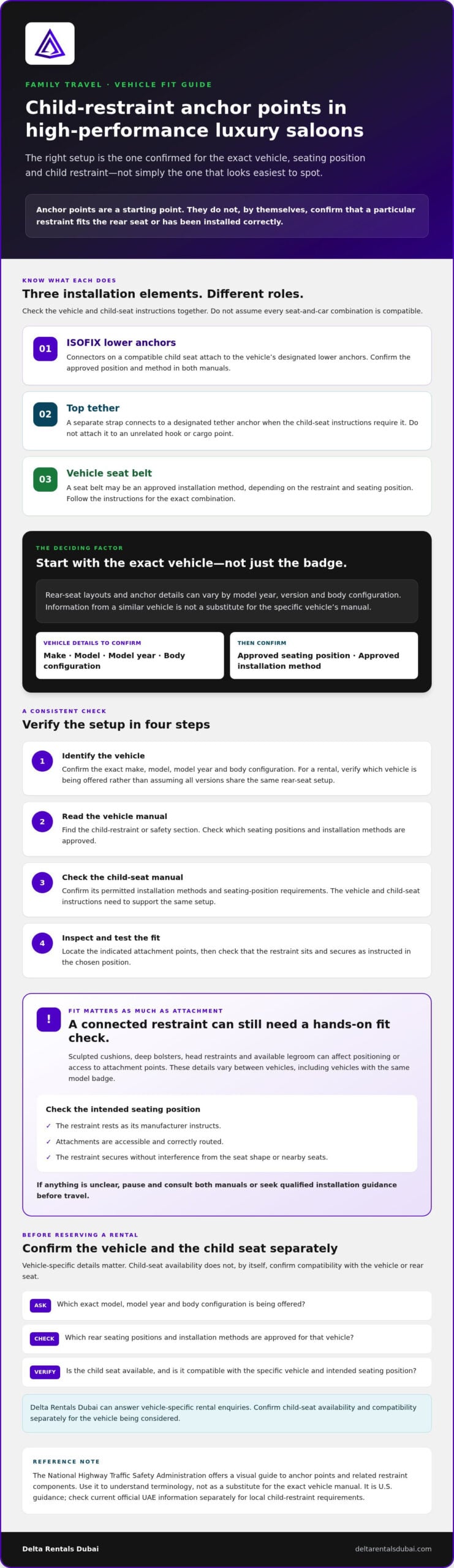
How to install and check a child restraint without guessing
A secure installation starts with the instructions, not trial and error. Use both the vehicle manual and the child-restraint manual, following the approved seating-position guidance in each. The manuals should confirm that the restraint and installation method are suitable for that exact position. The best child restraint anchor points in high performance luxury saloons are useful only when the restraint is attached and fitted as its manufacturer directs.
A manual-led installation check
Before fitting, check that the restraint is appropriate for your child’s current height and weight and remains within the manufacturer’s stated limits. Then follow the instructions for the chosen installation method, whether it uses ISOFIX connectors, a top tether, a seat belt or a combination specified by the manufacturer. Don’t substitute a different route or attachment because it seems easier.
- Secure the restraint: Use only the approved seating position and installation method listed in both manuals.
- Route attachments correctly: Follow the specified connector, tether or belt path. Check that each required attachment is connected to its designated point.
- Check the installed seat: Confirm its position and stability using the restraint manufacturer’s directions. Don’t apply a generic movement limit or technique that isn’t in the instructions.
- Recheck the child’s harness: Adjust its position and fit according to the restraint manual, then review the setup before travel.
Take your time. An attachment that looks connected may still be routed incorrectly. A well-fitted restraint should meet the manufacturer’s instructions for installation and child positioning.
When to pause and get expert help
Stop if the vehicle manual doesn’t approve the intended position or method, if the two manuals appear to conflict, or if the restraint won’t sit securely as instructed. Pause as well if connectors are difficult to identify, the tether route is unclear, or the seat-belt path or buckle position prevents the specified fit. Seek help from a qualified child-passenger-safety professional rather than improvising.
Never modify the vehicle seat, anchor points or restraint components to force a fit. For a rental, confirm the exact model and model year with the provider, then check the vehicle manual and child-seat compatibility yourself. Ask Delta Rentals Dubai about a specific vehicle, including its rear-seat configuration and anchor-point details. Verify child-seat availability and fit separately before making travel plans.
What to confirm before renting a high-performance saloon
A vehicle category alone can’t confirm whether your child restraint will fit. Before booking, ask which exact model, model year and rear-seat configuration will be supplied. Then verify the approved seating position and anchor details against that vehicle’s manual and your restraint manufacturer’s instructions. The best child restraint anchor points in high performance luxury saloons depend on the vehicle, position and restraint, not simply its luxury badge.
Questions to ask the rental provider
Keep your questions specific. A general answer about a model range may not describe the particular vehicle you’ll receive. Ask the provider:
- Which exact vehicle model and model year is being offered, and what is its rear-seat configuration?
- Can you confirm the anchor points available at the intended seating position, or direct me to the manual for that specific vehicle?
- Are child restraints available? If so, what information can you provide about the restraint, and how can I check its suitability for my child?
- Can I confirm the vehicle’s details before finalising the reservation?
Treat availability and compatibility as separate checks. A provider’s confirmation that a child restraint may be available doesn’t establish that it suits your child or fits the vehicle. Ask for details you can compare with your own seat’s instructions, including whether the vehicle position supports the required ISOFIX, tether or seat-belt method. Delta Rentals Dubai offers customer assistance through its rental enquiry channel. Ask the team about the specific vehicle, and verify child-seat availability and fit separately.
A calm, safety-first next step
Before you reserve, run through this checklist:
- Vehicle: Confirm the exact model, model year and rear-seat layout.
- Position: Identify the intended seating position and verify its approved attachments in the vehicle manual.
- Restraint: Match the installation method to the restraint manual and confirm the seat suits your child’s current height and weight.
- Local guidance: Check current official UAE child-restraint requirements before departure.
Review Delta Rentals Dubai’s vehicle categories as a starting point, then ask about the exact vehicle under consideration. For vehicle-specific rental details, message the rental team with your vehicle questions. Confirm the details before booking. When fit and installation matter, rely on the manuals and a proper fit check, not a category name or assumption.
Make your next booking with confidence
The right choice isn’t determined by a luxury badge or anchor points alone. Match the child restraint’s approved installation method to the exact vehicle, seating position and your child’s size, then verify the fit using both manufacturers’ instructions. Before travel in the UAE, check current child-restraint requirements through an official source.
Use the best child restraint anchor points in high performance luxury saloons as a vehicle-specific check, not a general model ranking. Confirm the exact vehicle model, model year and rear-seat layout with the rental provider, and don’t assume a child seat is available or compatible.
Delta Rentals Dubai offers premium and high-performance vehicle rentals. For a vehicle-specific rental enquiry, ask Delta Rentals Dubai to confirm vehicle details for your trip. Contact the team with your vehicle questions before booking, and verify the restraint fit separately.
Frequently Asked Questions
What are child-restraint anchor points in a car?
Child-restraint anchor points are designated vehicle attachment locations for compatible child seats. ISOFIX lower anchors connect to a seat’s matching connectors, while a top tether anchor provides a separate attachment for restraints that require one. Seat-belt installation uses the vehicle’s belt rather than ISOFIX anchors. Check the vehicle and restraint manuals to confirm which method and seating position are approved. An anchor’s presence alone doesn’t prove that a particular seat will fit.
Do all high-performance luxury saloons have ISOFIX?
No. Don’t assume every high-performance luxury saloon has ISOFIX or that it’s available in every rear seating position. Anchor equipment and approved seating positions can vary by model, model year and configuration. Check the owner’s manual for the exact vehicle and look for its child-restraint guidance. If you’re renting, ask which specific vehicle will be supplied and verify its anchor details rather than relying on a general model description.
Can I use a child seat with a top tether in any rear seat?
No. Use a top tether only in a seating position with a designated tether anchor approved for that restraint and installation method. Anchor locations can vary, so consult the vehicle manual and follow the child-seat instructions for tether routing. Don’t attach the tether to a cargo hook or another convenient-looking fitting unless the vehicle manufacturer identifies it as the correct anchor. If you can’t confirm the location, pause before installing.
How do I know if a child seat fits a luxury saloon?
Check both manuals for approval of the child seat, installation method and intended seating position. Then check whether the restraint sits as directed, its attachments or belt can be routed correctly, and the seat shape doesn’t interfere with installation. The best child restraint anchor points in high performance luxury saloons are the ones verified for your exact vehicle, restraint and child. If the fit remains uncertain, seek qualified installation guidance.
Are ISOFIX anchor points safer than a seat belt?
Not automatically. The correct choice depends on the child restraint’s approved installation methods and the vehicle’s instructions for that seating position. A permitted seat-belt installation may be appropriate, just as ISOFIX may be suitable where both manuals allow it. Don’t choose either method on assumption alone. Follow the stated routing and attachment steps, then check the installed restraint as its manufacturer directs.
Can I install a child restraint in a rental saloon?
Potentially, if the exact rental vehicle and seating position support an installation method approved for your restraint. Before booking, confirm the model, model year and rear-seat configuration, then check the vehicle manual and child-seat instructions together. Don’t assume the rental provider supplies a child seat or that one will fit. For travel in the UAE, check current child-restraint requirements through official guidance before departure.
What should I ask before renting a saloon with a child seat?
Ask which exact model and model year will be supplied, what rear-seat configuration it has, and which anchor points or installation methods are approved at your intended seating position. Ask separately whether a child restraint is available, then verify its suitability for your child using its manufacturer’s instructions. Delta Rentals Dubai offers premium and high-performance vehicle rentals. Confirm child-seat availability and vehicle-specific compatibility with the rental provider rather than assuming either.