

A hotter carbon-ceramic rotor isn’t automatically a better-stopping rotor. That’s why carbon ceramic brake rotor temperature requirements for optimal stopping power can’t be reduced to one universal number: the right operating range depends on the specific brake system, pads, vehicle and driving conditions. A temperature figure shared without that context may say little about how your brakes will perform on the road.
It’s reasonable to expect these performance brakes to need heat, especially when you’ve seen high figures associated with track use. But street driving and repeated hard braking create very different conditions, and visible heat or a single temperature reading isn’t a reliable measure of stopping power. This guide explains how braking feel can change as the system warms, why manufacturer specifications matter, and how street use differs from track use. You’ll also learn why carbon-ceramic road brakes aren’t the same as racing carbon-carbon systems, and when professional inspection is a safer choice than guesswork.
Key Takeaways
- Learn why dependable stopping depends on the complete brake system, not reaching a maximum rotor temperature.
- Compare cold starts, everyday driving, repeated hard stops, and track sessions to understand what changing brake feel may indicate.
- Use the vehicle manual and brake-system documentation before interpreting temperature figures or deciding what they mean for your car.
- Check the vehicle model, pad compound, test conditions, and sensor location behind any claim about carbon ceramic brake rotor temperature requirements for optimal stopping power.
- Confirm your vehicle specification, pad setup, intended use, and service condition before relying on an operating-temperature recommendation.
What temperature do carbon-ceramic brake rotors need for effective stopping?
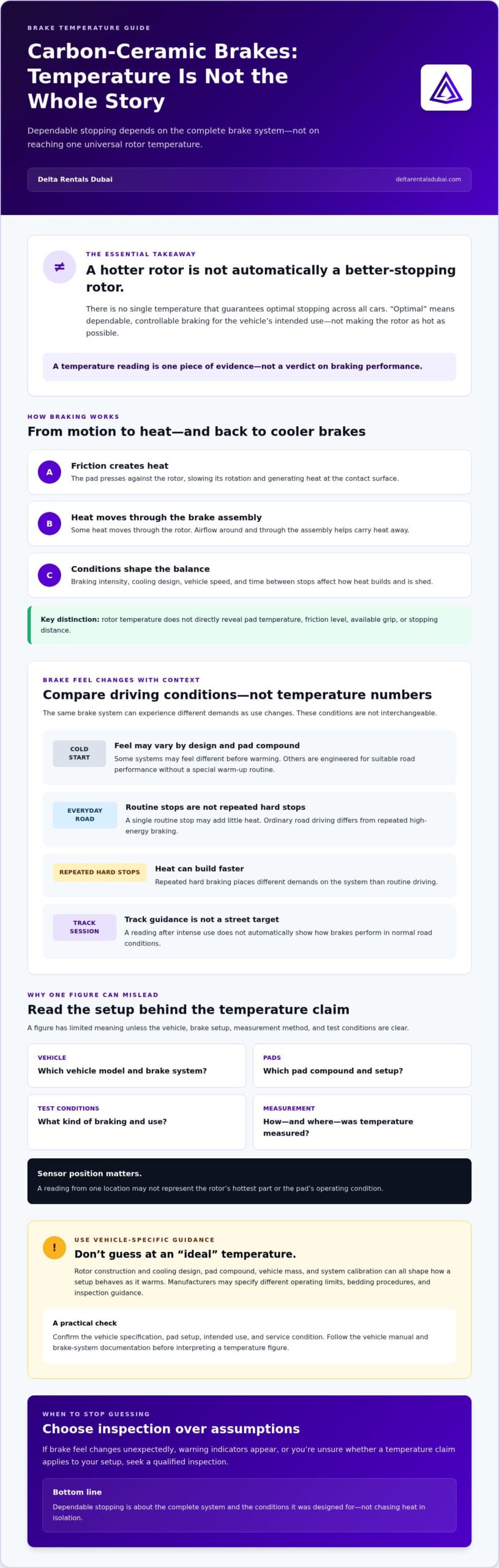
No single rotor temperature guarantees optimal stopping across all cars. The right operating behavior depends on the brake system as a whole, and “optimal” means dependable, controllable stopping for the vehicle’s intended use, not getting the rotor as hot as possible. A hot reading alone doesn’t prove that the brakes are working effectively.
Braking turns motion into heat through friction between the pad and rotor. But rotor temperature is only one part of the picture. The pad has its own temperature and friction characteristics, while the driver’s pedal input, vehicle speed, tyres, and brake calibration all affect the measured stopping outcome. A rotor reading, therefore, isn’t a direct measurement of stopping distance or available grip.
Why there is no universal carbon-ceramic brake temperature
Rotor construction and cooling design, pad compound, vehicle mass, and system calibration can all shape how a particular setup behaves as it warms. Manufacturers may also specify different operating limits, bedding procedures, and inspection guidance. General descriptions of carbon-ceramic brakes offer useful material context, but they can’t establish the approved temperature window for a specific vehicle.
A temperature figure means little without the vehicle, brake setup, measurement method, and test conditions behind it. Before treating a number as a target, look for vehicle-specific manufacturer documentation or validated testing that explains how and where the temperature was measured. A reading from one sensor position may not represent the hottest part of the rotor or the pad’s operating condition.
Cold brakes, warmed brakes, and everyday stopping
On a cold start, pedal feel and friction response can vary with the brake design and pad compound. Some systems may feel different before warming, while others are engineered to provide suitable road performance without a special warm-up routine. Don’t assume every carbon-ceramic brake needs to reach a particular temperature before it can stop effectively.
Ordinary road driving is also different from repeated high-energy stops or a track session. A single routine stop may add little heat; repeated hard braking can build heat faster and place different demands on the system. Track guidance should not be treated as a street-driving target, and a temperature recorded after intense use doesn’t automatically indicate how the brakes perform in normal conditions.
For the right interpretation, confirm the vehicle specification and follow its manual and brake-system instructions. If the feel changes unexpectedly, warning indicators appear, or you’re unsure whether a temperature claim applies to your setup, seek a qualified inspection rather than trying to diagnose performance by rotor heat alone.
How carbon-ceramic brakes respond as temperature rises
Braking converts vehicle motion into heat at the pad-and-rotor contact surface. The pad’s friction material presses against the rotor, slowing its rotation and transferring heat into the disc. Some heat moves through the rotor; airflow around and through the brake assembly helps carry it away. The balance between heat generated and heat shed changes with braking intensity, cooling design, vehicle speed, and the time between stops.
“Carbon-ceramic” doesn’t mean a disc made from generic ceramic alone. Many road-car systems use carbon-fiber-reinforced silicon carbide, a composite whose specific construction and behavior depend on the manufacturer. J.D. Power’s overview of these high-performance brake components provides accessible context on their composition and trade-offs. For exact material limits or operating guidance, use documentation for the vehicle and brake system rather than assuming every design behaves alike.
What happens at the pad-and-rotor contact surface?
The friction material is engineered to create the force that slows the vehicle while tolerating heat and wear within its intended conditions. Its formulation matters: a replacement pad or a different compound can alter friction response, temperature behavior, and pedal feel, even if the rotor is unchanged. The rotor’s surface reading can’t reveal all of this. It doesn’t directly tell you the pad’s temperature, the friction level at that moment, or the vehicle’s stopping distance.
That’s why a temperature reading should be treated as one piece of evidence, not a verdict on braking performance. Sensor position, measurement method, brake setup, and test conditions all affect what the figure represents.
Why repeated braking changes the temperature picture
During repeated deceleration, each stop adds heat. If the next stop comes before the rotor, pads, and surrounding components can shed enough of it, temperatures may build across the sequence. A longer interval or airflow during travel can allow more cooling, though the result depends on the system and conditions. Repeated hard braking therefore creates a different heat pattern from routine road use.
Brake fade describes a reduction in braking response under demanding conditions, but it isn’t a temperature reading or a diagnosis by itself. Friction changes at the pad can be one factor; other brake-system issues may also affect response. Don’t assume the rotor material prevents fade or that heat alone explains a change in pedal feel. Braking conditions create the heat, cooling determines how much remains, and the complete system shapes the response. Follow the vehicle maker’s track and inspection guidance, and seek qualified assessment if braking feel changes unexpectedly.
If you’re considering a performance-car rental, ask about the exact vehicle and its equipment rather than assuming a particular brake setup. Enquire about vehicle details.
Cold, road, and track braking: compare conditions instead of temperature numbers
The same brake system can experience very different heat loads depending on how and where it’s used. A cold start, routine commute, sequence of hard stops, and track session aren’t interchangeable test conditions. Compare the situation and the brake response, not an isolated rotor temperature.
| Driving condition | Likely heat pattern | What to observe |
|---|---|---|
| Cold start | The brakes begin near ambient temperature; initial applications start adding heat. | Notice whether pedal feel and response match the vehicle manual’s normal-use guidance. |
| Ordinary driving | Braking varies with traffic, speed, and how often the brakes are used, with opportunities for cooling between stops. | Look for consistent, predictable response rather than a target temperature. |
| Repeated hard stops | Heat can accumulate if braking events occur faster than the system can shed it. | Pay attention to changes in pedal feel or braking response, and follow the vehicle’s warnings. |
| Track sessions | Repeated high-energy braking can create sustained heat, while speed, airflow, setup, and session pace affect cooling. | Use the manufacturer’s track guidance and inspect the system as directed; don’t transfer a track reading to street driving. |
What changes between a cold start and repeated hard stops?
Some drivers may notice a different feel on the first brake applications, but there’s no universal cold-brake penalty for every carbon-ceramic setup. Pad compound and system design matter. One emergency stop also isn’t the same thermal test as several hard stops in succession: the latter can leave less time for heat to dissipate between applications. Check the vehicle manual for normal-use expectations, warnings, and any approved bedding or operating instructions. Don’t attempt to warm brakes on public roads.
Why track temperatures cannot be treated as street targets
Track use can involve repeated high-energy braking and operating conditions unlike everyday road use. Published readings may also differ because of pad choice, vehicle setup, session conditions, sensor location, and measurement method. Without those details, a figure can’t establish a suitable target for another car. The carbon ceramic brake rotor temperature requirements for optimal stopping power must be interpreted in the context of the specific system, not borrowed from a track report.
Stopping also depends on factors beyond the brakes, including tyres, road surface, traffic, vehicle condition, and driver behavior. Keep to legal, safe road use and adapt to the conditions; don’t test braking limits in traffic. For a performance-car example, a Porsche 911 GT3 RS is available to rent through Delta Rentals Dubai, but its exact model year and brake equipment should be confirmed rather than assumed. Follow that vehicle’s own documentation for applicable operating guidance.
How to assess carbon-ceramic brake temperature claims safely
A temperature figure is useful only if you know what it describes and whether it applies to your brake setup. Before using a number to judge performance, start with the vehicle manual and brake-system documentation. Then check the details behind the measurement. A rotor reading from one test may not be comparable with a pad-area reading from another, even if both are reported in degrees.
A four-step check before trusting a temperature figure
- 1. Identify the vehicle and brake configuration. Confirm the model year, brake specification, and installed pad compound. Similar-looking vehicles can have different equipment or setups.
- 2. Find the measurement location. Check whether the figure represents the rotor surface, another rotor location, the pad area, or a different component. Don’t treat these measurements as interchangeable.
- 3. Review the test conditions. Look for the type and intensity of braking, the time between stops, and whether the vehicle was on public roads or a track. These conditions shape the heat generated and the cooling available.
- 4. Check the method and approved guidance. Note the sensor or instrument used, where it was positioned, and when the reading was taken. Compare the claim with the manufacturer’s limits and instructions for that specific system.
If a source leaves out the vehicle, pad, test conditions, or sensor location, treat its figure as background information, not a target. This context is essential for interpreting carbon ceramic brake rotor temperature requirements for optimal stopping power without mistaking one measurement for a guarantee of braking performance.
When to stop driving and seek professional advice
Temperature and appearance alone can’t confirm rotor condition. Colour may change with use, but it isn’t a reliable stand-alone diagnosis. Don’t touch a hot brake assembly or attempt to assess structural damage by eye alone. Follow the vehicle maker’s inspection and service instructions, and have a qualified professional assess concerns.
- Brake warning indicators appear.
- You notice unusual noise, vibration, or a change in pedal feel.
- Braking response feels reduced or less predictable than usual.
- You see visible damage or are uncertain about the system’s condition.
If braking behavior changes, prioritize safety: avoid continued driving when it doesn’t feel safe, and arrange appropriate professional assistance. For questions about vehicle details before choosing a performance car, ask about available performance cars.
Choose vehicle-specific guidance before chasing an “ideal” brake temperature
The useful target isn’t a universal rotor number. It’s the operating guidance approved for the exact brake system, together with a clear understanding of the car’s condition and intended use. That keeps a track figure, another vehicle’s setup, or a single sensor reading from becoming an unsafe rule of thumb.
What to confirm in manufacturer and service documentation
Start with the owner’s manual and brake-system documentation. Check the cautions, warning indicators, inspection requirements, and any separate guidance for demanding use. Then confirm the exact model year, brake option, and installed pad setup. These details matter because a different configuration can have different instructions. Don’t apply another car’s temperature figures or track setup as a recommendation for yours.
- Vehicle: Verify the model year and factory brake specification.
- Components: Confirm the fitted pads and any documented changes to the system.
- Use case: Distinguish normal road guidance from any manufacturer-approved track instructions.
- Condition: Follow the stated inspection schedule and address warning indicators or unexpected changes in performance.
Use manufacturer information to interpret carbon ceramic brake rotor temperature requirements for optimal stopping power. If documentation doesn’t give a temperature target, don’t create one from an unrelated source. Ask a qualified professional to assess questions about a specific vehicle or setup.
Explore a performance car with the right expectations
The Porsche 911 GT3 RS is a relevant performance-car example, but the model name alone doesn’t confirm the equipment on an individual vehicle. Model year and brake specification must be checked before describing it as fitted with carbon-ceramic brakes. For general vehicle information, see the Porsche 911 GT3 RS rental offering, and verify the exact vehicle details rather than assuming its configuration.
Keep expectations grounded in the vehicle’s approved guidance and the brakes’ actual service condition. A performance-car badge doesn’t replace the manual, and a temperature claim from another setup isn’t proof of how a particular car will stop. If you’re interested in the listed Porsche 911 GT3 RS rental, you can enquire about the vehicle and its details. Availability and equipment should be confirmed directly.
Choose the right guidance for your next drive
The key to carbon ceramic brake rotor temperature requirements for optimal stopping power is context, not a universal target. A temperature figure only helps when it matches the vehicle, brake setup, measurement method, and driving conditions. For dependable guidance, start with the manufacturer’s documentation and take changes in braking behavior seriously.
Performance-car details matter, too. Delta Rentals Dubai lists the Porsche 911 GT3 RS for rent, but availability and the exact vehicle’s brake equipment should be confirmed before making assumptions about its specification. Get the details before you drive, then enjoy the experience with clear expectations.
Ask about Porsche 911 GT3 RS rental availability. The right information helps you make a confident choice and enjoy every drive responsibly.
Frequently Asked Questions
What temperature do carbon-ceramic brake rotors need for optimal stopping power?
There’s no single rotor temperature that guarantees optimal stopping across every vehicle. The suitable operating behavior depends on the brake design, pad compound, vehicle, and driving conditions. A temperature reading also doesn’t directly tell you stopping distance or available grip. For carbon ceramic brake rotor temperature requirements for optimal stopping power, use the vehicle manufacturer’s guidance and check that any published figure matches the specific brake setup and measurement method.
Do carbon-ceramic brakes need to warm up before they work?
Not necessarily. Road-going carbon-ceramic systems are designed for use on public roads, but initial pedal feel can vary with the brake design and pad compound. Follow the owner’s manual for normal-use guidance and any specified bedding or operating procedure. Don’t try to heat the brakes with aggressive driving on public roads. If the brakes feel unusually weak or behave differently than expected, stop when safe and seek professional advice.
Can carbon-ceramic brakes overheat during normal driving?
Ordinary driving generally creates a different heat load from repeated hard stops or track use, but conditions and vehicle setup matter. A temperature figure alone can’t establish whether a brake system is overheating. Pay attention to warning indicators, unexpected changes in pedal feel, unusual noise, vibration, or reduced braking confidence. Follow the vehicle’s instructions, and have the system checked if you notice a change rather than diagnosing it from rotor colour.
Are carbon-ceramic brakes better when they are hot?
Not as a universal rule. Brake response depends on the complete system, including the pads, rotor design, vehicle calibration, and operating conditions. Some setups may feel different as they warm, but hotter doesn’t automatically mean more effective stopping. A rotor’s temperature doesn’t independently reveal friction behavior or stopping distance. Use vehicle-specific operating guidance, and don’t pursue heat as a goal during everyday driving.
How can I measure carbon-ceramic brake rotor temperature accurately?
Use a measurement method and location specified by the vehicle or brake-system manufacturer. A reading taken with an infrared instrument may not be directly comparable to one recorded by a sensor, or from another spot on the rotor. Record the driving conditions and timing as well. Don’t touch a hot brake assembly, and don’t treat a single reading as a diagnosis of brake health or stopping performance.
What happens if carbon-ceramic brakes get too hot?
Excessive heat can change brake response and may contribute to fade, wear, or component damage, depending on the system and conditions. There isn’t one universal temperature threshold that identifies a problem for every vehicle. Treat warning lights, abnormal noise, vibration, or reduced braking confidence seriously. Follow the manufacturer’s inspection instructions and arrange professional assessment; don’t rely on rotor colour or a temperature reading alone.
Can I use track brake temperature figures for everyday driving?
No, not as a direct street-driving target. Track readings may come from repeated high-energy braking, a particular pad setup, and a specific sensor location or test method. Those conditions can differ greatly from ordinary road use. Before applying any figure, verify the vehicle, brake configuration, measurement point, and test context. For everyday expectations and warnings, rely on the vehicle manual rather than another car’s track data.