
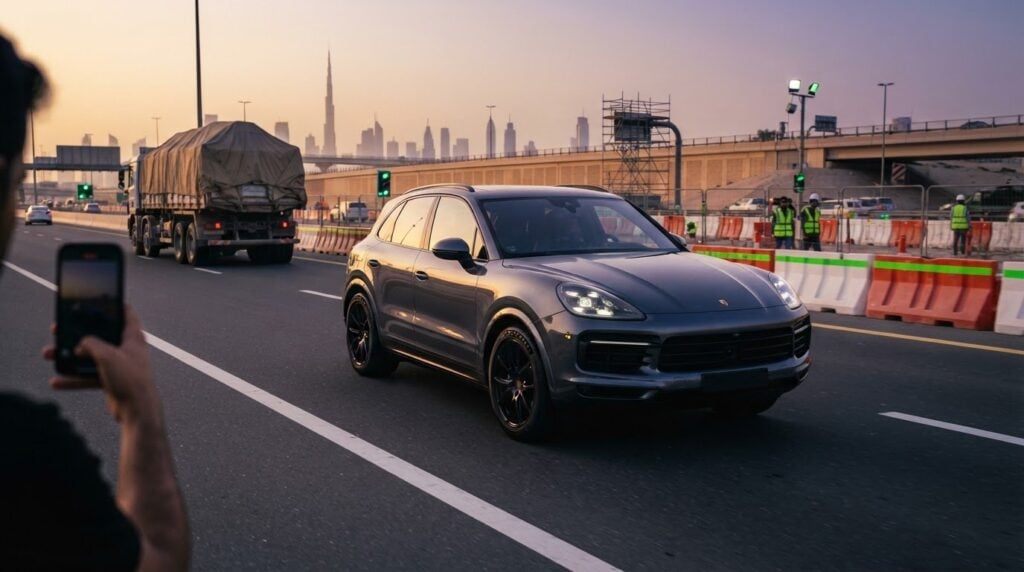
What if the best defence against a paint-chip dispute starts before you turn the key? A few small marks after a construction-heavy drive can raise big questions at return, especially when you’re driving a high-performance rental. Avoiding excessive paint chip disputes after highway construction zones comes down to clear evidence, a shared understanding of the rental terms, and calm, deliberate driving.
It’s reasonable to worry that a minor stone chip could put your security deposit at risk. Rental damage policies can feel unclear, and the line between ordinary wear and chargeable damage isn’t always obvious. A no-deposit option may ease one source of anxiety, but it doesn’t replace a careful inspection or a clear understanding of the agreement.
This guide offers a practical process: what to photograph before departure, how to document new marks, how to compare a chip with the rental terms, and what to do at return. You’ll also learn how to reduce exposure to loose road debris in work zones.
Key Takeaways
- Loose road debris can threaten exposed paint, particularly on low-slung performance cars.
- Make a condition record before driving with a careful inspection, photos, and a steady walkaround video.
- Leave space around construction traffic and don’t pass vehicles carrying loose materials if doing so would be unsafe.
- Check the rental agreement to understand how chips are assessed, and document new marks before returning the car.
- Transparent rental terms and no-deposit options may reduce deposit-related anxiety, but they don’t replace inspection or documentation.
The Physics of Paint Chips: Why Construction Zones are High-Risk
A small stone can leave a visible mark when it’s thrown into a moving car’s path. At highway speed, a tyre can propel loose gravel towards the bumper, hood, windscreen, or wheel arches. Construction areas can add debris sources: unsecured loads may shed material, and milled asphalt can leave loose aggregate near the driving lane. The risk depends on the road and traffic conditions, so treat fresh work zones as a cue to slow down and leave more space.
Surface treatments such as chipseal use loose stone as part of the road surface. Understanding what chipseal is helps explain why a recently treated or disturbed stretch may have aggregate available to be displaced by passing vehicles.
Aerodynamics and Ground Clearance Factors
Low ground clearance leaves less space between the road and a car’s front end. A low hood or front splitter can sit close to the path of kicked-up debris, making the lower front bodywork worth checking carefully. A Porsche 911 GT3 RS rental is a useful example of a low-slung performance car. Its shape and clearance call for extra care on uneven or debris-strewn pavement, not assumptions about a particular panel’s protection.
Wide performance tyres can also pick up and throw small stones. Pay particular attention to the front edge of each wheel arch, where debris from the tyre may strike. Note the condition of these areas during the initial inspection, then check them again if you spot a new mark. That gives you a clearer comparison at return.
Construction Zone Dynamics
Loose material may collect along lane edges, around temporary barriers, or where traffic patterns shift. Debris can appear unpredictably, so don’t make sudden lane changes to avoid a patch. Follow signs, keep a steady line, and leave more room ahead than you would on a clear road. There’s no universal rule that says to triple your following distance. Adjust the gap to your speed, visibility, traffic, and the conditions in front of you.
Sand and fine dust can settle on a high-gloss finish and make marks easier to notice, but dust alone doesn’t prove that paint has chipped. Avoid wiping a dusty panel dry, since grit can scratch the surface. Photograph anything you’re concerned about and ask the rental provider how to document it.
Don’t assume heat automatically makes paint more elastic or more susceptible to chips. Coating condition varies, and a stone impact is different from heat exposure. Focus on what you can control: speed, distance, awareness of the road surface, and clear records. That practical approach supports avoiding excessive paint chip disputes after highway construction zones without overstating what weather or road conditions can prove.
Pre-Drive Inspection: Creating an Irrefutable Evidence Log
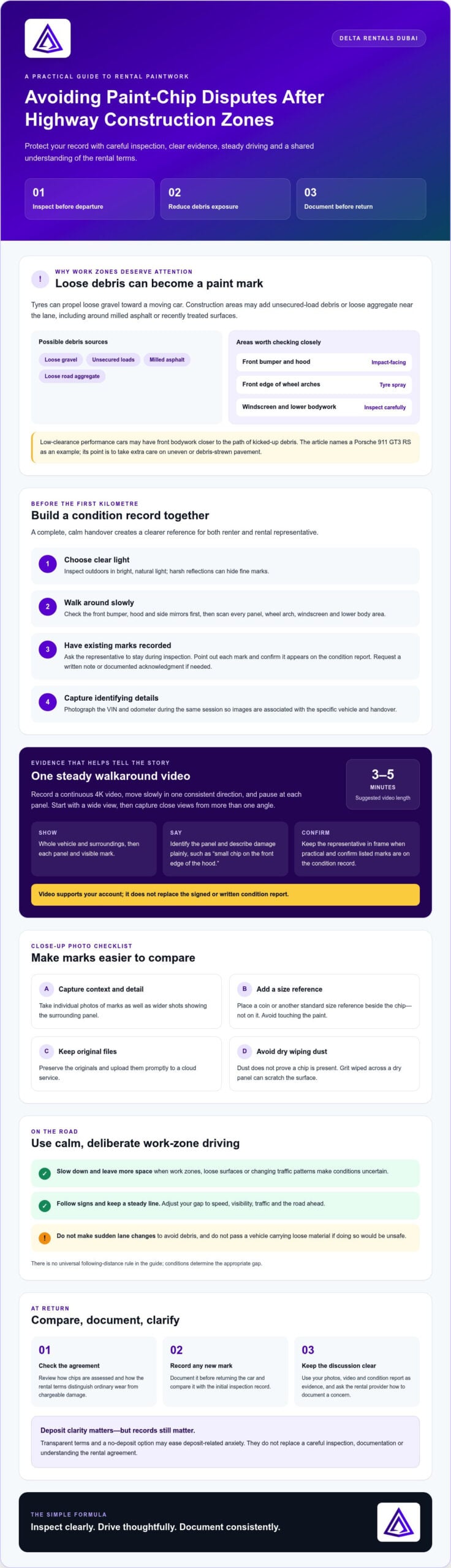
Build your record before the first kilometre. Inspect the car in bright, natural light, preferably outdoors and away from harsh reflections that can hide fine marks. Walk around slowly. Check the front bumper, hood, and side mirrors first, then scan every panel, wheel arch, windscreen, and area of lower bodywork for chips, scratches, cracks, or scuffs.
Don’t rely on a quick glance or a verbal handover. Ask the rental representative to stay with you during the inspection, point out each existing mark, and make sure it’s recorded on the condition report. If a mark isn’t clear on the form, ask for a written note or another documented acknowledgment before you leave. A calm, complete inspection gives both sides a record to refer to.
The 4K Video Walkaround Protocol
Record one continuous 4K video, moving at a slow, steady pace. Aim for a total of three to five minutes: long enough to show detail without rushing past key areas. Start with a wide shot that establishes the whole vehicle and its surroundings, then move around the car in a consistent direction. Pause at each panel and capture close views from more than one angle so the light can reveal a mark’s shape and depth.
Narrate as you go. Identify the panel and describe visible damage plainly, such as “small chip on the front edge of the hood.” Keep the representative in the frame when practical, and ask them to confirm that listed marks are included in the inspection record. The video supports your account; it doesn’t replace the signed or written condition report.
Macro Photography for Existing Damage
Take still photos of individual marks as well as wider panel shots. Place a coin or another standard size reference beside a chip, not on it, and avoid touching the paint. Photograph the VIN and odometer during the same session so the images are associated with the specific vehicle and handover. Preserve the original files, then upload them promptly to a cloud service. The upload record can help show when the files were stored, but it isn’t proof by itself of when or where each image was captured.
- Keep the full walkaround and close-ups together in one clearly named folder.
- Save the rental condition report and any written messages alongside the media.
- Check that images are sharp and that each mark can be matched to a specific panel.
Good documentation can clarify what was present before the drive, though it can’t guarantee a dispute-free return. FindLaw’s overview of liability for road construction damage discusses another jurisdiction, so don’t treat it as legal advice for the UAE. It does illustrate why precise records matter when responsibility is questioned. Before collection, confirm inspection and documentation expectations, including through a rental enquiry with Delta Rentals Dubai. A disciplined evidence log is one of the simplest steps towards avoiding excessive paint chip disputes after highway construction zones.
Tactical Driving: How to Minimise Paint Impact in Work Zones
In a work zone, smooth inputs and extra space matter more than making progress. A four-second following gap is a useful starting point, not a guarantee of protection. Increase it when visibility is poor, traffic is changing speed, or loose material is present. More distance gives you time to respond without abrupt braking, which can create new risks.
Don’t pass a heavy truck or construction vehicle carrying loose material if doing so would put your car beside it or in its path. If you hear debris strike the car, stay composed. Ease off the accelerator and reduce speed smoothly when traffic and posted signs allow. Don’t brake sharply or make a sudden lane change to avoid a small patch of gravel.
Lane Selection Strategies
There’s no dependable rule that the fast lane is the cleanest. Debris shifts with traffic, road work, and wind, so choose a lane based on signs, visibility, and the active work area. Avoid travelling beside grinding or paving equipment where practical, but never cross a solid line or make an unsafe manoeuvre to do so. At merges, leave room for vehicles entering from the shoulder, where grit can be carried into the lane.
In a low-clearance performance car, keep the car centred within your lane when conditions permit. This helps avoid loose material that may collect near barriers or lane edges. It doesn’t eliminate impact risk, but it reduces unnecessary exposure. Follow temporary signs and flagger directions, and prioritise a safe, predictable line over trying to find a supposedly debris-free route.
Post-Construction Zone Assessment
Once you’re clear of the work area, don’t stop on the shoulder just to inspect the paint. Continue to a safe, legal place to park. Then check exposed areas such as the front bumper, hood, and side mirrors, and compare anything concerning with your pre-drive record.
- Note where and when you first noticed a new mark, while the details are fresh.
- Take clear photos without wiping dusty or gritty paint.
- Contact the rental provider promptly if you find significant damage, and follow its reporting instructions.
This measured routine helps you respond to a possible impact without adding risk or confusion. For avoiding excessive paint chip disputes after highway construction zones, pair cautious driving with a prompt, factual report. Don’t guess at the cause or promise that a mark is only cosmetic. Share what you observed and let the rental provider explain the next steps.
Navigating the Return: Wear and Tear vs. Excessive Damage
At return, the rental agreement and documented vehicle condition matter more than a universal definition of acceptable wear. As a general guide, tiny stone specks, faint surface marks that don’t catch a fingernail, and minor scuffs may be treated differently from deeper scratches, dents, or cracked paint. These examples aren’t a guaranteed standard in the UAE or a promise that a particular mark won’t be charged. Check the rental terms and ask the provider to explain how its policy applies.
Don’t rely on the so-called “Credit Card Test” as a fixed rule. There’s no single chip-size threshold established here that guarantees a mark will be ignored. The number of chips, their location, depth, and effect on the finish may all matter under the agreement. Compare your pre-drive video and photos with the car’s current condition, panel by panel. A clear match can help distinguish a pre-existing mark from a new one.
Understand the Rental Terms Before You Return
Review the agreement for specific language about stone chips, road debris, paintwork, damage reporting, and charges. If it mentions a Collision Damage Waiver (CDW), check its exclusions, excess, and claim process. Don’t assume CDW covers every chip or removes every financial responsibility. For a separate look at vehicle categories, read this ultra luxury SUV rental guide.
Handle a Disagreement Professionally
Keep the return calm and factual. If staff identify damage, ask them to point out the exact mark and record it in a written inspection or formal damage report. Request a copy and ask how the assessment and any proposed charge will be reviewed. If you disagree, present the relevant timestamped images or video, the original condition report, and a concise account of when you noticed the mark. If needed, ask for the issue to be reviewed by a manager before accepting a disputed assessment.
A reasonably clean car is easier to inspect: dirt can conceal a chip, while dried residue or dust can resemble a mark. Don’t scrub a spot aggressively. Ask for an inspection under good light and document what you see. Keep copies of all correspondence and reports. An evidence-led process is central to avoiding excessive paint chip disputes after highway construction zones, even though documentation can’t guarantee a particular outcome.
Before your next rental, clarify how the provider records existing paint marks and handles return assessments. Ask Delta Rentals Dubai about rental terms and damage documentation.
The Delta Advantage: Transparency in Luxury Rentals
A luxury rental should feel exceptional before you set off, and clear expectations are part of that experience. Delta Rentals Dubai presents itself as a transparent, honest rental company and encourages renters to document the vehicle’s condition. A shared record helps both parties start with the same information, especially when a journey includes construction-heavy highways.
No-deposit options are available for eligible rentals. Not having a deposit can ease anxiety about money being held, but it doesn’t remove the renter’s responsibilities under the agreement or guarantee that a damage charge won’t apply. Review the terms, ask how paint damage is assessed, and make sure the vehicle’s condition is recorded before departure. Transparency works best when the process is clear on both sides.
Why We Encourage Renter Documentation
Photos and video aren’t a sign of distrust. They create a shared reference if a mark is noticed at return and support a fair conversation about what was already present. For a supercar or luxury SUV, ask the rental representative to walk through the condition report with you. Confirm that visible marks are noted, and keep a copy of the report and your inspection files.
Delta Rentals Dubai’s fleet includes models such as the Porsche 911 GT3 RS and McLaren Artura. Don’t assume any vehicle is free of chips simply because it’s presented for rent. Inspect it in good light, point out anything you see, and ask how its condition is recorded before you drive. Delta Rentals Dubai has more than 300 five-star Google reviews, which provide customer feedback but can’t guarantee a dispute-free experience.
Book with Clear Expectations
When choosing a vehicle for your journey, take time to understand its rental terms. Ask about any no-deposit option, what the damage policy says about paint chips, and how to report a new mark during the rental. Those details can reduce uncertainty without promising how a specific claim will be handled.
The practical aim is simple: enjoy the car, keep your records, and make the return conversation evidence-based. That’s a more confident approach to avoiding excessive paint chip disputes after highway construction zones, while preserving the premium experience you came for.
Review Delta Rentals Dubai’s vehicle options and check the rental details before confirming your next drive.
Avoiding Excessive Paint Chip Disputes After Highway Construction Zones: A Return Checklist
Protecting a luxury rental through construction zones starts with a few deliberate choices: inspect and document the car before departure, leave extra space around traffic, and report new marks promptly. At return, compare your original evidence with the current condition and review the rental terms before responding to a damage assessment. These steps make avoiding excessive paint chip disputes after highway construction zones a clearer, more manageable process, though no record can guarantee a particular outcome.
Delta Rentals Dubai offers no-deposit rental options, subject to the terms of the chosen rental, and has more than 300 five-star Google reviews. A no-deposit option can reduce deposit-related anxiety, but it doesn’t replace understanding your agreement or documenting the vehicle carefully.
Ready to plan your next drive? Ask Delta Rentals Dubai about a luxury car rental and clarify the inspection and damage process before you set off. With a clear record and a steady approach, you can enjoy the journey with greater confidence.
Frequently Asked Questions
What counts as “excessive” paint chips in a car rental?
“Excessive” depends on the rental agreement and the vehicle’s documented condition, not one universal chip-count or size limit. Tiny stone specks may be treated as ordinary wear, while clusters of chips, deeper marks that break the paint, or damage to a panel may be considered chargeable. Compare the return condition with your check-in report and photos. Ask the rental provider to identify the specific policy clause behind any damage assessment.
Does rental insurance cover stone chips from highway construction?
Coverage depends on the protection you selected, the rental contract, and any exclusions. A Collision Damage Waiver may limit your responsibility for certain damage, but don’t assume it covers every stone chip or removes an excess. Review the agreement’s language on paintwork, road debris, and reporting requirements. If a chip occurs, contact the rental provider promptly and ask how to document it before deciding what your insurance or waiver may cover.
How can I prove a paint chip was pre-existing if I forgot to take photos?
You may still be able to support your account, though proof can be harder without your own images. Request the signed or digital check-in condition report and ask the rental provider whether it has inspection records from before your rental. Look for timestamped messages where you reported the mark, or images you took that happen to show that panel. Share relevant evidence calmly. For avoiding excessive paint chip disputes after highway construction zones, report concerns as soon as you notice them.
Are certain car colours more prone to paint chip disputes?
No paint colour by itself establishes that a car is more likely to chip or that a rental provider will classify a mark as damage. Colour and lighting can affect how visible a chip appears: a contrasting mark may stand out more against some finishes, while reflections can make inspection harder. Judge the condition in clear light, photograph the mark from close and wider angles, and rely on the rental agreement rather than colour-based assumptions.
What should I do if a construction truck drops gravel on my rental car?
Prioritise safe driving. Don’t brake suddenly, follow the truck, or stop in an unsafe place. Once you can park safely, photograph any visible damage and note the time, location, road conditions, and truck details if you observed them safely. Contact the rental provider promptly and follow its reporting process. Don’t assume you can identify or recover from the responsible party; responsibility can depend on the circumstances and available evidence.
Can I use temporary paint protection film on a rental car?
Ask the rental provider for written permission before applying any film or adhesive product. Even temporary materials may leave residue, affect the finish, or conflict with the rental agreement, and removing them could create further problems. Don’t install protection yourself unless the provider approves the product and application method. For a short rental, practical alternatives include increasing distance from debris, avoiding loose material when safe, and carefully documenting the car’s condition.
Why are luxury cars more expensive to repair for minor chips?
Repair cost varies by vehicle, finish, damage location, and the repair method required. A small mark may need more than a simple touch-up if the paint colour or finish must be matched across a visible panel. Some vehicles may also have specialised finishes or parts that require particular handling. Don’t assume every luxury-car chip carries a premium repair charge, and don’t accept an estimate without asking for an itemised damage report and the assessment process.
How does Delta Rentals handle minor road wear on supercars?
Delta Rentals Dubai emphasises transparency and encourages renters to document a vehicle’s condition at handover, so both sides have a clear record. The rental agreement determines how specific marks are assessed; there’s no universal waiver for minor chips. Inspect the car with the representative, ensure visible marks are recorded, and keep your photos and condition report. Delta offers no-deposit rental options, but these don’t replace the agreement or guarantee that damage won’t be chargeable.