

Could an ordinary weekend bag threaten forged carbon trim? A shoe edge, zipper, or hard-sided case can leave a mark as passengers climb in or luggage passes through the cabin. Forged carbon is tough, but its finished resin surface can still be scuffed. Avoiding forged carbon trim scratches during passenger cabin loading starts before anyone reaches for the door handle.
If you’re concerned about damaging a rental or dulling the cabin’s distinctive marbled finish, a little preparation helps. A calm loading routine can protect the trim without making entry feel complicated.
This guide explains how to prepare passengers and bags, choose safer contact points, and respond to dust or marks without making matters worse. You’ll also learn why forged carbon needs careful handling and how to protect sensitive trim in cars such as the Porsche 911 GT3 RS and McLaren Artura. Delta Rentals Dubai offers these high-performance models for rent. Simple loading habits can help you take care of the cabin during your rental.
Key Takeaways
- Forged carbon’s chopped fibers create a distinctive marbled appearance, but the finished surface still needs careful handling.
- Check likely contact points before loading. Shoes can catch door sills, while keys, phones, and watch buckles can strike the center console.
- Woven patterns may make some light marks less noticeable, but both finishes can be scratched or damaged.
- Lift bags clear of trim instead of sliding them across it.
- A short, friendly passenger reminder can protect the cabin without making entry feel difficult.
What Is Forged Carbon and Why Is Cabin Loading a Risk?
Forged carbon has a distinctive marbled appearance rather than the regular weave of a traditional carbon-fiber panel. Also called forged composite, it is made by combining short carbon-fiber pieces with resin and pressing the mixture into a mold. This approach can form complex shapes and produces the irregular pattern seen in some high-performance cabins, including the Porsche 911 GT3 RS. For a concise overview of its composition and molding approach, see What is Forged Composite.
During passenger entry, trim can sit in the path of shoes and bags. A heel can concentrate pressure on a small area, while a metal zipper or luggage wheel can drag grit across the finish. Door sills and console edges are easy to bump when stepping in or reaching for a seat. Keeping these items clear of the trim is central to avoiding forged carbon trim scratches during passenger cabin loading.
The Science of Forged Composites
Forged carbon is generally made by placing chopped fibers and resin into a mold and applying pressure. Traditional woven carbon uses continuous fibers arranged in a pattern, and panel-making methods may include vacuum consolidation. The precise process varies by component. Forged carbon is a high-density material, but its resin surface can still develop fine scratches. Because the fibers do not follow a uniform woven direction, light catches the marbled pattern differently as the viewing angle changes. A fine mark may therefore be more visible from some angles than others.
Why Traditional Protection Often Fails
Interior wax is not a reliable shield against sharp edges, grit, or sliding luggage. Products intended for other cabin surfaces may leave residue or change the appearance of resin-heavy trim. Follow the vehicle maker’s care guidance and avoid applying an unapproved dressing. A hard impact can crack or chip the resin or composite beneath it, and the appropriate repair depends on the damage. Woven carbon can also suffer impact damage, including separation between layers, so neither finish should be treated as indestructible.
Heat and direct sunlight can affect cabin materials, and repeated temperature changes may put stress on interior finishes. The effect depends on the trim’s resin, coating, and construction, so do not assume climate alone makes a panel more scratch-prone. Keep hard objects from rubbing against the surface, and avoid wiping dusty trim with a dry cloth that could drag particles across the finish.
Simple rule: Lift shoes and bags clear of the trim. Never use a sill or console as a loading surface.
Identifying High-Risk Zones for Carbon Damage
Before passengers climb in, check the route their shoes, bags, and hands will take. In a low-slung supercar such as the McLaren Artura, the door sill sits directly beneath the entry path. The center console, seatbelt area, and door pull each have their own contact risks. Identifying these spots helps make avoiding forged carbon trim scratches during passenger cabin loading more deliberate.
The Door Sill “Danger Zone”
Watch the entry sequence: a passenger opens the door, turns toward the seat, then moves their feet over the sill. A shoe dragged across it can transfer grit or leave a faint scuff, even if the sole feels soft. Check for fine, hazy lines in angled light. Lamborghini’s work on Forged Composites® technology helps explain why this distinctive material appears in performance vehicles, but careful entry still matters.
Console, Dashboard, and Bag Strike Zones
The center console can collect loose items. Keys, phone edges, and watch buckles may hit it as passengers settle in or reach for storage. Ask guests to secure loose items before entering, and keep bags off the console and dashboard. A bag resting against trim can shift during loading, turning brief contact into rubbing or an impact.
For routine dust removal, use a clean, soft microfiber cloth and follow the vehicle’s care guidance. A rough cloth or trapped grit can mark the surface. Do not wipe a dusty panel with whatever fabric is nearby.
- Seat backs and buckle zones: A released belt can retract quickly and let its metal tongue strike nearby trim. Guide it back gently and keep it clear of the console or seat-side carbon.
- Door handles and pulls: Rings, watch hardware, and fingernails can leave small marks through repeated contact. Grip the intended handle rather than bracing against nearby trim.
- Passenger bag route: Check the space between the doorway, seat, and console. Lift bags through that path instead of resting or dragging them across interior surfaces.
A quick cabin scan before entry helps you point out sensitive areas without making guests feel uneasy. If you’re considering a supercar rental and want to ask about the cabin, message the rental team about interior care.
Forged Carbon vs. Woven Fiber: Durability and Scratch Sensitivity
“Carbon fiber” does not describe one identical finish. Woven panels show orderly strands, while forged carbon’s chopped fibers create an irregular, marbled pattern. Appearance alone does not reveal how scratch-resistant a cabin surface is. The resin, clear coat, panel construction, and finish all affect how it handles contact, so do not assume one type is automatically harder than the other.
The Resin Factor in Forged Composites
Resin binds and protects the fibers in both composites. In forged carbon, resin helps form a continuous molded part, but the resin-to-fiber ratio varies by design. It is not safe to claim that every forged panel contains more resin than woven cloth. The exposed finish can still pick up fine marks from grit or careless wiping. Forged carbon offers visual depth through its random pattern, while woven fiber’s aligned strands provide directional reinforcement within a designed structure.
Swirl marks often come from surface abrasion, not from the carbon fibers themselves. A dusty cloth or bag dragged across the trim can leave fine lines in the finish. Because polished and coated surfaces respond differently, avoid trying to buff out marks yourself. Removing material from the clear coat can change the sheen or expose the layer beneath. Have uncertain or deeper damage assessed by a qualified specialist.
Refractive Properties and Scratch Visibility
Light reflects from the resin and the varied angles of chopped fibers, giving forged carbon its shifting, marbled appearance. A narrow scratch can interrupt those reflections and stand out against the surrounding pattern. Woven fiber’s repeated lines may disguise some light marks, but that does not make it immune to damage.
Bright sunlight can make surface marks easier to notice as the viewing angle changes. Check trim in shade and under angled light before deciding a mark is a scratch. Dust or fingerprints can also affect reflections. If you’re considering protective treatments, review guidance on ways to protect your car’s interior, then confirm that any product suits the specific trim and coating.
Structure matters. Some carbon-composite parts are engineered to carry loads; cabin trim is often decorative or covers another component. Do not infer a part’s role from its appearance. A cracked panel or impact mark needs professional inspection, especially if you are unsure whether it is trim or structural. For everyday care, lift luggage clear of the surface and keep abrasive items away. That is a practical foundation for avoiding forged carbon trim scratches during passenger cabin loading.
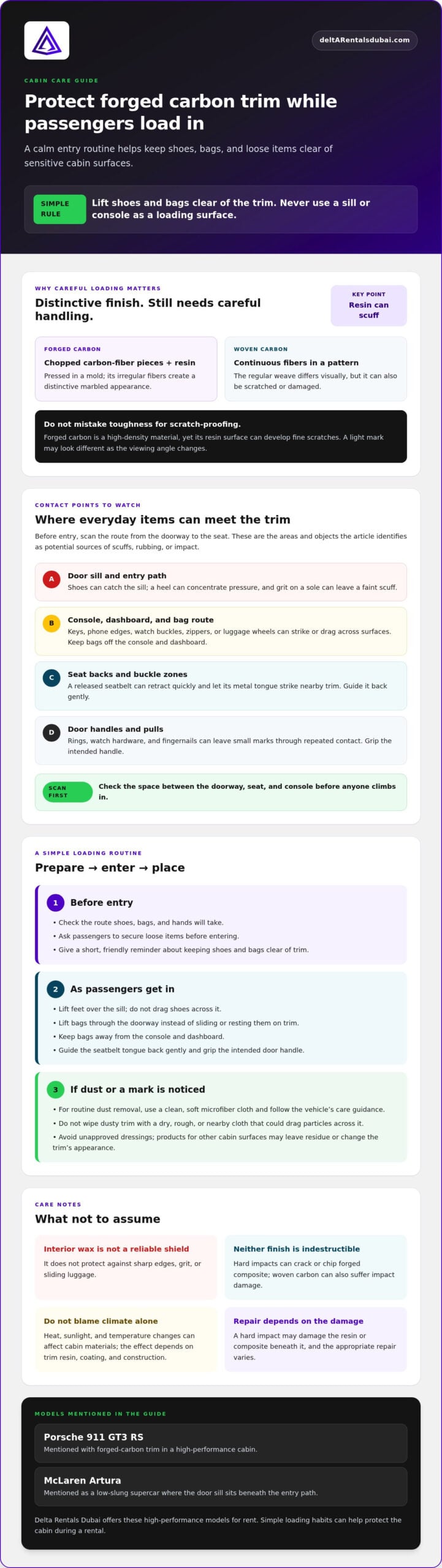
Avoiding Forged Carbon Trim Scratches During Passenger Cabin Loading
Make loading calm and deliberate. The core rule is simple: lift, don’t slide. Keep shoes, bag hardware, and luggage wheels clear of forged carbon and other finished surfaces. A quick, courteous reminder helps passengers know what to do without making the experience feel overly formal.
The Perfect Passenger Entry
Open the door fully when space allows, so the passenger can turn and enter without brushing the sill or door trim. Ask them to sit first, then bring their legs into the cabin together rather than dragging their feet across the sill. Before closing the door, check that clothing, metal belt hardware, and bag straps are clear of the frame.
A natural briefing is enough: “Please sit first, swing your legs in, and keep your shoes clear of the sill.” That small cue makes avoiding forged carbon trim scratches during passenger cabin loading easier for everyone.
Safe Cargo Management for Supercars
Where practical, choose a clean, soft-sided bag. It has fewer rigid corners than a hard case, though zippers and buckles can still mark trim if they rub against it. Lift each item into place and set it down gently. The “one-hand rule” is a reminder to keep bags suspended rather than dragging them. Use both hands for anything heavy or awkward, and prioritize a secure grip.
- Choose the right spot: A small bag may fit in the passenger footwell, but only if it will not interfere with the passenger’s feet, seatbelt, or vehicle controls. Secure it so it cannot shift. Do not place cargo where it could obstruct safe operation.
- Protect larger items: If the vehicle’s storage area or cabin can accommodate the item, use a clean, soft loading blanket as a buffer. Keep the blanket and item stationary while loading. A protective layer can still cause abrasion if it slides over dusty trim.
- Guide the seatbelt: Hold the belt as it retracts and guide its metal tongue back slowly. Do not let it snap against the B-pillar or nearby trim, and do not use trim as a handhold.
Think “lower into place,” not “push across.” Set bags down vertically where they belong, then check that they are stable before closing the door. If luggage is too large to position without contacting interior trim, leave it out rather than forcing it into the cabin.
Ready to enjoy a carefully chosen supercar? Message Delta Rentals Dubai about renting a supercar or explore Delta Rentals Dubai’s supercar options to find your ideal vehicle.
Caring for a Rental Cabin with Delta Rentals Dubai
Forged carbon calls for careful handling and care suited to the actual finish. Delta Rentals Dubai offers high-performance models including the Porsche 911 GT3 RS and McLaren Artura. If you are considering one of these vehicles, ask about the cabin and its care guidance before your rental.
Care That Respects the Finish
Cleaning products and protective films are not one-size-fits-all. A cleaner or interior dressing that works on leather or plastic may not suit a particular resin or clear coat. Likewise, do not assume that paint protection film designed for another surface is safe for interior trim. Follow the vehicle’s care guidance, and leave unfamiliar products or polishing to qualified professionals. Confirm with the rental team before using a cleaner, towel, or film on the interior.
The same cautious approach applies to other luxury vehicles in Delta Rentals Dubai’s fleet, including the Rolls-Royce Cullinan Black Badge. For renters, the practical takeaway is straightforward: lift bags over trim, keep hard accessories from rubbing against it, and do not attempt an improvised repair if a mark appears. These habits help protect the finish while avoiding forged carbon trim scratches during passenger cabin loading.
If You Notice a Scratch
Pause before wiping or buffing the mark. Dust, fingerprints, and a true surface scratch can look similar under changing light, and rubbing the area may make matters worse. Take a clear photo in good light, note where and when you noticed it, and contact the rental team promptly. Follow your rental agreement and ask how the condition should be documented. Delta Rentals Dubai has 5-star Google reviews, but contact the team directly for the specific reporting process rather than assuming a separate scratch policy.
A Confident Rental Experience
Choosing a provider that offers high-performance vehicles can make it easier to ask about cabin care and rental conditions. Delta Rentals Dubai lists a no-deposit supercar rental option. Confirm eligibility and applicable terms directly before booking. Careful loading and clear communication help keep expectations aligned.
For details about available vehicles and rental terms, explore Delta Rentals’ supercar options.
Protect the Finish and Enjoy the Drive
Protecting forged carbon does not require a complicated routine. Give passengers room to enter, lift bags clear of trim, and guide seatbelts back instead of letting buckles snap against nearby panels. Those simple habits make avoiding forged carbon trim scratches during passenger cabin loading easier and help preserve the cabin’s distinctive finish.
Delta Rentals Dubai offers an elite fleet that includes the Porsche 911 GT3 RS, Rolls-Royce Cullinan Black Badge, and McLaren Artura. The company also lists no-deposit luxury car rental options, subject to applicable terms, and has 300+ 5-star Google reviews. Ask about the specific vehicle, its interior, and rental conditions before booking so you know what to expect.
Ready to experience the Porsche 911 GT3 RS? Ask about a Porsche 911 GT3 RS rental. With a little care and preparation, you can enjoy the drive while taking care of the cabin.
Frequently Asked Questions
Can I buff out a scratch on forged carbon trim myself?
Do not buff a scratch yourself unless the vehicle manufacturer specifically approves the method for that finish. Polishing can remove or alter the clear coat, change the sheen, or make the mark more noticeable. First, check whether the mark is dust or residue by inspecting it in good light without rubbing. For a visible scratch, photograph it and ask the vehicle owner or rental company how to proceed.
Is forged carbon more fragile than traditional carbon fiber?
Not automatically. Forged and woven carbon composites differ in fiber arrangement and appearance, but scratch resistance depends on the specific resin, clear coat, and finish. Forged carbon’s surface can be marked, while woven panels can also be damaged by abrasion or impact. Treat either finish with care: keep grit, hard accessories, and luggage edges from rubbing against it, and follow the vehicle’s care instructions.
Does insurance cover interior trim scratches in a rental supercar?
Coverage depends on the rental agreement, the protection you selected, and the terms of any applicable insurance policy. Do not assume interior cosmetic damage is included or excluded. Before driving, review the contract’s damage and reporting sections and ask the rental company to clarify anything unclear. If you notice a mark during the rental, take clear photos and report it promptly using the agreed process.
What is the best way to clean forged carbon without scratching it?
Use only a clean, soft microfiber cloth and a cleaner approved for that vehicle’s trim. Remove loose grit gently before wiping, and do not press hard or use a cloth that has collected dust from other surfaces. Avoid household sprays, abrasive polish, and unapproved waxes, which may affect the resin or finish. These careful habits help prevent scratches during passenger cabin loading and everyday use.
Why do supercars use forged carbon if it is so sensitive?
Forged carbon offers a distinctive marbled appearance and can be molded into complex shapes, making it attractive for high-performance vehicle design. Its use does not mean every exposed surface is scratch-proof. In a cabin, the protective finish can still show scuffs from grit, metal hardware, or careless cleaning. Manufacturers choose materials for different design and engineering needs, so the role and construction of each component can vary.
Can I apply a screen protector or film to forged carbon sills?
Possibly, but do not apply a generic screen protector or film without checking its compatibility with the trim’s shape and coating. Adhesive may leave residue or affect the finish when removed, and an unsuitable film can alter the appearance. For a rental vehicle, get the owner’s approval before installing anything. Ask a qualified installer whether a film is appropriate for that specific interior surface.
What should I tell my passengers before they get into a GT3 RS?
Keep it friendly and specific: “Please sit first, swing your legs in, and keep your shoes clear of the sill. Lift your bag rather than sliding it, and guide the seatbelt back gently.” Ask passengers to secure keys and other hard items before entry. This quick briefing helps them protect the trim without making the cabin feel difficult to use.
Are forged carbon scratches more expensive to fix than leather scuffs?
There is no reliable universal comparison. Repair effort depends on the mark’s depth, the damaged material, the finish, and whether a panel can be repaired or needs replacement. A leather scuff and a scratch through a coated composite surface require different assessment and repair methods. Do not judge repair cost from appearance alone. Document the condition and contact the vehicle owner or rental company for guidance.