

Stepping onto a hundred-foot superyacht is easy, but staying invited back is where most people fail. True luxury travel isn’t just about the destination; it’s about how you carry yourself once the lines are cast off. You’ve likely felt that slight hesitation when boarding a pristine vessel, wondering if your shoes are acceptable or if your luggage choice is a secret faux pas. Mastering yacht etiquette for guests is the quickest way to transition from a nervous newcomer to a respected member of the maritime elite.
We’ve designed this 2026 checklist to give you an insider’s edge on every unwritten rule. You’ll learn exactly how to handle the “barefoot rule” with style, why the 10 to 15 percent tipping standard is the baseline for 2026 Mediterranean charters, and how to coordinate a prestigious arrival that sets the tone for the entire trip. This guide ensures you build an effortless rapport with the crew while enjoying a seamless, high-status experience that guarantees a repeat invitation. Get ready to master the deck before you even leave the dock.
Key Takeaways
- Protect the vessel’s integrity by mastering yacht etiquette for guests, starting with the “barefoot rule” to preserve delicate teak decks and custom carpets.
- Respect the crew’s “invisible service” by staying clear of restricted zones like the engine room and galley to ensure smooth operations.
- Optimize cabin space by packing exclusively in soft-sided, collapsible luggage, as rigid suitcases are a major logistical hurdle on any superyacht.
- Secure your reputation as a high-status traveler by adhering to 2026 tipping standards and showing undivided attention during mandatory safety briefings.
- Create a flawless transition from land to sea by coordinating your arrival with a high-performance supercar rental or professional chauffeur.
The Fundamentals of Yacht Etiquette: The Barefoot Rule and Entry
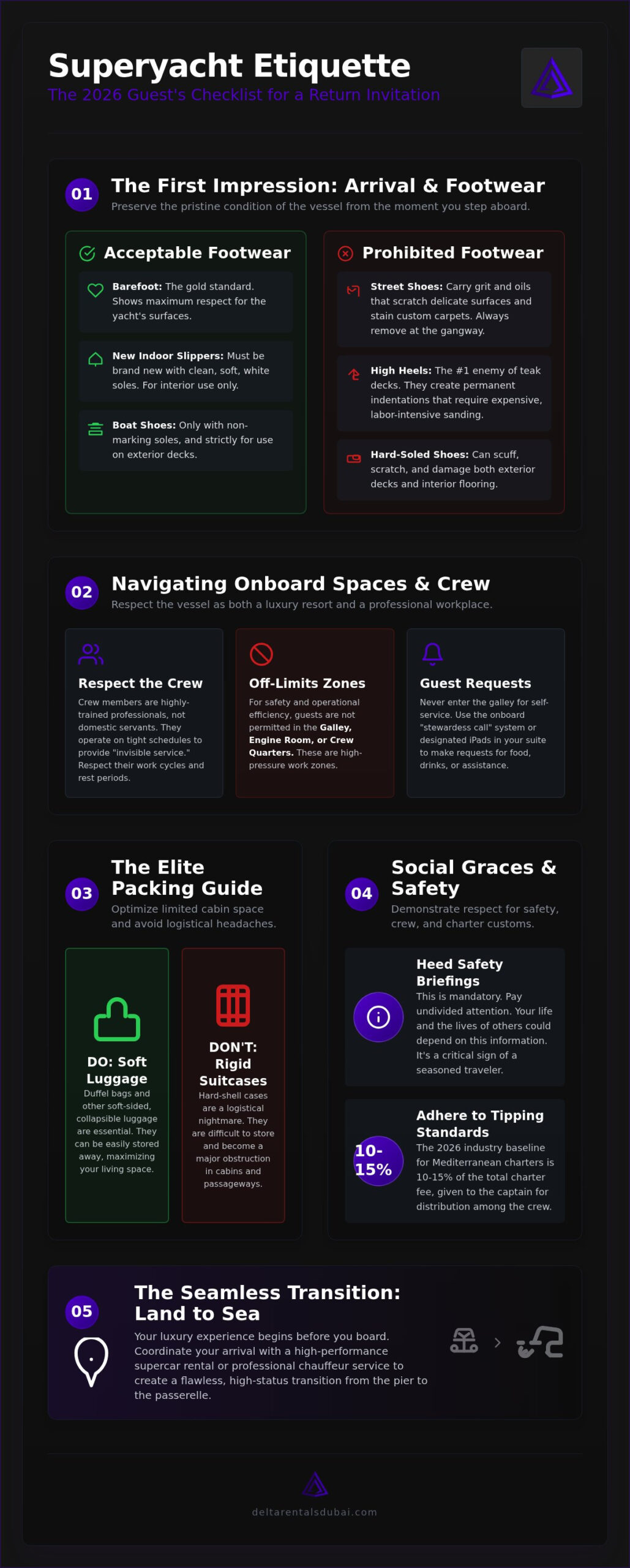
Mastering yacht etiquette for guests begins the moment your foot touches the passerelle. On a vessel that meets the technical criteria of what defines a superyacht, the most visible and non-negotiable rule is the immediate removal of street shoes. This isn’t just a quirky maritime tradition; it’s a critical maintenance requirement. Street shoes carry microscopic grit, oils, and asphalt debris that act as sandpaper against the yacht’s expensive finish. Upon boarding, you’ll typically see a “shoe basket” or a designated storage area at the base of the gangway. Place your footwear there immediately. This simple act signals your respect for the owner’s asset and the crew’s meticulous labor.
The preservation of custom carpets and hand-tufted rugs inside the main salon is equally vital. These materials are often bespoke and nearly impossible to deep-clean mid-charter if stained by street oils or dirt. By transitioning to the barefoot rule, you ensure the interior remains a pristine sanctuary for the duration of your stay. If you’ve arrived at the dock via a premium chauffeur from Delta Rentals, your transition from the luxury of the car to the deck should be swift, organized, and respectful of these boundaries.
Understanding Teak Deck Vulnerability
Teak is a premium, soft wood prized for its natural oils and superior grip, but it’s incredibly susceptible to physical damage. High heels and hard-soled dress shoes are the primary enemies of a pristine deck. They cause permanent indentations and “pitting” that require expensive, labor-intensive sanding to repair. Restoration of maritime decking is a specialized craft that can cost thousands and take the vessel out of service for several weeks. Adhering to the barefoot rule is the primary sign of respect for the vessel and its operational readiness. It’s a small concession for the privilege of elite maritime travel.
Acceptable Footwear for Onboard Use
Being “barefoot” doesn’t always mean skin-to-deck. If you prefer coverage, brand-new, white-soled indoor slippers are often acceptable, provided they have never touched a sidewalk or parking lot. Traditional boat shoes are designed for maritime grip, but they are generally reserved for exterior deck use and must feature non-marking soles. For shore excursions, the crew will bring your shoes to the swim platform or gangway as you prepare to disembark. Always keep a clear distinction between your “land” shoes and “sea” footwear to prevent cross-contamination of the yacht’s surfaces. If you’re unsure, ask the Chief Stewardess about the specific footwear policy for that vessel.
Navigating Onboard Spaces and Crew Interactions
A superyacht is a masterclass in logistical precision. While the vessel serves as your private sanctuary, it also functions as a high-performance workplace for a team of elite professionals. Adhering to proper yacht etiquette for guests means understanding the “invisible service” model. This concept ensures your needs are met before you even voice them, but it relies on guests respecting the crew’s work cycles. The crew often works in shifts to provide 24-hour coverage; respecting their downtime and designated rest areas is essential for maintaining a high-status environment. Treat every staff member as a specialized professional, from the Chief Engineer to the Deckhands. They aren’t domestic servants; they are highly trained experts responsible for your safety and the vessel’s multi-million dollar systems.
Effective communication is the cornerstone of a seamless charter. Avoid wandering the corridors to find a staff member. Instead, utilize the onboard “stewardess call” systems or designated iPads found in guest suites. This allows the interior team to coordinate their movements without disrupting the flow of the ship. To ensure your arrival at the pier matches the prestige of the vessel, you can coordinate your luxury transport through our concierge team for a frictionless land-to-sea transition.
The Galley: A High-Pressure Zone
The galley is the heart of the yacht’s hospitality, but it’s also a high-pressure, hazardous workspace. Sharp knives, intense heat, and tight timelines make it off-limits to guests. Never enter the galley to self-serve snacks or drinks. This disrupts the Chef’s workflow and compromises safety. Instead, relay your requests to the service staff. Respect the pre-planned menu timings discussed during your initial briefing. If you have a late-night craving, inform the Chief Stewardess earlier in the evening so they can prepare a platter for you in the main salon.
Cabin Etiquette and Privacy
Your suite is your retreat, but the interior team requires access for “turn-down” and cleaning duties. To facilitate this, keep your personal items organized and utilize the provided storage lockers. This allows the crew to perform their duties efficiently without touching your private belongings. Communication is key; if you plan to sleep in or need a specific laundry item handled urgently, inform the team early in the morning. Maintaining a tidy cabin is a hallmark of sophisticated yacht etiquette for guests, ensuring the crew can maintain the vessel’s five-star standards without unnecessary friction.
The Elite Packing Guide: Soft Luggage and Maritime Style
Packing for a voyage is an exercise in curated minimalism. While you might be tempted to bring your full wardrobe in rigid designer trunks, proper yacht etiquette for guests dictates a different approach. Space on a vessel is a premium commodity; even the most expansive suites have architectural limits. Understanding these constraints is the difference between an effortless arrival and a logistical headache for the crew. Arriving at the marina with your curated soft luggage in a vehicle from Delta Rentals ensures your journey begins with the right aesthetic and operational efficiency.
Why Soft Luggage Wins
Standard hard-shell suitcases are a liability in narrow maritime corridors. They lack the flexibility required to navigate tight turns and frequently leave scuffs or deep gouges on delicate hand-finished wall panels. Unlike a hotel, most yachts don’t have a dedicated cargo hold for empty luggage. Your bags must fit inside your cabin’s lockers or under the berth. We recommend investing in premium leather or canvas duffels for the ultimate elite look. These collapsible bags tuck away easily once unpacked, maintaining the clean lines of your suite and preventing clutter.
Dressing for the Occasion
Your wardrobe should mirror the transition from sun-drenched decks to refined dining. Swimwear is strictly for the exterior; never enter the main salon or indoor dining areas in a bikini or trunks without a proper cover-up. Smart casual is the standard for evening meals. If your host has specified a theme, such as a “White Party,” ensure your attire is crisp and compliant. Safety remains a priority even in high fashion. Avoid long, trailing scarves or excessively loose garments when moving near winches or moving parts during docking maneuvers. Even in the warm UAE climate, night cruising brings a sharp drop in temperature. Pack a light, high-performance windbreaker to stay comfortable on the flybridge during late-night transits.
To ensure you’re fully prepared for the 2026 season, prioritize these essential items:
- Polarized Sunglasses: Essential for cutting the intense glare of the water and protecting your vision.
- Reef-Safe Sunscreen: Standard sunscreens contain chemicals that damage marine ecosystems; high-status guests choose eco-conscious brands.
- Formal Attire: Always pack one formal outfit for the Captain’s dinner or unexpected shore-side events at exclusive clubs.
- Personal Tech: Bring waterproof pouches for your devices and ensure all chargers are compatible with international maritime outlets.
Social Conduct: Safety Briefings, Alcohol, and Tipping
Social conduct is the final layer of yacht etiquette for guests that separates a one-time visitor from a seasonal regular. Once you’ve settled into the maritime lifestyle, your ability to follow safety protocols and social boundaries becomes the primary measure of your status. While the environment is designed for relaxation, it operates under a strict hierarchy. The Captain is the ultimate authority at sea, and their instructions regarding safety and vessel movement are absolute. Maintaining a sophisticated presence means balancing the freedom of the open water with a deep respect for the vessel’s operational rules.
To ensure your journey to the marina is as seamless as your time on the water, you can coordinate your arrival via supercar through our concierge team. This sets a high-status tone before you even step onto the deck.
The Safety Briefing is Non-Negotiable
Every charter begins with a mandatory safety briefing. Even if you’ve spent decades on the water, you must pay undivided attention. This session covers the location of life jackets, emergency muster stations, and the operation of life rafts. The Captain’s authority is law; if they determine that weather conditions or guest behavior make the swim platform or water toys unsafe, their decision is final. Following these rules isn’t just about safety. It’s a sign of respect for the crew’s responsibility toward every life on board. Never attempt to use jet skis or dive equipment without a crew member’s supervision, as this often violates the vessel’s insurance and safety protocols.
Regarding substances and conduct, luxury yachts maintain a zero-tolerance policy for illegal substances. Discovery of such items results in the immediate termination of the charter and notification of the authorities. Moderation is the hallmark of an elite guest. While the champagne flows freely, maintaining your composure ensures you remain a welcome presence in the close quarters of a superyacht.
Mastering the Gratuity
Tipping is the most common source of confusion in yacht etiquette for guests. In 2026, the industry standard for a job well done is between 10 and 15 percent of the base charter fee. If the service has been truly exceptional, 20 percent is appropriate. It’s important to remember that this calculation is based on the base rate, not the total cost including the Advance Provisioning Allowance (APA) or fuel. This gratuity recognizes the 18-hour days and invisible labor the crew performs to make your stay perfect.
- The Captain’s Envelope: Never tip individual crew members. This creates friction and ignores the hard work of engineers and chefs you may rarely see.
- Timing: Deliver the tip in a sealed envelope to the Captain on the final morning of your trip.
- Distribution: The Captain ensures the tip is divided equally among the entire team, maintaining morale and rewarding the collective effort.
By following this protocol, you acknowledge the professional nature of the crew and secure your reputation as a high-tier charterer who understands the nuances of the yachting industry.
Seamless Luxury: Coordinating Your Arrival with Delta Rentals
First impressions in the maritime world begin long before you step onto the teak deck. The final leg of your journey to the marina sets the tone for your entire stay. Mastering the nuances of yacht etiquette for guests involves understanding that your arrival is a public statement of your respect for the host and the vessel. Pulling up to the quay in a high-performance Porsche 911 GT3 RS signals an appreciation for engineering excellence that mirrors the superyacht itself. It creates an immediate sense of belonging within the elite maritime community.
Logistical precision is the hallmark of a sophisticated traveler. Coordination is key; your vehicle drop-off must align perfectly with the yacht’s scheduled departure. Delta Rentals facilitates this transition by managing the timing with surgical accuracy. For those traveling with a full set of soft-sided luggage, a luxury chauffeur service offers the ultimate advantage. A professional chauffeur handles the heavy lifting, allowing you to focus on greeting the Captain and crew with undivided attention. This frictionless hand-off is the gold standard for high-status travel across the UAE.
The High-Status Arrival
Your choice of vehicle reflects your understanding of the occasion. For group arrivals, the Rolls Royce Cullinan provides the necessary presence and interior volume to transport guests and their curated maritime wardrobes comfortably. The crew notices when a guest arrives with organized, premium luggage in a vehicle of equal stature. It builds immediate confidence in your familiarity with luxury protocols. This psychological impact shouldn’t be underestimated; it establishes you as a guest who values quality and understands the effort required to maintain a five-star environment.
Delta Rentals: Your Elite UAE Partner
We specialize in removing the traditional friction associated with luxury travel. Our “No Deposit” supercar rental policy ensures that your focus remains on the experience rather than administrative hurdles. This level of convenience is essential for mastering yacht etiquette for guests, as it allows you to arrive relaxed and ready to engage with the onboard safety briefings. We act as your authoritative concierge, bridging the gap between road performance and maritime luxury. You can book your supercar and yacht coordination as a single, curated itinerary to ensure every detail of your national UAE travel is handled with expert care.
Elevate your journey with Delta Rentals Dubai today and experience the peak of land-to-sea luxury coordination.
Command the Deck with Elite Confidence
True luxury is found in the details that others often overlook. By mastering yacht etiquette for guests, you transform from a mere passenger into a respected maritime traveler. You now understand the functional necessity of soft luggage to protect custom interiors and why the barefoot rule remains a non-negotiable sign of respect for the vessel’s integrity. These nuances don’t just ensure a smoother trip; they solidify your reputation as someone who truly understands the high-status lifestyle. When you respect the crew’s professional boundaries and prioritize safety protocols, you guarantee a seamless experience for everyone on board.
Your journey shouldn’t begin at the gangway. It starts with a prestigious arrival that sets the expectation for excellence. As a 5-star Google reviewed service, Delta Rentals acts as your national UAE elite concierge, bridging the gap between land performance and sea-bound luxury. Whether you choose exclusive access to a Porsche 911 GT3 RS or a chauffeur-driven Rolls Royce, we ensure your transition is effortless and impactful. Step aboard with the confidence of an insider and secure your next invitation before the anchor is even dropped.
Master the UAE lifestyle—Rent a Supercar for your Yacht Arrival
Frequently Asked Questions
How much should I tip the yacht crew at the end of a charter?
You should tip between 10 and 15 percent of the base charter fee for standard service, while 20 percent is reserved for exceptional performance. This gratuity is calculated on the base rate, not including fuel or the Advance Provisioning Allowance. Always deliver the total amount in a sealed envelope to the Captain on the final morning. They will distribute it equally among the entire team to reward the collective effort of the interior and deck staff.
Can I wear shoes on a yacht if they are brand new?
You generally cannot wear shoes on board, even if they are brand new and have never touched a sidewalk. The “barefoot rule” protects delicate teak decks and custom carpets from microscopic grit and oils. If you prefer foot coverage, check with the crew about wearing brand-new, white-soled slippers that are strictly for indoor use. Most guests find that being barefoot or wearing high-quality grip socks is the standard for elite maritime travel.
What is the most important rule of yacht etiquette for a first-time guest?
The most critical aspect of yacht etiquette for guests is respecting the Captain’s authority and the crew’s professional boundaries. Safety is the priority, so following instructions during the initial briefing is non-negotiable. Beyond safety, remember that the yacht is a high-performance workplace. Treating the staff with professional courtesy and staying out of restricted zones like the galley ensures a high-status experience for everyone on the vessel.
Is it okay to bring my own food or drinks on a luxury yacht?
It is typically unnecessary and often discouraged to bring your own food or drinks on a luxury charter. The Chef prepares a bespoke menu based on your pre-trip preference sheets. Bringing outside items can disrupt the galley’s organization and storage plans. If you have specific vintage wines or rare spirits you wish to enjoy, discuss this with your concierge or the Chief Stewardess before you arrive at the marina to ensure proper service.
What happens if I miss the mandatory safety briefing?
You cannot miss the mandatory safety briefing, as it is a legal requirement for all guests before the vessel leaves the dock. If you arrive late, the Captain will conduct a private session for you before any maritime activities begin. This briefing covers the location of life jackets and emergency muster stations. Missing this session compromises the safety of the entire vessel and is considered a serious breach of protocol.
Why is soft luggage required for yacht trips?
Soft luggage is required because yacht cabins feature curved architectural lines and limited storage lockers that cannot accommodate rigid trunks. Hard-shell suitcases are a logistical nightmare that can easily gouge hand-finished wall panels in narrow corridors. Using collapsible leather or canvas duffels allows the crew to store your bags efficiently after you unpack. This practice is a hallmark of sophisticated yacht etiquette for guests, ensuring your suite remains clutter-free and pristine.
Can I smoke on board a luxury yacht?
Smoking is strictly prohibited inside the yacht’s interior due to fire safety and the preservation of expensive fabrics. Most vessels have a designated smoking area on the aft deck or flybridge, provided the wind direction doesn’t carry smoke toward other guests. Always ask the crew for an ashtray and never throw butts overboard. Vaping policies vary by vessel, so it’s best to confirm the specific rules with the Captain upon your arrival.
How should I address the Captain and crew members?
You should address the Captain formally by their title and last name unless they specifically invite you to use their first name. For the rest of the crew, first names are standard and help build a friendly yet professional rapport. Maintaining a polite and respectful tone is essential, as the crew are elite professionals responsible for your safety and comfort. Clear communication through the Chief Stewardess ensures your needs are met without disrupting the ship’s workflow.