
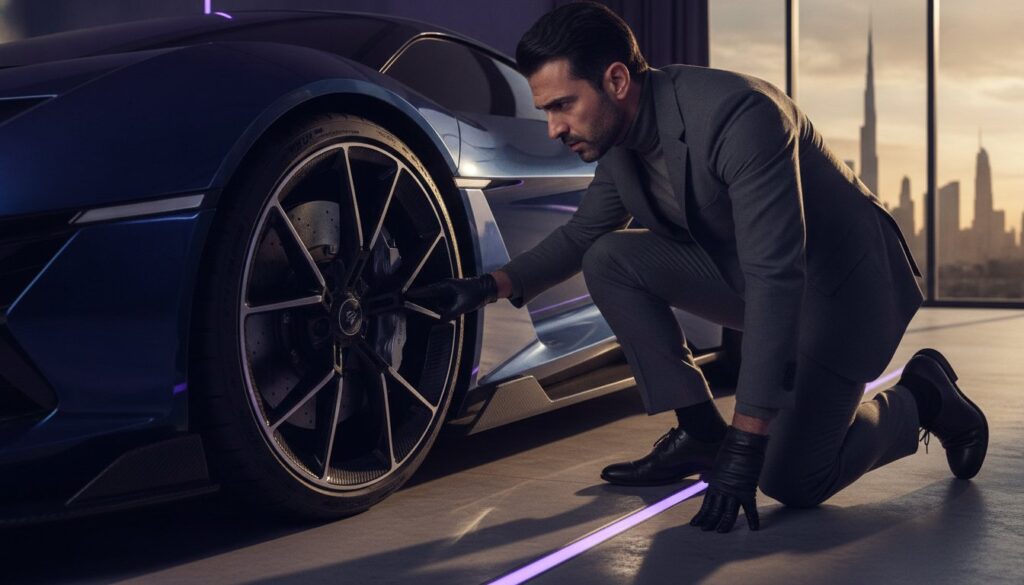
A supercar isn’t just a vehicle; it’s a high-precision instrument that carries a six-figure liability if you overlook the details. Most drivers treat a rental handover like a standard car pick-up, but missing a single hairline fracture on a carbon fiber splitter can cost more than the entire weekend’s rental fee. To protect your wallet and your peace of mind, you need a specialized supercar rental inspection checklist that accounts for the extreme engineering of a 2026 performance machine.
We understand the mix of adrenaline and anxiety that comes with holding the keys to a Porsche 911 GT3 RS or a McLaren Artura. You want to focus on the open road, not worry about microscopic scratches or complex UAE insurance terms that seem designed to confuse. This guide promises to transform you into a surgical inspector, providing bulletproof evidence of the car’s condition before you ever hit the ignition. We’ll walk through the high-value fail points, from verifying ADAS sensors to the “tap test” for authentic carbon fiber, ensuring you drive away with total confidence in both your safety and your liability protection.
Key Takeaways
- Understand why high-performance vehicles demand a higher standard of scrutiny to protect you from significant liability costs.
- Learn how to use a professional supercar rental inspection checklist to identify curb rash on front splitters and hairline fractures in carbon fiber weaves.
- Identify the specific mechanical checks for “sticky” performance tyres and carbon-ceramic brakes to ensure total safety at high speeds.
- Master the operation of essential 2026 cabin technology, such as nose-lift systems, to navigate UAE terrain without undercarriage damage.
- Secure your financial interests by properly documenting the Vehicle Condition Report and clarifying mileage limits before departure.
The Elite Standard: Why Supercar Inspections Differ from Standard Rentals
Renting a high-performance machine requires a fundamental mindset shift. You aren’t just picking up a set of keys; you’re assuming responsibility for a precision-engineered asset. A single stone chip on a Porsche 911 GT3 RS or a scuff on a Ferrari’s forged carbon rim can result in repair bills that eclipse the cost of a standard monthly car rental. This financial reality is exactly why a comprehensive supercar rental inspection checklist is non-negotiable. It bridges the gap between casual renting and professional vehicle stewardship.
The premium national market operates on a “showroom condition” standard. Unlike economy rentals where a minor door ding might go unnoticed, elite providers expect the vehicle to return in the same immaculate state it left. Taking 15 minutes for a surgical walkthrough isn’t just about being cautious; it’s your ultimate insurance policy. It ensures you aren’t held liable for the previous driver’s enthusiasm or a delivery driver’s oversight. By identifying issues before you leave the lot, you protect your security deposit and maintain the prestige of the experience.
The Value of Precision Documentation
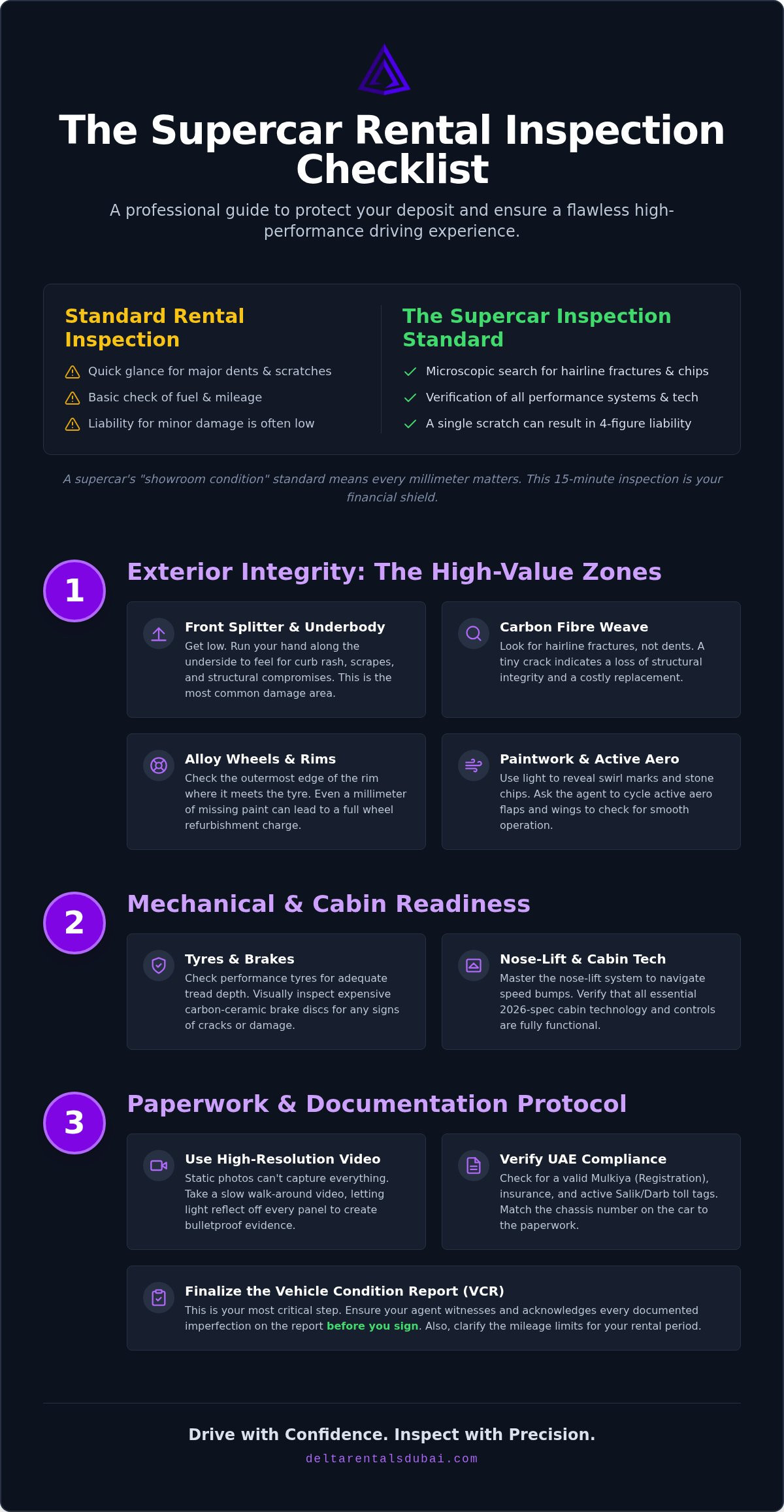
Static photos often fail to capture the nuances of multi-layer metallic paint or the depth of carbon fiber weaves. Use high-resolution video instead. Walk slowly around the car, letting light reflect off every panel to reveal any hidden imperfections. Following a structured supercar rental inspection checklist allows you to pay close attention to “hidden” zones like the underside of the front splitter and the rear diffuser. These areas are frequent targets for curb rash and speed bump damage. Your rental agent is a partner in this process; ensure they witness your findings and acknowledge them in the digital report before you sign.
National UAE Compliance and Paperwork
A thorough vehicle inspection extends beyond the bodywork. You must verify that the vehicle is legally prepared for the open road. Check the glovebox for the original Mulkiya (Registration Card) and ensure the chassis number matches the physical car. Confirm that the national insurance certificate is valid for the duration of your trip. Finally, verify that the UAE toll gate tags, specifically Salik and Darb, are present and active. This prevents administrative friction and ensures your focus remains entirely on the driving experience. For more details on our fleet readiness, visit Delta Rentals Dubai.
Exterior Integrity: Inspecting Aerodynamics, Carbon Fibre, and Ground Clearance
The visual drama of a high-performance vehicle often masks the fragility of its aerodynamic components. When you approach a car like the Porsche 911 GT3 RS, your eyes naturally gravitate toward the massive rear wing, but your professional supercar rental inspection checklist must start much closer to the tarmac. Most significant damage occurs where the car meets the environment. You must adopt a low-angle perspective to catch issues that a standing walkthrough will always miss.
Begin with the front splitter. On low-slung models like the McLaren Artura, “curb rash” on the underside is the most common pre-existing condition. Run your hand carefully along the bottom edge to feel for rough patches or structural compromises. Transition your focus to any exposed carbon fibre. Unlike metal, carbon fibre doesn’t dent; it shatters or cracks. Look for hairline fractures in the weave that might look like tiny scratches but indicate a loss of structural integrity. If the car features active aerodynamics, ask the agent to cycle the flaps or wings to ensure smooth, unhindered movement without mechanical clicking.
Paintwork and wheels require a microscopic eye. Search for “swirl marks” caused by improper cleaning or stone chips on leading edges that suggest high-speed track use. Oversized alloy wheels are magnets for microscopic kerbing. Check the very edge of the rim where it meets the tyre; even a millimetre of missing paint can lead to a full wheel refurbishment charge. Before you finish, speak with a concierge if you notice any deviation from showroom standards.
Aerodynamic and Underbody Health
The rear diffuser is a high-value fail point often damaged by steep driveway inclines or speed bumps. Inspect the vertical fins for cracks or impact marks. Similarly, check the side skirts for pitting caused by road debris kicked up at high speeds. Ground clearance liability refers to the renter’s financial responsibility for any contact between the vehicle’s undercarriage and the road surface, including damage to splitters, diffusers, and floor pans. Adhering to a strict vehicle inspection checklist ensures these safety-critical exterior parts are documented before you depart.
Lighting and Glass Standards
Modern LED and Matrix headlights are incredibly expensive to replace. Ensure the lenses are clear of condensation or internal cracking. Examine the windscreen for “star” chips; in the national heat of the UAE, a minor chip can quickly expand into a full-length crack. Finally, test the side mirrors. They should adjust silently. Any grinding sound from the motor suggests previous impact damage that hasn’t been fully repaired. For a fleet that meets these exacting standards, explore the options at Delta Rentals Dubai.
Mechanical Readiness: Tyres, Brakes, and Performance Fluid Checks
A supercar is a complex ecosystem of high-stress components. While the exterior dazzles, the mechanical state determines your safety when exploring the performance envelope. Your supercar rental inspection checklist must move beyond a cursory glance at the engine cover. It requires an active verification of the systems that keep you pinned to the tarmac. Mechanical failure at speed is a risk you can eliminate with five minutes of focused observation.
Execute an “Engine On” protocol as your first step. Turn the ignition and watch the dashboard display. Every warning light should illuminate briefly and then extinguish. If a sensor remains active, or if the car displays a “service overdue” message, address this with the agent immediately. Don’t accept a vehicle with active fault codes, as these often indicate sensor health issues that could trigger a “limp mode” during your drive. Peek into the engine bay, even if it’s mid-mounted like in the McLaren Artura, to check for loose heat shielding or fresh fluid leaks that may have pooled during storage.
Performance Rubber and Wheel Alignment
Performance tyres are “sticky” by design but wear rapidly under stress. Check the tread depth across the entire width of the tyre. Aggressive braking or track use from previous drivers can cause “flat spots.” These are often imperceptible to the eye but manifest as a violent vibration through the steering wheel at higher speeds. Verify that all four tyres are identical in brand and specification. Mixed rubber on a precision machine like the Porsche 911 GT3 RS can lead to unpredictable handling in corners. Finally, use the onboard Tyre Pressure Monitor (TPM) to confirm all corners are within the manufacturer’s optimal range before you depart.
Braking Systems and Fluids
Brake integrity is your primary safety net. Differentiate between steel and carbon-ceramic discs; carbon-ceramics should appear smooth and dark without any “pockmarking” on the surface. If the vehicle uses steel rotors, look for “blueing” or heavy scoring, which indicates excessive heat stress. Before finalizing the handover, confirm the fuel level. High-compression engines in the UAE require Super 98 as a national standard to prevent engine knocking. Ask for a cold start and observe the exhaust. A brief puff of white vapor is normal, but persistent blue or black smoke suggests internal engine health issues. This level of mechanical diligence ensures your experience at Delta Rentals Dubai remains flawless.
Cabin Excellence: Verifying Luxury Amenities and Performance Tech
The cockpit of a high-performance vehicle is your command center. While the exterior and engine provide the thrill, the cabin provides the control and comfort necessary for an elite experience. Your supercar rental inspection checklist must transition from the mechanical to the functional once you step inside. These interiors feature bespoke materials and sensitive electronics that require a delicate yet thorough verification before you leave the showroom.
Start with the nose-lift system. This is the most critical feature for navigating UAE terrain, where speed bumps and inclined parking ramps are standard. Activate the lift and ensure the front axle rises smoothly without mechanical groaning or dashboard warnings. Next, cycle through the driving modes. Switch between Sport, Track, and Corsa to verify that the digital cluster updates and the exhaust valves respond. A failure in these systems can significantly mute the performance you’ve paid to enjoy. Finally, test the climate control. The national heat is unforgiving; the AC must deliver ice-cold air at maximum fan speed within 60 seconds to ensure your comfort during the midday sun.
Don’t overlook the sensory experience of the infotainment system. Whether the car is equipped with Burmester or Bang & Olufsen audio, test the clarity at various volumes. If you’re ready to secure a vehicle that meets these exacting standards, book your next elite drive via WhatsApp today.
Interior Material Condition
Examine the Alcantara and leather surfaces for signs of pilling or deep stains. These materials are chosen for their grip and luxury feel, but they’re susceptible to wear from previous drivers. Pay close attention to the steering wheel for “ring scratches” or oils that can degrade the finish. Verify that the seat adjustment motors and massage functions operate silently. Any hesitation in the seat’s movement could indicate a failing motor or a fuse issue that needs immediate documentation on your report.
Tech and Connectivity
Pair your smartphone via Bluetooth immediately to ensure the system is functional and responsive. This is also the time to test the reverse camera and the 360-degree parking sensors. In a low-visibility supercar, these sensors are your primary defense against costly parking mishaps. Finally, pull both paddle shifters while the engine is running in park. They should provide a crisp, tactile click. If they feel mushy or fail to engage the gear indicator on the dash, the transmission software might require an update. For a cockpit that feels brand new, explore the fleet at Delta Rentals Dubai.
The Paperwork Protocol: Finalising Liability and National Compliance
The physical walkthrough is only half the battle. To truly insulate yourself from liability, you must translate your findings into a legally binding document. Your supercar rental inspection checklist concludes here, at the digital tablet or paper contract. This is the moment where precision documentation becomes your financial shield. If an imperfection isn’t on the page, it doesn’t exist in the eyes of the law.
Review the Vehicle Condition Report (VCR) with microscopic detail. Every scratch, chip, or mechanical anomaly you discovered in the previous steps must be explicitly listed. If the agent’s report doesn’t match your high-resolution photos, don’t sign. Clarify the mileage limits immediately. Elite engines are high-maintenance assets, and “extra kilometre” costs are structured to reflect that. Understanding these thresholds prevents surprise invoices at the end of your journey. Similarly, verify the insurance “franchise” amount. This is the deductible you’re liable for in the event of a claim, and it varies significantly across supercar classes. Keep the national roadside assistance number saved in your contacts for immediate support.
Finalising the Agreement
Confirm the Salik and Darb toll policies before you leave. Most premium rentals come with a pre-loaded balance, but you should verify how additional tolls are billed. The fuel policy is almost always “full-to-full.” Return the car with a full tank of Super 98 to avoid premium refueling surcharges. One major advantage of choosing Delta Rentals Dubai is their no-deposit options. This removes the traditional industry friction of large credit card holds, allowing you to transition into your high-status experience with total ease and financial transparency.
The Handover Experience
An elite rental isn’t just about the car; it’s about the mastery of the machine. Ask the concierge for a specific demonstration of the Porsche 911 GT3 RS rental track settings to ensure you can toggle the DRS and suspension mid-drive. If you’ve chosen the dark luxury of a Rolls-Royce Cullinan Black Badge, ensure you know how to operate the door-integrated umbrellas and the electronic coach door controls. These features are unique to the brand and require a quick tutorial to avoid accidental damage. Provide your final signature only when the digital VCR is an exact mirror of the car’s current state and your own photographic evidence.
Master the Road with Total Confidence
Stepping into the driver’s seat of a high-performance vehicle should be a moment of pure exhilaration, not administrative anxiety. By applying this professional supercar rental inspection checklist, you’ve moved beyond the casual renter mindset and adopted the standards of an elite driver. You now know how to spot the subtle hairline fractures in carbon fiber, verify the integrity of track-bred tyres, and ensure every luxury amenity is primed for the national heat. These steps aren’t just about protecting your liability; they’re about ensuring the car performs exactly as the engineers intended.
We pride ourselves on being your high-status partner in the UAE. With our 5-Star Google Reviewed service and national vehicle delivery, we ensure your transition into a Porsche 911 GT3 RS or a Rolls-Royce Cullinan is seamless. Our no-deposit luxury rental options remove traditional industry friction, letting you focus on the thrill of the drive. Ready to experience the pinnacle of automotive performance? Browse the Delta Rentals Dubai Elite Fleet today and hit the open road with total peace of mind.
Frequently Asked Questions
What is the most important thing to check on a supercar before driving?
The most critical check is the nose-lift system and the front splitter underside. Ground clearance is the primary vulnerability for any high-performance vehicle on national roads. If the lift system fails to engage, you risk immediate financial liability at the first speed bump. Verify the splitter is free of curb rash by using your phone’s camera to peek underneath. This ensures the car’s most fragile aerodynamic component is documented on your supercar rental inspection checklist.
How do I document pre-existing scratches on a metallic-painted car?
Document metallic paint imperfections using high-resolution video in bright, natural light. Photos often hide fine scratches or swirl marks that become visible only when light hits the metallic flakes at certain angles. Move the camera slowly around the car, allowing the sun to reflect off every panel. Ensure the rental agent acknowledges any findings and includes them in the digital report before you sign the final handover agreement.
Is insurance automatically included in UAE supercar rentals?
Standard comprehensive insurance is typically included, but you must clarify the “franchise” or deductible amount. This is the maximum out-of-pocket expense you face in the event of an accident. High-value models often carry a higher franchise fee than standard vehicles. Always verify that a valid national insurance certificate is present in the glovebox and that you understand the specific terms for elite performance classes.
What happens if I find damage after I have already driven away?
You must notify the provider the moment you spot undocumented damage after departing. Pull over safely and take time-stamped, high-resolution photos immediately. While it’s harder to prove liability once you’ve left the showroom, immediate communication shows transparency. Don’t wait until the car is returned; a delay makes it nearly impossible to dispute pre-existing issues. This is why a surgical walkthrough before departure is your best defense.
Do I need to check the underbody of the rental car?
Checking the underbody is essential for low-profile vehicles. Focus specifically on the front splitter, side skirts, and rear diffuser. These parts are magnets for impact damage from steep inclines or debris. Use a flashlight or your phone to inspect for cracks in the floor pan or loose aerodynamic flaps. Neglecting this step could leave you responsible for expensive structural repairs that aren’t visible from a standing position.
What should I look for when inspecting carbon-ceramic brakes?
Inspect carbon-ceramic brakes for a smooth, consistent surface and intact edges. Unlike steel discs, these high-performance rotors don’t show typical scoring but can suffer from “pockmarking” or small chips on the outer rim. These chips often occur during wheel changes or from road debris. Ensure the discs are clean and the brake pads have sufficient thickness. Any visible damage to these components represents a significant safety and financial risk.
How do mileage limits work for high-performance rentals?
Mileage limits are usually calculated on a daily basis and vary by model. Your contract will specify a set number of kilometres included in the daily rate. If you exceed this limit, you’ll be charged a fixed fee for every additional kilometre driven. Verify the starting odometer reading against the paperwork before you leave. This prevents administrative errors and ensures you can plan your national route without unexpected costs.
Can I take a rental supercar into the desert for photos?
Supercars are strictly for paved surfaces and must never be taken onto sand. The low ground clearance and high-performance tyres are not designed for off-road environments. Even driving onto a sandy shoulder for photos can lead to underbody pitting or radiator clogs. Doing so voids your insurance and will likely result in heavy cleaning or repair fees. Stick to the tarmac to maintain the car’s showroom condition.